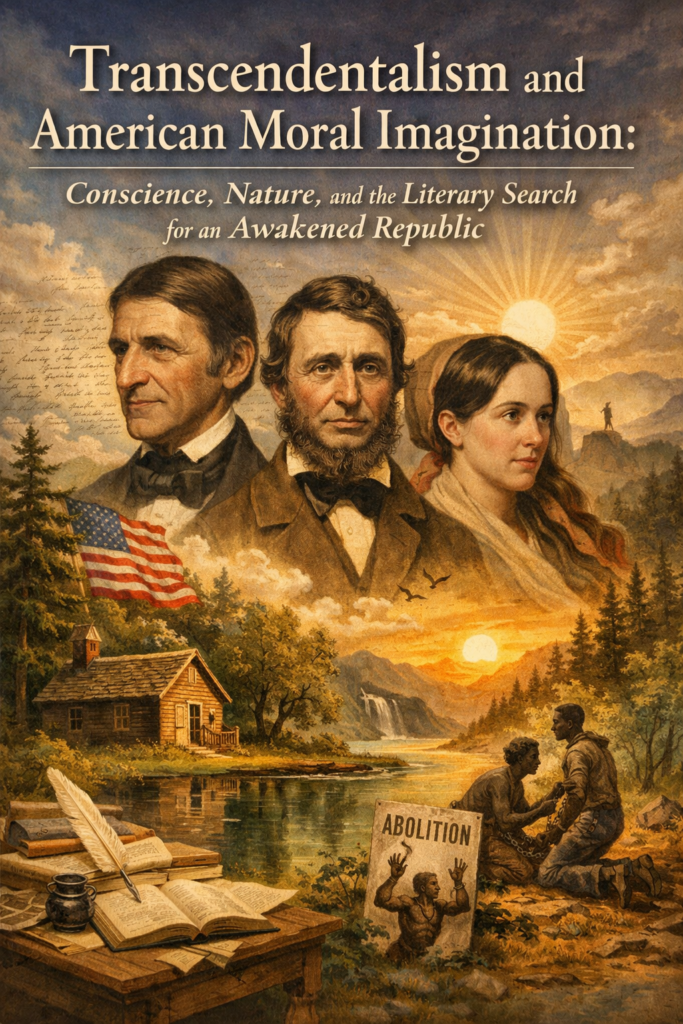
An editorial illustration featuring Emerson, Thoreau, and Margaret Fuller above a river landscape with a cabin, books and papers, abolitionist imagery, and glowing sunset light, representing Transcendentalism’s links to conscience, nature, reform, and moral awakening.

Transcendentalism and American Moral Imagination: Conscience, Nature, and the Literary Search for an Awakened Republic

Transcendentalism and American Moral Imagination explores the literary and philosophical movement through which nineteenth-century American writers reimagined selfhood, conscience, nature, spiritual authority, and the ethical responsibilities of individual life. Through essays, journals, lectures, poetry, reform writing, and reflective prose, this category examines how Transcendentalism linked inward awakening to public obligation under conditions of slavery, market expansion, democratic contradiction, and spiritual unrest. It studies Emerson, Thoreau, Margaret Fuller, and the wider movement as makers of an American language of moral striving, ecological perception, dissent, and idealism, showing how literature became a vehicle for reform, self-culture, and the unfinished ethical work of the republic.
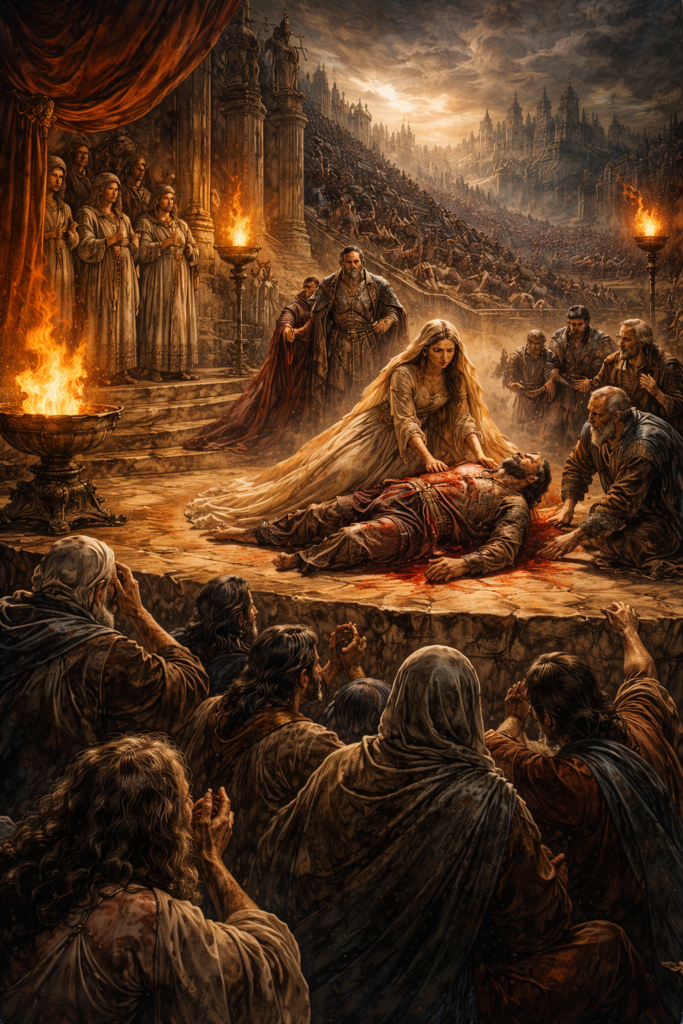
A dramatic painting of a queen mourning a fallen king on an ancient stage before a vast audience, with torches, mourners, and a ruined cityscape evoking tragedy as public spectacle and collective grief.

Tragedy, Drama, and Collective Memory: Performance, Catastrophe, and the Public Staging of Irreparable Conflict

Tragedy, Drama, and Collective Memory explores dramatic literature as one of humanity’s most powerful public arts of reckoning. Through performance, voice, gesture, silence, ritual structure, and repeated staging, drama transforms private suffering into shared reflection and turns conflict into something a community must witness together. This category examines tragedy, sacred drama, historical drama, vernacular performance, court theater, political theater, and post-traumatic stage memory as forms through which societies preserve violence, sacrifice, grief, inherited guilt, and the breakdown of justice. It studies the stage as a civic and symbolic space where memory is not only narrated, but embodied, repeated, and publicly reactivated.

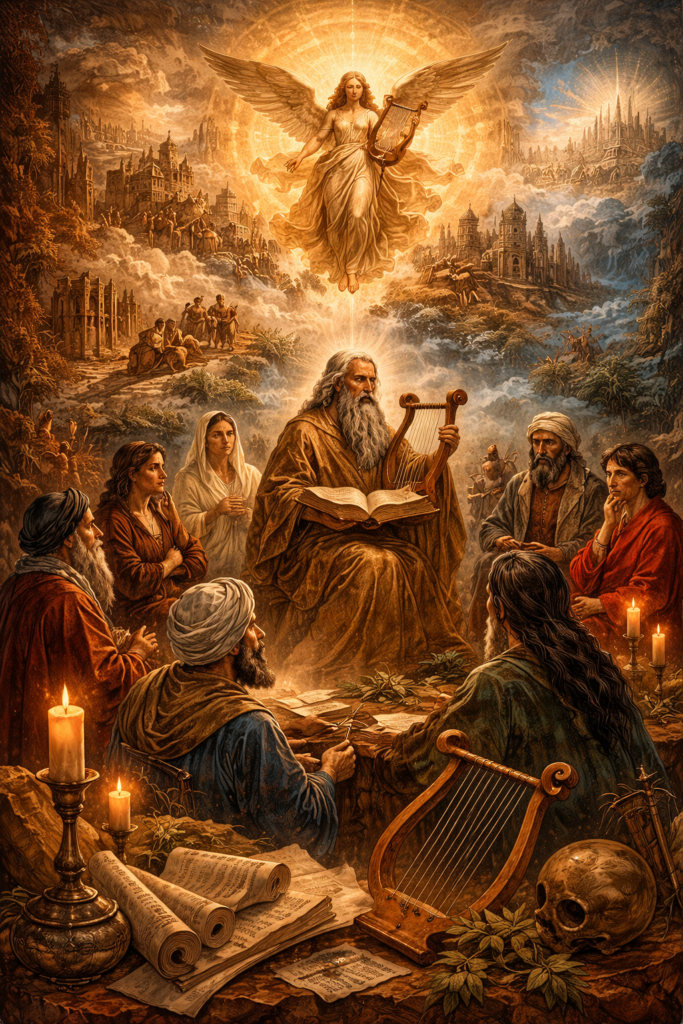
An allegorical painting of poets and listeners gathered around a bearded bard holding a lyre and open book, with candles, scrolls, and a radiant winged figure above, symbolizing poetry as memory, ritual, and imagination across civilizations.

Poetry, Memory, and Imagination: Ritual, Voice, and the Forms Through Which Civilizations Remember

Poetry, Memory, and Imagination explores one of humanity’s oldest and most enduring arts: the patterned making of language through which experience is preserved, intensified, and carried across generations. Across lyric, epic, elegy, devotional verse, oral poetry, praise poetry, political poetry, and experimental poetics, this category examines how poetry binds memory to rhythm, image, repetition, voice, and form. It studies poetry as cultural archive and imaginative renewal, showing how verse preserves the absent, carries grief, sustains ritual, shapes collective identity, and opens new possibilities of perception and feeling through one of literature’s most concentrated forms.

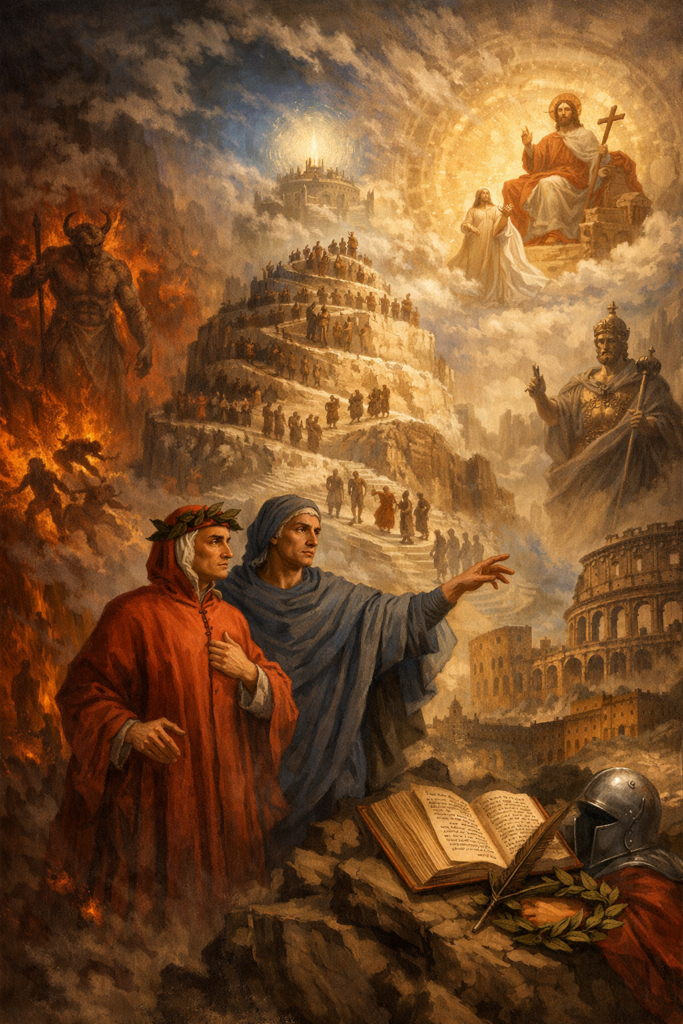
A dramatic allegorical painting of Dante and Virgil before the three realms of the Divine Comedy, with Inferno in flames at left, Mount Purgatory rising in the center, and radiant heavenly figures above a medieval and classical landscape.

Dante, Epic, and Medieval Memory: Exile, Judgment, and the Poetic Architecture of Salvation

Dante, Epic, and Medieval Memory explores the literary, moral, and cosmological traditions through which the medieval world imagined justice, exile, salvation, sacred history, political order, and the destiny of the human soul. Centered on Dante’s extraordinary synthesis of classical epic, Christian theology, political conflict, vernacular authority, and visionary architecture, this category examines how medieval literature preserves cultural memory through allegory, pilgrimage, eschatology, exemplarity, and symbolic order. It studies how poetry became a total language of history, judgment, desire, and transcendence, and how Dante stands at the center of one of the great civilizational achievements in literary history.

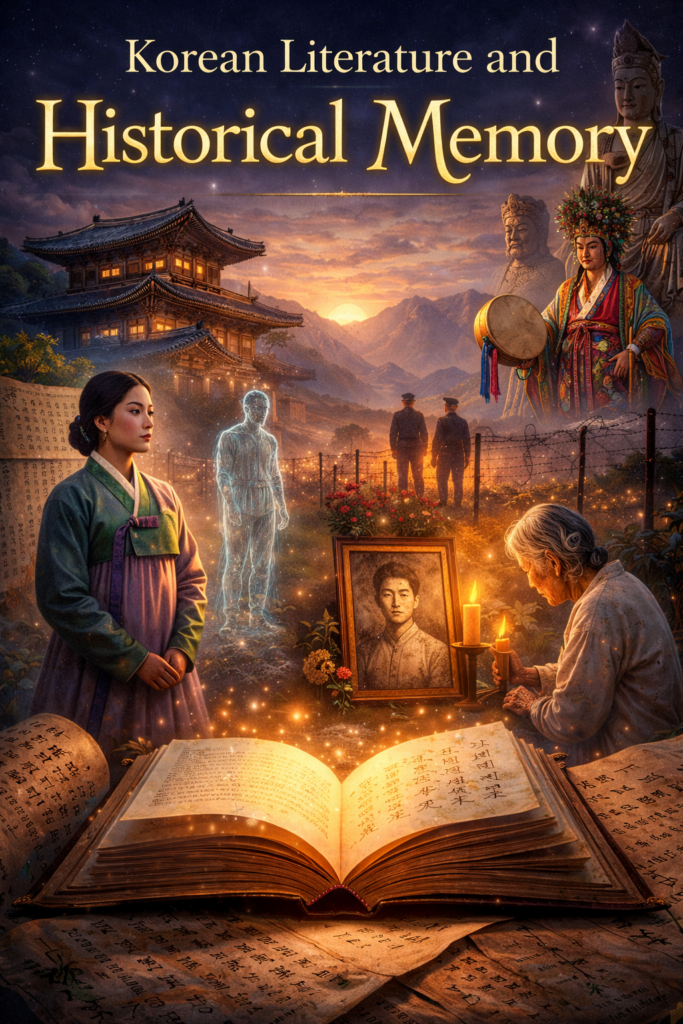
An editorial illustration showing an open book surrounded by Korean manuscripts, a traditional palace, a woman in hanbok, a ghostly figure, memorial candles, a framed portrait, and symbolic imagery of division and spiritual memory.

Korean Literature and Historical Memory: Dynastic Inheritance, Historical Rupture, and the Literary Persistence of Grief and Dignity

Korean Literature and Historical Memory explores a literary tradition shaped by dynastic order, Confucian learning, Buddhist reflection, shamanic residue, colonization, war, division, authoritarian violence, and migration. Across classical poetry, sijo, kasa, vernacular fiction, memoir, pansori, modern fiction, testimony, and diasporic writing, Korean literary culture preserves not only historical experience but the emotional and moral forms through which that experience is endured and transmitted. This category examines how script, language, family memory, women’s voices, oral tradition, colonial rupture, partition, and witness shape one of the world’s most disciplined and historically burdened literary archives.

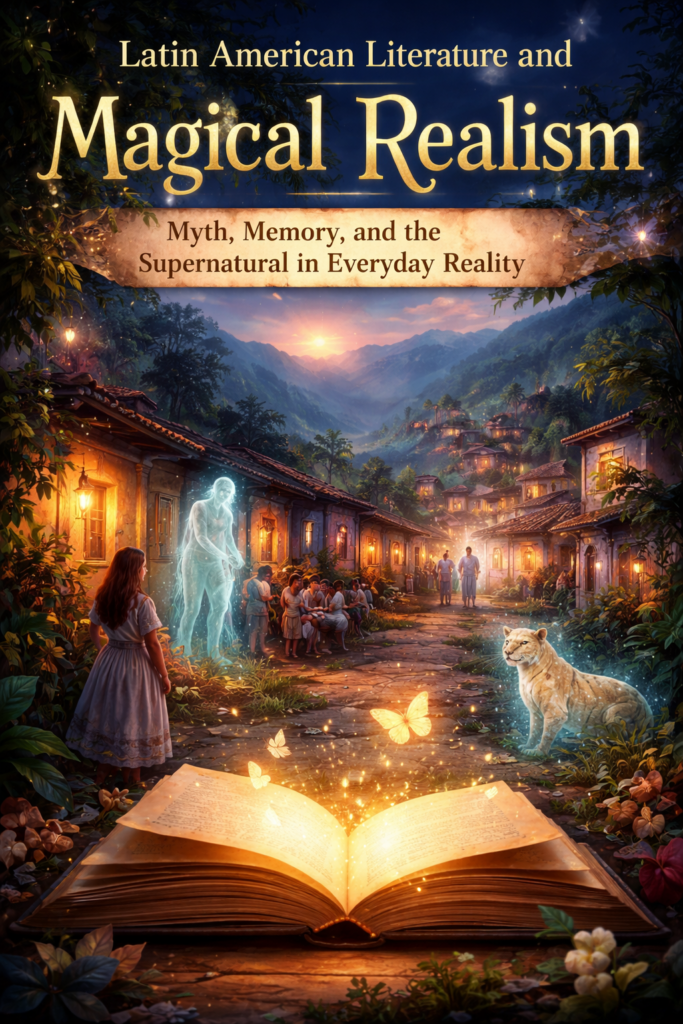
A twilight Latin American village scene with glowing homes, an open book in the foreground, butterflies of light, a ghostly human figure, and a spectral big cat, visualizing magical realism through supernatural presence within ordinary daily life.

Latin American Literature and Magical Realism: Myth, Memory, and the Supernatural in Everyday Reality

Latin American Literature and Magical Realism explores a literary tradition in which myth, memory, ghosts, prophecy, miracles, and supernatural presence appear within ordinary social reality rather than in distant fantasy worlds. Across households, villages, family sagas, regional landscapes, and communal life, the marvelous enters everyday existence with tonal calm and imaginative force. This category examines how Latin American writers made the visible world more spacious by allowing the sacred, the uncanny, and the ancestral to coexist with familiar routines and recognizable settings. Far more than a stylistic label, magical realism becomes a way of narrating how ordinary life can hold wonder, inheritance, haunting, and hidden depth without ceasing to be real.

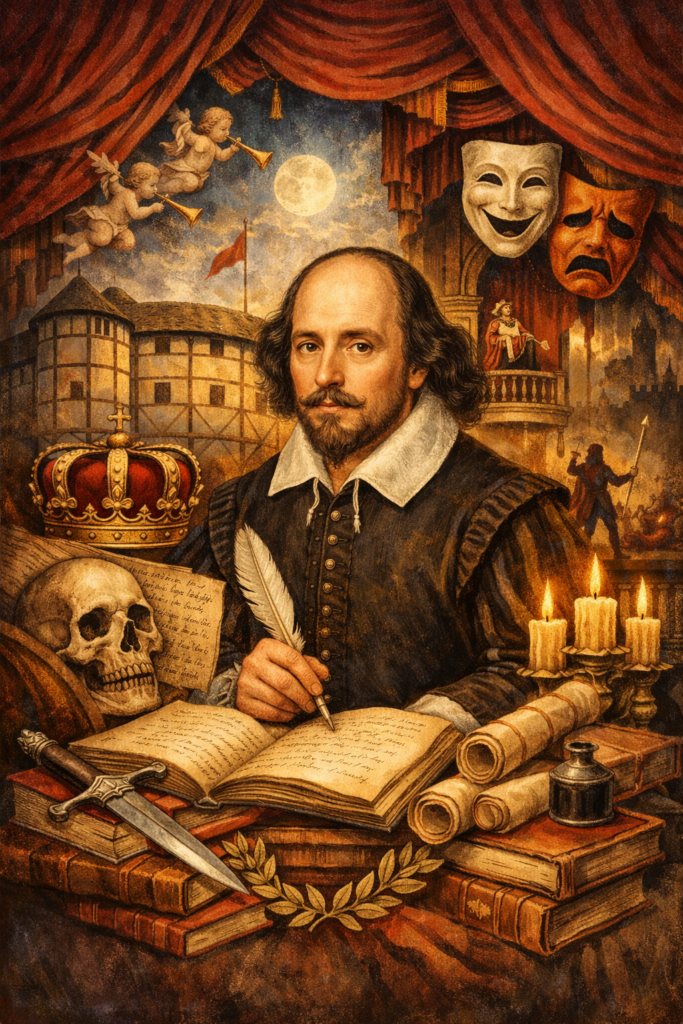
Editorial illustration of Shakespeare and early modern literature featuring theatrical architecture, manuscripts, crowns, masks, candles, and dramatic symbols of tragedy, kingship, and literary legacy

Shakespeare and Early Modern Literature: Plays, Power, Tragedy, and Literary Afterlife

Shakespeare and early modern literature preserve one of the decisive archives of literary and civilizational transition in the modern West, but this category is centered above all on Shakespeare himself: on the plays, poems, theatrical imagination, afterlife, and interpretive force through which he became the most influential writer in the English language. From the histories, tragedies, comedies, romances, sonnets, and narrative poems to questions of kingship, conscience, rhetoric, law, gender, religion, race, empire, and the Shakespeare authorship debate, this article approaches Shakespeare as the central literary intelligence through whom the early modern age most fully staged its tensions and through whom later centuries continued to think about power, desire, justice, mortality, and the unstable problem of human action.

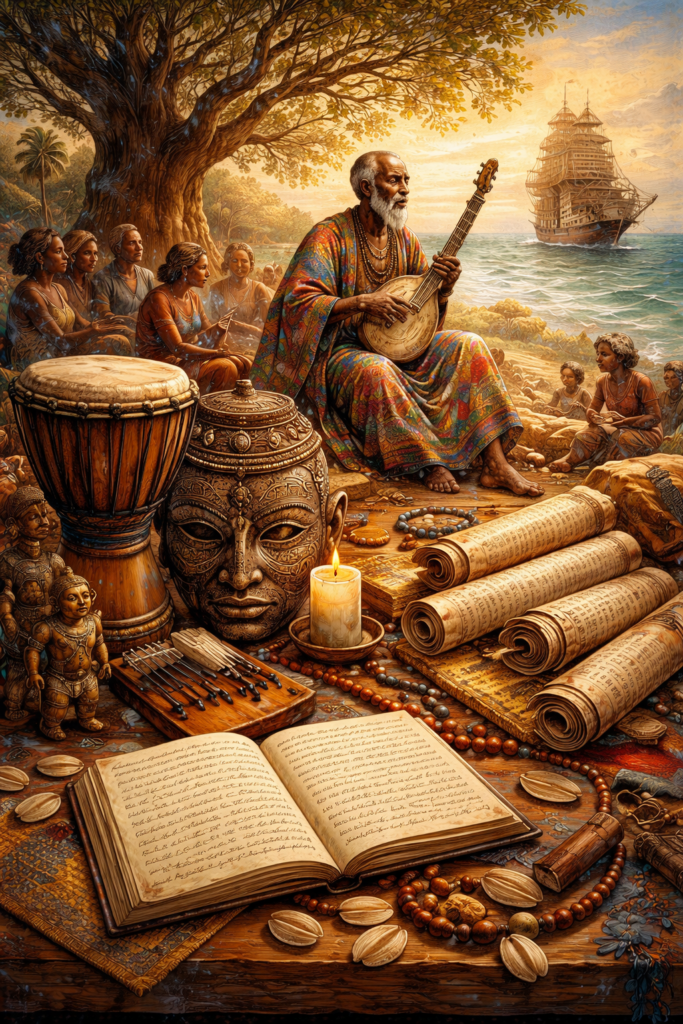
Editorial illustration of African and diasporic literature and cultural memory featuring oral performance, manuscripts, drums, ancestral objects, oceanic passage, and layered symbols of memory and survival

African and Diasporic Literature and Cultural Memory: Memory, Resistance, and Liberation

African and diasporic literature preserves one of the world’s most powerful archives of memory under conditions of rupture. Across oral traditions, praise poetry, epics, slave narratives, anti-colonial writing, postcolonial fiction, African American literature, Caribbean poetics, testimony, music-inflected forms, and spiritual expression, African societies and dispersed African-descended communities have carried forward ancestral relation, collective trauma, resistance, dignity, and the search for renewal across enslavement, colonial domination, racial violence, migration, and dispossession. From oral epic and sacred memory to Richard Wright, Ralph Ellison, James Baldwin, Toni Morrison, Black Atlantic thought, and liberation poetics, this article approaches literature as a transregional archive in which memory survives through voice, form, performance, witness, and the enduring struggle to narrate a people’s humanity against erasure.

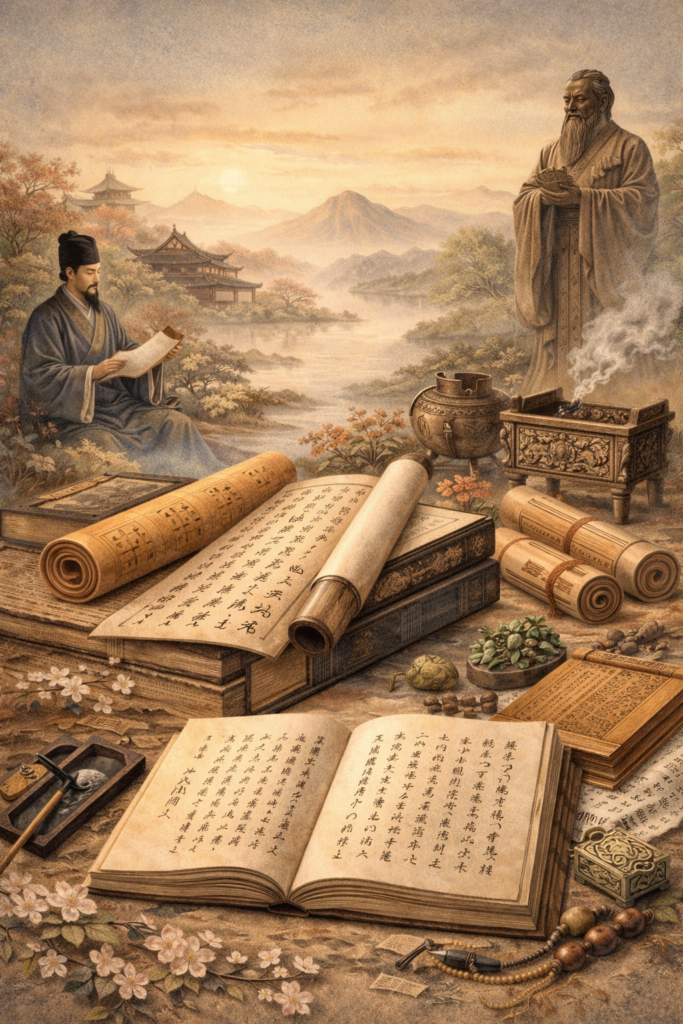
Editorial illustration of Chinese literature and classical memory featuring manuscripts, brush calligraphy, scholar’s objects, scrolls, landscape distance, and symbols of literati culture

Chinese Literature and Classical Memory: Poetry, History, Canon, and Civilizational Form

Chinese literature preserves one of the world’s deepest archives of classical memory. Across poetry, historiography, philosophical prose, regulated verse, ci lyric, literati essay, drama, fiction, women’s writing, and commentary traditions, Chinese literary culture has carried forward moral order, dynastic remembrance, cultivated feeling, political judgment, and the continuity of civilization across more than two millennia. From the Classic of Poetry, early philosophy, and historical prose to Tang poetry, Song literati culture, the great Ming–Qing novels, and the modern recasting of classical inheritance, this article approaches Chinese literature as a long civilizational archive in which memory survives through disciplined form, commentary, literary language, and renewal through return.

Scroll to Top