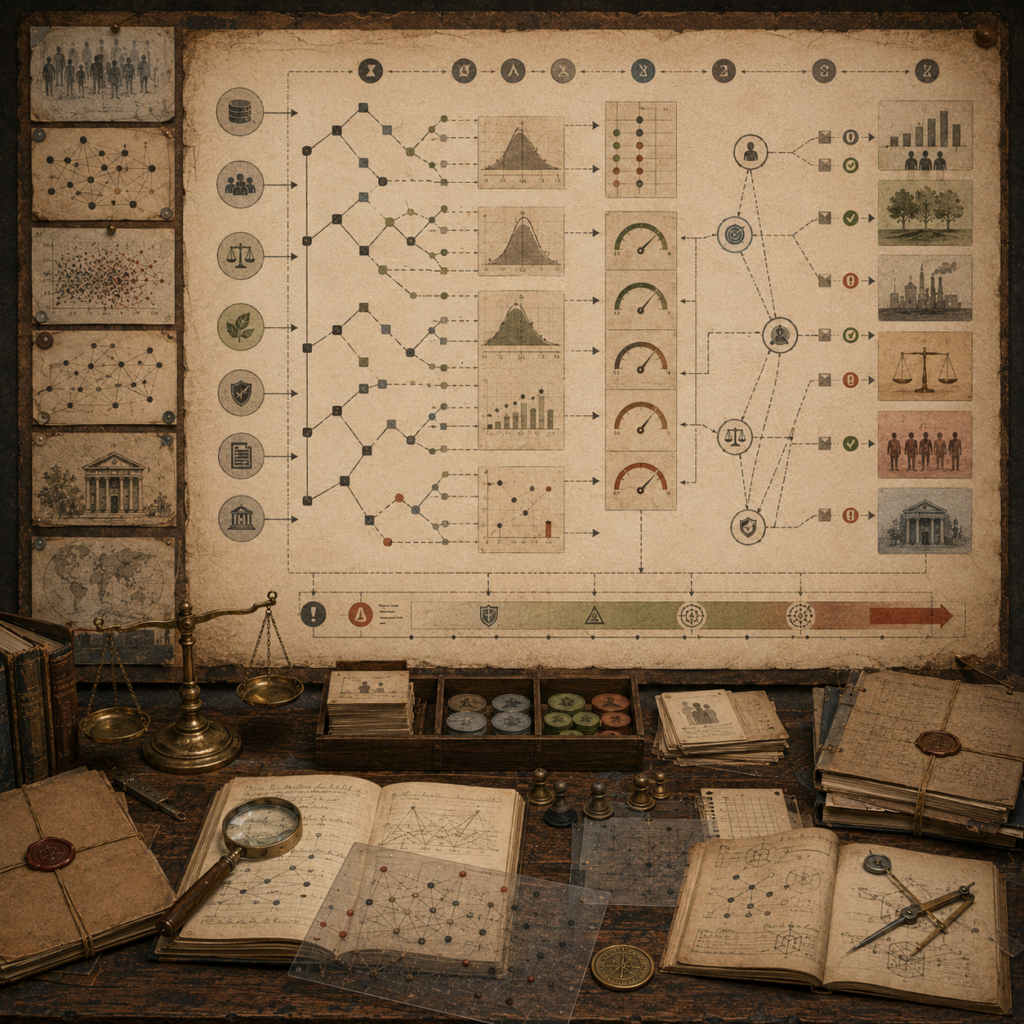
Algorithms in Systems Modeling: Feedback, Networks, Scenarios, and Simulation
Algorithms in Systems Modeling examines how computational procedures represent, simulate, analyze, and govern systems made of interacting parts. This article introduces feedback simulation, stock-and-flow modeling, network dynamics, scenario modeling, agent-based reasoning, discrete-event simulation, hybrid models, sensitivity analysis, calibration, uncertainty, resilience, cascading failure, leverage points, digital twins, governance, and accountable interpretation. It explains how algorithms turn system assumptions into state updates, simulation runs, network measures, parameter sweeps, intervention tests, and scenario comparisons while also showing why models are never neutral copies of reality. The article emphasizes boundaries, assumptions, feedback loops, delays, constraints, data quality, uncertainty, and human judgment. By connecting computational systems analysis with responsible governance, it frames systems models as tools for exploring interdependence, stress, adaptation, unintended consequences, and intervention options across climate, infrastructure, health, cities, platforms, supply chains, finance, organizations, ecosystems, and public policy contexts responsibly over time.