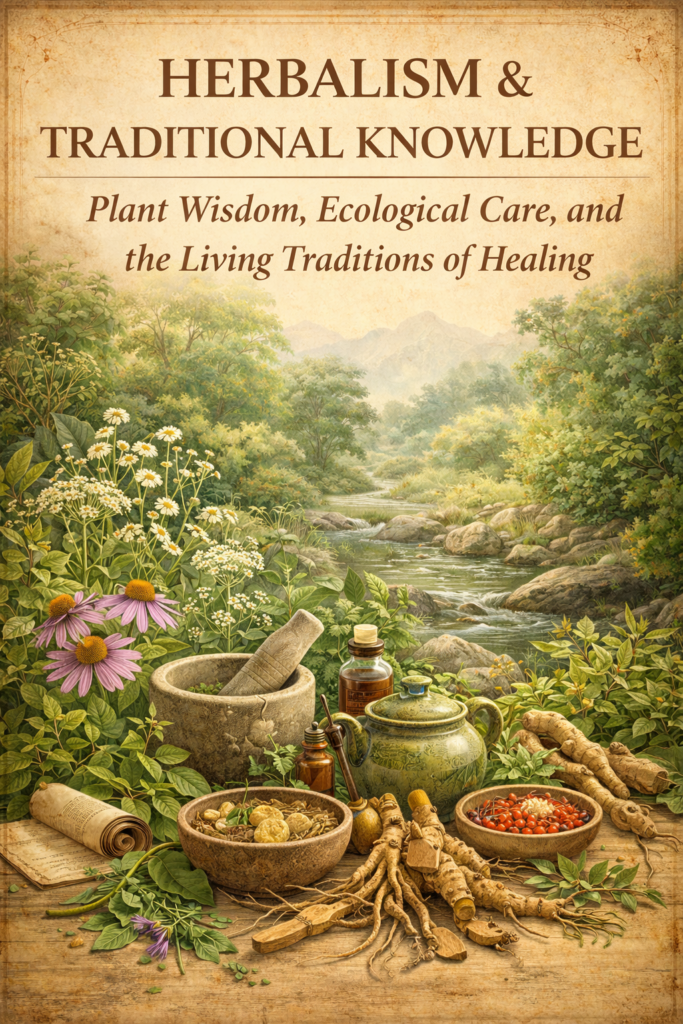
Editorial illustration inspired by herbalism featuring medicinal plants, roots, leaves, vessels, a mortar and pestle, and a natural stream landscape that evokes ecological care and traditional healing knowledge.

Herbalism & Traditional Knowledge: Plant Wisdom, Ecological Care, and the Living Traditions of Healing

Herbalism & Traditional Knowledge: Plant Wisdom, Ecological Care, and the Living Traditions of Healing explores one of the oldest and most enduring forms of healing knowledge, where medicinal plants, ecological familiarity, preparation, transmission, and care converge. From ethnobotany and materia medica to conservation, safety, pharmacology, and Indigenous and local knowledge systems, this category examines how plant-based healing has been cultivated, preserved, and interpreted across generations and living environments.
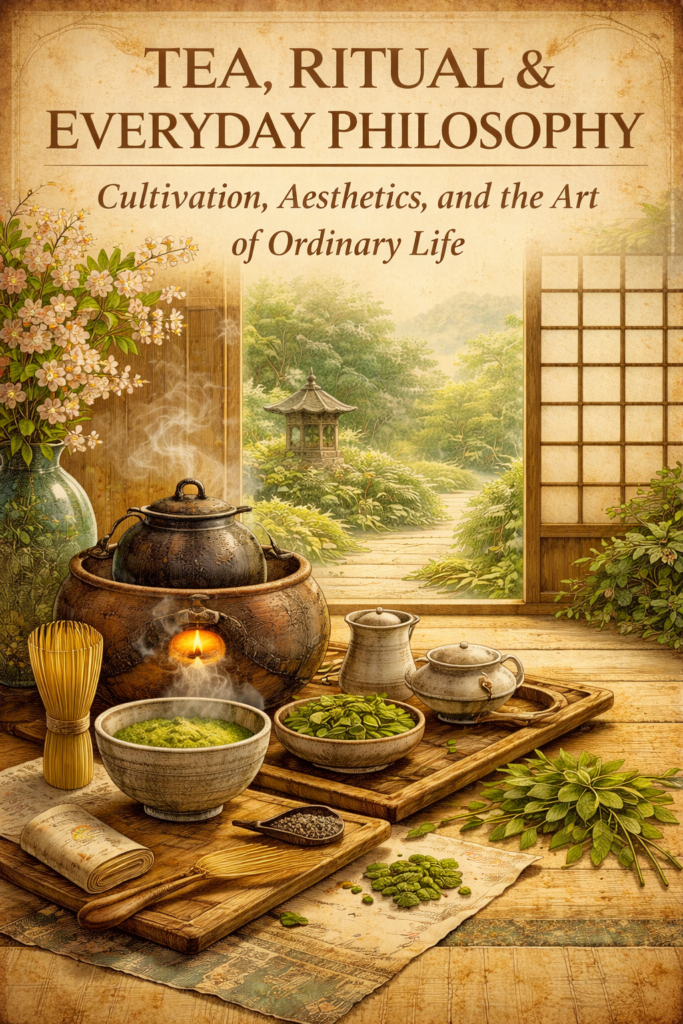
Editorial illustration inspired by tea culture featuring a kettle, bowl, whisk, tea leaves, blossoms, and a serene garden setting that evokes ritual, cultivation, and everyday philosophical life.

Tea, Ritual & Everyday Philosophy: Cultivation, Aesthetics, and the Art of Ordinary Life

Tea, Ritual & Everyday Philosophy: Cultivation, Aesthetics, and the Art of Ordinary Life explores a distinctive cultural and philosophical field in which tea becomes a medium of attentiveness, hospitality, refinement, atmosphere, and disciplined daily life. From Lu Yu’s Classic of Tea and Chinese literati traditions to Sen no Rikyū, chanoyu, and Okakura Kakuzō’s The Book of Tea, this category examines how tea has been shaped into a practice of ritual form, aesthetic perception, and everyday cultivation.

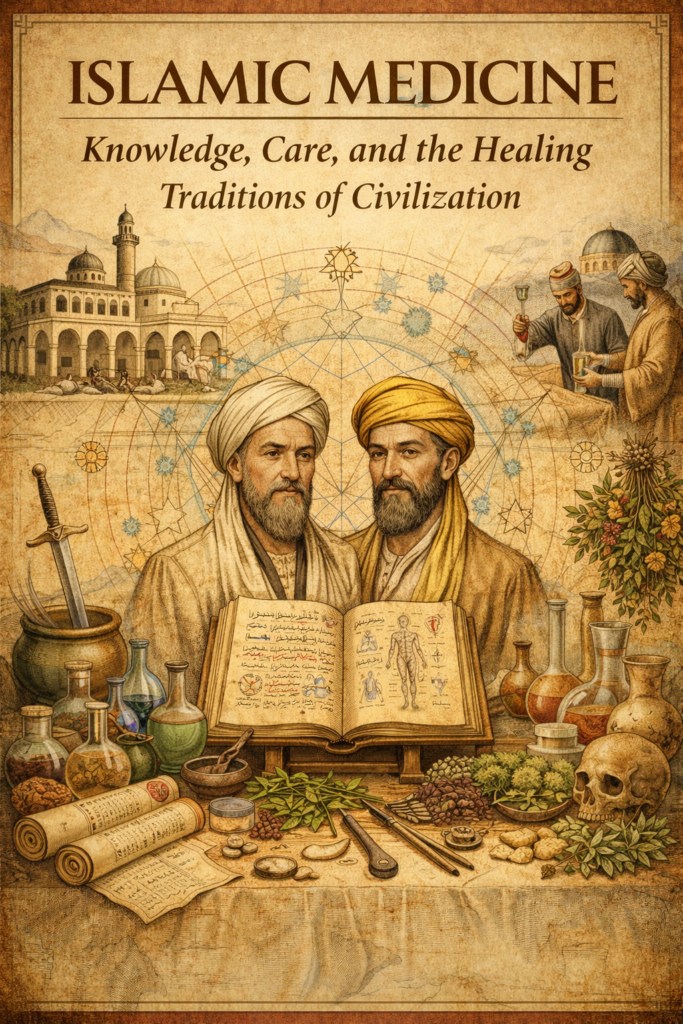
Editorial illustration inspired by Islamic medicine featuring major physicians, a medical manuscript, herbs, vessels, surgical tools, and a hospital setting within an illuminated scholarly composition.

Islamic Medicine: Knowledge, Care, and the Healing Traditions of Civilization

Islamic Medicine: Knowledge, Care, and the Healing Traditions of Civilization explores a major medical tradition shaped by translation, clinical observation, hospital practice, pharmacology, surgery, ethics, and the disciplined preservation and development of inherited knowledge. From al-Razi, Ibn Sina, and al-Zahrawi to bimaristans, manuscript traditions, and the wider medical culture of Islamic civilization, this category examines how healing was understood as a field of learned knowledge, practical care, and civilizational exchange.

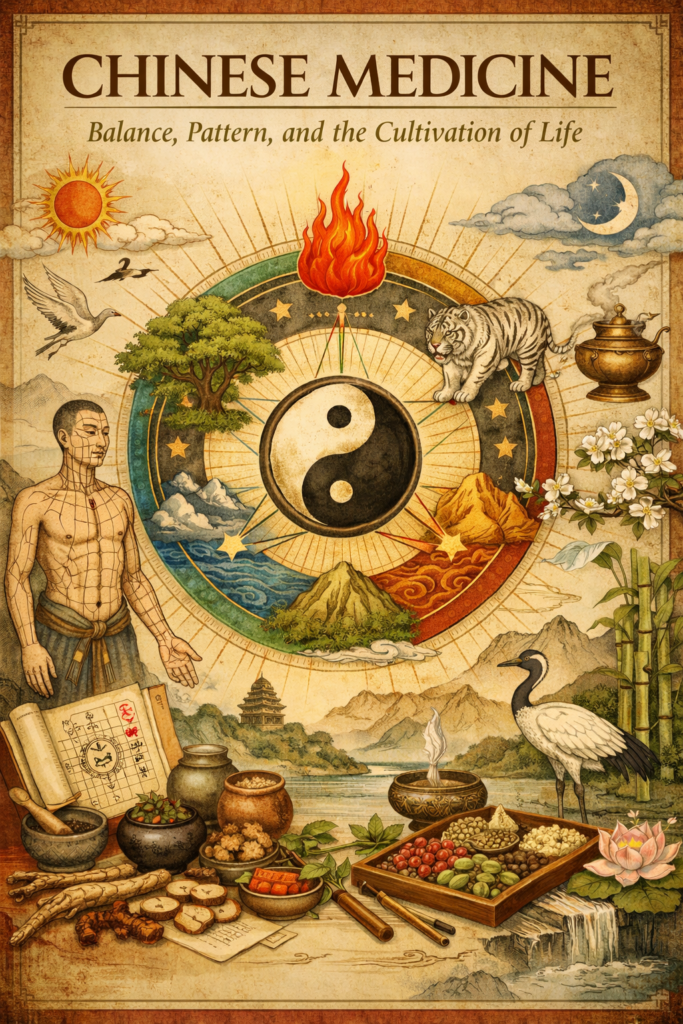
Editorial illustration inspired by Chinese medicine featuring yin-yang symbolism, the Five Phases, acupuncture meridians, herbs, vessels, mountains, cranes, and a balanced cosmological composition.

Chinese Medicine: Balance, Pattern, and the Cultivation of Life

Chinese medicine examines a major healing tradition grounded in qi, yin and yang, the Five Phases, organ networks, seasonal change, and the patterned interpretation of health and disorder. From the Huangdi neijing and Nanjing to herbal formula traditions, acupuncture, moxibustion, pulse diagnosis, and preventive care, this category explores how Chinese medicine developed as an integrated medical-philosophical system of balance, regulation, correspondence, and cultivation.

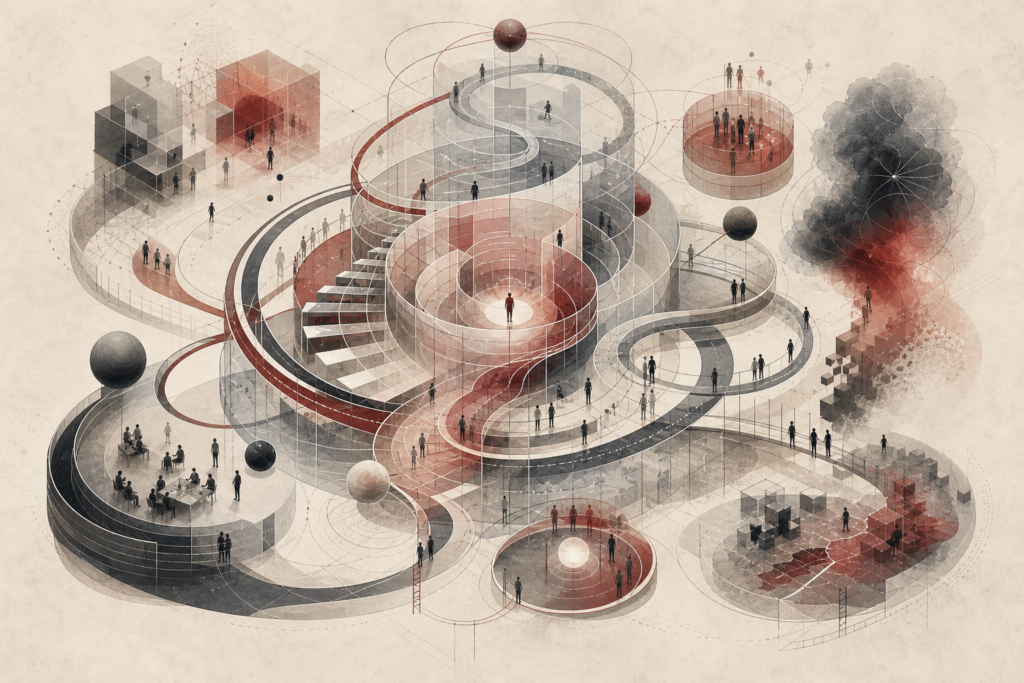
Editorial scientific illustration of grit as a sustained-striving systems architecture, showing long-term goal pathways, repeated effort loops, recovery arcs, support scaffolds, feedback systems, friction fields, burnout pressure, and adaptive rerouting.

Grit: Long-Term Striving, Self-Regulation, and the Science of Sustained Effort

Grit is most useful when treated not as a slogan of toughness, but as a bounded research problem about sustained striving across long time horizons. This article examines grit as perseverance and passion for long-term goals while distinguishing it from self-control, resilience, conscientiousness, and generic willpower. It explores the field’s core methodologies, major debates, measurement challenges, and the growing recognition that productive persistence depends on context, meaning, recovery, and adaptive disengagement. It also introduces formal models and code-based analytical approaches for studying goal continuity, friction, support, and setback recovery. The result is a more precise account of grit as part of a broader science of long-range human effort.

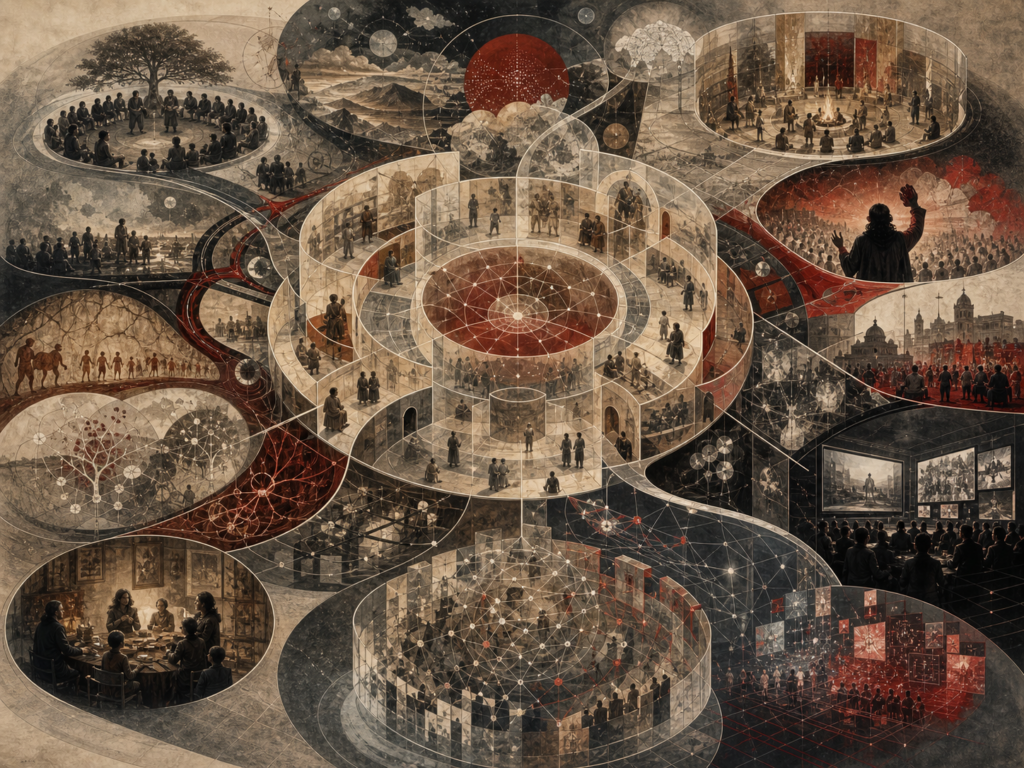
Editorial illustration of storytelling as a narrative systems architecture, showing oral tradition, myth, ritual, folklore, public narrative, memory, character arcs, motifs, symbolic pathways, collective transmission, media adaptation, and the architecture of meaning over time.

Storytelling: Narrative Form, Mythic Structure, and Human Meaning

Storytelling is one of the oldest ways humans organize meaning, transmit knowledge, build trust, and make complexity understandable. This article map introduces the Storytelling series as a structured guide to narrative theory, communication strategy, audience understanding, ethics, memory, persuasion, identity, and public meaning-making. It connects foundational concepts with practical methods for shaping stories across institutions, education, research, leadership, media, advocacy, and digital platforms. The map treats storytelling not as decoration, entertainment, or branding alone, but as a disciplined way of arranging events, values, evidence, conflict, and consequence into coherent understanding. It also emphasizes responsibility: stories can clarify reality, but they can also distort, manipulate, exclude, or oversimplify. Across the series, storytelling is examined as a powerful framework for explanation, strategy, learning, cultural interpretation, and ethical communication in complex public contexts.

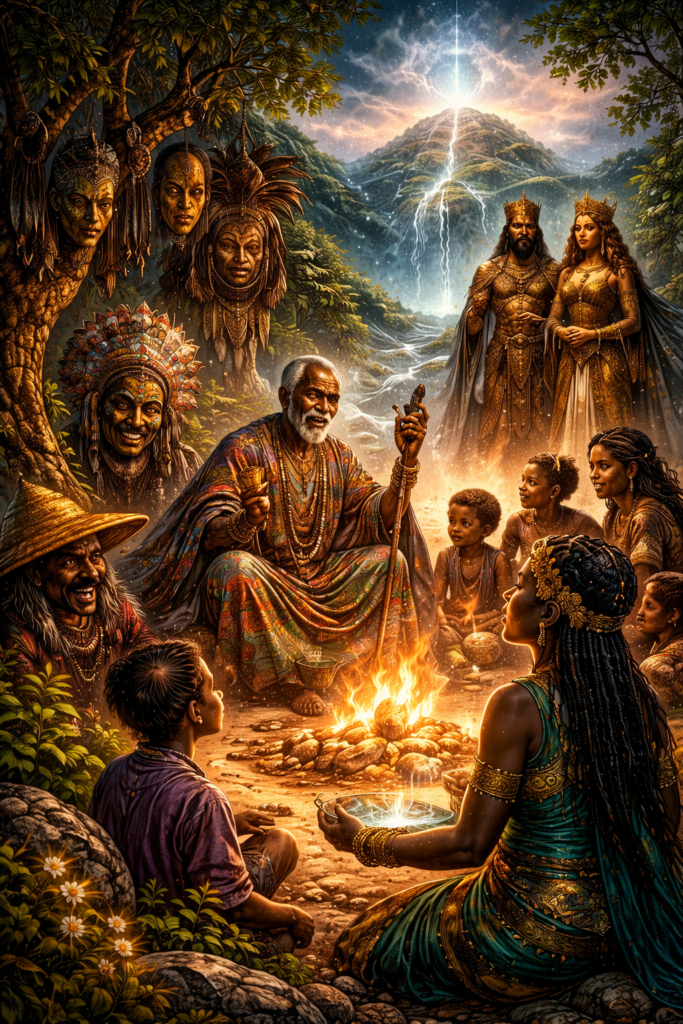
Digital painting inspired by African myth and sacred narrative featuring storytellers, spirit presences, sacred landscapes, royal symbolism, masks, and oral tradition motifs.

African Myth, Folklore & Sacred Narrative: Oral Tradition, Sacred Worlds, and Living Story

African Myth, Folklore & Sacred Narrative: Oral Tradition, Sacred Worlds, and Living Story examines a vast and internally diverse field of cultural memory in which creation, ancestry, trickster intelligence, sacred kingship, spirit worlds, ecological imagination, and ritual performance converge. From Anansi traditions and Yoruba sacred narratives to royal histories, masquerade worlds, epic memory, and regionally grounded sacred stories across the continent, this category explores how African myth and folklore have been preserved, enacted, transmitted, and continually renewed through oral tradition, performance, ceremony, and communal life.

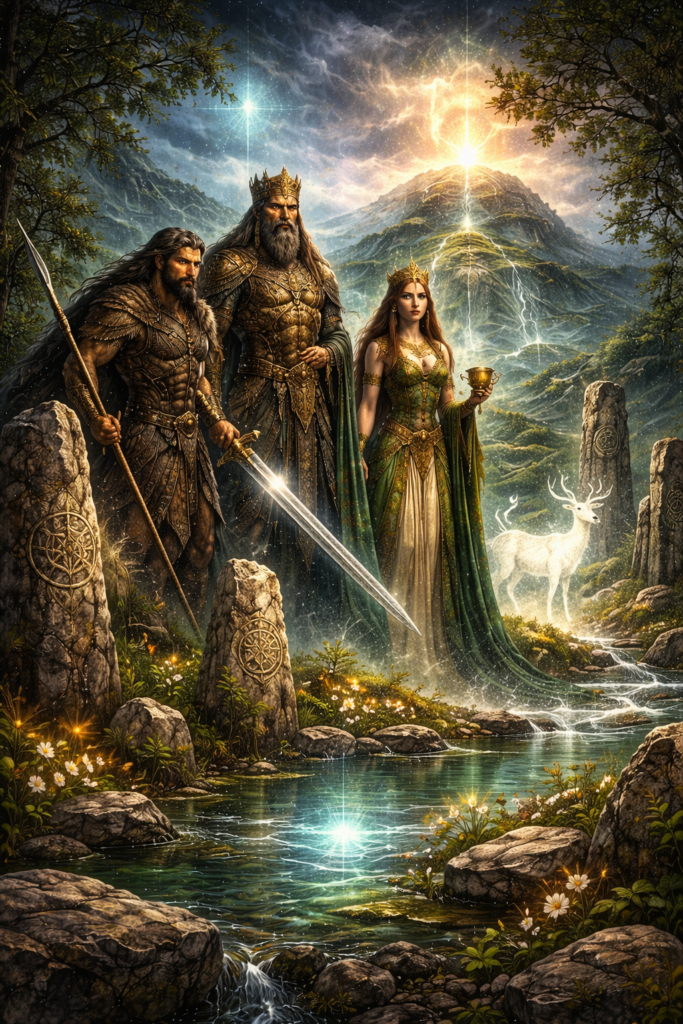
Digital painting inspired by Celtic mythology featuring heroic figures, sacred hills, standing stones, enchanted waters, and otherworldly landscapes.

Celtic Mythology: Sovereignty, Sacred Landscape, and the Otherworld Imagination

Celtic Mythology: Sovereignty, Sacred Landscape, and the Otherworld Imagination examines a richly layered mythic archive in which divine rule, heroic legend, enchanted crossings, poetic power, and place-bound memory converge. From the Táin Bó Cúailnge and Lebor Gabála Érenn to the Welsh tales later grouped as the Mabinogion, this category explores how Celtic myth was preserved, transformed, and continually reimagined across oral tradition, manuscript culture, sacred geography, and the enduring otherworldly imagination of the Celtic world.

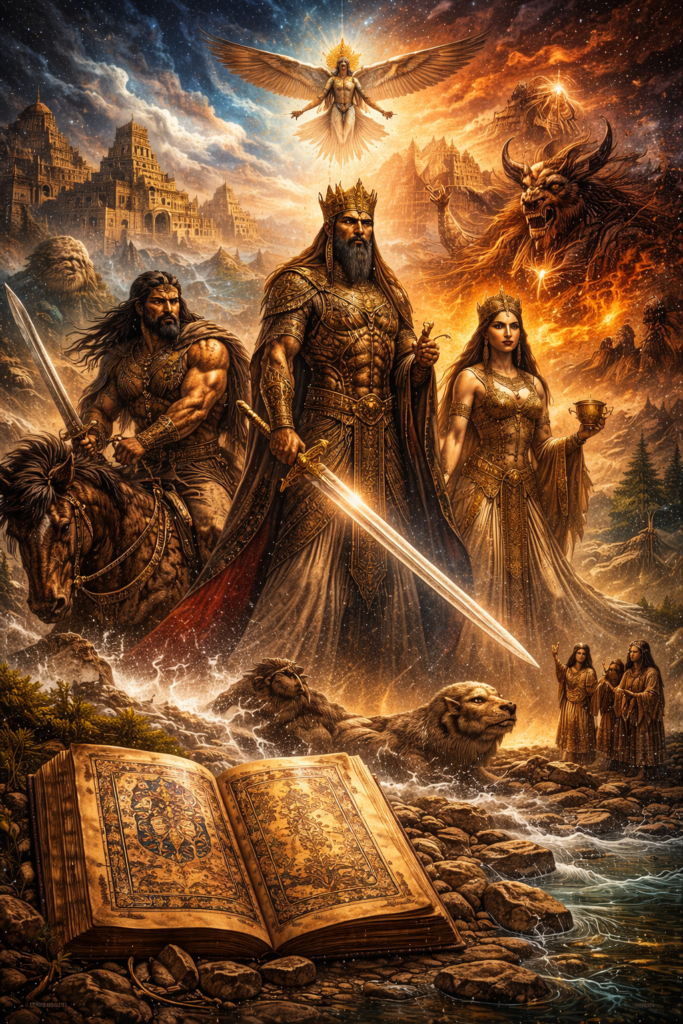
Digital painting inspired by Persian myth and epic featuring sacred kingship, heroic figures, mythic creatures, manuscript motifs, and an Iranian epic landscape.

Persian Myth, Folklore & Epic Tradition: Cosmic Struggle, Heroic Memory, and Sacred Imagination

Persian Myth, Folklore & Epic Tradition: Cosmic Struggle, Heroic Memory, and Sacred Imagination examines a richly layered archive in which creation, moral conflict, sacred order, dynastic memory, heroic struggle, and tragic grandeur converge. From the Avesta and the Bundahišn to Ferdowsi’s Shahnameh, popular epics, manuscript traditions, and oral storytelling, this category explores how Persian myth and folklore were preserved, transformed, and continually reimagined across Zoroastrian cosmology, epic memory, courtly literature, and the long cultural afterlives of Iranian narrative tradition.

Scroll to Top