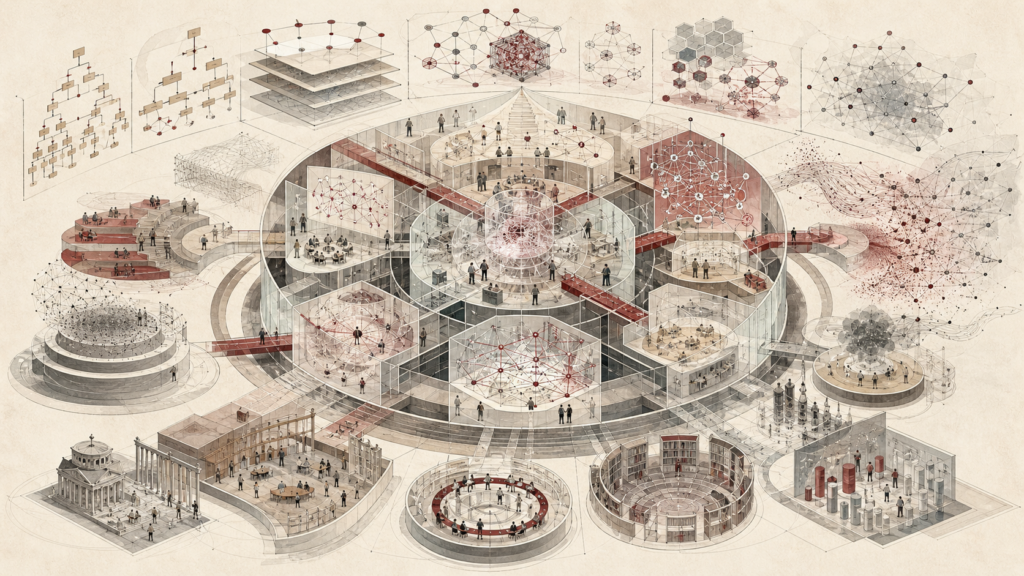
Knowledge Architecture: Structuring Frameworks for Complex Knowledge Systems
The Knowledge Architecture article map organizes a full knowledge series around the structures that make complex information navigable, cumulative, and coherent. It introduces knowledge architecture as the design of intellectual infrastructure: frameworks, taxonomies, hierarchies, ontologies, semantic networks, knowledge graphs, metadata systems, research pathways, digital libraries, AI-assisted organization, governance structures, and scalable knowledge platforms. The map moves from foundations and core concepts into taxonomy design, information architecture, interdisciplinary research, sustainability science, policy frameworks, systems thinking, education, scientific collaboration, and future knowledge platforms. It also connects conceptual organization with computational practice, including Python, R, Julia, SQL, C, C++, Rust, Go, Fortran, notebooks, synthetic datasets, and reproducible code. Together, the series treats knowledge architecture as a strategic discipline for organizing meaning, preserving context, supporting inquiry, and maintaining coherence across expanding intellectual systems as the platform grows into a more durable research environment.