
Technology & Systems Intelligence

Technology and systems intelligence examine how advanced analytical tools and digital technologies can enhance our understanding of complex systems. Technologies such as artificial intelligence, machine learning, sensor networks, and large-scale data analytics are increasingly used to analyze environmental, economic, and social systems.

Systems intelligence emphasizes the ability to integrate data, models, and human expertise in order to interpret complex patterns and support informed decision-making. Rather than replacing human judgment, these technologies augment the capacity of researchers and institutions to detect trends, simulate outcomes, and evaluate policy interventions.

As digital technologies become more deeply integrated into governance and sustainability research, the challenge lies in deploying them responsibly. Effective systems intelligence requires transparency, accountability, and careful integration with ethical and institutional frameworks.

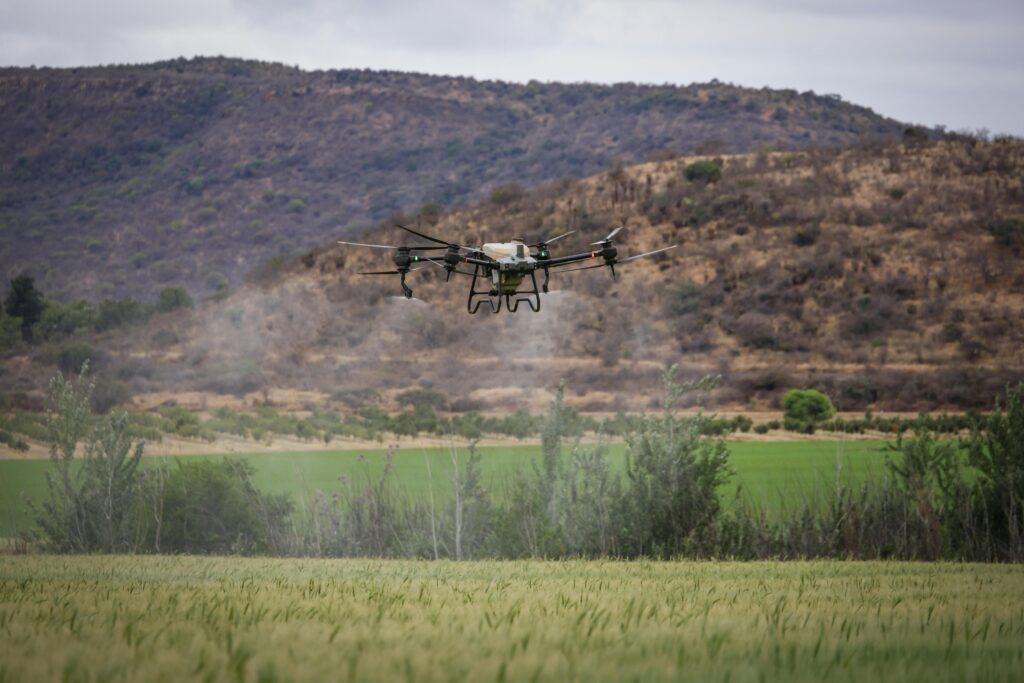
Agricultural drone flying over a crop field as part of a precision farming system

Precision Farming: IoT Sensors, Agricultural Drones, and Data-Driven Agriculture

Precision farming transforms agriculture into an environmental monitoring system. By combining IoT sensors, drones, remote sensing, geospatial analytics, and decision-support tools, farmers can observe soil moisture, crop stress, nutrient variability, irrigation needs, and field conditions with far greater precision than fixed schedules or broad averages allow. This article examines precision farming as more than a farm-technology upgrade: it is a new data infrastructure for food systems, water stewardship, soil health, and climate adaptation. It argues that sensors and drones are most valuable when they strengthen farmer judgment, reduce waste, improve input efficiency, and support sustainable decision-making. But precision agriculture also raises questions of data ownership, platform dependency, equity, interoperability, and governance. Its future depends on whether digital agriculture is designed for resilience, transparency, and ecological responsibility.


Deep learning for biodiversity illustrated as AI-assisted monitoring of wildlife and ecosystems

Deep Learning for Biodiversity: Monitoring, Prediction, and the Governance Challenge

Deep learning for biodiversity can transform ecological monitoring by helping researchers classify species, detect habitat change, analyze acoustic recordings, process satellite imagery, and identify early warning signals across complex ecosystems. But its conservation value depends on more than model performance. Biodiversity loss is driven by land-use change, extraction, climate stress, pollution, weak enforcement, and institutional failure, not simply by a lack of data. This article examines deep learning as one layer within a broader environmental monitoring system: data collection, validation, uncertainty reporting, governance, policy translation, and ecological stewardship. It argues that AI-assisted biodiversity monitoring is most valuable when it is transparent, auditable, scientifically validated, ethically governed, and connected to institutions capable of turning prediction into preservation.

Smart city skyline at night representing FPGA-accelerated edge AI and TinyML for scalable urban intelligence.

Edge Intelligence for Smart Cities: FPGA and TinyML Infrastructure

FPGA TinyML smart cities shift urban digital infrastructure from cloud-dependent data collection toward distributed edge intelligence. By combining embedded systems, TinyML, and FPGA acceleration, cities can process signals locally where latency, energy efficiency, privacy, and operational continuity matter most. This article examines how on-device inference and configurable hardware can support traffic systems, water monitoring, environmental sensors, transit infrastructure, grid diagnostics, and adaptive public services without transmitting every signal to centralized platforms. It argues that edge intelligence is not merely a performance upgrade; it is a resilience architecture. For smart-city systems to remain trustworthy, they must also be secure, auditable, version-controlled, maintainable, and governed across the full lifecycle of models, firmware, FPGA configurations, sensors, and public infrastructure decisions.

Scroll to Top