
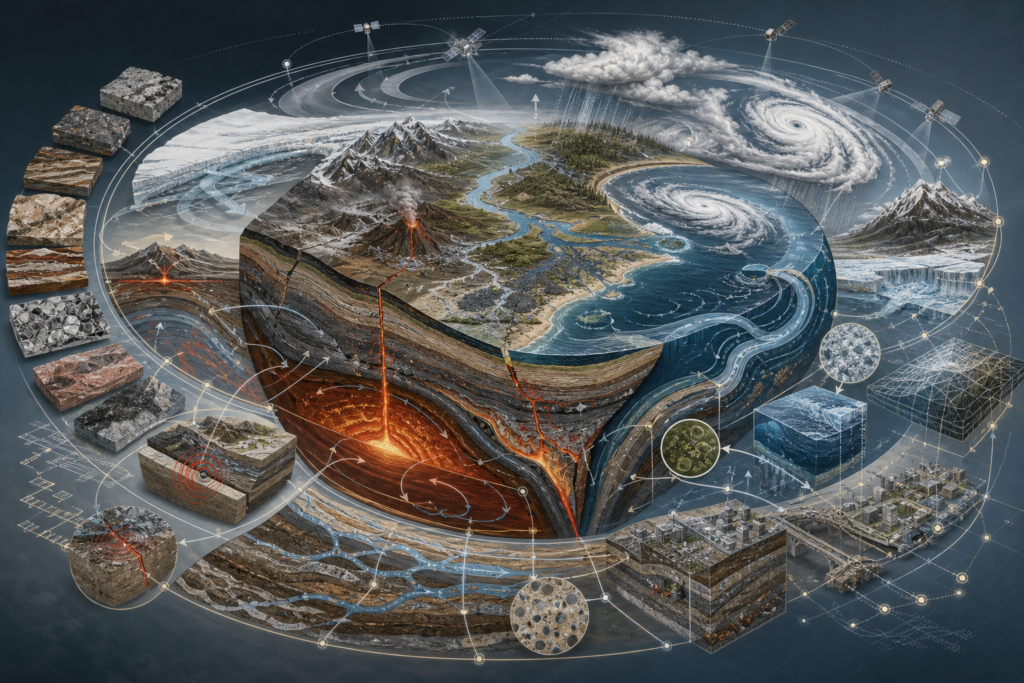
Earth Science: Planetary Systems, Deep Time, Climate, Water, and Change
Earth Science examines the structure, history, materials, and dynamic systems of the planet, connecting geology, hydrology, oceanography, atmospheric science, climate systems, cryosphere dynamics, natural hazards, Earth observation, and planetary change. This content pillar presents Earth not as a static backdrop, but as an interconnected system shaped by deep time, tectonic movement, water, air, ice, rock, life, energy, and human activity. It also emphasizes the quantitative and computational methods now central to modern geoscience, including GIS, remote sensing, climate-data analysis, hydrological modeling, terrain analysis, Python, R, SQL, and reproducible scientific workflows. The series explains how Earth-system knowledge supports hazard preparedness, water security, climate adaptation, infrastructure planning, resource governance, environmental monitoring, and long-term questions of habitability, stewardship, and planetary responsibility.