
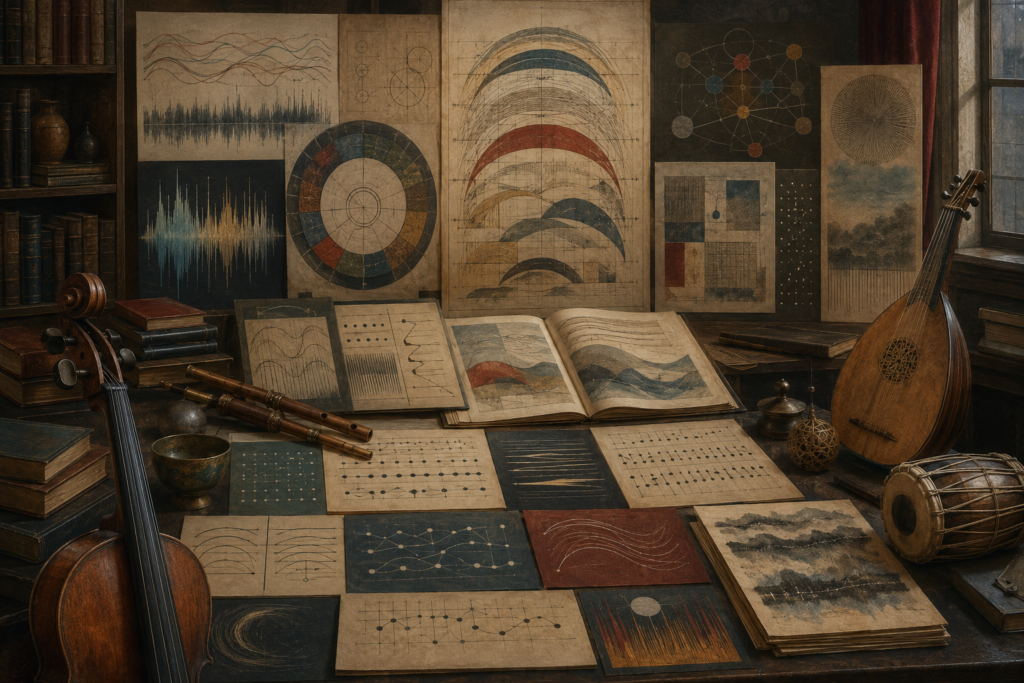
Music Theory, Form, and Meaning: How Sound Organizes Experience
This article map introduces music theory, form, and meaning as a study of how sound organizes time, feeling, memory, expectation, and human experience. It treats music as meaningful without requiring ordinary language, examining melody, harmony, rhythm, meter, phrase, cadence, texture, timbre, repetition, development, notation, performance, and interpretation. The map moves from foundations of musical understanding into structure, emotional expression, improvisation, tuning systems, genre, ritual, technology, culture, identity, protest, platforms, and algorithmic music. It helps readers understand how music can carry emotion, shape collective life, and create patterns of tension, resolution, return, and transformation. The series also connects musical meaning to ethics, cultural exchange, listening practices, archives, media systems, public culture, and the changing conditions of musical experience across everyday listening, performance spaces, and institutions. while opening pathways into aesthetics, culture, technology, ritual, and the philosophy of sound. today. collectively.