
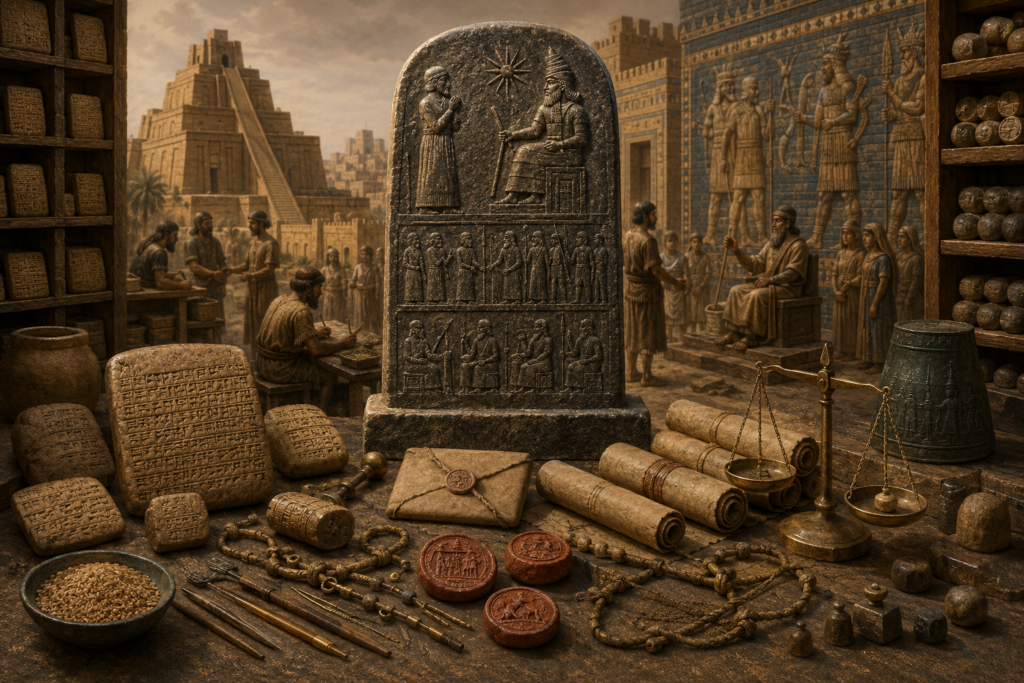
Ancient Near Eastern Law and Early Legal Codes: Hammurabi, Kingship, and Early Governance
Ancient Near Eastern Law and Early Legal Codes examines some of the earliest surviving legal materials in world history, including Mesopotamian law collections, Hammurabi, Ur-Nammu, Eshnunna, Hittite texts, Egyptian legal order, biblical law in regional context, contracts, court records, scribal archives, and royal justice. The article map treats early law as governance infrastructure rather than a simple list of rules. It studies how ancient societies used writing, kingship, debt regulation, property, family law, labor obligations, punishment, treaties, temples, palaces, and public memory to organize authority and social order. By connecting legal collections to everyday practice, administration, hierarchy, and legitimacy, the series shows why early legal codes still matter for comparative governance, legal pluralism, institutional history, and the long human effort to organize power through obligation, recordkeeping, and justice across cultures, empires, households, archives, and public institutions globally over time.