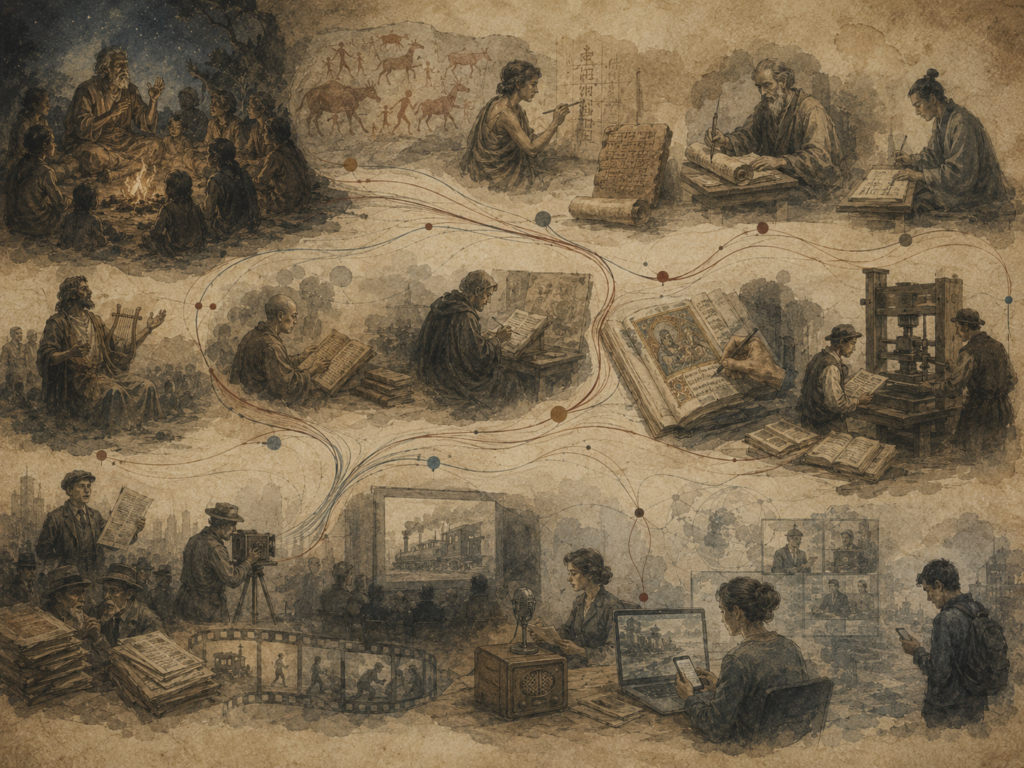
The History of Storytelling: From Oral Tradition to Modern Media
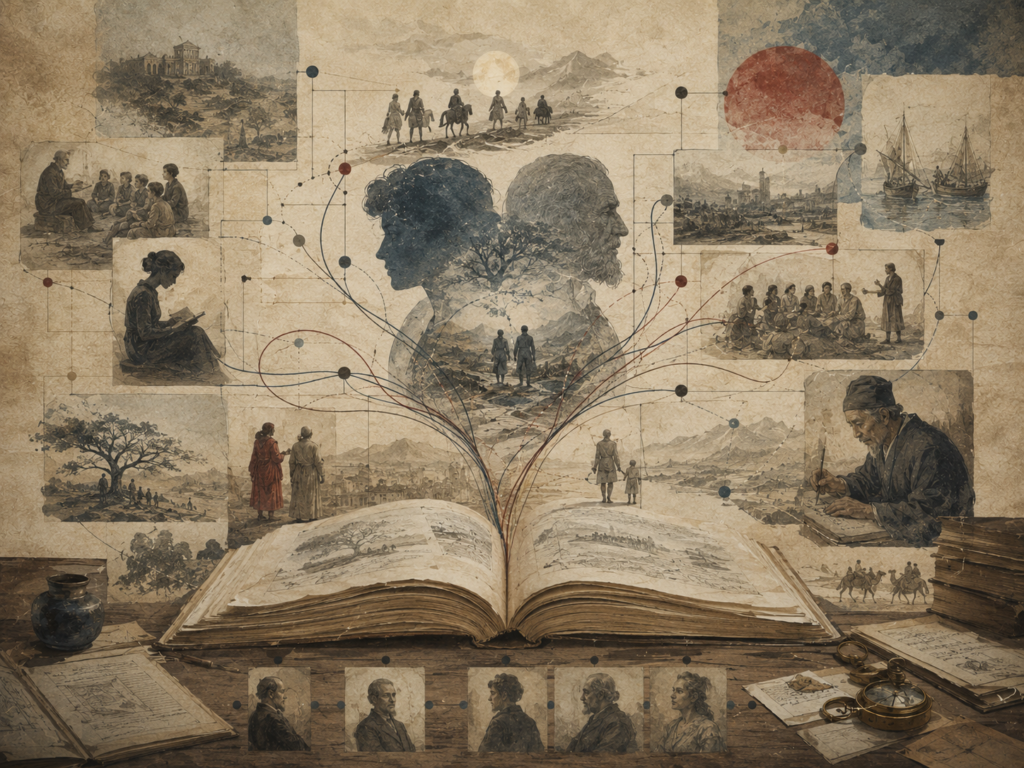
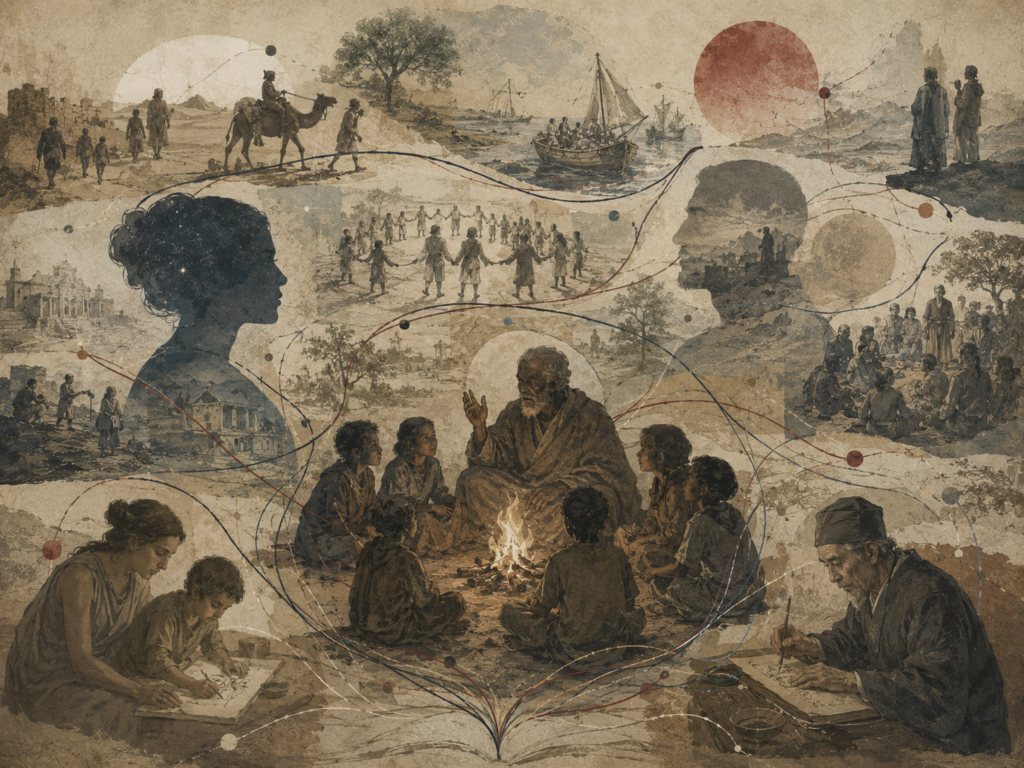
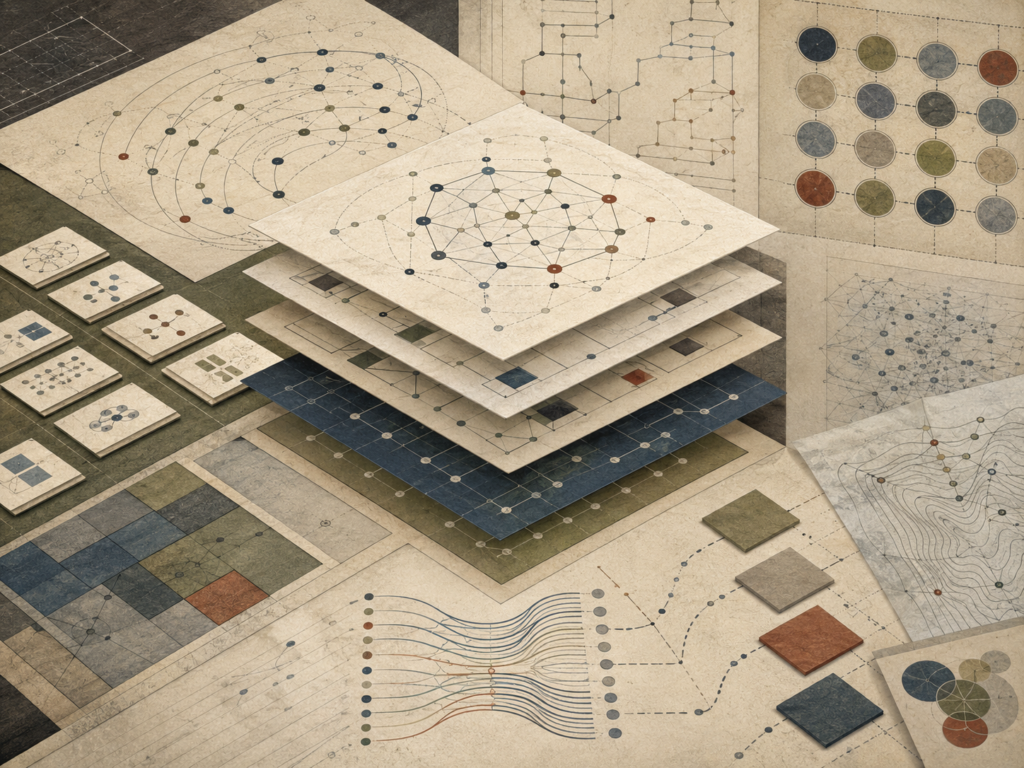
The history of storytelling is the history of how human beings preserve, perform, circulate, and transform meaning across media. This article traces storytelling from oral tradition, myth, ritual, epic, and collective memory through writing, manuscript culture, print, theater, novels, photography, film, radio, television, digital platforms, games, and transmedia systems. It argues that storytelling history is not a straight line of progress from speech to screen, but a layered process in which older forms survive inside newer media. Each medium changes the relationship among memory, authority, audience participation, preservation, access, and power. The article explains how oral performance, textual record, printed circulation, visual narrative, broadcast seriality, networked platforms, and interactive systems shape what stories can do. It also considers archives, context loss, algorithmic visibility, cultural ownership, and ethical responsibility in studying storytelling history across cultures and technologies over long periods.