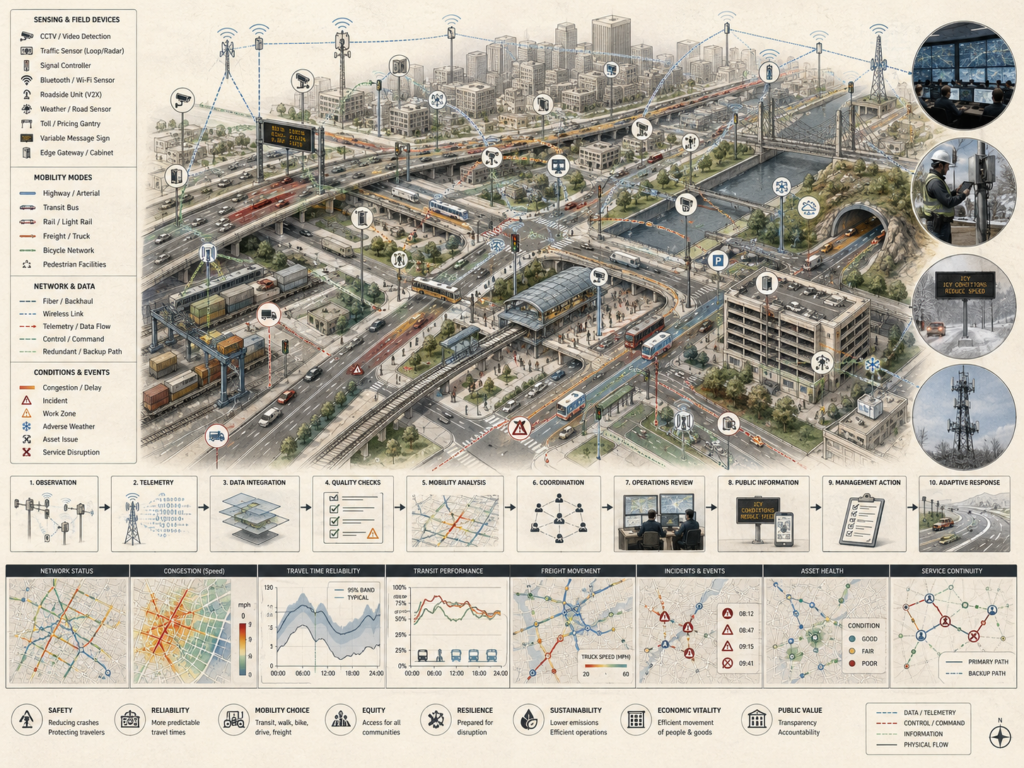
Intelligent Transportation Networks: Mobility, Data and Network Coordination
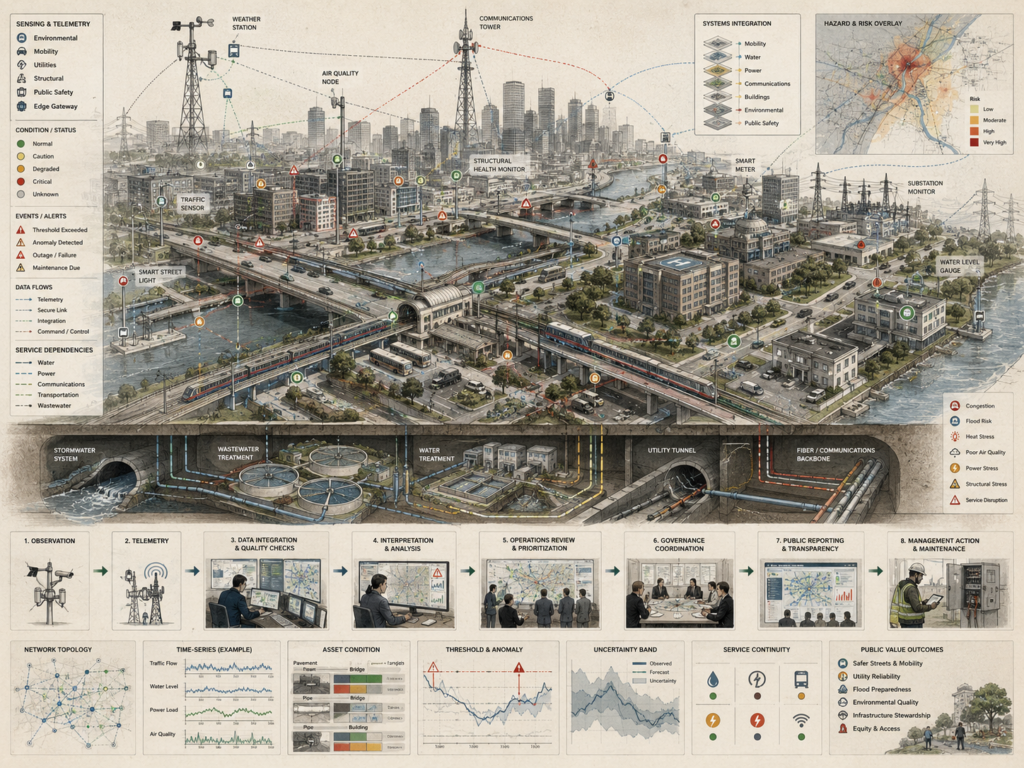
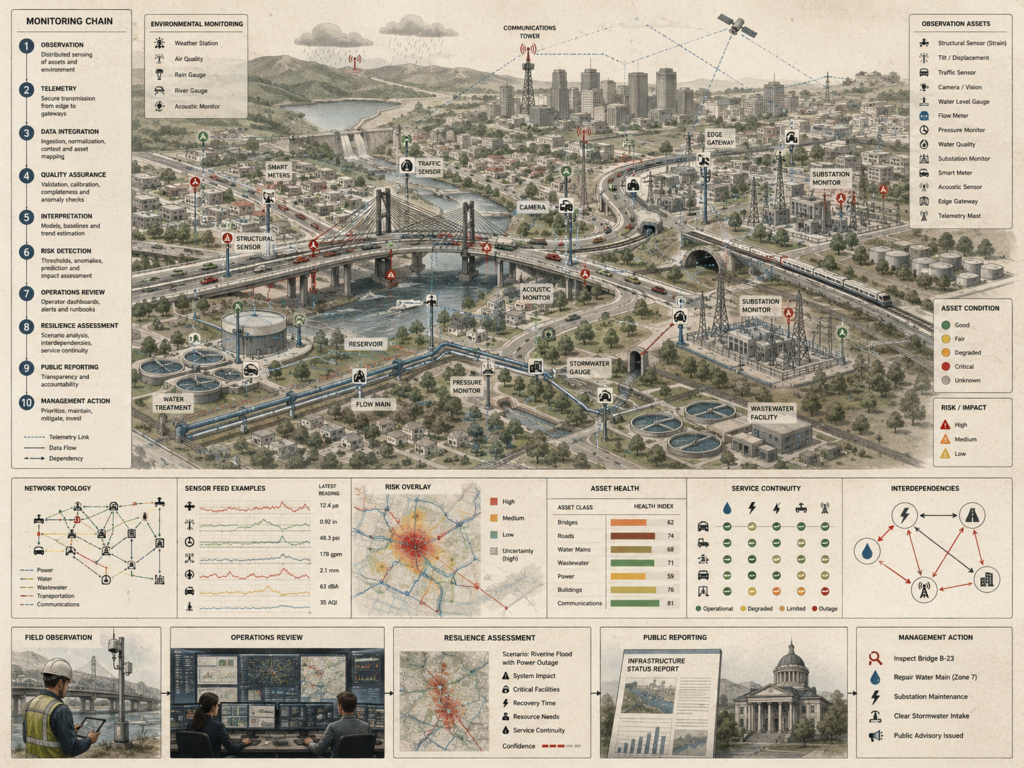
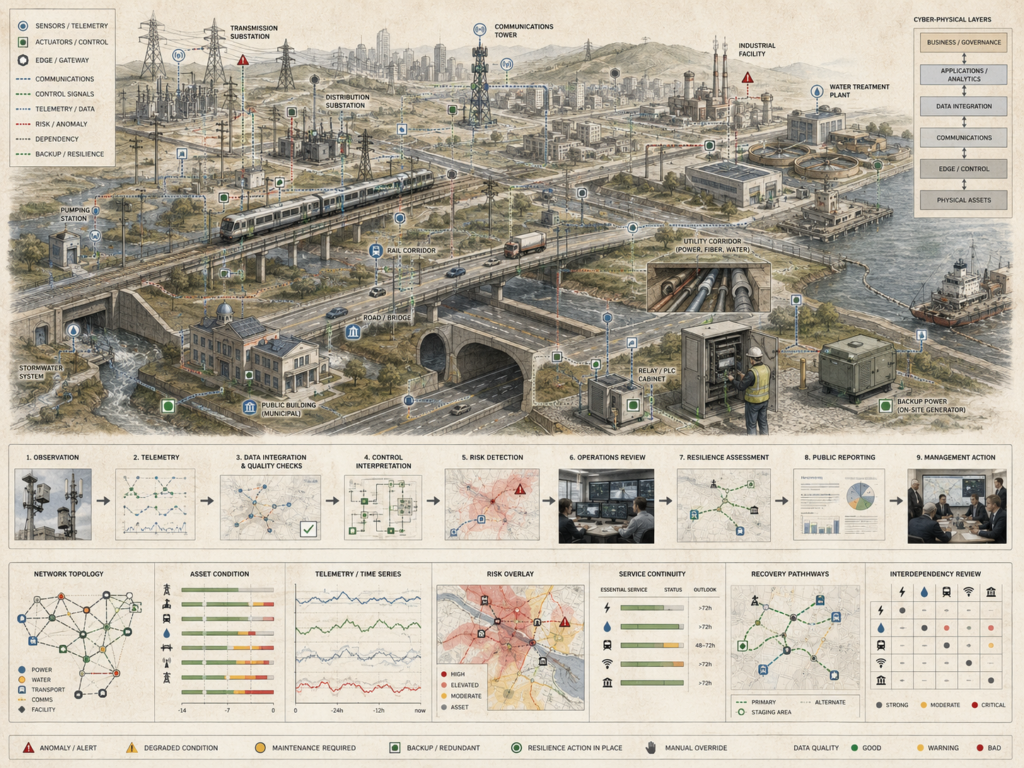
Intelligent transportation networks turn mobility data into coordinated public infrastructure. Roads, bridges, intersections, tunnels, rail lines, buses, freight corridors, bicycle networks, pedestrian systems, stations, and parking assets increasingly depend on sensors, telemetry, signal systems, operations centers, and public information channels. This article examines how transportation intelligence connects traffic detection, travel-time reliability, transit performance, freight movement, incidents, road weather, asset health, congestion, service continuity, and adaptive response. Intelligent transportation is not only about optimizing traffic flow; it is about improving safety, reliability, mobility choice, equity, resilience, sustainability, and public value. By linking data, infrastructure, operations, and governance, transportation networks can coordinate movement more effectively while supporting accountable, accessible, and resilient urban mobility.