
Last Updated May 4, 2026
Ayurveda and South Asian Healing Traditions examine the healing systems of South Asia through concepts of life, constitution, balance, digestion, vitality, nourishment, daily regimen, seasonal rhythm, purification, rejuvenation, surgery, reproductive care, ethics, embodied discipline, and the relationship between body, mind, conduct, environment, and the wider order of life. As a major category within the Healing Traditions knowledge series, it studies Ayurveda and related South Asian healing worlds first through classical texts, internal medical categories, clinical reasoning, materia medica, embodied practices, household care, regional traditions, and institutional histories, and only after that through modern scholarship, integrative medicine, public health, and global reception.
In the history of ideas, Ayurveda developed one of the world’s major medical traditions. It grounds health in the interpretation of bodily processes, elemental and constitutional composition, digestive transformation, energetic balance, seasonal adaptation, nourishment, ethical conduct, and the long-term management of life. Ayurveda is not simply a collection of herbal remedies or wellness practices. It is a structured medical-philosophical system concerned with how bodies differ, how disorder accumulates, how digestion sustains vitality, how daily life shapes resilience, and how care should be individualized according to constitution, age, environment, season, disease pattern, and strength.
This category explores Ayurvedic medicine, classical textual foundations, doṣa theory, dhātu, mala, agni, ojas, prakṛti, diagnosis, dietetics, herbs, minerals, pañcakarma, rasāyana, surgery, women’s health, childbirth, pediatrics, ethics, daily and seasonal regimen, Yoga-related embodied discipline, Siddha medicine, Unani medicine in South Asia, household healing, regional medical worlds, and Ayurveda’s modern institutional and global afterlives. It treats South Asian healing not as a single homogeneous system, but as a plural field shaped by Sanskritic, Tamil, Islamic, regional, household, philosophical, ritual, and contemporary institutional traditions.
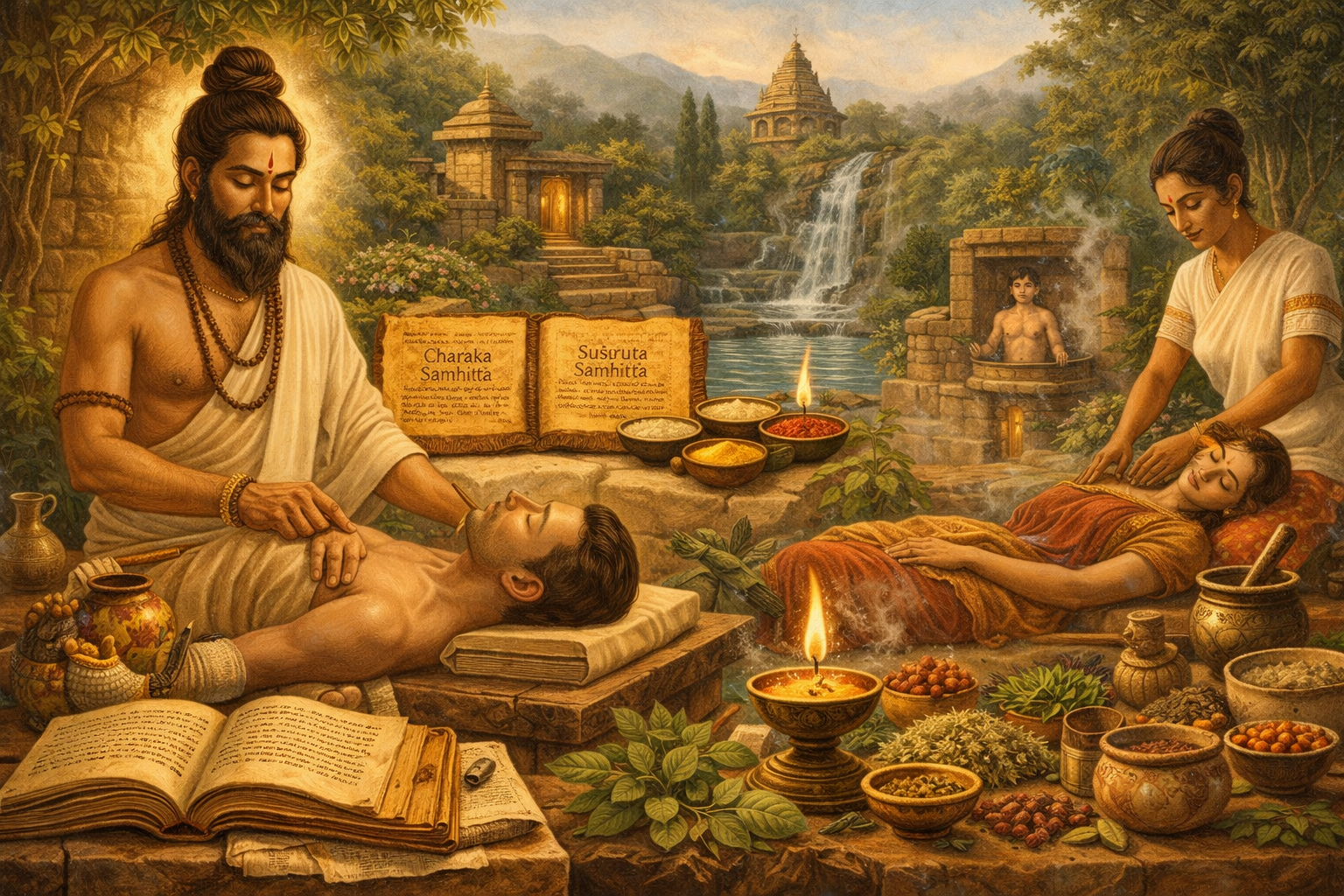
Ayurveda and South Asian Healing Traditions play an important role in comparative medical and philosophical inquiry because they present one of the world’s most influential frameworks for understanding embodiment, vitality, nourishment, constitution, resilience, longevity, and the ordering of life. Ayurveda asks not only how disease should be treated, but how health should be preserved, how digestion sustains vitality, how habits become pathological or therapeutic, how seasons affect equilibrium, how the individual should be read constitutionally, and how the body participates in a wider natural, ethical, and social order.
This category is especially important to the broader architecture of this site because it connects Healing Traditions to Diet, Nourishment & Food as Medicine, Vital Energy Healing Traditions, Herbalism & Traditional Knowledge, Chinese Medicine, Islamic Medicine, South Asian Traditions, Religious Studies, Biology, Environmental Science, and Psychology. It shows how healing traditions can connect bodily life to ethics, diet, ecology, philosophy, ritual, gender, family, aging, public institutions, and the everyday discipline of care.
The goal of this pillar is not to present Ayurveda as a substitute for contemporary biomedical care, nor to treat all traditional claims as automatically validated by modern evidence. It is to understand Ayurveda and South Asian healing traditions as serious civilizational systems of knowledge, practice, and interpretation. A scholarly treatment should preserve their internal logic while also recognizing modern questions about evidence, safety, standardization, regulation, global commercialization, and responsible integration. Ayurveda matters because it has shaped medical thought and practice across centuries; it must also be studied carefully, historically, critically, and respectfully.
Why This Series Matters
Ayurveda matters because it is not simply a set of remedies. It is a comprehensive theory of life, constitution, disorder, care, and disciplined living. It asks what kind of person one is, how digestion and metabolism shape vitality, how climate and season affect equilibrium, how food and habit become medicine or poison, how daily routine supports resilience, and how health can be preserved before disease becomes acute. This gives Ayurveda unusual importance for a site concerned not only with treatment, but with civilizational understandings of body, balance, and the ordering of life.
This series also matters because Ayurveda stands as one of the major medical traditions of the world alongside Chinese medicine, Greek and Roman medicine, Islamic medicine, and other long-standing healing systems. It offers a framework that is simultaneously physiological, ecological, ethical, and philosophical. It treats human life as a dynamic relationship among constitution, diet, digestion, environment, conduct, time, strength, and vulnerability. A serious Healing Traditions architecture therefore needs Ayurveda not as a token South Asian addition, but as one of the core civilizational pillars through which embodied life, prevention, vitality, and long-term care can be understood.
Ayurveda also matters because it offers a distinctive account of prevention. Modern health systems often become most visible at the point of acute disease, institutional treatment, or biomedical intervention. Ayurveda’s classical logic places enormous weight on maintenance: daily routine, seasonal adjustment, nourishment, digestive strength, bodily elimination, mental discipline, ethical conduct, and constitutional fit. Whether or not specific claims are accepted under modern scientific standards, the tradition’s insistence that health is cultivated through ordinary life remains historically and philosophically important.
For the broader Sustainable Catalyst architecture, this series helps connect healing to systems thinking. It shows how a medical tradition can organize the body not as an isolated machine, but as a living system embedded in food, season, environment, routine, family, ethics, aging, and social practice. That systems orientation makes Ayurveda especially valuable for comparative inquiry into resilience, prevention, and the long human effort to live in balance.
The Civilizational Frame of Ayurveda and South Asian Healing Traditions
Ayurveda should be understood not merely as a historical medical system but as part of a broader South Asian world of healing thought. It developed through textual scholarship, clinical practice, dietetics, pharmaceutics, surgery, preventive regimen, rejuvenation therapies, ethics, household medicine, and philosophical reflection. It also intersected with religious and philosophical traditions concerned with nature, personhood, discipline, liberation, ritual order, and the management of embodied life.
The wider South Asian healing landscape is plural. It includes Siddha traditions in the Tamil world, Unani medicine as developed and practiced in the subcontinent, Yoga-based embodied disciplines, folk and household remedies, regional pharmacological knowledge, spiritual healing, ritual practices, and community-based care. Ayurveda is central, but it is not the only South Asian healing system. A pillar titled “Ayurveda and South Asian Healing Traditions” must therefore preserve Ayurveda’s textual and conceptual specificity while also acknowledging the wider plural medical world in which it exists.
This plural frame matters because South Asian healing traditions developed across languages, regions, religions, courts, households, monasteries, temples, medical lineages, colonial institutions, and modern regulatory systems. Sanskrit medical texts are crucial, but they do not exhaust the history of healing in South Asia. Tamil Siddha literature, Persianate and Arabic-derived Unani traditions, local botanical knowledge, women’s household care, and regionally specific practices all belong to the broader field.
A civilizational frame also helps prevent the modern reduction of Ayurveda to consumer wellness. Ayurveda is not only massage, herbs, or lifestyle branding. It is a historically deep system of textual authority, clinical reasoning, philosophical anthropology, pharmacology, surgical inheritance, preventive care, and ethical medical practice. Its modern global popularity should not obscure its complexity.
Ayurveda as the Knowledge of Life
The term “Ayurveda” is traditionally understood as the knowledge or science of life. That scope is already revealing. The tradition is not limited to disease treatment but extends to the maintenance of health, the interpretation of constitution, the management of daily and seasonal routine, the promotion of longevity, and the disciplined care of body, mind, conduct, and environment.
This wide scope makes Ayurveda a healing tradition and a life discipline at once. It asks how a person should eat, sleep, move, cleanse, work, rest, age, reproduce, recover, and adapt to seasonal change. It asks how digestion transforms food into vitality, how waste must be eliminated, how tissues are nourished, how disorder accumulates, and how strength may be restored. Medicine is therefore not only intervention after illness; it is the ongoing governance of life.
Ayurveda’s scope also explains why it has remained conceptually powerful. A system that treats health as the dynamic ordering of life can address prevention, constitution, aging, diet, lifestyle, digestion, and resilience in a unified language. This does not mean that every Ayurvedic claim should be accepted uncritically. It means that Ayurveda should be studied as a coherent intellectual and practical tradition rather than as a loose collection of wellness techniques.
For this site, Ayurveda’s “knowledge of life” orientation creates a strong bridge to Diet, Nourishment & Food as Medicine, Vital Energy Healing Traditions, Psychology, Biology, and Sustainable Systems. It is one of the clearest examples of medicine as a theory of life rather than a narrow practice of symptom correction.
The Classical Textual Foundations: Charaka, Suśruta, and Vāgbhaṭa
A serious account of Ayurveda must be anchored in its classical textual foundations. The Charaka Saṃhitā and the Suśruta Saṃhitā are among the most important classical sources associated with Ayurveda, while later synthesis is strongly associated with Vāgbhaṭa’s works, especially the Aṣṭāṅga Hṛdaya. These texts do not simply preserve old medical content. They organize a civilizational medical world through theory, diagnosis, treatment, ethics, regimen, surgery, materia medica, and philosophical reflection.
The Charaka Saṃhitā is especially important for internal medicine, etiology, diagnosis, clinical reasoning, regimen, dietetics, and the physician’s role. It gives Ayurveda a major theoretical and medical-philosophical foundation. The Suśruta Saṃhitā is especially important for surgery, anatomical reflection, trauma care, instruments, wound management, and procedural medicine. Vāgbhaṭa’s compendia help consolidate earlier traditions into influential syntheses that shaped later Ayurvedic teaching and practice.
The textual tradition matters because it shows Ayurveda as a learned medical system. It was not only oral, household, or experiential, though all of those dimensions matter. It was also textual, scholastic, commentarial, and teachable. Medical knowledge could be organized, memorized, debated, transmitted, interpreted, and adapted across generations.
A mature pillar should therefore treat these texts as foundations without reducing Ayurveda to texts alone. Ayurveda has always lived through practitioners, patients, households, pharmacies, regional traditions, oral practices, and modern institutions as well as manuscripts and commentaries.
The Eight Branches of Ayurveda
A full pillar should make visible Ayurveda’s classical internal organization into eight branches. These branches are commonly understood to include internal medicine, surgery, diseases of the head and neck, pediatrics, toxicology, psychiatry or spirit-related disorders, rejuvenation, and virilification or fertility-related care. This matters because Ayurveda was not conceived as a vague lifestyle philosophy. It was structured as a broad, internally differentiated medical system with recognized specializations.
The eight-branch structure demonstrates the breadth of Ayurvedic medical imagination. It includes acute and chronic disease, surgical intervention, reproductive vitality, childhood care, toxins, mental or spirit-related disturbances, aging, and rejuvenation. Ayurveda therefore covers much more than diet and herbs. It contains a wide therapeutic architecture for interpreting bodily and life-stage vulnerability.
This structure also helps readers understand why the tradition has such internal range. Internal medicine and dietetics are central, but so are surgery, pediatrics, toxicology, reproductive concerns, and rejuvenation. The system is simultaneously preventive and therapeutic, theoretical and practical, body-centered and life-centered.
For the article architecture, the eight branches provide a natural organizing framework. They allow future articles to move beyond surface-level Ayurveda and into its internal categories of expertise, specialization, and clinical reasoning.
Philosophical Background: Nature, Personhood, and Order
Ayurveda is inseparable from larger South Asian reflections on nature, embodiment, and order. Its concepts presuppose a world in which the person is materially and energetically constituted, environmentally situated, and ethically formed. Health is not merely mechanical function. It is ordered life. Medicine here is also anthropology and cosmology: a way of understanding what a person is, how bodily processes relate to wider natural patterns, and how disciplined living sustains or weakens vitality.
This philosophical background matters because Ayurvedic categories are not simply equivalents of modern biomedical categories. Doṣa, agni, ojas, dhātu, mala, prakṛti, and rasāyana belong to a different conceptual world. They should not be flattened into one-to-one modern translations. Their importance lies in how they organize relationship: body and environment, food and transformation, constitution and vulnerability, routine and resilience, age and decline, habit and disorder.
Ayurveda also links medicine to conduct. A person’s health is affected not only by what happens inside the body but by how life is lived: food, sleep, behavior, desire, cleanliness, routine, seasonal adaptation, emotional balance, and ethical self-management. This gives the tradition a moral and practical seriousness that extends beyond the clinic.
For comparative study, Ayurveda’s philosophical background places it alongside Greek and Roman medicine, Chinese medicine, Islamic medicine, and other traditions in which healing is tied to broader accounts of nature, order, balance, and human flourishing. It offers one of the world’s major examples of medicine as an integrated theory of life.
Doṣa, Dhātu, Mala, Agni, and Ojas
The core physiological and diagnostic architecture of Ayurveda cannot be reduced to doṣas alone. Classical Ayurvedic thought works through several interrelated categories: doṣa as organizing principles of physiological and pathological activity, dhātu as tissues or sustaining bodily strata, mala as waste products, agni as the principle of digestion and transformation, and ojas as a subtle index of vitality, resilience, and integrative strength.
This architecture matters because Ayurveda interprets health as a coordinated system. Doṣas may become imbalanced, but they do so in relation to tissues, wastes, digestive fire, strength, constitution, environment, and conduct. A symptom does not stand alone. It belongs to a pattern. The physician’s task is to read that pattern and determine how disorder has developed within the person’s whole life process.
Agni and ojas are especially important because they help connect digestion to vitality. Food is not merely consumed. It must be transformed. If digestion is weak or disturbed, nourishment does not become strength in the right way. Ojas then represents a deeper idea of resilience and integrity, the subtle result of well-ordered transformation. These categories allow Ayurveda to link metabolism, immunity, vitality, aging, and resilience within a single medical vocabulary.
For modern readers, these terms should be treated as internal Ayurvedic categories rather than hastily converted into biomedical equivalents. Their value for scholarship lies in how they structure an internally coherent system of interpretation.
Prakṛti and the Constitutional Reading of the Person
Prakṛti is one of the most important concepts in Ayurveda because it expresses the individualized constitutional reading of the person. Ayurvedic medicine does not assume that all bodies should be treated in identical fashion. It instead emphasizes that individuals differ in disposition, vulnerability, response, temperament, metabolic pattern, and likely pathways of imbalance. Constitution is fundamental to how Ayurveda interprets both prevention and treatment.
This makes Ayurveda deeply individualized in principle. A food, routine, herb, or therapy may be helpful for one person and inappropriate for another depending on constitution, age, season, digestive strength, disease pattern, and overall condition. The person is not merely a carrier of disease. The person is a patterned life system with distinctive tendencies.
Prakṛti also links medicine to self-knowledge. To understand one’s constitution is to understand tendencies toward imbalance and the kind of regimen that may preserve health. This is one reason Ayurveda has been so appealing in contemporary wellness culture. Yet scholarly care is needed: constitutional language should be presented as part of Ayurvedic diagnostic reasoning, not as a simplistic personality typology.
For the article series, prakṛti deserves sustained treatment because it is one of Ayurveda’s strongest contributions to comparative medicine: the idea that prevention and care begin with the differentiated reading of the person.
Diagnosis, Clinical Reasoning, and Individualized Care
A serious pillar should emphasize that Ayurveda contains a real clinical logic. Disease is read through patterns rather than only through isolated lesions or single causal agents. The physician assesses constitution, digestion, symptom clusters, strength, life stage, season, environment, habits, bodily signs, and disease progression in order to identify the particular pattern of imbalance at work.
This clinical reasoning matters because Ayurveda is often misunderstood as either generalized wellness advice or a fixed list of treatments. In its classical logic, treatment depends on interpretation. The healer must ask what kind of person is ill, what kind of disorder has developed, how strong the patient is, how strong the disease is, what has accumulated, what must be removed, what must be strengthened, and what regimen will prevent recurrence.
Ayurvedic diagnosis also involves a different concept of medical evidence than modern laboratory medicine. It depends on signs, symptoms, observation, questioning, pulse-related traditions in later practice, constitution, digestion, elimination, sleep, appetite, pain, strength, and pattern recognition. These methods should be studied historically and comparatively without pretending they are identical to biomedical diagnostics.
Individualized care is therefore not a marketing slogan in Ayurveda. It belongs to the system’s internal medical reasoning. The challenge for contemporary scholarship is to understand that reasoning clearly while also evaluating modern claims responsibly.
Digestion, Metabolism, and the Centrality of Agni
Agni occupies an especially central position because Ayurveda treats digestion and transformation as basic to bodily order. Food must be digested, absorbed, assimilated, and transformed correctly for health to be maintained. If agni is disturbed, the entire system of nourishment, tissue formation, waste elimination, strength, immunity, and vitality may be affected.
This gives Ayurveda one of its most distinctive medical emphases. Health begins with transformation. The body is not only fed by what is eaten, but by what it can digest, transform, and integrate. This is why Ayurveda gives so much weight to appetite, meal timing, food qualities, combinations, digestive strength, elimination, and the correction of accumulated disorder.
Agni also connects medicine to daily life. The patient’s habits are not secondary. Eating too much, eating at the wrong time, eating incompatible foods, eating without appetite, irregular sleep, seasonal mismatch, and emotional disturbance may all be interpreted as contributing to digestive and systemic imbalance. Medicine therefore begins with routine.
For this pillar, agni should become one of the key bridge concepts linking Ayurveda to Diet, Nourishment & Food as Medicine, metabolism, preventive care, and systems thinking. It shows how a healing tradition can organize the body around transformation rather than isolated organs alone.
Diet, Nourishment, and Therapeutic Food
Ayurveda gives unusual importance to diet because food is both nourishment and medicine. What is eaten, how much is eaten, when it is eaten, how it is prepared, how it is combined, and how it is digested all affect constitutional balance. Therapeutic food, fasting, digestive correction, appetite management, and seasonal eating are therefore central rather than supplementary.
This dietary orientation makes Ayurveda especially relevant to the broader Healing Traditions architecture. It connects medicine to ordinary life, habit, environment, agriculture, household practice, and civilizational discipline. Food is not merely caloric input. It is part of the ongoing formation of the body. It can sustain, strengthen, burden, disturb, cleanse, or restore depending on constitution, preparation, timing, and digestion.
Ayurvedic dietetics also resists one-size-fits-all advice. A food may be nourishing under one condition and aggravating under another. It may be appropriate in one season and inappropriate in another. It may support one constitution and disturb another. This contextual approach is one of the reasons Ayurveda remains important in comparative nutrition history.
For the site, this section should link strongly to Diet, Nourishment & Food as Medicine. Ayurveda offers one of the most developed historical examples of food as a therapeutic and constitutional practice.
Dinacharya, Ṛtucharya, and the Regimen of Life
One of Ayurveda’s strongest contributions is its treatment of health as a disciplined way of living. Dinacharya refers to daily routine, while ṛtucharya refers to seasonal adjustment. Together they express the idea that health is maintained through patterned living: waking, cleansing, oiling, bathing, nourishment, exertion, rest, sleep, and behavioral moderation aligned with bodily constitution and environmental change.
This matters because Ayurveda does not treat health as episodic. Health is cultivated through rhythm. The body must be kept in relation to time: the daily cycle, the seasonal cycle, the life cycle, and the changing conditions of environment and age. A person’s routine can either support stability or contribute to disorder.
Dinacharya and ṛtucharya also connect Ayurveda to ecology. Seasonal change affects diet, activity, vulnerability, and regimen. The body must adapt to climate, temperature, humidity, dryness, and environmental shifts. Health is therefore not only internal balance but ecological attunement.
For modern readers, this does not mean every classical recommendation should be applied literally outside its historical and regional context. It means that Ayurveda preserves a sophisticated idea of preventive health as temporal discipline. The body lives in time, and care must be rhythmic.
Herbs, Minerals, and Ayurvedic Materia Medica
Ayurveda is also a major pharmacological tradition. Its materia medica includes plant-based remedies, compound formulations, oils, decoctions, powders, resins, and, in some historical settings, mineral and metal preparations. These substances are not used in abstraction from theory. They are interpreted through qualities, potency, post-digestive effect, constitutional fit, digestive state, and therapeutic aim.
This makes Ayurvedic pharmacy part of a larger logic of balance, elimination, strengthening, cooling, warming, nourishing, drying, lubricating, cleansing, and restoration rather than a purely symptom-targeting drug model. Substances are evaluated not only by what they treat but by how they interact with constitution, disease pattern, digestion, and strength.
Materia medica also links Ayurveda to ecology and trade. Medicinal plants depend on landscapes, biodiversity, cultivation, harvesting, preparation, storage, and knowledge transmission. The history of Ayurvedic substances is therefore also a history of soils, forests, gardens, markets, practitioners, pharmacies, and regional biodiversity.
This branch should be handled carefully in contemporary contexts. Herbal and mineral preparations may have therapeutic potential, but they also raise questions of dosage, contamination, standardization, toxicity, drug interactions, and practitioner oversight. Scholarly respect requires both historical seriousness and safety awareness.
Pañcakarma, Purification, and Therapeutic Elimination
A complete pillar must give visible place to pañcakarma, the classical framework of purification and therapeutic elimination. In Ayurvedic reasoning, accumulated disorder may require not only palliation but removal. Purification thus becomes a structured medical logic involving preparation, cleansing, evacuation, and rebalancing.
This matters because elimination is central to Ayurveda’s model of disorder. If disease involves accumulation, blockage, imbalance, or improperly transformed material, treatment may require a staged process: preparing the body, mobilizing what has accumulated, eliminating it through appropriate channels, and then restoring strength. Purification is therefore not merely symbolic. It belongs to the system’s internal logic of treatment.
Pañcakarma also reveals how Ayurveda thinks procedurally. It is not only diet and herbs. It includes bodywork, oleation, sweating, therapeutic elimination, aftercare, and careful selection based on patient strength and disease condition. In classical logic, these practices require practitioner judgment and are not casual wellness routines.
For publication-ready framing, this section should avoid promoting unsupervised use. Pañcakarma belongs to trained clinical contexts and should be presented as a historical and medical framework rather than a self-directed detox trend.
Rasāyana, Rejuvenation, and Longevity
Rasāyana is another indispensable layer. Ayurveda does not only treat illness; it also seeks to preserve vitality, support healthy aging, slow decline, and strengthen resilience. Rasāyana belongs to a broader medical-philosophical concern with the quality, duration, and integrity of life. It asks how tissues are nourished, how vitality is preserved, how aging may be managed, and how strength can be restored after depletion.
This makes aging not merely a late-life issue but a category through which Ayurveda thinks about time, vitality, and the preservation of life. Aging is not only biological decline. It is the gradual transformation of strength, digestion, tissue stability, mental clarity, immunity, and resilience. Rasāyana therefore connects medicine to longevity, ethics, diet, conduct, and rejuvenative care.
Rasāyana also shows Ayurveda’s preventive orientation. The goal is not only to intervene once disease appears, but to cultivate the conditions under which life remains strong, clear, and resilient. This makes rasāyana important for comparative thinking about resilience, longevity science, and the history of aging.
Modern discussions of rejuvenation should be handled carefully. Rasāyana should not be converted into exaggerated anti-aging claims. It should be studied as a classical Ayurvedic category concerned with vitality, restoration, and long-term strength.
Suśruta, Surgery, and Anatomical Knowledge
Ayurveda should not be flattened into herbs, lifestyle, and inner balance alone. The Suśruta Saṃhitā is foundational precisely because the Ayurvedic tradition also includes surgery, instruments, wound care, trauma treatment, anatomical reflection, and procedural knowledge. South Asian healing traditions included a surgical imagination as well as preventive and constitutional medicine.
This matters because modern popular presentations often emphasize Ayurveda as diet, herbs, massage, detoxification, or lifestyle guidance. Those are important, but incomplete. Classical Ayurveda also contains medical branches concerned with operative intervention, trauma, wounds, abscesses, fractures, obstetric risk, and bodily repair. Surgery belongs to the tradition’s historical breadth.
Suśruta also reveals the relationship between anatomy and practice. Procedural medicine requires knowledge of bodily structures, instruments, technique, risk, and aftercare. Even when ancient anatomical models differ from modern anatomy, the presence of surgical discourse demonstrates practical engagement with the body as a material field of intervention.
For the article series, Suśruta should serve as a major anchor. It helps prevent Ayurveda from being misrepresented as only gentle lifestyle medicine and restores its place within the broader history of surgery, trauma, and procedural healing.
Women, Childbirth, Reproduction, and Life Stages
A strong account should include women’s medicine, fertility, menstruation, pregnancy, childbirth, postpartum care, pediatrics, aging, and the vulnerabilities associated with different life stages. South Asian healing traditions did not think only in terms of adult male bodies. They addressed reproductive life, family continuity, infant care, childhood vulnerability, aging, and the specific conditions associated with sex, age, and stage of life.
This matters because healing traditions are often reproduced in households as much as in formal medical settings. Women’s knowledge, midwifery, maternal care, dietary practice, postpartum recovery, infant care, and family medicine are central to the lived history of healing, even when elite textual traditions are dominated by male authorities. A complete healing pillar must therefore treat reproductive care and life-stage medicine as integral rather than supplemental.
Ayurveda’s concern with life stages also reinforces its preventive orientation. Care changes across childhood, maturity, pregnancy, postpartum recovery, aging, weakness, and convalescence. A therapy appropriate for one stage may not be appropriate for another. This life-course orientation makes Ayurveda especially relevant to comparative approaches to development, aging, family care, and resilience.
This section also requires critical awareness. Historical medical traditions may preserve valuable care practices while also reflecting patriarchal assumptions about women’s bodies, sexuality, reproduction, and family roles. A scholarly treatment should preserve both dimensions.
Ethics, Conduct, and the Figure of the Healer
Ayurveda belongs to a moral world. The healer’s conduct, discipline, knowledge, responsibility, and self-command matter, as do the patient’s habits, behavior, diet, and self-care. Medicine in this sense is not morally neutral technique. It is tied to right conduct, observation, discipline, trust, and the ethical seriousness of care.
The figure of the healer is therefore central. A physician is not only someone who knows substances or procedures. The healer must interpret the patient, understand disease, select appropriate treatment, maintain professional conduct, and avoid harm. Medical authority depends on knowledge, restraint, responsibility, and judgment.
Patient conduct also matters within Ayurveda. Habits can preserve health or generate disorder. Diet, sleep, daily routine, emotional regulation, cleanliness, moderation, and responsiveness to season all become part of the patient’s participation in care. This gives Ayurveda a strong ethical and practical dimension: health is something cultivated through disciplined life.
For this site’s broader ethical orientation, Ayurveda’s concern with conduct is especially important. It shows that healing traditions often treat care as a relationship among practitioner, patient, household, environment, and moral discipline.
Ayurveda, Yoga, and Embodied Discipline
Ayurveda intersects naturally with Yoga because both traditions are concerned with body, breath, routine, discipline, purification, self-regulation, and the management of life. They are not identical systems, and they should not be collapsed into each other. Ayurveda is a medical system; Yoga is a broader discipline of embodied, mental, ethical, and contemplative practice. Yet they share a concern with how disciplined living transforms the person.
This connection strengthens the pillar because it shows Ayurveda as part of a larger South Asian ecology of self-care and embodied cultivation rather than an isolated medical doctrine. Breath, posture, cleansing, meditation, diet, sleep, daily routine, and mental discipline may all intersect in practice, even when their textual and philosophical lineages differ.
The Ayurveda-Yoga relationship also reveals how healing can become part of self-formation. The body is not only treated when ill; it is trained, regulated, purified, strengthened, and brought into relation with mind and conduct. Health becomes a disciplined practice rather than a passive condition.
Modern global culture often blends Ayurveda and Yoga freely. A publication-ready pillar should clarify the relationship without erasing distinction. Their overlap is real, but their histories, aims, texts, and methods are not identical.
Beyond Ayurveda: Siddha, Unani, and the Plural Medical World of South Asia
If the category is titled Ayurveda and South Asian Healing Traditions, the pillar must gesture beyond Ayurveda alone. South Asia has long housed a plural medical world that includes Siddha traditions, Unani medicine as developed and practiced in the subcontinent, and overlapping household, regional, ritual, spiritual, and botanical healing practices. This plurality prevents the category from collapsing South Asian healing into one Sanskritic textual lineage alone.
Siddha medicine, associated especially with Tamil traditions, offers its own historical, linguistic, pharmaceutical, alchemical, bodily, and spiritual frameworks. Unani medicine, with roots in Greco-Arabic and Persianate medical traditions, became deeply embedded in South Asian medical culture. Regional household practices and local botanical knowledge further complicate the picture.
This plurality matters because medical traditions move through language, empire, migration, court patronage, trade, translation, religion, and local practice. Ayurveda itself has never existed in complete isolation. It has interacted with Buddhist, Jain, Hindu, Islamic, colonial, regional, and modern institutional contexts. South Asian healing is therefore a field of encounter as much as inheritance.
A mature pillar should preserve Ayurveda’s centrality while honoring the wider healing worlds around it. This makes the category more historically accurate and more useful for comparative medical study.
Modernity, Institutions, and Global Afterlives
Ayurveda now exists not only as a classical inheritance but as an institutionalized, researched, debated, regulated, commercialized, and globally circulating tradition. It appears in universities, hospitals, ministries, wellness markets, research institutes, export industries, integrative medicine discussions, and global health policy debates. Its modern life is therefore complex: scholarly, clinical, political, economic, cultural, and transnational.
This modern afterlife matters because traditions change when they enter new institutional worlds. Ayurveda under colonial rule, Ayurveda under modern state institutions, Ayurveda in global wellness culture, and Ayurveda in contemporary research settings are not identical. Each setting reshapes authority, evidence, language, training, standardization, and public legitimacy.
The global spread of Ayurveda also produces tensions. It can expand access to South Asian medical knowledge and generate new research. It can also detach practices from context, simplify constitutional theory into lifestyle branding, commercialize sacred and medical traditions, or create safety risks through poorly regulated products. A serious pillar should therefore treat global Ayurveda as both opportunity and problem.
This section connects Ayurveda to public health, institutions, globalization, and cultural transmission. It also reinforces the need for careful language: Ayurveda should be respected as a major tradition, but modern claims must be evaluated responsibly.
Evidence, Safety, and Responsible Integration
A publication-ready Ayurveda pillar should include a clear section on evidence, safety, and responsible integration. Traditional medical systems deserve serious historical and intellectual study, but contemporary health claims require appropriate standards of evidence, safety assessment, regulation, and clinical caution. This is especially important when readers may be encountering Ayurveda in modern wellness, supplement, detox, or integrative medicine contexts.
Herbal and mineral preparations can have biological effects, which is precisely why safety matters. Potential concerns include contamination, heavy metals, adulteration, incorrect dosage, drug interactions, pregnancy-related risks, and use without qualified guidance. Pañcakarma and other intensive therapies should not be presented as casual self-care practices. They belong to trained contexts and must be evaluated carefully.
Responsible integration also requires translation humility. Ayurvedic categories should not be forced into direct equivalence with biomedical terms, and biomedical categories should not be dismissed because they arise from a different system. The strongest approach is comparative and critical: understand Ayurveda in its own conceptual framework, evaluate modern therapeutic claims with appropriate evidence, and avoid both romanticization and dismissal.
This section protects the pillar’s credibility. It allows the article to be intellectually generous toward South Asian healing traditions while maintaining public-facing responsibility around health information.
Core Themes in This Series
One major theme in this field is balance: health as the dynamic ordering of bodily processes rather than the mere absence of disease. A second is constitution: the idea that persons differ deeply and must be read individually. A third is digestion and transformation: agni as central to assimilation, metabolism, vitality, and resilience.
A fourth theme is regimen: daily and seasonal discipline as preventive medicine. A fifth is purification: pañcakarma and the logic of removing accumulated disorder. A sixth is rejuvenation: rasāyana and the preservation of life, strength, resilience, and longevity. A seventh is plurality: Ayurveda situated within a wider South Asian healing world that includes Siddha, Unani, household medicine, Yoga-related practice, regional traditions, and modern institutions.
Additional themes include ethics, the moral conduct of healer and patient; material medicine, the use of herbs, minerals, oils, compounds, and preparations; life stages, the changing needs of childhood, reproduction, aging, and convalescence; ecology, the relation of body to season, food, landscape, and climate; and translation, the challenge of interpreting classical categories responsibly in modern global contexts.
Ayurveda and South Asian Healing Traditions Pillar Map
The following article map is designed as a serious research agenda for the Ayurveda and South Asian Healing Traditions pillar, with emphasis on classical texts, constitutional theory, clinical reasoning, digestion, diet, regimen, materia medica, purification, rejuvenation, surgery, reproductive care, ethics, Yoga, Siddha, Unani, modern institutions, and responsible integration.
Ayurveda and South Asian Healing Traditions is organized to move from foundational concepts and classical sources into physiology, diagnosis, dietetics, regimen, pharmacology, purification, rejuvenation, surgery, reproductive care, ethics, embodied discipline, plural South Asian medical systems, and modern global afterlives. The goal is to treat Ayurveda as a full civilizational healing tradition: textual, clinical, philosophical, ecological, ethical, practical, regional, and globally contested.
Foundations, Concepts, and Civilizational Frames
- What Is Ayurveda? (planned)
Introduces Ayurveda as a classical South Asian system of life, health, constitution, disorder, prevention, and therapeutic care. - Ayurveda as the Knowledge of Life (planned)
Explores the meaning of Ayurveda as a science or knowledge of life rather than a narrow disease-treatment system. - Why Ayurveda and South Asian Healing Traditions Still Matter (planned)
Explains Ayurveda’s significance for comparative medicine, preventive care, dietetics, vitality, aging, and global healing traditions. - Ayurveda in the Civilizational History of Medicine (planned)
Situates Ayurveda alongside Greek, Roman, Chinese, Islamic, African, and Indigenous healing systems. - South Asian Healing Traditions Beyond a Single Medical System (planned)
Introduces the plural medical landscape of Ayurveda, Siddha, Unani, Yoga-related care, household remedies, and regional healing knowledge. - Healing, Life, and Order in South Asian Thought (planned)
Connects medicine to wider South Asian ideas of nature, personhood, conduct, discipline, and embodied life.
Classical Texts and Medical Authority
- The Charaka Saṃhitā and the Logic of Internal Medicine (planned)
Studies the Charaka tradition through internal medicine, diagnosis, etiology, regimen, ethics, and clinical reasoning. - The Suśruta Saṃhitā and the Surgical Imagination of South Asia (planned)
Examines Suśruta through surgery, instruments, trauma, anatomy, wounds, and procedural medical knowledge. - Vāgbhaṭa and the Classical Synthesis of Ayurveda (planned)
Explores Vāgbhaṭa’s role in synthesizing earlier Ayurvedic traditions into influential medical compendia. - The Eight Branches of Ayurveda (planned)
Introduces Ayurveda’s classical internal organization across medicine, surgery, pediatrics, toxicology, rejuvenation, and related fields. - Commentary, Transmission, and the Ayurvedic Medical Archive (planned)
Studies how Ayurvedic knowledge was preserved, interpreted, copied, taught, and transmitted across generations. - Medical Sanskrit, Translation, and the Challenge of Ayurvedic Terminology (planned)
Examines why terms such as doṣa, agni, ojas, prakṛti, and rasāyana require careful translation and contextual interpretation.
Physiology, Constitution, and Clinical Reasoning
- Doṣa, Dhātu, Mala, Agni, and Ojas (planned)
Explains the core categories through which Ayurveda interprets bodily processes, tissues, waste, digestion, vitality, and disorder. - Prakṛti and the Ayurvedic Constitution (planned)
Studies constitutional individuality and the role of prakṛti in prevention, diagnosis, and treatment planning. - Diagnosis, Pattern, and Individualized Care in Ayurveda (planned)
Explores Ayurvedic clinical reasoning through signs, symptoms, constitution, strength, digestion, environment, and disease pattern. - Agni, Digestion, and Metabolism in Ayurvedic Thought (planned)
Examines agni as a central principle of digestion, transformation, assimilation, vitality, and systemic health. - Ojas, Resilience, and the Integrity of Life (planned)
Studies ojas as a subtle marker of strength, vitality, resilience, and integrated bodily order. - Āma, Accumulation, and the Logic of Disorder (planned)
Explores the concept of improperly transformed residue or accumulation and its role in Ayurvedic disease interpretation.
Diet, Regimen, and Preventive Care
- Diet, Nourishment, and Therapeutic Food in Ayurveda (planned)
Studies food as medicine through taste, quality, preparation, timing, constitution, digestion, and seasonal context. - Food as Medicine in South Asian Healing Traditions (planned)
Connects Ayurvedic dietetics to broader South Asian household, ritual, agricultural, and regional food practices. - Dinacharya and the Discipline of Daily Life (planned)
Explores daily routine as preventive medicine, including cleansing, oiling, bathing, movement, meals, sleep, and moderation. - Ṛtucharya and Seasonal Adjustment (planned)
Studies seasonal regimen and the body’s adaptation to climate, weather, diet, vulnerability, and environmental change. - Sleep, Exercise, Cleanliness, and the Regimen of Care (planned)
Examines ordinary practices through which Ayurveda organizes bodily rhythm and preventive health. - Ayurveda, Ecology, and the Seasonal Body (planned)
Connects Ayurvedic regimen to ecological awareness, climate, agriculture, food, and environmental attunement.
Materia Medica, Pharmacology, and Therapeutic Substances
- Herbs, Minerals, and Ayurvedic Materia Medica (planned)
Introduces the Ayurvedic world of plants, minerals, oils, compounds, preparations, qualities, and therapeutic aims. - Ayurvedic Herbal Medicine: Potential, Limits, and Safety (planned)
Studies herbal therapeutics with attention to evidence, dosage, contamination, interactions, and responsible use. - Oils, Decoctions, Powders, and Compound Formulations (planned)
Explores the material forms through which Ayurvedic therapies are prepared, administered, and preserved. - Rasa, Guṇa, Vīrya, Vipāka, and the Qualities of Substances (planned)
Examines how Ayurveda classifies therapeutic substances through taste, qualities, potency, post-digestive effect, and action. - Medicine, Botany, and Biodiversity in South Asian Healing (planned)
Connects materia medica to landscapes, biodiversity, cultivation, trade, ecology, and conservation. - Mineral Preparations, Risk, and Responsible Interpretation (planned)
Critically examines mineral and metal preparations, historical use, standardization, contamination, toxicity, and regulatory concern.
Purification, Rejuvenation, and Longevity
- Pañcakarma and the Logic of Purification (planned)
Studies pañcakarma as a structured therapeutic framework of preparation, elimination, cleansing, and rebalancing. - Oleation, Sweating, and Preparatory Therapies (planned)
Explores the preparatory logic of oiling, heat, mobilization, and bodily readiness before elimination therapies. - Therapeutic Elimination and the Removal of Accumulated Disorder (planned)
Examines evacuation, cleansing, aftercare, and the internal logic of removing accumulated imbalance. - Rasāyana, Rejuvenation, and Longevity (planned)
Studies rejuvenation as a medical-philosophical category linking vitality, tissue support, resilience, aging, and long life. - Aging, Strength, and the Preservation of Life in Ayurveda (planned)
Explores aging as a life-stage process shaped by digestion, tissue nourishment, regimen, vitality, and resilience. - Ayurveda and the Medical Imagination of Resilience (planned)
Connects ojas, rasāyana, agni, nourishment, recovery, and preventive care to resilience thinking.
Surgery, Reproduction, and Life Stages
- Suśruta, Surgery, and Anatomical Knowledge (planned)
Studies surgery, instruments, wounds, anatomical reflection, trauma care, and procedural medicine in the Suśruta tradition. - Wounds, Trauma, and Practical Intervention in Ayurveda (planned)
Examines practical care for injury, wound management, instruments, procedures, and bodily repair. - Women’s Health, Reproduction, and Family Medicine in Ayurveda (planned)
Centers menstruation, fertility, pregnancy, childbirth, postpartum care, family continuity, and gendered medical assumptions. - Pregnancy, Childbirth, and Postpartum Care in South Asian Healing (planned)
Studies maternal vulnerability, birth practices, household care, diet, ritual support, and postpartum recovery. - Pediatrics, Childhood, and the Vulnerable Body (planned)
Explores childhood care, infant vulnerability, nourishment, disease, development, and family medicine. - Life Stages and the Changing Needs of the Body (planned)
Examines Ayurveda’s life-course orientation across childhood, adulthood, reproduction, aging, illness, and convalescence.
Ethics, Yoga, and Embodied Discipline
- The Ethics of the Ayurvedic Healer (planned)
Studies professional conduct, responsibility, knowledge, restraint, judgment, and the moral seriousness of care. - Patient Conduct, Self-Care, and the Moral Life of Health (planned)
Explores how habit, diet, sleep, moderation, emotional conduct, and daily discipline shape health and disorder. - Ayurveda and Yoga as Disciplines of Embodied Care (planned)
Compares Ayurveda and Yoga through body, breath, discipline, purification, routine, and self-regulation without collapsing them. - Mind, Emotion, and Mental Balance in Ayurveda (planned)
Studies mental life, emotional regulation, spirit-related disorders, conduct, sleep, and the body-mind relation. - Healing, Spiritual Life, and Embodied Self-Cultivation (planned)
Connects healing to broader South Asian concerns with discipline, liberation, ethical life, and embodied practice.
Plural South Asian Medical Worlds
- Siddha Medicine and Tamil Healing Traditions (planned)
Introduces Siddha medicine through Tamil textual traditions, pharmacology, alchemy, bodily disciplines, and regional healing worlds. - Unani Medicine in South Asia (planned)
Studies Unani as a Greco-Arabic and Persianate medical tradition deeply developed within South Asian contexts. - Ayurveda, Siddha, and Unani in Comparative Perspective (planned)
Compares major South Asian medical systems while preserving their distinct languages, histories, and theoretical frameworks. - Household Healing, Regional Medicine, and Women’s Knowledge (planned)
Explores domestic remedies, oral transmission, family care, local plants, and non-institutional healing practices. - Ritual, Spiritual Healing, and Medical Pluralism in South Asia (planned)
Studies the overlap of medicine, ritual, religion, spirit, household practice, and local therapeutic cultures. - South Asian Healing Traditions and the Question of Medical Pluralism (planned)
Examines how multiple systems coexist, compete, blend, and become institutionally recognized in South Asia.
Modernity, Evidence, and Global Afterlives
- Ayurveda in the Modern World (planned)
Studies Ayurveda’s transformation through colonial history, state institutions, universities, hospitals, regulation, and global circulation. - Ayurveda, Evidence, and Integrative Medicine (planned)
Explores how Ayurvedic claims are evaluated in modern research, public health, safety, and integrative medicine contexts. - Standardization, Regulation, and the Safety of Ayurvedic Products (planned)
Examines quality control, contamination, heavy metals, dosage, labeling, practitioner oversight, and regulatory frameworks. - Global Ayurveda, Wellness Markets, and Cultural Translation (planned)
Studies how Ayurveda circulates globally through wellness industries, diaspora, tourism, online media, and commercial simplification. - Ayurveda, Colonialism, and Medical Modernity (planned)
Examines how colonial knowledge systems, institutions, and modern state-building reshaped Ayurvedic authority and practice. - Why South Asian Healing Traditions Still Matter (planned)
Concludes the series by connecting Ayurveda and related traditions to embodiment, prevention, resilience, plural medicine, and global health.
This structure allows the category to remain centered on Ayurveda while also acknowledging the broader South Asian healing world. It gives the pillar enough depth to support classical textual study, clinical categories, dietetics, pharmacology, surgery, life-stage care, ethics, Yoga, Siddha, Unani, household medicine, modern evidence debates, and responsible public-facing interpretation.
Closing Perspective
Ayurveda and South Asian Healing Traditions give the Healing Traditions knowledge series one of its most important civilizational foundations. Ayurveda shows how medicine can become a theory of life: constitution, digestion, vitality, diet, regimen, season, aging, purification, rejuvenation, and ethical conduct all become part of the medical field. Healing is not only the correction of disease after it appears. It is the disciplined care of life before disorder becomes severe.
The strongest reason to study this field is that it widens the meaning of medicine. Ayurveda asks how persons differ, how food becomes vitality, how routine shapes resilience, how seasons affect the body, how accumulated disorder should be removed, how aging may be supported, and how the healer’s ethical conduct matters. It also reveals a broader South Asian medical world in which Ayurveda, Siddha, Unani, Yoga-related discipline, household care, and regional botanical knowledge coexist and interact.
For the broader Sustainable Catalyst architecture, this pillar is essential. It links Healing Traditions to Diet, Nourishment & Food as Medicine, Vital Energy Healing Traditions, Herbalism, Chinese Medicine, Islamic Medicine, South Asian Traditions, Biology, Environmental Science, Psychology, and ethical self-cultivation. Ayurveda reminds us that healing is never only technical. It is constitutional, ecological, ethical, daily, seasonal, textual, material, and deeply embedded in the way life is organized.
Related Reading
- Healing Traditions
- Diet, Nourishment & Food as Medicine
- Vital Energy Healing Traditions
- Herbalism & Traditional Knowledge
- Chinese Medicine
- Islamic Medicine
- Greek & Roman Medicine
- Ancient Near Eastern and Mediterranean Healing Traditions
- African Healing Traditions
- Shamanism, Ritual & Spiritual Healing
- Healing Spaces, Baths & Sacred Environments
- South Asian Traditions
- Religious Studies
- Biology
- Environmental Science
- Psychology
Primary Sources and Archives
- Charaka Saṃhitā: A foundational Ayurvedic source associated especially with internal medicine, etiology, diagnosis, regimen, medical ethics, and the theoretical organization of Ayurvedic care. See Britannica overview: https://www.britannica.com/topic/Charaka-Samhita (Accessed: 12 April 2026).
- Suśruta Saṃhitā: A foundational source for Ayurvedic surgery, anatomy, instruments, wounds, trauma, and procedural medicine. See Britannica overview of Ayurveda: https://www.britannica.com/science/Ayurveda (Accessed: 12 April 2026).
- Vāgbhaṭa and the Aṣṭāṅga Hṛdaya tradition: Later Ayurvedic synthesis associated with the consolidation and teaching of classical Ayurvedic concepts across branches of medicine.
- Siddha medical sources: Tamil textual and practitioner traditions connected with Siddha medicine, materia medica, bodily disciplines, alchemical preparations, and regional healing worlds.
- Unani medical sources in South Asia: Textual, institutional, and clinical traditions through which Greco-Arabic and Persianate medicine became embedded in South Asian medical culture.
- WHO Traditional, Complementary and Integrative Medicine materials: World Health Organization materials on traditional, complementary, and integrative medicine provide modern institutional context. Available at: https://www.who.int/india/health-topics/traditional-complementary-and-integrative-medicine (Accessed: 12 April 2026).
- Modern research archives: Peer-reviewed literature on Ayurveda, agni, prakṛti, diagnostic methods, rasāyana, herbal safety, and traditional medicine policy provides contemporary scholarly context for the tradition’s modern interpretation.
Internal Interpretive Traditions
- Classical Ayurvedic traditions: Charaka, Suśruta, Vāgbhaṭa, commentarial traditions, practitioner lineages, medical Sanskrit, and the internal organization of Ayurvedic theory and practice.
- Clinical Ayurvedic traditions: diagnosis, constitution, doṣa interpretation, agni, dietetics, herbs, pañcakarma, rasāyana, surgery, life-stage care, and practitioner judgment.
- Household and regional traditions: domestic remedies, family care, women’s knowledge, local plant use, postpartum practices, diet, seasonal routines, and oral transmission.
- Siddha traditions: Tamil medical, pharmaceutical, alchemical, bodily, and spiritual healing traditions with their own textual and regional histories.
- Unani traditions in South Asia: Greco-Arabic and Persianate medical traditions practiced, institutionalized, and adapted in the subcontinent.
- Yoga-related embodied disciplines: bodily discipline, breath, purification, posture, meditation, and self-regulation in relation to wider South Asian healing worlds.
- Modern institutional traditions: universities, ministries, hospitals, research institutes, professional training bodies, regulatory systems, and global integrative medicine networks.
Modern Scholarship
- Agrawal, A.K., Yadav, C.R. and Meena, M.S. Work on physiological aspects of agni.
- Kurande, V.H., Waagepetersen, R., Toft, E. and Prasad, R. Work on reliability and diagnostic methods in Ayurveda.
- Rao, R.V. and Deep, G. Work on Ayurveda and the science of aging.
- Sharma, V. and Dash, B. Work on dhātu siddhānta and rasāyana.
- Patibandla, S., Khetan, S., Kaur, G. and colleagues work on Ayurvedic herbal medicines, therapeutic potential, and safety.
- World Health Organization materials on traditional, complementary, and integrative medicine.
- Britannica entries on Ayurveda, Charaka Saṃhitā, Siddha medicine, varmam, and herbalism.
Further Reading
- Agrawal, A.K., Yadav, C.R. and Meena, M.S. (2010) ‘Physiological aspects of Agni’, Ayu. Available at: https://pmc.ncbi.nlm.nih.gov/articles/PMC3221079/ (Accessed: 12 April 2026).
- Britannica (n.d.) ‘Ayurveda’. Available at: https://www.britannica.com/science/Ayurveda (Accessed: 12 April 2026).
- Britannica (n.d.) ‘Charaka Samhita’. Available at: https://www.britannica.com/topic/Charaka-Samhita (Accessed: 12 April 2026).
- Kurande, V.H., Waagepetersen, R., Toft, E. and Prasad, R. (2013) ‘Reliability studies of diagnostic methods in Indian traditional Ayurveda medicine: an overview’, Journal of Ayurveda and Integrative Medicine. Available at: https://pmc.ncbi.nlm.nih.gov/articles/PMC3737449/ (Accessed: 12 April 2026).
- Patibandla, S., Khetan, S., Kaur, G. and colleagues (2024) ‘Ayurvedic Herbal Medicines: A Literature Review of Their Therapeutic Potential and Safety’, Biomedicines. Available at: https://pmc.ncbi.nlm.nih.gov/articles/PMC10981444/ (Accessed: 12 April 2026).
- Rao, R.V. and Deep, G. (2018) ‘Ayurveda and the science of aging’, Journal of Ayurveda and Integrative Medicine. Available at: https://pmc.ncbi.nlm.nih.gov/articles/PMC6148064/ (Accessed: 12 April 2026).
- Sharma, V. and Dash, B. (2015) ‘Concepts of Dhatu Siddhanta (theory of tissues formation and differentiation) and Rasayana; probable predecessor of stem cell therapy’, Ancient Science of Life. Available at: https://pmc.ncbi.nlm.nih.gov/articles/PMC4649578/ (Accessed: 12 April 2026).
- World Health Organization India (n.d.) ‘Traditional, complementary and integrative medicine’. Available at: https://www.who.int/india/health-topics/traditional-complementary-and-integrative-medicine (Accessed: 12 April 2026).
References
- Agrawal, A.K., Yadav, C.R. and Meena, M.S. (2010) ‘Physiological aspects of Agni’, Ayu. Available at: https://pmc.ncbi.nlm.nih.gov/articles/PMC3221079/ (Accessed: 12 April 2026).
- Britannica (n.d.) ‘Ayurveda’. Available at: https://www.britannica.com/science/Ayurveda (Accessed: 12 April 2026).
- Britannica (n.d.) ‘Charaka Samhita’. Available at: https://www.britannica.com/topic/Charaka-Samhita (Accessed: 12 April 2026).
- Britannica (n.d.) ‘Herbalism’. Available at: https://www.britannica.com/science/herbalism (Accessed: 12 April 2026).
- Britannica (n.d.) ‘Siddha medicine’. Available at: https://www.britannica.com/science/Siddha-medicine (Accessed: 12 April 2026).
- Britannica (n.d.) ‘Varmam’. Available at: https://www.britannica.com/science/varmam (Accessed: 12 April 2026).
- Kurande, V.H., Waagepetersen, R., Toft, E. and Prasad, R. (2013) ‘Reliability studies of diagnostic methods in Indian traditional Ayurveda medicine: an overview’, Journal of Ayurveda and Integrative Medicine. Available at: https://pmc.ncbi.nlm.nih.gov/articles/PMC3737449/ (Accessed: 12 April 2026).
- Patibandla, S., Khetan, S., Kaur, G. and colleagues (2024) ‘Ayurvedic Herbal Medicines: A Literature Review of Their Therapeutic Potential and Safety’, Biomedicines. Available at: https://pmc.ncbi.nlm.nih.gov/articles/PMC10981444/ (Accessed: 12 April 2026).
- Rao, R.V. and Deep, G. (2018) ‘Ayurveda and the science of aging’, Journal of Ayurveda and Integrative Medicine. Available at: https://pmc.ncbi.nlm.nih.gov/articles/PMC6148064/ (Accessed: 12 April 2026).
- Sharma, V. and Dash, B. (2015) ‘Concepts of Dhatu Siddhanta (theory of tissues formation and differentiation) and Rasayana; probable predecessor of stem cell therapy’, Ancient Science of Life. Available at: https://pmc.ncbi.nlm.nih.gov/articles/PMC4649578/ (Accessed: 12 April 2026).
- World Health Organization (2010) Benchmarks for Training in Unani Medicine. Available at: https://iris.who.int/bitstreams/fade2302-c3b8-469b-8108-1dfe87d875a4/download (Accessed: 12 April 2026).
- World Health Organization (2022) WHO Benchmarks for the Practice of Unani Medicine. Available at: https://www.who.int/publications/i/item/9789240042698 (Accessed: 12 April 2026).
- World Health Organization (2023) WHO International Standard Terminologies on Unani Medicine. Available at: https://www.who.int/publications/i/item/9789240064959 (Accessed: 12 April 2026).
- World Health Organization (2023) ‘New WHO and Ministry of AYUSH, Republic of India agreement signed to advance traditional, complementary and integrative medicine’. Available at: https://www.who.int/news/item/17-11-2023-new-who-and-ministry-of-ayush–republic-of-india-agreement-signed-to-advance-traditional–complementary–and-integrative-medicine (Accessed: 12 April 2026).
- World Health Organization (2025) ‘WHA78: Traditional medicine takes centre stage’. Available at: https://www.who.int/news/item/02-06-2025-wha78–traditional-medicine-takes-centre-stage (Accessed: 12 April 2026).
- World Health Organization (n.d.) ‘Traditional, Complementary and Integrative Medicine’. Available at: https://www.who.int/teams/integrated-health-services/traditional-complementary-and-integrative-medicine (Accessed: 12 April 2026).
- World Health Organization (n.d.) ‘WHO Global Traditional Medicine Centre: Research and Evidence’. Available at: https://www.who.int/teams/who-global-traditional-medicine-centre/research-and-evidence (Accessed: 12 April 2026).
- World Health Organization India (n.d.) ‘Traditional, complementary and integrative medicine’. Available at: https://www.who.int/india/health-topics/traditional-complementary-and-integrative-medicine (Accessed: 12 April 2026).