
Last Updated June 1, 2026
A learning organization is not simply an organization that trains people, collects data, or holds retrospectives. It is an organization designed to notice what is happening, interpret feedback honestly, preserve learning, and change its structure before repeated failure becomes normal. Learning organizations do not treat feedback as noise, blame, complaint, or reputational threat. They treat feedback as intelligence about how the system is behaving.
Feedback awareness is the discipline that makes organizational learning possible. It asks whether signals from customers, workers, communities, data systems, frontline experience, failures, delays, errors, and unintended consequences actually reach the people who can change the system. It asks whether feedback is timely, trusted, interpreted, remembered, and acted upon. An organization cannot learn from feedback it punishes, ignores, distorts, delays, or buries inside reports no one uses.
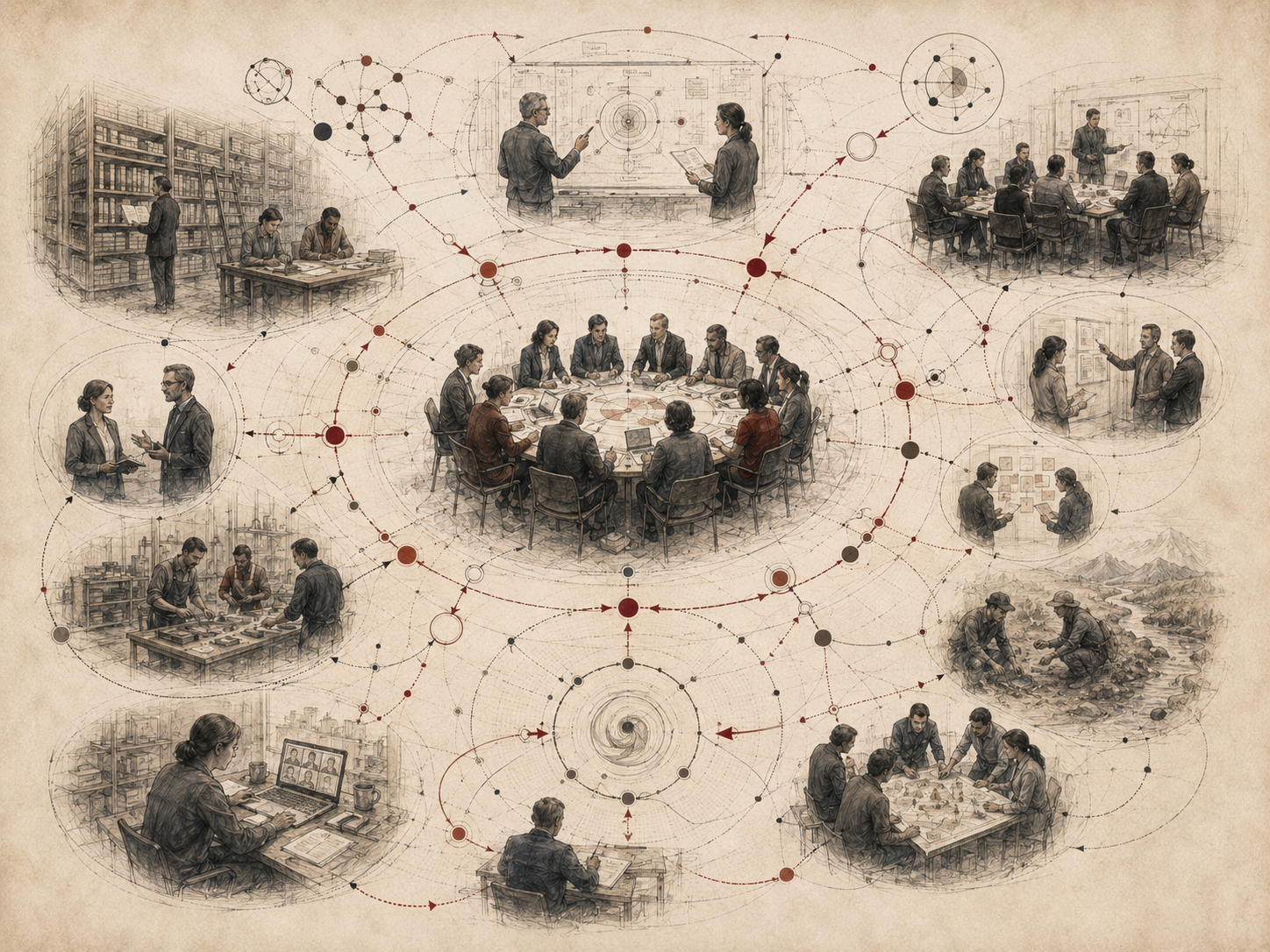
This article examines learning organizations through the lens of feedback awareness. It explains how organizations learn, why feedback is often distorted, how psychological safety differs from comfort, why defensive routines block learning, and how single-loop and double-loop learning help organizations move from correction to redesign. It also examines the ethical stakes of organizational learning: who is asked to provide feedback, who is punished for bad news, whose knowledge is treated as credible, and whether the organization uses feedback to repair systems or simply extract more adaptation from people already carrying the burden.
Why Learning Organizations Matter
Learning organizations matter because the world changes faster than formal plans can anticipate. Markets shift, policies change, technologies evolve, employees adapt, customers behave unexpectedly, communities respond, risks emerge, and unintended consequences appear. An organization that cannot learn from feedback becomes trapped in yesterday’s assumptions. It repeats old routines even when the environment has changed. It protects past success even when past success becomes a source of present failure.
Many organizations claim to value learning, but their systems reward certainty, speed, performance theater, blame avoidance, and short-term output. They ask for innovation while punishing mistakes. They ask for transparency while reacting defensively to bad news. They ask employees to speak up while ignoring the feedback they give. They collect survey data without changing conditions. They hold retrospectives without altering incentives. They document lessons learned without embedding those lessons into future decisions.
A learning organization is different because it treats feedback as part of its operating system. It builds routines for noticing weak signals, discussing uncomfortable evidence, preserving memory, testing assumptions, and redesigning structures. It does not depend entirely on heroic leaders or extraordinary individuals. It creates conditions in which ordinary people can tell the truth about the system and participate in improving it.
| Non-learning pattern | Learning-organization response | Systems-thinking question |
|---|---|---|
| Bad news is softened or hidden. | Bad news is protected as early warning. | What makes truth-telling risky? |
| Mistakes lead to blame. | Mistakes trigger structural inquiry and accountability. | What system made the mistake likely? |
| Feedback is collected but not used. | Feedback changes decisions, resources, and routines. | Where does feedback lose authority? |
| Lessons disappear after turnover. | Learning is embedded in memory, process, and training. | How does the organization retain what it learns? |
| Leaders demand adaptation from others. | Leaders change structure when feedback reveals design failure. | Who is expected to adapt, and who is expected to redesign? |
Learning organizations matter because repeated failure is expensive. It costs money, time, trust, credibility, institutional memory, human energy, and public legitimacy. It also has moral consequences. When organizations fail to learn, the burden often falls on workers, customers, patients, students, applicants, residents, or communities that have little power to redesign the system. Feedback awareness is therefore not only a management capability. It is a responsibility.
What a Learning Organization Is
A learning organization is an organization that can detect changes in itself and its environment, interpret those changes without denial, preserve what it learns, and alter its behavior and structure accordingly. It is not defined by training programs alone. Training can support learning, but an organization can train constantly and still fail to learn if its feedback loops, incentives, power structures, and routines remain unchanged.
Learning organizations have several core capacities. They make feedback visible. They protect people who report problems. They distinguish symptoms from causes. They question assumptions. They preserve institutional memory. They align local action with whole-system outcomes. They monitor delayed consequences. They use errors as information without abandoning accountability. They revise routines when evidence shows that routines are failing.
Learning organizations are also self-aware. They know that their own mental models shape what they see. They understand that metrics are partial signals, not reality itself. They recognize that silence is not consent, compliance is not commitment, and activity is not learning. They do not assume that absence of complaint means absence of harm.
\text{Learning Organization} = \text{Feedback Awareness} + \text{Interpretive Capacity} + \text{Memory} + \text{Structural Change}
\]
Interpretation: An organization learns when feedback is noticed, interpreted, retained, and translated into changes in structure and behavior.
A learning organization is not a conflict-free organization. In fact, real learning often requires conflict with old assumptions. It may require surfacing disagreement, admitting uncertainty, acknowledging harm, questioning authority, and changing routines that once felt successful. Learning organizations do not eliminate tension. They make tension usable.
Several features distinguish learning organizations from organizations that merely perform learning:
- feedback changes decisions, not only dashboards;
- mistakes are investigated structurally, not only personally;
- leaders revise assumptions when evidence contradicts them;
- frontline knowledge reaches decision authority;
- institutional memory survives turnover;
- people can raise risks without punishment;
- metrics include burden, quality, capacity, and side effects;
- learning routines lead to redesign, not ritual documentation.
A learning organization is therefore a systems capability. It is a structure for converting experience into wiser action.
Feedback Awareness as Organizational Intelligence
Feedback awareness is the ability to notice, interpret, and respond to signals from the system. It requires more than collecting data. Organizations are surrounded by signals: complaints, errors, turnover, delays, rework, user behavior, frontline workarounds, customer service patterns, morale shifts, social trust, process bottlenecks, missed handoffs, quality variation, and weak signals from people closest to harm. Feedback awareness asks whether the organization can recognize these signals before they become crisis.
Feedback awareness includes both formal and informal feedback. Formal feedback includes metrics, audits, surveys, incident reports, dashboards, evaluations, performance reviews, customer data, and financial indicators. Informal feedback includes hallway conversations, workarounds, silence, emotional exhaustion, repeated questions, frustrated users, tacit knowledge, and the stories people tell about how the organization really works. Learning organizations take both seriously.
\text{Organizational Intelligence} = f(\text{Signal Quality}, \text{Interpretation}, \text{Memory}, \text{Authority})
\]
Interpretation: Organizational intelligence depends on the quality of signals, the ability to interpret them, the capacity to remember them, and the authority to act on them.
Feedback awareness requires attention to weak signals. A weak signal is an early indication of a pattern that has not yet become obvious. A small increase in rework may reveal process confusion. A repeated workaround may reveal tool failure. Rising turnover in one role may reveal hidden workload. A decline in meeting participation may reveal disengagement. Repeated user confusion may reveal poor design. A single complaint from a marginalized group may reveal a system failure that aggregate metrics hide.
| Feedback signal | Shallow interpretation | Feedback-aware interpretation |
|---|---|---|
| Employees stop raising concerns. | Things must be fine. | Speaking up may no longer feel safe or useful. |
| Users submit repeated support tickets. | Users need better instructions. | The system may be poorly designed or overly complex. |
| Teams create workarounds. | People are not following process. | The formal process may not match actual work. |
| Metrics improve while complaints rise. | Complaints are outliers. | The metric may not measure the outcome people experience. |
| High performers are overloaded. | They are reliable and can handle it. | The system may be converting success into depletion. |
Feedback awareness is not passive listening. It requires a system for acting. Feedback that cannot change decisions becomes symbolic. People learn quickly whether feedback matters. If feedback disappears into a survey, report, committee, or archive without visible consequence, the organization teaches people not to bother.
A feedback-aware organization closes the loop. It says what was heard, what was learned, what will change, what cannot change yet, and why. Closing the loop turns feedback into trust.
Signal Distortion, Delay, and Organizational Blindness
Organizations often fail to learn because feedback is distorted before it reaches authority. Bad news may be softened. Problems may be reframed as isolated incidents. Frontline warnings may be filtered through managerial optimism. Metrics may hide lived experience. Reports may become polished narratives rather than learning tools. By the time leadership sees the signal, the system has already translated it into something safer, narrower, or less actionable.
Signal distortion occurs for many reasons. People may fear blame. Managers may not want to surprise executives. Departments may protect reputations. Incentives may reward positive reporting. Dashboards may exclude qualitative experience. Consultants may simplify conflict into sanitized recommendations. Employees may stop reporting problems because prior feedback produced no change. Communities may disengage because institutions have ignored them before.
Delay compounds distortion. Feedback that arrives late can be technically accurate but practically useless. An annual survey may confirm a problem that frontline workers saw months earlier. A quarterly dashboard may show declining quality after customers have already left. A postmortem may document a preventable failure after the same pattern has already harmed people repeatedly.
S_{\text{received}} = S_{\text{observed}}(1 – d)(1 – f)
\]
Interpretation: The signal received by decision-makers is weakened by distortion \(d\) and filtering \(f\), reducing the organization’s ability to learn from what was actually observed.
Organizational blindness emerges when distorted feedback becomes normal. Leaders may believe they are well informed because they receive many reports. But volume is not clarity. A system can produce constant information while hiding the most important signals. The problem is not lack of data. It is lack of truthful, timely, context-rich feedback connected to decision authority.
Common forms of signal distortion include:
- bad news softened as it moves upward;
- frontline observations dismissed as anecdotal;
- aggregate data hiding subgroup harm;
- metrics improving while user burden increases;
- silence misread as agreement;
- high turnover framed as personal choice rather than system feedback;
- complaints treated as communication problems rather than design problems;
- postmortems documenting issues without changing incentives or authority.
Learning organizations reduce distortion by protecting truth-telling, shortening feedback loops, triangulating data sources, including affected voices, and examining where information changes as it moves through hierarchy. They ask not only what the feedback says, but what the organization does to feedback on its way to power.
Psychological Safety and Truth-Telling
Psychological safety is the condition in which people can speak honestly about problems, uncertainty, mistakes, risks, disagreement, and harm without fear of humiliation, retaliation, exclusion, or career damage. It is essential for learning because organizations cannot improve what people are afraid to name.
Psychological safety is often misunderstood as comfort, niceness, or avoidance of conflict. In a learning organization, psychological safety is not the absence of challenge. It is the ability to engage challenge honestly. People can disagree, question assumptions, report risk, and examine mistakes because the organization treats truth as a resource rather than a threat.
Psychological safety is structural, not merely interpersonal. It depends on leadership behavior, accountability systems, power distribution, history, inclusion, reporting routines, workload, and whether speaking up has consequences. A leader cannot simply announce that people are safe. People infer safety from what happens when someone tells the truth.
\text{Truth-Telling} = f(\text{Safety}, \text{Trust}, \text{Consequence}, \text{Voice}, \text{Power})
\]
Interpretation: People tell the truth when they have enough safety, trust, meaningful voice, and evidence that feedback can change the system.
Psychological safety matters especially for people with less organizational power. Senior leaders may experience the organization as open because they can speak freely. Junior staff, frontline workers, contractors, marginalized employees, or people outside dominant networks may experience the same organization very differently. A learning organization must ask not whether powerful people feel safe, but whether the people closest to risk can speak and be believed.
| False safety | Real learning safety |
|---|---|
| People are encouraged to be positive. | People can name problems without being labeled negative. |
| Leaders say the door is open. | Feedback produces visible response and structural change. |
| Conflict is avoided. | Disagreement is used to examine assumptions. |
| Mistakes are discussed abstractly. | Mistakes are analyzed without scapegoating and with repair. |
| Surveys collect anonymous feedback. | The organization reduces the conditions that make anonymity necessary. |
Psychological safety does not eliminate accountability. It makes accountability smarter. In unsafe systems, people hide information to protect themselves. In safer systems, people can surface information early enough for responsible action. Accountability without safety becomes blame. Safety without accountability becomes avoidance. Learning requires both.
Defensive Routines and Learning Avoidance
Defensive routines are organizational habits that protect people or institutions from embarrassment, threat, blame, or loss of control while preventing learning. They help the organization avoid discomfort, but they also block the feedback that would make improvement possible. Defensive routines are especially dangerous because they often appear professional, diplomatic, efficient, or prudent.
Examples include vague postmortems, over-polished reports, meetings where disagreement is hidden, leaders asking for feedback but reacting defensively, teams naming “communication” as the cause of every failure, and organizations treating symptoms as isolated events rather than recurring patterns. A defensive routine allows the organization to appear reflective while avoiding the change that reflection should produce.
Defensive routines can be self-reinforcing. If bad news is punished, people hide bad news. When bad news is hidden, leaders believe the system is healthier than it is. Because leaders believe the system is healthy, they are surprised by failure and blame the people closest to the event. That blame confirms that bad news is unsafe. The system learns to hide more.
\text{Blame Risk} \uparrow \Rightarrow \text{Signal Hiding} \uparrow \Rightarrow \text{Learning} \downarrow \Rightarrow \text{Failure Surprise} \uparrow
\]
Interpretation: Blame risk increases signal hiding, which reduces learning and makes failures appear sudden even when warning signs existed.
Defensive routines appear through language as well as behavior. Phrases such as “we need better communication,” “lessons were learned,” “we are moving forward,” or “this was a one-off” may be true, but they can also prevent deeper inquiry. Learning organizations ask whether such phrases clarify the system or protect it from examination.
Common defensive routines include:
- naming symptoms but not causes;
- holding retrospectives without changing incentives;
- using consensus language to suppress disagreement;
- keeping difficult feedback away from senior leaders;
- creating action plans that avoid power, workload, or authority;
- treating repeated problems as isolated exceptions;
- asking employees for feedback while failing to respond;
- mistaking documentation for learning.
Breaking defensive routines requires changing consequences. People will not stop being defensive just because leaders ask them to be open. The organization must make truth-telling safer, make learning consequential, protect people from retaliation, and show that feedback can change structure.
Defensive routines protect the organization from discomfort. Learning routines protect it from repeated harm.
Single-Loop and Double-Loop Learning
Single-loop learning corrects errors within the current system. Double-loop learning questions the assumptions, goals, rules, and mental models that define the system. Both are necessary. The problem arises when organizations rely only on single-loop correction while the deeper structure keeps producing the same errors.
Single-loop learning asks: How do we fix this problem within the existing frame? A process is slow, so a step is removed. A report is unclear, so the template is improved. A staff member lacks knowledge, so training is updated. Single-loop learning is valuable for reliability, refinement, and operational improvement.
Double-loop learning asks: Is the existing frame part of the problem? Why is the process so complex? Why does the report exist? Why is training repeatedly insufficient? Why do people lack the authority to solve the problem? Why are we measuring this metric? Why do we define success this way? Double-loop learning changes the governing logic.
| Single-loop learning | Double-loop learning |
|---|---|
| Corrects error. | Questions the system that produced the error. |
| Improves process within existing assumptions. | Examines whether the assumptions are valid. |
| Asks how to meet the target. | Asks whether the target measures the real goal. |
| Focuses on compliance and adjustment. | Focuses on redesign and governing values. |
| Often feels safer. | Often challenges power, identity, and routines. |
An organization may conduct many single-loop improvements and still fail to learn deeply. It may become faster at processing a burdensome form instead of questioning why the form exists. It may improve escalation procedures instead of asking why problems are detected late. It may train employees on a confusing tool instead of redesigning the workflow. It may improve reporting while failing to ask whether reports support decisions.
\text{Single-Loop Learning}: \quad \text{Action} \rightarrow \text{Result} \rightarrow \text{Adjustment}
\]
\[
\text{Double-Loop Learning}: \quad \text{Action} \rightarrow \text{Result} \rightarrow \text{Assumption Review} \rightarrow \text{System Redesign}
\]
Interpretation: Single-loop learning adjusts action, while double-loop learning revises the assumptions and structures that shape action.
Learning organizations create conditions for double-loop learning. They make it possible to question goals, metrics, authority, workload, and mental models without immediate punishment. They understand that deeper learning may challenge what made the organization successful in the past.
Single-loop learning helps organizations improve. Double-loop learning helps them transform.
Mental Models and Shared Inquiry
Mental models are the internal maps people use to interpret reality. In organizations, mental models define what counts as success, what counts as failure, who is trusted, what is considered risky, what is assumed about customers, employees, communities, technology, and leadership. Organizational learning depends on the ability to surface and examine these mental models.
Shared inquiry is the practice of examining assumptions together. It is different from debate, where people defend positions, and different from consensus, where discomfort may be smoothed over too quickly. Shared inquiry asks what each person is seeing, what assumptions are shaping interpretation, what evidence supports those assumptions, and what the organization might be missing.
Mental models can block feedback awareness. If leaders believe employees resist change because they are comfortable, they may miss signals of overload, distrust, unclear purpose, or prior failed change. If an organization believes customers are confused because they do not read instructions, it may miss poor design. If a public agency believes applicants fail because they are noncompliant, it may miss administrative burden. If a technology team believes automation is neutral, it may miss power, bias, and accountability problems.
\text{Mental Model} \rightarrow \text{Attention} \rightarrow \text{Interpretation} \rightarrow \text{Action}
\]
Interpretation: Mental models shape what people notice, how they interpret feedback, and which actions they consider reasonable.
Learning organizations do not assume that more information automatically changes beliefs. People interpret information through existing frames. A metric that contradicts a leader’s worldview may be dismissed as flawed. A frontline warning may be treated as negativity. A community’s feedback may be labeled resistance. A user complaint may be framed as edge-case behavior. Shared inquiry helps the organization slow down interpretation and ask what its assumptions are doing.
Useful shared inquiry questions include:
- What do we assume is causing this pattern?
- What evidence supports that assumption?
- What evidence challenges it?
- Who sees the system differently?
- Whose knowledge is absent from this discussion?
- What would we notice if our assumption were wrong?
- What are we protecting by keeping this assumption?
- What would change if we adopted a different frame?
Feedback awareness requires mental-model awareness. Otherwise, organizations may receive feedback but interpret it in ways that preserve the old system.
Institutional Memory and Learning Retention
Institutional memory is the organization’s ability to retain and reuse what it has learned. Without memory, feedback becomes temporary. People notice problems, discuss them, and move on. Then turnover occurs, tools change, leaders rotate, projects restart, documents disappear, and the organization repeats the same mistakes under new names.
Learning retention requires more than storing files. A large archive is not memory if people cannot find, interpret, trust, or apply what it contains. Institutional memory must be organized around future use. It should preserve decisions, rationale, assumptions, outcomes, mistakes, workarounds, context, and lessons that can guide later action.
M_{t+1} = M_t + L_t – F_t
\]
Interpretation: Institutional memory \(M\) grows through retained learning \(L_t\) and declines through forgetting \(F_t\). Learning must be preserved faster than it is lost.
Institutional memory is especially important in organizations with high turnover, complex programs, long projects, public responsibilities, technical systems, or community relationships. When memory decays, new people inherit responsibility without context. They may repeat old experiments, rediscover known risks, reopen settled questions, or miss why certain decisions were made. The burden of forgetting often falls on the people closest to implementation.
Strong institutional memory includes:
- decision records explaining why choices were made;
- postmortems that identify structural causes and redesign actions;
- knowledge bases organized around real workflows;
- onboarding materials that explain history and rationale;
- project archives that preserve assumptions, constraints, and trade-offs;
- feedback repositories that include customer, worker, and community experience;
- clear ownership for maintaining living documentation;
- routines that revisit lessons before repeating similar work.
Memory must also be connected to action. If lessons learned documents are not consulted before future decisions, they are not learning infrastructure. If postmortems do not alter process, they are ritual. If documentation becomes outdated, it may create false confidence. A learning organization maintains memory as an active system.
Institutional memory turns feedback into durable capacity. Without it, organizations may experience many lessons and retain few of them.
Systems Thinking and the Disciplines of Learning
Learning organizations are often associated with a set of disciplines: systems thinking, mental models, personal mastery, shared vision, and team learning. Systems thinking provides the integrating frame because it helps the organization see interdependence, feedback, delay, unintended consequences, and structural causality. Without systems thinking, learning can become fragmented: individuals improve, teams reflect, dashboards expand, and strategies shift, but the organization still fails to see the pattern that connects them.
Systems thinking helps learning organizations ask what produces behavior over time. It directs attention away from isolated events and toward recurring structures. A missed deadline is not only a missed deadline. It may be a symptom of workload pressure, decision delay, unclear authority, weak feedback, overcommitment, and rework loops. A failed change initiative is not only resistance. It may be the result of mistrust, poor timing, conflicting incentives, and mental models that were never examined.
Personal mastery matters because individuals need the capacity to learn, reflect, and act with discipline. But personal mastery is not enough if the organization punishes honest reflection. Shared vision matters because people need a meaningful direction. But shared vision is not enough if incentives contradict it. Team learning matters because organizations act through groups. But team learning is not enough if teams are trapped inside silos. Mental models matter because assumptions shape action. But mental-model work is not enough unless assumptions lead to structural redesign.
| Learning discipline | Systems contribution | Risk if isolated |
|---|---|---|
| Systems thinking | Connects events to feedback, structure, delay, and leverage. | Can become abstract if disconnected from practice. |
| Mental models | Reveals assumptions shaping interpretation and action. | Can become discussion without redesign. |
| Shared vision | Aligns effort around meaningful direction. | Can become rhetoric if incentives contradict it. |
| Team learning | Improves collective inquiry, coordination, and adaptation. | Can remain local if organizational boundaries block learning. |
| Personal mastery | Builds individual capacity for reflection, growth, and disciplined practice. | Can become individual burden if structure is ignored. |
A learning organization does not treat these disciplines as slogans. It embeds them into feedback routines, decision processes, leadership behavior, documentation systems, cross-functional work, and performance evaluation. The disciplines become real only when they change how the organization notices, interprets, remembers, and acts.
Systems thinking is the discipline that keeps organizational learning from becoming a collection of disconnected improvement activities.
Feedback-Aware Leadership
Feedback-aware leadership is leadership that protects the organization’s ability to perceive reality. It does not demand only good news, polished narratives, or confident answers. It creates conditions in which problems can be named early, uncertainty can be discussed honestly, and feedback can change decisions. Feedback-aware leaders understand that their reactions shape what the organization tells them next.
Leaders often underestimate how much hierarchy distorts feedback. A leader may believe they are approachable while employees experience real risk in speaking honestly. A leader may ask for candor but reward optimism. A leader may invite dissent but act defensively when challenged. People watch these signals closely. They learn whether truth is welcome, tolerated, or dangerous.
Feedback-aware leaders practice several behaviors:
- they ask what signals are missing, not only what the dashboard shows;
- they invite dissent before decisions lock in;
- they respond to bad news with inquiry before judgment;
- they distinguish accountability from blame;
- they close the loop after receiving feedback;
- they protect people who raise uncomfortable problems;
- they change structure when feedback reveals design failure;
- they treat frontline and affected-community knowledge as system intelligence.
\text{Leadership Learning Capacity} = \text{Candor Invited} \times \text{Candor Protected} \times \text{Candor Used}
\]
Interpretation: Leaders build learning capacity only when candor is invited, protected, and used to change decisions.
Feedback-aware leadership also requires humility about authority. Leaders often see the organization through summaries, metrics, and filtered accounts. People closer to the work often see different truths. A leader’s role is not to replace those truths with executive interpretation, but to create a system where multiple forms of knowledge can inform action.
This kind of leadership is not passive. It can be demanding. It asks for evidence, clarity, responsibility, and follow-through. But it refuses to confuse control with learning. A leader who controls the narrative too tightly may protect confidence while destroying intelligence.
Feedback-aware leadership protects the organization from becoming blind to itself.
Ethics: Feedback, Power, and Repair
Feedback awareness has ethical stakes because feedback is not gathered from neutral space. It comes from people who may be carrying harm, burden, risk, exclusion, or hidden labor. Workers provide feedback about overload. Customers report confusing systems. Patients report unsafe care. Students report exclusion. Communities report distrust. Frontline staff report policy failure. If the organization extracts this feedback without changing the conditions that produced it, feedback becomes another burden.
Ethical learning requires more than listening. It requires response, repair, and redistribution of responsibility. An organization should not ask people to repeatedly describe harm while leaving the harmful structure intact. It should not celebrate transparency while punishing the transparent. It should not ask marginalized employees to educate the institution without giving them authority, protection, and compensation. It should not use feedback to improve reputation while avoiding accountability.
Feedback also reflects power. Some people can speak safely. Others cannot. Some feedback is treated as strategic insight. Other feedback is treated as complaint. Some forms of evidence are considered legitimate. Others are dismissed as anecdotal, emotional, political, or inconvenient. A learning organization must examine whose feedback becomes knowledge.
Ethical feedback awareness asks:
- Who is asked to provide feedback?
- Who is believed when feedback is uncomfortable?
- Who is punished for naming problems?
- Who benefits from the current structure?
- Who carries the cost when feedback is ignored?
- Does feedback change resources, authority, or routines?
- Are people asked to adapt to harm instead of receiving repair?
- Does the organization remember what people already told it?
- Is learning used to reduce burden or to extract more performance?
- What accountability follows from what has been learned?
Ethical learning is not blame avoidance. It is repair-oriented accountability. It asks what happened, why it happened, who was harmed, what structure produced it, who had authority, what must change, and how the organization will prevent recurrence. It treats feedback as a claim on responsibility, not merely as input to improvement.
A learning organization should become more just as it becomes more intelligent. If learning does not reduce harm, it is incomplete.
Examples Across Organizational Systems
Learning organizations and feedback awareness matter across public agencies, healthcare systems, technology organizations, education, nonprofits, research institutions, corporations, and civic institutions. The examples below show how feedback awareness changes diagnosis and redesign.
Public agencies
A public agency may receive repeated complaints about application burden. A non-learning response treats complaints as communication issues and adds more instructions. A learning response asks whether rules, forms, language access, digital systems, documentation requirements, staff capacity, and appeal processes are creating unnecessary burden. Feedback awareness would include applicants, frontline workers, community navigators, and error data in redesign.
Healthcare organizations
A hospital may experience repeated safety incidents. A defensive organization searches for individual error. A learning organization examines staffing, fatigue, handoffs, alarms, documentation, communication, training, equipment, and psychological safety. It protects near-miss reporting and uses feedback to redesign conditions before harm recurs.
Technology organizations
A product team may receive user complaints about confusing features. A non-learning response assumes users need education. A learning response asks whether design, terminology, onboarding, accessibility, documentation, or workflow assumptions are flawed. Feedback awareness includes support tickets, usability research, customer calls, analytics, accessibility review, and downstream support burden.
Schools and universities
An educational institution may respond to student disengagement with attendance enforcement. A learning response asks whether curriculum, belonging, advising, workload, mental health, teaching conditions, financial pressure, and institutional trust are shaping disengagement. Feedback awareness includes student voice, teacher experience, retention data, equity patterns, and informal signals.
Nonprofits
A nonprofit may burn out staff while trying to meet community need. A non-learning response offers wellness sessions. A learning response examines grant restrictions, reporting burden, staffing, emotional labor, funding instability, governance expectations, and mission-capacity mismatch. Feedback awareness includes staff experience and community outcomes, not only funder metrics.
Research institutions
A research institution may struggle with reproducibility, data management, or knowledge loss. A learning response examines incentives around publication, documentation, collaboration, mentoring, code sharing, data stewardship, and project continuity. Feedback awareness includes graduate students, research staff, librarians, data stewards, and replication findings.
Corporations
A corporation may experience repeated customer churn despite strong sales. A non-learning response increases acquisition spending. A learning response examines onboarding, product fit, support experience, pricing expectations, quality, service promises, and handoffs between sales and delivery. Feedback awareness connects customer experience to strategy, not only retention dashboards.
Civic institutions
A civic institution may face declining public trust. A non-learning response increases messaging. A learning response asks what institutional behaviors depleted trust: exclusion, inconsistency, administrative burden, lack of accountability, poor service, opaque decisions, or broken promises. Feedback awareness requires public participation with real authority and visible repair.
Across these examples, learning organizations do not treat feedback as an afterthought. They treat it as the system speaking.
Mathematics, Computation, and Modeling
Learning organizations can be modeled through feedback systems, signal distortion models, institutional memory equations, workload-capacity dynamics, network analysis, organizational learning curves, and scenario simulations. The purpose is not to reduce organizational learning to numbers. It is to make hidden relationships visible enough to test, discuss, and redesign.
A simple feedback-learning model can be represented as:
L_{t+1} = L_t + \alpha F_t – \beta D_t
\]
Interpretation: Organizational learning \(L\) increases with usable feedback \(F_t\) and decreases with distortion, delay, or defensiveness \(D_t\).
Feedback usefulness can be modeled as:
F_{\text{usable}} = F_{\text{raw}} \times Q \times T \times A
\]
Interpretation: Usable feedback depends on raw feedback volume, signal quality \(Q\), timeliness \(T\), and authority connection \(A\).
Institutional memory can be represented as:
M_{t+1} = M_t + \gamma L_t – \delta R_t
\]
Interpretation: Institutional memory \(M\) grows when learning is retained and declines through forgetting, turnover, poor documentation, or unused knowledge \(R_t\).
A defensive-routine model can be represented as:
F_{\text{reported}} = F_{\text{observed}}(1 – B_t)
\]
Interpretation: Reported feedback declines as blame risk or defensiveness \(B_t\) increases, even when observed problems remain high.
Learning effectiveness can be represented as:
E_L = F_Q \times I_C \times M_R \times S_C
\]
Interpretation: Learning effectiveness \(E_L\) depends on feedback quality \(F_Q\), interpretive capacity \(I_C\), memory retention \(M_R\), and structural change capacity \(S_C\).
A structural learning threshold can be represented conceptually as:
\Delta S > 0 \quad \text{only if} \quad E_L > \theta
\]
Interpretation: Structural change \(\Delta S\) occurs only when learning effectiveness exceeds a practical threshold \(\theta\). Feedback alone is not enough.
| Modeling task | Learning-organization question | Example output |
|---|---|---|
| Feedback-flow mapping | Where does feedback originate, travel, distort, or stop? | Signal path diagrams and authority gaps. |
| Learning-retention modeling | Does institutional memory survive turnover and time? | Memory accumulation and decay curves. |
| Psychological safety analysis | Does blame risk suppress reporting? | Reported-versus-observed problem gaps. |
| Workload-capacity modeling | Does overload reduce learning time and reflection? | Capacity, burnout, and learning-rate trajectories. |
| Network analysis | Who carries feedback across silos? | Bridge roles, bottlenecks, isolated teams, and knowledge hubs. |
| Scenario comparison | Which redesign improves feedback use? | Blame culture, survey-only, and feedback-aware redesign scenarios. |
| Distributional analysis | Who is asked to provide feedback and who benefits from learning? | Voice, burden, response, and repair patterns across groups. |
Modeling learning organizations should include both technical and social variables. Feedback volume alone is not enough. The model must ask whether feedback is safe to report, whether it is interpreted accurately, whether it is remembered, whether it reaches authority, and whether it changes structure. An organization can collect enormous amounts of data and still fail to learn.
Python Workflow: Feedback Awareness, Signal Distortion, Memory Retention, and Structural Learning Diagnostics
The Python workflow below turns learning-organization analysis into a small reproducible systems model. It compares four scenarios: blame and signal suppression, survey-only learning, protected feedback and memory, and feedback-aware structural learning. It also includes one-at-a-time sensitivity analysis for the feedback-aware structural learning scenario. The script uses only the Python standard library, writes CSV outputs relative to the article folder, and is designed as a clear starting point for companion repository work.
# learning_organizations_feedback_awareness_workflow.py
# Dependency-light workflow for learning-organization diagnostics:
# feedback awareness, signal distortion, psychological safety, memory retention,
# defensive routines, learning effectiveness, burden, and structural change.
# Writes outputs relative to the article root.

from __future__ import annotations

from dataclasses import dataclass, replace
from pathlib import Path
import csv
from statistics import mean

ARTICLE_ROOT = Path(__file__).resolve().parents[1]
TABLES = ARTICLE_ROOT / "outputs" / "tables"


@dataclass
class FeedbackLearningScenario:
    name: str
    raw_feedback_volume: float
    signal_quality: float
    reporting_safety: float
    blame_risk: float
    signal_filtering: float
    interpretation_capacity: float
    institutional_memory_practice: float
    authority_connection: float
    structural_change_capacity: float
    defensive_routine_strength: float
    workload_pressure: float
    affected_voice: float
    repair_accountability: float


def clamp(value: float, low: float = 0.0, high: float = 140.0) -> float:
    return max(low, min(high, value))


def run_scenario(scenario: FeedbackLearningScenario, periods: int = 64) -> list[dict[str, object]]:
    learning_stock = 34.0 + scenario.interpretation_capacity * 16.0
    institutional_memory = 34.0 + scenario.institutional_memory_practice * 18.0
    trust_and_voice = 36.0 + scenario.reporting_safety * 18.0 + scenario.affected_voice * 10.0
    structural_change_stock = 28.0 + scenario.structural_change_capacity * 18.0
    unresolved_problem_stock = 58.0 + scenario.workload_pressure * 12.0
    burden_stock = 42.0 + scenario.workload_pressure * 12.0
    distortion_stock = 36.0 + scenario.signal_filtering * 16.0 + scenario.defensive_routine_strength * 12.0
    rows: list[dict[str, object]] = []

    for period in range(periods + 1):
        observed_feedback = clamp(
            scenario.raw_feedback_volume * 18.0
            + unresolved_problem_stock * 0.12
            + burden_stock * 0.08
            + scenario.affected_voice * 6.0,
            0.0,
            120.0,
        )

        suppression_pressure = clamp(
            scenario.blame_risk * 16.0
            + scenario.signal_filtering * 14.0
            + scenario.defensive_routine_strength * 14.0
            + max(0.0, 55.0 - trust_and_voice) * 0.10
            - scenario.reporting_safety * 6.0
            - scenario.repair_accountability * 4.0,
            0.0,
            100.0,
        )

        reported_feedback = clamp(
            observed_feedback
            * (0.45 + 0.45 * scenario.reporting_safety)
            * (1.0 - 0.45 * scenario.signal_filtering)
            * (1.0 - 0.35 * scenario.blame_risk)
            + scenario.affected_voice * 5.0,
            0.0,
            120.0,
        )

        usable_feedback = clamp(
            reported_feedback * (0.40 + 0.35 * scenario.signal_quality)
            + scenario.interpretation_capacity * 10.0
            + scenario.affected_voice * 8.0
            + scenario.repair_accountability * 6.0
            - suppression_pressure * 0.16
            - distortion_stock * 0.08,
            0.0,
            120.0,
        )

        learning_flow = clamp(
            usable_feedback * 0.16
            + scenario.interpretation_capacity * 12.0
            + scenario.institutional_memory_practice * 7.0
            + scenario.authority_connection * 8.0
            - scenario.defensive_routine_strength * 5.0,
            0.0,
            100.0,
        )

        memory_retention_flow = clamp(
            learning_flow * 0.12
            + scenario.institutional_memory_practice * 12.0
            + scenario.repair_accountability * 5.0
            - scenario.workload_pressure * 4.0
            - scenario.defensive_routine_strength * 3.0,
            0.0,
            100.0,
        )

        forgetting_flow = clamp(
            scenario.workload_pressure * 10.0
            + scenario.defensive_routine_strength * 6.0
            + max(0.0, 55.0 - institutional_memory) * 0.06
            - scenario.institutional_memory_practice * 5.0,
            0.0,
            100.0,
        )

        structural_change_flow = clamp(
            learning_stock * 0.08
            + usable_feedback * 0.08
            + scenario.authority_connection * 13.0
            + scenario.structural_change_capacity * 14.0
            + scenario.repair_accountability * 10.0
            + scenario.affected_voice * 6.0
            - scenario.defensive_routine_strength * 7.0
            - scenario.blame_risk * 4.0,
            0.0,
            120.0,
        )

        defensive_response = clamp(
            scenario.defensive_routine_strength * 16.0
            + scenario.blame_risk * 10.0
            + max(0.0, reported_feedback - 50.0) * 0.06
            + max(0.0, unresolved_problem_stock - 60.0) * 0.05
            - scenario.repair_accountability * 5.0
            - scenario.reporting_safety * 3.0,
            0.0,
            100.0,
        )

        unresolved_problem_stock = clamp(
            unresolved_problem_stock
            + scenario.workload_pressure * 2.0
            + distortion_stock * 0.05
            + defensive_response * 0.05
            - structural_change_flow * 0.10
            - learning_flow * 0.05,
            0.0,
            140.0,
        )

        burden_stock = clamp(
            burden_stock
            + unresolved_problem_stock * 0.035
            + scenario.workload_pressure * 1.2
            + suppression_pressure * 0.04
            - structural_change_flow * 0.07
            - scenario.affected_voice * 0.7
            - scenario.repair_accountability * 0.9,
            0.0,
            120.0,
        )

        learning_stock = clamp(
            learning_stock
            + learning_flow * 0.11
            - defensive_response * 0.06
            - forgetting_flow * 0.04,
            0.0,
            120.0,
        )

        institutional_memory = clamp(
            institutional_memory
            + memory_retention_flow * 0.10
            - forgetting_flow * 0.10,
            0.0,
            120.0,
        )

        trust_and_voice = clamp(
            trust_and_voice
            + scenario.reporting_safety * 1.2
            + scenario.affected_voice * 1.0
            + scenario.repair_accountability * 1.0
            + structural_change_flow * 0.035
            - suppression_pressure * 0.04
            - burden_stock * 0.035,
            0.0,
            100.0,
        )

        structural_change_stock = clamp(
            structural_change_stock
            + structural_change_flow * 0.10
            + scenario.structural_change_capacity * 0.8
            - scenario.defensive_routine_strength * 0.6,
            0.0,
            120.0,
        )

        distortion_stock = clamp(
            distortion_stock
            + defensive_response * 0.08
            + scenario.signal_filtering * 1.0
            - scenario.signal_quality * 0.8
            - scenario.reporting_safety * 0.8
            - scenario.repair_accountability * 0.8,
            0.0,
            100.0,
        )

        feedback_gap = max(0.0, observed_feedback - reported_feedback)
        learning_effectiveness = clamp(
            learning_stock * 0.16
            + institutional_memory * 0.16
            + trust_and_voice * 0.16
            + structural_change_stock * 0.18
            + usable_feedback * 0.12
            + scenario.authority_connection * 10.0
            + scenario.repair_accountability * 10.0
            - burden_stock * 0.14
            - distortion_stock * 0.12
            - feedback_gap * 0.12,
            0.0,
            100.0,
        )

        organizational_blindness_risk = clamp(
            feedback_gap * 0.20
            + distortion_stock * 0.18
            + defensive_response * 0.18
            + burden_stock * 0.14
            + max(0.0, 55.0 - institutional_memory) * 0.12
            + max(0.0, 55.0 - trust_and_voice) * 0.12
            - learning_stock * 0.10
            - structural_change_stock * 0.10,
            0.0,
            100.0,
        )

        rows.append({
            "period": period,
            "scenario": scenario.name,
            "observed_feedback": round(observed_feedback, 3),
            "reported_feedback": round(reported_feedback, 3),
            "usable_feedback": round(usable_feedback, 3),
            "feedback_gap": round(feedback_gap, 3),
            "learning_stock": round(learning_stock, 3),
            "institutional_memory": round(institutional_memory, 3),
            "trust_and_voice": round(trust_and_voice, 3),
            "structural_change_stock": round(structural_change_stock, 3),
            "unresolved_problem_stock": round(unresolved_problem_stock, 3),
            "burden_stock": round(burden_stock, 3),
            "distortion_stock": round(distortion_stock, 3),
            "suppression_pressure": round(suppression_pressure, 3),
            "defensive_response": round(defensive_response, 3),
            "learning_flow": round(learning_flow, 3),
            "structural_change_flow": round(structural_change_flow, 3),
            "learning_effectiveness": round(learning_effectiveness, 3),
            "organizational_blindness_risk": round(organizational_blindness_risk, 3),
        })

    return rows


def summarize(rows: list[dict[str, object]]) -> list[dict[str, object]]:
    output: list[dict[str, object]] = []
    for scenario_name in sorted({row["scenario"] for row in rows}):
        subset = [row for row in rows if row["scenario"] == scenario_name]
        final = subset[-1]
        avg_learning = mean(float(row["learning_effectiveness"]) for row in subset)
        avg_blindness = mean(float(row["organizational_blindness_risk"]) for row in subset)
        avg_gap = mean(float(row["feedback_gap"]) for row in subset)
        avg_memory = mean(float(row["institutional_memory"]) for row in subset)
        avg_burden = mean(float(row["burden_stock"]) for row in subset)

        if float(final["learning_effectiveness"]) >= 65 and float(final["organizational_blindness_risk"]) <= 35:
            diagnostic = "feedback is becoming usable learning and structural change"
        elif avg_blindness >= 55:
            diagnostic = "signal distortion and defensive routines are producing organizational blindness"
        elif avg_gap >= 35:
            diagnostic = "observed feedback is not reaching the organization with enough force"
        elif avg_memory < 45:
            diagnostic = "learning retention is too weak to preserve institutional memory"
        elif avg_burden >= 60:
            diagnostic = "feedback is not yet reducing burden on people carrying system failure"
        elif avg_learning >= 55:
            diagnostic = "partial feedback awareness with remaining structural risk"
        else:
            diagnostic = "weak evidence of durable organizational learning"

        output.append({
            "scenario": scenario_name,
            "final_learning_effectiveness": final["learning_effectiveness"],
            "final_organizational_blindness_risk": final["organizational_blindness_risk"],
            "final_feedback_gap": final["feedback_gap"],
            "final_institutional_memory": final["institutional_memory"],
            "final_structural_change_stock": final["structural_change_stock"],
            "final_burden_stock": final["burden_stock"],
            "average_learning_effectiveness": round(avg_learning, 3),
            "average_organizational_blindness_risk": round(avg_blindness, 3),
            "average_feedback_gap": round(avg_gap, 3),
            "average_institutional_memory": round(avg_memory, 3),
            "average_burden_stock": round(avg_burden, 3),
            "diagnostic": diagnostic,
        })

    return output


def one_at_a_time(base: FeedbackLearningScenario, delta: float = 0.10) -> list[dict[str, object]]:
    base_score = float(run_scenario(base)[-1]["learning_effectiveness"])
    parameters = [
        "raw_feedback_volume",
        "signal_quality",
        "reporting_safety",
        "blame_risk",
        "signal_filtering",
        "interpretation_capacity",
        "institutional_memory_practice",
        "authority_connection",
        "structural_change_capacity",
        "defensive_routine_strength",
        "workload_pressure",
        "affected_voice",
        "repair_accountability",
    ]

    rows: list[dict[str, object]] = []
    for parameter in parameters:
        for direction in (-1, 1):
            current = getattr(base, parameter)
            revised_value = max(0.0, min(1.0, current + direction * delta))
            revised = replace(base, name=f"{base.name} {parameter} {direction * delta:+.2f}", **{parameter: revised_value})
            revised_score = float(run_scenario(revised)[-1]["learning_effectiveness"])
            rows.append({
                "parameter": parameter,
                "delta": direction * delta,
                "base_value": current,
                "revised_value": revised_value,
                "base_final_learning_effectiveness": round(base_score, 3),
                "revised_final_learning_effectiveness": round(revised_score, 3),
                "score_change": round(revised_score - base_score, 3),
                "absolute_score_change": round(abs(revised_score - base_score), 3),
            })

    return sorted(rows, key=lambda row: float(row["absolute_score_change"]), reverse=True)


def write_csv(path: Path, rows: list[dict[str, object]]) -> None:
    path.parent.mkdir(parents=True, exist_ok=True)
    if not rows:
        raise ValueError(f"No rows to write: {path}")
    with path.open("w", newline="", encoding="utf-8") as handle:
        writer = csv.DictWriter(handle, fieldnames=list(rows[0].keys()))
        writer.writeheader()
        writer.writerows(rows)


def main() -> None:
    scenarios = [
        FeedbackLearningScenario("Blame and signal suppression", 0.74, 0.36, 0.22, 0.78, 0.72, 0.30, 0.24, 0.24, 0.20, 0.76, 0.70, 0.18, 0.20),
        FeedbackLearningScenario("Survey-only learning", 0.82, 0.50, 0.42, 0.52, 0.52, 0.46, 0.36, 0.34, 0.30, 0.56, 0.62, 0.34, 0.36),
        FeedbackLearningScenario("Protected feedback and memory", 0.74, 0.68, 0.68, 0.34, 0.34, 0.68, 0.72, 0.64, 0.62, 0.34, 0.46, 0.66, 0.66),
        FeedbackLearningScenario("Feedback-aware structural learning", 0.72, 0.84, 0.86, 0.22, 0.18, 0.84, 0.86, 0.84, 0.86, 0.20, 0.34, 0.86, 0.86),
    ]

    rows: list[dict[str, object]] = []
    for scenario in scenarios:
        rows.extend(run_scenario(scenario))

    write_csv(TABLES / "feedback_awareness_timeseries.csv", rows)
    write_csv(TABLES / "feedback_awareness_summary.csv", summarize(rows))
    write_csv(TABLES / "feedback_awareness_sensitivity_analysis.csv", one_at_a_time(scenarios[-1]))

    print("Feedback-awareness workflow complete.")
    print(TABLES / "feedback_awareness_timeseries.csv")


if __name__ == "__main__":
    main()
The workflow is intentionally simple enough to inspect. It shows how observed feedback, reported feedback, usable feedback, signal filtering, blame risk, defensive routines, interpretation capacity, institutional memory, authority connection, affected voice, repair accountability, and structural change interact over time. It also shows why feedback collection is not the same as organizational learning: learning depends on whether feedback becomes safe, credible, memorable, and consequential. The model is synthetic and illustrative; it supports disciplined inquiry rather than replacing domain expertise, stakeholder evidence, or ethical judgment.
R Workflow: Learning-Organization Summary and Feedback-Scenario Visualization
The R workflow reads the Python-generated time-series and sensitivity outputs, creates feedback-awareness summaries, and exports base R plots for observed feedback, reported feedback, feedback gap, institutional memory, organizational blindness risk, and learning effectiveness. It uses only base R so it remains portable across simple local environments.
# learning_organizations_feedback_awareness_diagnostics.R
# Base R workflow for learning-organization summary and feedback-scenario visualization.

args <- commandArgs(trailingOnly = FALSE)
file_arg <- grep("^--file=", args, value = TRUE)

if (length(file_arg) > 0) {
  script_path <- normalizePath(sub("^--file=", "", file_arg[1]), mustWork = TRUE)
  article_root <- normalizePath(file.path(dirname(script_path), ".."), mustWork = TRUE)
} else {
  article_root <- getwd()
}

setwd(article_root)

tables_dir <- file.path(article_root, "outputs", "tables")
figures_dir <- file.path(article_root, "outputs", "figures")

if (!dir.exists(tables_dir)) {
  dir.create(tables_dir, recursive = TRUE)
}

if (!dir.exists(figures_dir)) {
  dir.create(figures_dir, recursive = TRUE)
}

timeseries_path <- file.path(tables_dir, "feedback_awareness_timeseries.csv")
sensitivity_path <- file.path(tables_dir, "feedback_awareness_sensitivity_analysis.csv")

if (!file.exists(timeseries_path)) {
  stop(paste("Missing", timeseries_path, "Run the Python workflow first."))
}

data <- read.csv(timeseries_path, stringsAsFactors = FALSE)

last_by_scenario <- do.call(
  rbind,
  lapply(split(data, data$scenario), function(df) df[nrow(df), ])
)

avg_learning <- aggregate(learning_effectiveness ~ scenario, data = data, FUN = mean)
avg_blindness <- aggregate(organizational_blindness_risk ~ scenario, data = data, FUN = mean)
avg_gap <- aggregate(feedback_gap ~ scenario, data = data, FUN = mean)
avg_memory <- aggregate(institutional_memory ~ scenario, data = data, FUN = mean)
avg_burden <- aggregate(burden_stock ~ scenario, data = data, FUN = mean)

names(avg_learning)[2] <- "average_learning_effectiveness"
names(avg_blindness)[2] <- "average_organizational_blindness_risk"
names(avg_gap)[2] <- "average_feedback_gap"
names(avg_memory)[2] <- "average_institutional_memory"
names(avg_burden)[2] <- "average_burden_stock"

final_fields <- last_by_scenario[, c(
  "scenario",
  "learning_effectiveness",
  "organizational_blindness_risk",
  "feedback_gap",
  "institutional_memory",
  "structural_change_stock",
  "burden_stock"
)]

names(final_fields) <- c(
  "scenario",
  "final_learning_effectiveness",
  "final_organizational_blindness_risk",
  "final_feedback_gap",
  "final_institutional_memory",
  "final_structural_change_stock",
  "final_burden_stock"
)

summary_table <- Reduce(
  function(x, y) merge(x, y, by = "scenario"),
  list(avg_learning, avg_blindness, avg_gap, avg_memory, avg_burden, final_fields)
)

summary_table$diagnostic <- ifelse(
  summary_table$final_learning_effectiveness >= 65 &
    summary_table$final_organizational_blindness_risk <= 35,
  "feedback is becoming usable learning and structural change",
  ifelse(
    summary_table$average_organizational_blindness_risk >= 55,
    "signal distortion and defensive routines are producing organizational blindness",
    ifelse(
      summary_table$average_feedback_gap >= 35,
      "observed feedback is not reaching the organization with enough force",
      ifelse(
        summary_table$average_institutional_memory < 45,
        "learning retention is too weak to preserve institutional memory",
        ifelse(
          summary_table$average_burden_stock >= 60,
          "feedback is not yet reducing burden on people carrying system failure",
          ifelse(
            summary_table$average_learning_effectiveness >= 55,
            "partial feedback awareness with remaining structural risk",
            "weak evidence of durable organizational learning"
          )
        )
      )
    )
  )
)

summary_table <- summary_table[order(summary_table$final_learning_effectiveness, decreasing = TRUE), ]

write.csv(
  summary_table,
  file.path(tables_dir, "feedback_awareness_r_summary.csv"),
  row.names = FALSE
)

if (file.exists(sensitivity_path)) {
  sensitivity <- read.csv(sensitivity_path, stringsAsFactors = FALSE)
  sensitivity_ranked <- sensitivity[order(sensitivity$absolute_score_change, decreasing = TRUE), ]
  write.csv(
    sensitivity_ranked,
    file.path(tables_dir, "feedback_awareness_sensitivity_ranked_r.csv"),
    row.names = FALSE
  )
}

plot_metric <- function(metric, label, file_name) {
  png(file.path(figures_dir, file_name), width = 1200, height = 700)
  scenarios <- unique(data$scenario)
  plot(
    NA,
    xlim = range(data$period),
    ylim = range(data[[metric]], na.rm = TRUE),
    xlab = "Period",
    ylab = label,
    main = paste(label, "by Feedback-Awareness Scenario")
  )
  for (scenario_name in scenarios) {
    subset_data <- data[data$scenario == scenario_name, ]
    lines(subset_data$period, subset_data[[metric]], lwd = 2)
  }
  legend("topleft", legend = scenarios, lwd = 2, cex = 0.8, bty = "n")
  grid()
  dev.off()
}

plot_metric("observed_feedback", "Observed feedback", "observed_feedback_trajectories.png")
plot_metric("reported_feedback", "Reported feedback", "reported_feedback_trajectories.png")
plot_metric("feedback_gap", "Feedback gap", "feedback_gap_trajectories.png")
plot_metric("institutional_memory", "Institutional memory", "institutional_memory_trajectories.png")
plot_metric("organizational_blindness_risk", "Organizational blindness risk", "organizational_blindness_risk_trajectories.png")
plot_metric("learning_effectiveness", "Learning effectiveness", "learning_effectiveness_trajectories.png")

png(file.path(figures_dir, "final_learning_effectiveness_scores.png"), width = 1200, height = 700)
barplot(
  summary_table$final_learning_effectiveness,
  names.arg = summary_table$scenario,
  las = 2,
  ylab = "Final learning effectiveness",
  main = "Final Learning Effectiveness by Scenario"
)
grid()
dev.off()

print(summary_table)
This workflow supports the article’s central methodological claim: feedback becomes organizational learning only when it travels through safety, interpretation, memory, authority, and structural change. The R outputs help readers compare symbolic feedback collection with feedback-aware structural learning.
GitHub Repository
The companion repository for this article should help readers model feedback awareness, learning retention, signal distortion, psychological safety, institutional memory, defensive routines, and structural redesign scenarios using synthetic datasets and reproducible workflows.
Complete Code Repository
Companion repository for the article, including feedback-awareness simulations, learning-organization diagnostics, signal-distortion models, institutional-memory decay examples, psychological-safety indicators, defensive-routine scenarios, structural-learning comparisons, synthetic datasets, documentation assets, and multi-language scaffolds for systems analysis.
articles/learning-organizations-and-feedback-awareness/
├── python/
│   ├── learning_organizations_feedback_awareness_workflow.py
│   ├── feedback_awareness_baseline.py
│   ├── signal_distortion_model.py
│   ├── psychological_safety_reporting.py
│   ├── institutional_memory_retention.py
│   ├── defensive_routines_simulation.py
│   ├── learning_effectiveness_index.py
│   ├── feedback_network_analysis.py
│   ├── structural_learning_scenarios.py
│   ├── validation_checks.py
│   └── run_all_feedback_awareness_workflows.py
├── r/
│   ├── learning_organizations_feedback_awareness_diagnostics.R
│   ├── feedback_awareness_plots.R
│   ├── signal_distortion_visualization.R
│   ├── memory_retention_tables.R
│   ├── psychological_safety_summary.R
│   ├── learning_effectiveness_comparison.R
│   ├── structural_learning_outputs.R
│   └── run_all_feedback_awareness_workflows.R
├── julia/
│   ├── nonlinear_learning_feedback.jl
│   ├── memory_decay_dynamics.jl
│   └── adaptive_learning_organization_model.jl
├── sql/
│   ├── schema_feedback_signals.sql
│   ├── schema_feedback_channels.sql
│   ├── schema_learning_events.sql
│   ├── schema_memory_assets.sql
│   ├── schema_psychological_safety_indicators.sql
│   ├── schema_defensive_routines.sql
│   ├── schema_structural_changes.sql
│   ├── schema_model_runs.sql
│   └── schema_outputs.sql
├── rust/
│   └── learning_feedback_diagnostics_cli.rs
├── go/
│   └── feedback_scenario_runner.go
├── cpp/
│   ├── efficient_signal_distortion_scan.cpp
│   └── learning_threshold_solver.cpp
├── fortran/
│   └── recurrence_learning_organization_model.f90
├── c/
│   └── low_level_feedback_learning_engine.c
├── docs/
│   ├── modeling_principles.md
│   ├── article_notes.md
│   ├── learning_organization_framework.md
│   ├── feedback_awareness_framework.md
│   ├── diagnostic_questions.md
│   ├── ethics_power_and_voice_notes.md
│   ├── assumptions_and_limitations.md
│   └── responsible_use.md
├── data/
│   ├── synthetic_feedback_signals.csv
│   ├── synthetic_feedback_channels.csv
│   ├── synthetic_learning_events.csv
│   ├── synthetic_memory_assets.csv
│   ├── synthetic_psychological_safety_indicators.csv
│   ├── synthetic_defensive_routines.csv
│   ├── synthetic_structural_changes.csv
│   ├── synthetic_model_runs.csv
│   └── synthetic_outputs.csv
├── outputs/
│   ├── README.md
│   ├── figures/
│   └── tables/
└── notebooks/
    ├── python_feedback_awareness_walkthrough.ipynb
    └── r_learning_organization_visualization_placeholder.ipynb
This repository structure supports the article’s central argument: organizations learn only when feedback is noticed, interpreted, remembered, and translated into structural change. The data/ folder separates feedback signals, feedback channels, learning events, memory assets, psychological-safety indicators, defensive routines, structural changes, model runs, and outputs. The python/ and r/ folders support signal-distortion modeling, feedback-awareness diagnostics, institutional-memory retention, psychological-safety reporting, defensive-routine simulation, learning-effectiveness comparison, and structural-learning scenarios. The julia folder supports nonlinear feedback and learning dynamics. The sql folder defines schemas for organizational learning data. The lower-level language folders provide scaffolds for diagnostics, signal scanning, learning threshold solving, recurrence modeling, and low-level feedback simulation.
A Practical Method for Building Feedback Awareness
Building feedback awareness requires more than asking people for input. It requires designing an organizational system in which feedback can travel, be trusted, be interpreted, be remembered, and change decisions. The method below turns feedback awareness into practice.
1. Identify the recurring learning failure
Start with the pattern: repeated mistakes, ignored warnings, employee silence, recurring complaints, failed change initiatives, forgotten lessons, hidden rework, turnover, or distrust.
2. Map feedback sources
Identify where feedback originates: frontline workers, customers, communities, incident reports, support tickets, surveys, audits, metrics, informal conversations, workarounds, and weak signals.
3. Trace feedback pathways
Follow how feedback moves. Who hears it first? Where is it documented? Who interprets it? Who has authority to act? Where does it get delayed, softened, or lost?
4. Identify distortion and fear
Ask what makes feedback unsafe or inconvenient. Are people punished for bad news? Are leaders defensive? Are metrics tied to blame? Are marginalized voices dismissed?
5. Examine mental models
Identify the assumptions shaping interpretation. Does the organization frame feedback as complaint, resistance, error, risk, learning, or intelligence?
6. Separate single-loop and double-loop needs
Determine whether the organization needs correction within the current system or deeper questioning of rules, goals, metrics, and assumptions.
7. Preserve learning in memory
Document decisions, assumptions, lessons, workarounds, and outcomes in forms that future teams can find and use.
8. Close the feedback loop
Tell people what was heard, what changed, what did not change, and why. Feedback without closure weakens trust.
9. Redesign structure
Change routines, metrics, authority, workload, tools, documentation, incentives, and decision processes so the same feedback does not need to be repeated forever.
10. Monitor whether learning changes behavior
Track whether the recurring pattern improves. The test of learning is not whether feedback was collected. The test is whether system behavior changes.
This method helps organizations move from feedback collection to feedback awareness. It asks whether the organization is willing to be changed by what it learns.
Common Pitfalls
Learning organizations can fail when learning language becomes symbolic. Several pitfalls are common.
- Confusing training with learning: Training can build individual skill, but organizational learning requires feedback, memory, authority, and structural change.
- Collecting feedback without closing the loop: When people provide feedback and never hear what changed, they learn that feedback is performative.
- Treating psychological safety as comfort: Psychological safety is not avoidance of disagreement. It is the ability to discuss real problems honestly and usefully.
- Using postmortems as rituals: A postmortem that does not change process, incentives, authority, documentation, or capacity may document learning without creating it.
- Rewarding optimism while asking for candor: People believe consequences, not slogans. If good news is rewarded and bad news is punished, feedback will distort.
- Ignoring power differences: Feedback from senior leaders, frontline workers, contractors, customers, and marginalized groups does not carry equal risk or authority.
- Preserving memory without making it usable: Documentation that cannot be found, trusted, understood, or applied is not institutional memory.
- Using feedback to demand more adaptation from people: Learning should redesign harmful systems, not simply ask people to endure them better.
The central pitfall is treating feedback as information to collect rather than responsibility to act upon. Learning organizations are built when feedback changes structure.
Why Feedback Awareness Makes Learning Possible
Learning organizations are not created by slogans, workshops, dashboards, or leadership declarations alone. They are created by structures that make feedback visible, safe, credible, memorable, and consequential. Feedback awareness is the organization’s ability to hear itself clearly enough to change.
An organization without feedback awareness may look busy, efficient, and confident while becoming blind. It may collect data without insight, encourage voice without authority, document lessons without memory, and correct symptoms without changing causes. Over time, the same problems return. People adapt around failure. Burnout becomes normal. Trust declines. The organization mistakes survival for learning.
A learning organization does something harder. It notices weak signals. It protects truth-telling. It questions mental models. It distinguishes correction from redesign. It preserves memory. It closes feedback loops. It changes routines, incentives, authority, and goals when feedback reveals that the old system is producing harm.
Feedback awareness is therefore a discipline of humility and responsibility. It asks the organization to let reality speak before failure becomes crisis. It asks leaders to treat uncomfortable feedback not as threat, but as intelligence. It asks institutions to repair what they have learned is broken.
The organization that learns is not the one that hears the most feedback. It is the one that is willing to be changed by what feedback reveals.
Related Articles
- Mental Models and the Limits of Linear Reasoning
- Systems Thinking in Organizations and Learning
- Organizational Burnout as a System Pattern
- Policy Resistance and Structural Redesign
- Paradigms, Goals, and Deep System Change
- Success to the Successful and Systemic Advantage
- Shifting the Burden
- Feedback Loops and System Behavior
Further Reading
- Senge, Peter M. The Fifth Discipline: The Art and Practice of the Learning Organization. Doubleday/Currency.
- Argyris, Chris and Schön, Donald A. Organizational Learning: A Theory of Action Perspective. Addison-Wesley.
- Argyris, Chris. Overcoming Organizational Defenses: Facilitating Organizational Learning. Allyn and Bacon.
- Edmondson, Amy C. The Fearless Organization: Creating Psychological Safety in the Workplace for Learning, Innovation, and Growth. Wiley.
- March, James G. “Exploration and Exploitation in Organizational Learning.” Organization Science.
- Weick, Karl E. and Sutcliffe, Kathleen M. Managing the Unexpected: Sustained Performance in a Complex World. Wiley.
- Nonaka, Ikujiro and Takeuchi, Hirotaka. The Knowledge-Creating Company. Oxford University Press.
- Sterman, John D. Business Dynamics: Systems Thinking and Modeling for a Complex World. Irwin/McGraw-Hill.
- Meadows, Donella H. Thinking in Systems: A Primer. Chelsea Green Publishing.
- Simon, Herbert A. Administrative Behavior. Free Press.
References
- Argyris, C. (1990) Overcoming Organizational Defenses: Facilitating Organizational Learning. Boston: Allyn and Bacon.
- Argyris, C. and Schön, D.A. (1978) Organizational Learning: A Theory of Action Perspective. Reading, MA: Addison-Wesley.
- Edmondson, A.C. (1999) “Psychological Safety and Learning Behavior in Work Teams.” Administrative Science Quarterly, 44(2), pp. 350–383. Available at: https://doi.org/10.2307/2666999
- Edmondson, A.C. (2018) The Fearless Organization: Creating Psychological Safety in the Workplace for Learning, Innovation, and Growth. Hoboken, NJ: Wiley.
- March, J.G. (1991) “Exploration and Exploitation in Organizational Learning.” Organization Science, 2(1), pp. 71–87. Available at: https://doi.org/10.1287/orsc.2.1.71
- Meadows, D.H. (2008) Thinking in Systems: A Primer. White River Junction, VT: Chelsea Green Publishing. Available at: https://www.chelseagreen.com/product/thinking-in-systems/
- Nonaka, I. and Takeuchi, H. (1995) The Knowledge-Creating Company: How Japanese Companies Create the Dynamics of Innovation. New York: Oxford University Press.
- Senge, P.M. (1990) The Fifth Discipline: The Art and Practice of the Learning Organization. New York: Doubleday/Currency.
- Simon, H.A. (1947) Administrative Behavior: A Study of Decision-Making Processes in Administrative Organization. New York: Free Press.
- Sterman, J.D. (2000) Business Dynamics: Systems Thinking and Modeling for a Complex World. Boston: Irwin/McGraw-Hill.
- Weick, K.E. and Sutcliffe, K.M. (2007) Managing the Unexpected: Resilient Performance in an Age of Uncertainty. 2nd edn. San Francisco: Jossey-Bass.