
Last Updated June 3, 2026
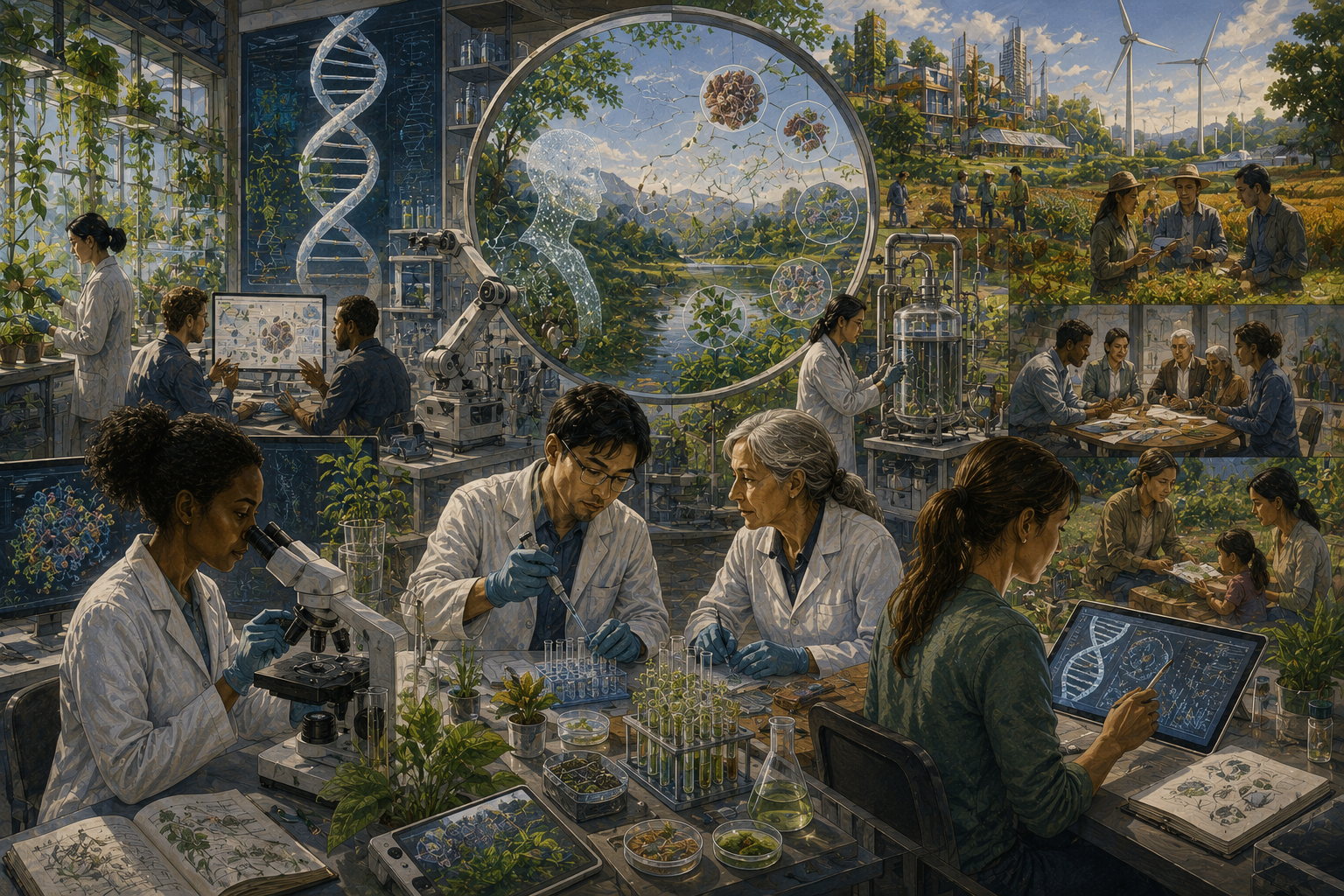
Biotechnology futures concern the long-term social, ecological, medical, agricultural, industrial, ethical, and security consequences of humanity’s growing capacity to read, edit, design, synthesize, manufacture, and govern living systems. Biotechnology is no longer limited to laboratories, pharmaceuticals, or isolated medical breakthroughs. It is becoming an infrastructural force across medicine, food systems, agriculture, climate adaptation, materials, manufacturing, biodiversity, biosecurity, data systems, artificial intelligence, public health, and geopolitical strategy.
Biotechnology futures are shaped by a convergence of scientific and technical capabilities: genome sequencing, CRISPR and other gene-editing tools, synthetic biology, biomanufacturing, cell and gene therapies, mRNA platforms, precision fermentation, engineered microbes, biosensors, AI-assisted protein design, computational biology, agricultural biotechnology, regenerative medicine, biofoundries, and distributed biological data infrastructures. These tools do not merely produce new products. They change what societies can imagine, design, repair, optimize, commercialize, regulate, and potentially misuse.
The central futures question is not whether biotechnology will become more powerful. It already is. The deeper question is how societies will govern living technologies whose consequences may extend across bodies, ecosystems, supply chains, public health systems, food systems, national security, intergenerational ethics, and the boundary between therapy, enhancement, production, and control.
Biotechnology can support extraordinary public goods: disease treatment, vaccine development, climate-resilient crops, low-carbon materials, environmental remediation, food-system resilience, diagnostic access, pandemic preparedness, and new forms of sustainable production. But it also carries serious risks: unequal access, biological surveillance, genetic discrimination, ecological disruption, dual-use misuse, patent enclosure, reproductive inequality, biosecurity threats, public mistrust, and the commodification of life itself.
This article examines biotechnology futures as a futures-thinking problem. It analyzes biotechnology as a long-term systems transformation rather than a narrow scientific field. It connects scientific capability, governance, ethics, public health, ecological responsibility, biosecurity, industrial strategy, justice, marginalized communities, and anticipatory regulation. It treats biotechnology not as an inevitable destiny, but as a contested social, institutional, and planetary pathway.
Main Library
Publications
Article Map
Futures Thinking
Related Topic
Artificial Intelligence Systems
Related Topic
Environmental Monitoring Systems
Related Topic
Stewardship & Ethics
What Are Biotechnology Futures?
Biotechnology futures examine how advances in biological science and engineering may reshape medicine, agriculture, ecosystems, industry, public health, security, ethics, and social life over time. Biotechnology is not one technology. It is a family of capabilities that allow humans to analyze, modify, synthesize, cultivate, scale, monitor, and commercialize biological processes.
These capabilities include genome sequencing, gene editing, synthetic biology, cell therapy, gene therapy, mRNA vaccine platforms, microbial engineering, biosensors, biomanufacturing, precision fermentation, tissue engineering, computational biology, AI-assisted drug discovery, agricultural biotechnology, environmental biotechnology, and biosecurity monitoring. Each capability can produce beneficial, harmful, or ambiguous futures depending on governance, access, values, institutional design, public trust, ecological context, and commercial incentives.
Unlike many digital technologies, biotechnology acts through living systems. It can alter cells, microbes, crops, animals, bodies, ecosystems, and reproductive possibilities. Its consequences may be biological, social, economic, ecological, ethical, and intergenerational at the same time. This gives biotechnology a distinctive futures profile: it can heal, feed, repair, and decarbonize, but it can also create forms of risk that are difficult to contain once biological systems replicate, spread, mutate, or become embedded in markets and institutions.
| Biotechnology Capability | Future Possibility | Governance Challenge |
|---|---|---|
| Genome sequencing | Earlier diagnosis, population health insight, pathogen surveillance, ancestry and trait analysis. | Privacy, consent, genetic discrimination, data ownership, and surveillance. |
| Gene editing | Treatment of genetic disease, crop improvement, research acceleration, possible germline interventions. | Safety, equity, public consent, heritability, and intergenerational ethics. |
| Synthetic biology | Designed organisms, engineered metabolic pathways, biosensors, bio-based materials, environmental applications. | Dual-use risk, ecological release, standards, biosafety, and biosecurity. |
| Biomanufacturing | Low-carbon chemicals, materials, medicines, foods, and industrial inputs. | Scale, feedstocks, supply chains, regulation, labor, and ecological impact. |
| Cell and gene therapies | Personalized and potentially curative treatments. | Access, cost, manufacturing complexity, long-term monitoring, and clinical evidence. |
| AI-assisted biology | Faster discovery of proteins, drugs, enzymes, diagnostics, and design candidates. | Validation, dual-use misuse, model opacity, and biological safety. |
| Agricultural biotechnology | Climate-resilient crops, pest resistance, nutrient improvement, reduced inputs. | Biodiversity, farmer dependence, patents, ecological effects, and food sovereignty. |
Biotechnology futures are not simply about what can be engineered. They are about how living systems become sites of design, power, care, risk, and responsibility.
Why Biotechnology Is a Futures Thinking Problem
Biotechnology requires futures thinking because its consequences unfold across long time horizons, uncertain pathways, and interacting systems. A new biological capability may begin as a research tool, then become a medical therapy, industrial process, agricultural input, environmental intervention, security concern, commercial platform, or political controversy. The same underlying capability can move across domains as institutions, markets, regulation, and public trust change.
Futures thinking is necessary because biotechnology creates uncertainty at several levels:
- Scientific uncertainty: biological systems are complex, adaptive, context-dependent, and sometimes poorly understood.
- Clinical uncertainty: therapies may produce benefits, side effects, unequal responses, or long-term consequences not visible in early trials.
- Ecological uncertainty: engineered organisms, agricultural traits, or environmental interventions may interact with ecosystems in nonlinear ways.
- Governance uncertainty: regulatory systems may lag behind scientific capability, commercial scale, or cross-border deployment.
- Ethical uncertainty: societies disagree about acceptable uses, enhancement, reproductive intervention, ownership, consent, and the meaning of altering life.
- Security uncertainty: tools that enable beneficial innovation may also lower barriers to harmful misuse or accidental release.
- Justice uncertainty: benefits and risks may be distributed unevenly across class, race, geography, disability, gender, nationality, and colonial histories.
Because biotechnology acts through living systems, ordinary risk management may be insufficient. Societies need anticipatory governance: horizon scanning, scenario planning, early warning indicators, public deliberation, ethical review, biosafety, biosecurity, ecological monitoring, data governance, and institutions capable of learning as the science evolves.
| Futures Question | Biotechnology Relevance | Example |
|---|---|---|
| What is becoming technically possible? | Capability changes may open new medical, industrial, agricultural, or security pathways. | AI-assisted protein design, gene editing, synthetic cells, precision fermentation. |
| What is becoming governable? | Institutions may lack rules, expertise, standards, or enforcement mechanisms. | Human genome editing, dual-use research, distributed biofoundries. |
| What is becoming commercially scalable? | Biotechnology futures depend on manufacturing, supply chains, capital, and regulation. | Cell therapies, bio-based materials, alternative proteins, biochemicals. |
| What is becoming socially contested? | Public legitimacy can shape adoption, delay, backlash, or prohibition. | Germline editing, GM crops, synthetic organisms, biological surveillance. |
| What is becoming ecologically risky? | Living systems interact with other living systems beyond laboratory boundaries. | Gene drives, engineered microbes, agricultural monocultures. |
| What is becoming unjust? | Benefits may concentrate while risks are externalized to vulnerable communities. | Therapy pricing, genetic data extraction, bioprospecting, food-system dependence. |
Biotechnology futures demand foresight because the ability to intervene in life increasingly exceeds the capacity of many institutions to deliberate, govern, and distribute benefits justly.
Core Domains of Biotechnology Futures
Biotechnology futures cut across multiple domains. These domains should not be treated as separate silos, because scientific platforms, data infrastructures, manufacturing systems, and governance questions often overlap. A gene-editing tool may shape medicine, agriculture, conservation, biosecurity, and reproductive ethics. A synthetic biology platform may support climate adaptation while raising dual-use or ecological questions. AI-assisted biology may accelerate drug discovery while changing the speed and scale of biosecurity risk.
1. Medical Biotechnology
Medical biotechnology includes vaccines, biologics, diagnostics, cell therapies, gene therapies, regenerative medicine, mRNA platforms, immunotherapies, pharmacogenomics, and personalized medicine. Its promise is substantial: earlier diagnosis, more targeted treatment, potential cures, and improved public-health preparedness. Its risks include unequal access, high costs, long-term safety uncertainty, clinical hype, genetic discrimination, and concentration of therapeutic power.
2. Agricultural Biotechnology
Agricultural biotechnology includes genetically modified crops, gene-edited crops, microbial fertilizers, pest-resistant traits, drought tolerance, animal biotechnology, biosensors, and precision fermentation. Its promise includes food security, climate resilience, reduced inputs, and improved nutrition. Its risks include farmer dependence, biodiversity loss, patent enclosure, ecological spillover, monoculture reinforcement, and conflicts over food sovereignty.
3. Industrial Biotechnology and Biomanufacturing
Industrial biotechnology uses biological systems to produce chemicals, materials, fuels, medicines, enzymes, foods, and manufacturing inputs. It may support lower-carbon production and resilient supply chains. But it also depends on scale, feedstocks, energy, land use, waste streams, labor, standards, and economic governance. A bio-based product is not automatically sustainable simply because biology is involved.
4. Environmental Biotechnology
Environmental biotechnology includes bioremediation, biosensors, engineered microbes, ecosystem monitoring, methane mitigation, wastewater treatment, soil restoration, and possible interventions in biodiversity conservation. It raises difficult questions about ecological release, reversibility, monitoring, community consent, and whether technical fixes distract from structural ecological responsibility.
5. Synthetic Biology
Synthetic biology seeks to design and build biological systems with useful functions. It includes genetic circuits, engineered microbes, metabolic engineering, DNA synthesis, biofoundries, cell-free systems, and programmable biology. It can support medicine, manufacturing, agriculture, and climate applications, but also intensifies questions of dual use, standards, containment, and biological design ethics.
6. Computational Biology and AI-Enabled Bioscience
Computational biology and AI-enabled bioscience accelerate analysis, design, simulation, protein prediction, drug discovery, genomic interpretation, and biological modeling. These tools can expand discovery capacity but also create new forms of opacity, data dependence, model uncertainty, and biosecurity risk when design capabilities become easier to access.
7. Biosecurity and Dual-Use Governance
Biosecurity concerns the prevention of accidental, negligent, or deliberate biological harm. Biotechnology futures require responsible life-sciences governance because the same knowledge that supports vaccines, diagnostics, and therapies may also enable dangerous pathogen work, toxin production, or misuse of synthetic biology tools.
8. Biopolitics, Ethics, and Social Justice
Biotechnology changes how societies classify, value, treat, monitor, and govern bodies, populations, traits, diseases, reproduction, disability, food, life, and ecosystems. It therefore raises questions about dignity, consent, disability justice, colonial extraction, racialized medicine, reproductive autonomy, Indigenous knowledge, environmental justice, and the political economy of biological data.
| Domain | Primary Promise | Primary Risk |
|---|---|---|
| Medical biotechnology | Targeted treatment, prevention, diagnostics, and possible cures. | Unequal access, safety uncertainty, high costs, genetic discrimination. |
| Agricultural biotechnology | Climate resilience, yield stability, nutrition, reduced inputs. | Biodiversity loss, patent dependence, ecological spillover, food sovereignty concerns. |
| Industrial biotechnology | Bio-based production, lower-carbon materials, supply-chain resilience. | Scale, feedstock competition, greenwashing, uneven industrial benefits. |
| Environmental biotechnology | Bioremediation, monitoring, restoration, ecological adaptation. | Irreversibility, ecological uncertainty, consent, technical-fix politics. |
| Synthetic biology | Programmable biological systems for medicine, industry, and environment. | Dual use, containment, standards, security, ecological release. |
| AI-enabled biology | Accelerated discovery, design, modeling, and drug development. | Model opacity, validation gaps, misuse, concentration of capability. |
| Biosecurity | Preparedness, pathogen detection, safer research governance. | Militarization, secrecy, uneven enforcement, misuse. |
| Biopolitics and ethics | Public deliberation, health justice, dignity, and responsible innovation. | Commodification, surveillance, exclusion, eugenic logic, colonial extraction. |
The future of biotechnology is not one sectoral future. It is a systems-level transformation in how societies relate to life, health, production, ecology, and power.
Genomics and Gene Editing
Genomics and gene editing are among the most visible and ethically charged areas of biotechnology futures. Genome sequencing makes biological information more legible. Gene editing makes certain biological interventions more precise, programmable, and potentially heritable. Together, these capabilities transform diagnosis, research, treatment, agriculture, reproduction, pathogen surveillance, population health, and identity.
Somatic gene editing, which affects non-reproductive cells, may help treat serious diseases without passing changes to future generations. Heritable or germline editing raises much deeper ethical questions because changes may be transmitted to descendants. The distinction matters. Treating a severe disease in a living patient is different from altering embryos, reproductive cells, or lineages in ways future people cannot consent to.
Gene editing also challenges the boundary between therapy and enhancement. If editing can reduce risk of disease, could it also be used to select or modify traits associated with height, cognition, appearance, athletic ability, or other socially valued characteristics? Even if many such enhancements remain scientifically unrealistic, the social imagination surrounding them can still shape markets, inequality, reproductive pressure, disability stigma, and eugenic forms of thinking.
| Use Case | Potential Benefit | Ethical and Governance Concern |
|---|---|---|
| Somatic gene therapy | Treats or potentially cures serious disease in affected individuals. | Safety, access, cost, durability, and long-term monitoring. |
| Heritable genome editing | Could theoretically prevent transmission of severe genetic disease. | Consent of future generations, irreversible lineage effects, social pressure, inequality. |
| Gene-edited crops | Supports climate resilience, nutrition, pest resistance, or reduced inputs. | Ecological impact, farmer dependence, patents, biodiversity, food sovereignty. |
| Pathogen genomics | Improves outbreak detection, surveillance, and response. | Privacy, stigma, geopolitical trust, data sharing, and surveillance governance. |
| Consumer genomics | Provides ancestry, trait, health-risk, or family information. | Data ownership, consent, misinterpretation, discrimination, and family privacy. |
| Embryo selection and reproductive genomics | May identify serious disease risks in reproductive contexts. | Disability justice, trait selection, inequality, commercialization, and eugenic histories. |
Genome editing is not only a technical intervention in DNA. It is an intervention in kinship, medicine, disability, reproduction, identity, inequality, and intergenerational responsibility.
Synthetic Biology and Engineering Biology
Synthetic biology and engineering biology seek to make biological systems more designable. Instead of only observing or modifying existing organisms, synthetic biology attempts to construct new biological functions, circuits, pathways, and systems. This includes engineered microbes that produce chemicals, biosensors that detect environmental signals, cells that respond to disease markers, enzymes that break down pollutants, and biological production systems that replace petroleum-based processes.
The promise is enormous because biology is already a manufacturing system. Cells can self-assemble, replicate, catalyze reactions, operate at ambient conditions, and produce complex molecules. Engineering biology attempts to harness these capacities for medicine, materials, agriculture, energy, environmental monitoring, and industrial production.
But design metaphors can be misleading. Biological systems are not simple machines. They mutate, interact, reproduce, evolve, and behave differently across contexts. What functions in a laboratory may fail, escape, drift, or interact unpredictably outside controlled environments. This is why synthetic biology futures require a careful balance between innovation, standards, biosafety, containment, public trust, and ecological humility.
| Synthetic Biology Area | Future Application | Governance Issue |
|---|---|---|
| Engineered microbes | Chemicals, fuels, medicines, food ingredients, environmental sensing. | Containment, mutation, ecological release, monitoring, industrial scale. |
| Genetic circuits | Programmable cellular behavior for sensing, therapy, or manufacturing. | Reliability, biological noise, failure modes, standardization. |
| DNA synthesis | Rapid construction of genetic sequences for research and design. | Screening, access control, dual-use misuse, international standards. |
| Biofoundries | Automated design-build-test-learn platforms for biological engineering. | Concentration of capability, safety protocols, workforce skills, oversight. |
| Cell-free systems | Biological production outside living cells. | Scale, cost, quality control, containment, and use cases. |
| Gene drives | Population-level genetic changes in wild organisms. | Ecological uncertainty, reversibility, consent, transboundary governance. |
Synthetic biology makes life more programmable, but not fully predictable. That tension defines much of its futures significance.
Biomanufacturing and the Bioeconomy
Biomanufacturing uses biological systems to produce goods: medicines, vaccines, enzymes, chemicals, foods, fuels, textiles, polymers, materials, and agricultural inputs. In future-oriented policy debates, biomanufacturing is often linked to the bioeconomy: the use of biological resources, processes, and knowledge as part of economic production.
Biomanufacturing could support lower-carbon production, distributed manufacturing, resilient supply chains, and alternatives to fossil-based chemicals or animal-intensive food systems. It may become strategically important in medicine, defense, food security, climate policy, industrial policy, and regional development. But the bioeconomy should not be treated as automatically sustainable. Biological production still requires feedstocks, energy, water, land, labor, logistics, capital, regulation, and waste management.
The political economy of biomanufacturing matters. If the bioeconomy is organized around proprietary platforms, concentrated ownership, extractive feedstock systems, and unequal trade relations, it may reproduce old patterns under green language. If it is organized around public value, open standards, labor protections, ecological accounting, community benefit, and resilient supply chains, it could support more just forms of production.
| Biomanufacturing Future | Potential Benefit | Strategic Risk |
|---|---|---|
| Bio-based materials | Alternatives to petroleum-based plastics, textiles, chemicals, and industrial inputs. | Feedstock competition, greenwashing, land-use pressure, weak life-cycle accounting. |
| Precision fermentation | Production of proteins, fats, enzymes, and food ingredients. | Market concentration, farmer displacement, energy use, consumer trust. |
| Distributed biomanufacturing | More resilient medical or industrial supply chains. | Quality control, biosafety, regulation, and uneven technical capacity. |
| Pharmaceutical manufacturing | Faster and more flexible production of biologics, vaccines, and advanced therapies. | Access, pricing, manufacturing bottlenecks, cold chains, and global equity. |
| Industrial enzymes and microbes | Cleaner production, waste reduction, and process efficiency. | Containment, scale, ecological release, and occupational safety. |
| Regional bioeconomy strategies | New jobs, rural development, and local production capacity. | Unequal benefits, land pressure, extractive development, and weak labor standards. |
The bioeconomy is not inherently sustainable or just. Its value depends on how biological production is governed, measured, owned, scaled, and embedded in ecological limits.
Medicine, Public Health, and Precision Care
Medicine is one of the most transformative arenas for biotechnology futures. Advances in genomics, diagnostics, mRNA platforms, biologics, immunotherapy, cell therapy, gene therapy, regenerative medicine, microbiome science, biosensors, and AI-assisted drug discovery are changing how disease is detected, prevented, treated, and monitored.
Precision medicine promises more targeted care based on genetic, molecular, environmental, behavioral, and clinical data. In ideal form, it could improve diagnosis, reduce ineffective treatments, personalize therapies, and support preventive care. But precision medicine also risks becoming precision inequality if only wealthy patients, elite health systems, or well-represented genetic populations benefit.
Public health raises a broader question. Biotechnology should not be judged only by personalized therapies at the frontier of medicine. It should also be judged by whether it improves population health: vaccines, diagnostics, surveillance, antimicrobial resistance monitoring, maternal health, neglected diseases, water safety, low-cost therapeutics, and equitable access across regions and communities.
| Medical Biotechnology Area | Future Promise | Equity Concern |
|---|---|---|
| Cell and gene therapies | Potentially curative treatments for severe disease. | Extremely high costs, manufacturing constraints, limited access. |
| mRNA platforms | Rapid vaccine development and possible therapeutic applications. | Global manufacturing capacity, distribution, trust, and intellectual property. |
| Precision medicine | Tailored therapies and risk prediction. | Underrepresentation in genomic datasets and unequal clinical infrastructure. |
| Point-of-care diagnostics | Earlier and more accessible detection. | Affordability, implementation, data privacy, and rural access. |
| AI-assisted drug discovery | Faster target identification and candidate screening. | Validation, cost, proprietary models, and neglected disease priorities. |
| Pathogen surveillance | Improved outbreak detection and public-health response. | Stigma, surveillance overreach, data sharing, and geopolitical distrust. |
Medical biotechnology should be evaluated not only by scientific novelty, but by health justice: who gains access, who is studied, who is protected, and whose diseases receive investment.
Agriculture, Food Systems, and Biodiversity
Biotechnology futures are deeply connected to food systems. Climate change, soil degradation, water stress, biodiversity loss, pest pressure, changing diets, supply-chain fragility, and population dynamics all create pressure to transform agriculture. Biotechnology may contribute through gene-edited crops, microbial fertilizers, pest-resistant traits, drought tolerance, disease-resistant animals, alternative proteins, precision fermentation, biosensors, and improved breeding methods.
But agricultural biotechnology must be assessed in ecological and political context. A crop trait may reduce pesticide use in one system and reinforce monoculture in another. A drought-tolerant variety may support resilience but also increase dependence on proprietary seeds. Alternative proteins may reduce land and emissions pressure but disrupt livelihoods in farming communities if transition planning is weak. Microbial soil products may improve soil function, or they may be oversold without durable evidence.
Food is not just a production problem. It is a question of land, culture, sovereignty, labor, nutrition, ecology, public health, and power. Biotechnology futures in agriculture must therefore include farmers, Indigenous communities, food workers, consumers, ecologists, public-health experts, and marginalized communities affected by land use, pollution, and food insecurity.
| Food-System Application | Potential Benefit | Governance Question |
|---|---|---|
| Gene-edited crops | Drought tolerance, disease resistance, nutrition, reduced inputs. | Who controls seeds, traits, data, and access? |
| Microbial fertilizers | Reduced synthetic inputs and improved soil function. | What evidence supports long-term field performance? |
| Alternative proteins | Lower land use, lower emissions, diversified food supply. | How are farmers, workers, and regions included in transition planning? |
| Livestock biotechnology | Disease resistance, welfare improvement, lower emissions. | Animal ethics, consumer trust, ecological effects, and market concentration. |
| Agricultural biosensors | Early detection of disease, soil stress, water stress, and pests. | Data ownership, farmer dependence, and unequal access. |
| Biodiversity genomics | Improved monitoring of species, ecosystems, and conservation priorities. | Indigenous rights, benefit sharing, data sovereignty, and conservation ethics. |
A biotechnology future that feeds the world while weakening biodiversity, farmer autonomy, or food sovereignty is not a sustainable food future.
Climate, Ecology, and Bioremediation
Biotechnology is increasingly framed as part of climate and ecological strategy. Engineered microbes may help produce low-carbon materials, remove pollutants, transform waste, capture carbon, detect ecosystem stress, or reduce methane emissions. Biosensors may improve environmental monitoring. Biotechnology may support climate-resilient agriculture, soil restoration, wastewater treatment, and circular production systems.
These possibilities are important, but they must be handled carefully. Biological interventions in ecosystems can be difficult to reverse. Engineered organisms may interact with other species, mutate, fail, or spread beyond intended boundaries. Even contained biomanufacturing systems may create feedstock, energy, waste, and land-use pressures. Climate biotechnology can also become a technical-fix narrative that avoids deeper changes in fossil fuel dependence, consumption, land use, inequality, and industrial systems.
Environmental biotechnology should therefore be governed through ecological precaution, public consent, monitoring, reversibility analysis, life-cycle assessment, and attention to environmental justice. Communities already burdened by pollution should not become testing grounds for poorly governed biological interventions.
| Climate or Ecological Use | Potential Contribution | Risk or Constraint |
|---|---|---|
| Bioremediation | Microbes or enzymes degrade pollutants or support cleanup. | Incomplete degradation, ecological side effects, accountability for sites. |
| Methane mitigation | Biological tools reduce emissions from agriculture or waste. | Scale, verification, animal welfare, and food-system context. |
| Bio-based materials | Substitute for fossil-derived chemicals or plastics. | Feedstock use, land pressure, waste, life-cycle impacts. |
| Environmental biosensors | Detect pathogens, toxins, stress, or ecosystem change. | Data governance, false positives, maintenance, and unequal monitoring. |
| Engineered ecosystem interventions | Modify organisms or communities to achieve ecological goals. | Irreversibility, uncertainty, transboundary effects, consent. |
| Climate-resilient crops | Support adaptation to heat, drought, disease, or salinity. | Seed dependence, monoculture, local suitability, and farmer participation. |
Biotechnology can support climate and ecological resilience, but it cannot substitute for ecological responsibility, democratic governance, and structural decarbonization.
AI and Computational Biology
Artificial intelligence is becoming a major accelerator of biotechnology. Machine learning systems can help predict protein structure, design molecules, interpret genomic variants, identify drug targets, optimize fermentation processes, analyze microscopy, model biological pathways, screen compounds, and detect patterns across large biological datasets. AI can shorten discovery cycles and expand the space of biological designs that researchers can explore.
AI-enabled biology also changes the risk landscape. The faster and more accessible biological design becomes, the more important validation, containment, biosafety, biosecurity, and responsible access become. A model that proposes candidate molecules, proteins, or genetic constructs may be useful for medicine and industry, but could also raise dual-use concerns if safeguards are weak. AI may also amplify data inequities: models trained on biased or incomplete biological data may perform poorly for underrepresented populations, diseases, organisms, or environments.
The convergence of AI and biotechnology also creates institutional concentration. The most capable systems may depend on proprietary datasets, compute infrastructure, specialized labs, automated platforms, and capital-intensive pipelines. This could concentrate discovery power among large firms, elite universities, military institutions, and countries with advanced infrastructure.
| AI-Biotech Capability | Future Value | Governance Concern |
|---|---|---|
| Protein design | New enzymes, therapeutics, materials, and biological tools. | Validation, dual use, intellectual property, and access. |
| Drug discovery | Faster target discovery and candidate screening. | Clinical translation, proprietary models, neglected diseases. |
| Genomic interpretation | Improved diagnosis and risk analysis. | Dataset bias, privacy, uncertainty, and discrimination. |
| Automated biofoundries | Accelerated design-build-test-learn cycles. | Biosafety, standardization, oversight, and concentration of capability. |
| Pathogen surveillance | Earlier detection and outbreak response. | Stigma, geopolitical misuse, data governance, and trust. |
| Bioprocess optimization | Improved yield, efficiency, and scale-up. | Labor impacts, quality control, and industrial concentration. |
AI does not merely help biotechnology move faster. It changes who can design biology, how quickly biological designs can be generated, and how urgently governance must adapt.
Biosecurity, Dual Use, and Governance
Biotechnology futures must include biosecurity because powerful life-sciences tools can be used for both beneficial and harmful purposes. Dual-use research is research that can advance knowledge, health, or preparedness while also creating information, materials, or capabilities that could be misused. This does not mean biotechnology should be frozen by fear. It means responsible innovation must include risk assessment, oversight, norms, training, screening, security, and international cooperation.
Biosecurity is not only about malicious actors. It also includes accidents, containment failures, poor laboratory practices, weak oversight, inadequate training, supply-chain gaps, and incentives that reward speed over safety. As biotechnology becomes more automated, distributed, and computationally assisted, governance must evolve beyond traditional laboratory regulation.
Important governance questions include DNA synthesis screening, pathogen research oversight, lab biosafety, biofoundry standards, AI model safeguards, data access controls, international reporting, public-health preparedness, and accountability for private-sector platforms. The goal is not to suppress beneficial research. The goal is to prevent preventable harm while preserving legitimate science and public benefit.
| Biosecurity Area | Risk | Governance Need |
|---|---|---|
| Dual-use research | Beneficial knowledge may enable harmful applications. | Risk-benefit review, oversight, transparency, and responsible publication norms. |
| DNA synthesis | Hazardous sequences could be ordered or assembled. | Sequence screening, customer screening, international standards. |
| Pathogen research | Accidental release or misuse of dangerous organisms. | Biosafety, biosecurity, training, auditing, and emergency response. |
| AI-enabled design | Models may lower barriers to harmful biological design. | Safeguards, monitoring, access controls, red-teaming, and secure-by-design practices. |
| Distributed bioengineering | Capability spreads beyond traditional institutions. | Education, norms, licensing, oversight, and community stewardship. |
| Biological data systems | Sensitive pathogen, genomic, or vulnerability data may be misused. | Data governance, privacy, security, and legitimate access rules. |
Responsible biotechnology governance must be capable of supporting beneficial research while reducing the risk that biological knowledge, tools, or materials cause harm.
Ethics, Equity, and Marginalized Communities
Biotechnology futures are inseparable from ethics and equity. Biological technologies act on bodies, populations, reproduction, disease, disability, food, land, ecosystems, and ancestry. These are not neutral domains. They are already shaped by histories of racism, colonialism, eugenics, medical exploitation, environmental injustice, ableism, gender inequality, reproductive control, land dispossession, and unequal access to healthcare.
Marginalized communities should not be treated as afterthoughts in biotechnology governance. They are often most exposed to the risks and least likely to receive early benefits. Communities facing environmental pollution may be targeted for bioremediation experiments. Patients with rare or neglected diseases may be excluded from profitable research. Indigenous communities may see biological samples, genetic data, or traditional knowledge extracted without fair benefit sharing. Disabled people may face renewed stigma if genetic technologies frame certain lives primarily as conditions to eliminate.
Equity requires more than access after innovation. It requires participation before design. It asks who defines the problem, whose knowledge counts, who owns data, who shares benefits, who bears risks, who can refuse, and who has power to shape the pathway.
| Equity Issue | Biotechnology Context | Justice-Oriented Question |
|---|---|---|
| Genetic data extraction | Populations may be sampled for research or commercial databases. | Who owns the data, who consents, and who benefits? |
| Clinical access | Advanced therapies may be extremely expensive or geographically concentrated. | Who receives treatment, and who is excluded? |
| Disability justice | Genetic selection or editing may frame disability as a problem to eliminate. | Are disabled people included in defining ethical priorities? |
| Environmental justice | Biotechnology may be deployed in polluted or vulnerable communities. | Do communities have consent, monitoring power, and protection? |
| Food sovereignty | Biotech seeds and food platforms may reshape farming systems. | Do farmers and communities retain autonomy over food systems? |
| Indigenous data sovereignty | Genomic, biodiversity, and traditional knowledge may be extracted. | Are Indigenous rights, governance, and benefit-sharing respected? |
| Global health inequality | Vaccines, diagnostics, and therapies may not reach low-resource settings. | Is biotechnology organized for public health or only profitable markets? |
A biotechnology future that cures some while extracting from, surveilling, excluding, or stigmatizing others is not ethically advanced. It is a new form of biological inequality.
Ownership, Patents, and the Politics of Life
Biotechnology raises difficult questions about ownership. Biological materials, genetic sequences, engineered organisms, cell lines, therapies, seeds, microbial strains, data, platforms, and manufacturing processes can become intellectual property. Patents and proprietary platforms may incentivize investment, but they can also restrict access, concentrate power, raise costs, limit research freedom, and transform life processes into private assets.
Ownership matters because biotechnology often depends on shared biological inheritance, public research investment, patient participation, community knowledge, biodiversity, and ecological systems. When commercial rights are built on these foundations, justice requires asking who contributed, who benefits, and who is excluded.
There is also a public-interest question. Some biotechnologies are essential for health, food, climate, and security. If access depends entirely on proprietary pricing or commercial strategy, public welfare may be subordinated to market power. This does not mean innovation should be unsupported. It means public funding, procurement, licensing, standards, prize systems, open science, and benefit-sharing mechanisms must be part of biotechnology governance.
| Ownership Site | Potential Public Value | Political Economy Risk |
|---|---|---|
| Therapeutic platforms | Faster development of treatments and vaccines. | High prices, access barriers, and dependency on proprietary systems. |
| Genetic datasets | Improved research and diagnosis. | Privacy loss, extraction, undercompensation, and unequal benefit sharing. |
| Seeds and crop traits | Improved resilience and productivity. | Farmer dependence, patent control, and biodiversity reduction. |
| Microbial strains | Biomanufacturing, agriculture, remediation, and medicine. | Enclosure of biological production platforms. |
| Traditional knowledge | Ecological and medicinal insight. | Biopiracy, colonial extraction, and weak community control. |
| Biofoundry infrastructure | Accelerated design-build-test-learn cycles. | Concentration of capability among wealthy firms and states. |
The politics of biotechnology is partly the politics of who gets to own, access, price, modify, and benefit from living systems.
Future Scenarios for Biotechnology
Biotechnology futures are highly uncertain because they depend on scientific progress, public trust, regulatory capacity, market structure, geopolitical competition, ecological pressure, biosecurity incidents, clinical breakthroughs, and ethical legitimacy. Scenario planning helps avoid one-path thinking. It shows that biotechnology could become a pathway toward public health and ecological resilience, or toward inequality, militarization, enclosure, and fragile biological control.
| Scenario | Description | Key Risk | Strategic Opportunity |
|---|---|---|---|
| Public-Interest Bioinnovation | Biotechnology is governed for health equity, ecological responsibility, open standards, and shared benefits. | Requires sustained public capacity and international cooperation. | Align biotech with public health, food resilience, climate adaptation, and justice. |
| Bioeconomy Acceleration | Biomanufacturing and synthetic biology scale rapidly across industry, agriculture, and medicine. | Commercial speed may outpace safety, labor, ecological, and equity governance. | Build standards, life-cycle accounting, workforce pathways, and responsible scale. |
| Genomic Inequality | Advanced therapies and genetic services concentrate among wealthy populations. | Health systems deepen inequality through unequal access to biological innovation. | Use public funding, licensing, and global access mechanisms to distribute benefits. |
| Biosecurity Crisis | A major accident, misuse event, or governance failure triggers public distrust and restrictive regulation. | Beneficial research may be damaged by preventable harm or secrecy. | Strengthen biosafety, dual-use oversight, responsible life-sciences norms, and preparedness. |
| Ecological Biotechnology Turn | Biotechnology becomes central to climate adaptation, remediation, food security, and biodiversity monitoring. | Technical fixes may distract from structural ecological change and create new ecological risks. | Pair biotechnology with ecological governance, community consent, and monitoring. |
| Corporate Biological Enclosure | Platforms, patents, datasets, seeds, therapies, and biofoundries become concentrated among a few actors. | Life-science capability becomes a source of private control and dependency. | Build public infrastructure, antitrust scrutiny, open science, and benefit-sharing rules. |
| Democratic Biofutures | Public deliberation, community governance, patient groups, farmers, workers, and marginalized communities shape biotechnology pathways. | Participation may be symbolic if not tied to real power. | Create institutions for consent, contestability, repair, and shared decision-making. |
Biotechnology futures will not be determined by scientific capability alone. They will be shaped by institutions, markets, publics, ethics, security systems, ecological limits, and struggles over who has authority to define the future of life.
Strategic Questions for Institutions
Governments, universities, firms, public-health agencies, hospitals, farmers, funders, regulators, and civil society organizations need stronger strategic questions for biotechnology. The right question is not simply “Can this be built?” It is “What system does this create, who benefits, who is exposed, and how will it be governed over time?”
| Strategic Question | What It Reveals | Why It Matters |
|---|---|---|
| What biological capability is emerging? | The technical function and possible domain expansion. | Research tools often become platforms across sectors. |
| What living system is being altered? | Cells, organisms, ecosystems, populations, bodies, or reproductive pathways. | Different biological scales require different governance. |
| Who defines the purpose? | Public health, profit, security, ecology, agriculture, or enhancement. | Purpose shapes acceptable risk and distribution of benefit. |
| Who bears the risk? | Patients, workers, farmers, ecosystems, communities, future generations. | Risk is often externalized to those with less power. |
| Who owns the platform, data, or product? | Commercial control, public access, intellectual property, and dependency. | Ownership shapes access and long-term power. |
| What would failure look like? | Clinical harm, ecological spread, biosecurity misuse, public backlash, inequality. | Failure modes must be anticipated before scale. |
| How will affected communities participate? | Consent, voice, refusal, benefit sharing, monitoring, and repair. | Legitimacy requires more than expert approval. |
| What monitoring and reversal mechanisms exist? | Post-deployment governance and adaptive learning. | Biological systems can change after release or treatment. |
Responsible biotechnology strategy begins when institutions stop treating biological innovation as a product pipeline and start treating it as a long-term public-governance responsibility.
Limits and Failure Modes
Biotechnology futures analysis can fail in several ways. It can become hype-driven, assuming that every emerging capability will scale smoothly. It can become fear-driven, treating all biological innovation as inherently dangerous. It can become market-driven, measuring success only through investment, patents, and commercialization. It can become technocratic, excluding the people most affected by biological interventions. It can become ethically shallow, treating consent, equity, and ecology as public-relations afterthoughts.
Another failure mode is solutionism. Biotechnology may be presented as a fix for climate change, hunger, disease, pollution, aging, biodiversity loss, or industrial sustainability without addressing structural causes. A gene-edited crop cannot by itself solve unequal land ownership, water scarcity, poverty, monoculture, or food waste. A cell therapy cannot by itself solve health-system inequality. Biomanufacturing cannot by itself solve overconsumption or fossil fuel dependence. Biotechnology can contribute, but it should not be used to avoid deeper political and ecological responsibilities.
| Failure Mode | Problem | Corrective Practice |
|---|---|---|
| Biotech hype | Overstates capability, speed, scalability, or certainty. | Use evidence standards, technology readiness assessment, and scenario testing. |
| Biotech fatalism | Treats powerful tools as inevitably harmful or uncontrollable. | Build governance, safeguards, democratic deliberation, and responsible innovation. |
| Market enclosure | Turns public science, data, and life processes into private control. | Use public-interest licensing, open science, antitrust, and benefit sharing. |
| Ethics washing | Uses ethical language without shifting power or practice. | Require enforceable accountability, community participation, and audit mechanisms. |
| Ecological simplification | Treats living systems as predictable machines. | Use ecological monitoring, reversibility analysis, and precaution. |
| Access inequality | Advanced therapies and tools benefit only wealthy populations. | Build global access models, public manufacturing, and equitable health systems. |
| Dual-use neglect | Ignores misuse, accidents, or security implications. | Strengthen responsible life-sciences governance and biosecurity norms. |
| Colonial extraction | Uses biological samples, land, data, or traditional knowledge without justice. | Respect Indigenous sovereignty, consent, repair, and benefit sharing. |
The greatest biotechnology failure may not be that societies move too slowly or too quickly. It may be that they move without enough public wisdom, ecological humility, and justice.
Mathematical Lens: Biotechnology Readiness, Risk, and Justice
A biotechnology readiness score can be represented as:
B_r = \alpha S + \beta M + \gamma G + \delta P
\]
Interpretation: \(B_r\) is biotechnology readiness, \(S\) is scientific maturity, \(M\) is manufacturing capacity, \(G\) is governance readiness, and \(P\) is public legitimacy. A biotechnology may be scientifically promising but socially unready if governance or legitimacy is weak.
A dual-use risk profile can be represented as:
D_u = C \times A \times (1 – O)
\]
Interpretation: \(D_u\) is dual-use risk, \(C\) is capability power, \(A\) is accessibility, and \(O\) is oversight strength. Risk rises when powerful biological capabilities become widely accessible without adequate oversight, norms, screening, or accountability.
A biotechnology justice score can be written conceptually as:
J_b = E + V + C + R – H
\]
Interpretation: \(J_b\) is biotechnology justice, \(E\) is equitable access, \(V\) is affected-community voice, \(C\) is consent, \(R\) is repair or benefit sharing, and \(H\) is harm concentration. A biotechnology can be technically successful while remaining unjust if benefits and risks are distributed unequally.
A bioeconomy sustainability profile can be represented as:
S_b = L + R_c + W + E_c – X
\]
Interpretation: \(S_b\) is bioeconomy sustainability, \(L\) is life-cycle performance, \(R_c\) is circularity or resource efficiency, \(W\) is worker and community benefit, \(E_c\) is ecological compatibility, and \(X\) is externalized harm. Bio-based production should be measured by full system effects, not by biological origin alone.
A clinical biotechnology access profile can be represented as:
A_t = \frac{Q \times C_a \times I}{P_c}
\]
Interpretation: \(A_t\) is access to a therapy, \(Q\) is clinical quality, \(C_a\) is care-system capacity, \(I\) is insurance or public financing support, and \(P_c\) is patient cost. Advanced therapies require more than scientific efficacy; they require manufacturing, delivery, financing, and health-system capacity.
These equations do not predict biotechnology futures. They make governance relationships visible: readiness, risk, justice, sustainability, and access must be evaluated together.
Computational Modeling for Biotechnology Futures
Computational modeling can help institutions compare biotechnology pathways by making assumptions explicit. A biotechnology futures workflow may combine technology readiness, scientific uncertainty, governance readiness, public legitimacy, dual-use risk, ecological uncertainty, equity, manufacturing capacity, and access conditions.
A professional biotechnology futures workflow may include:
- Capability register: gene editing, synthetic biology, biomanufacturing, diagnostics, cell therapy, AI-enabled biology, agricultural biotechnology, environmental biotechnology.
- Readiness assessment: scientific maturity, manufacturing capacity, regulatory readiness, clinical evidence, public legitimacy, and ecological knowledge.
- Risk register: safety uncertainty, ecological uncertainty, dual-use risk, data privacy, access inequality, market concentration, and public trust risk.
- Justice indicators: access, consent, affected-community voice, benefit sharing, harm concentration, disability justice, Indigenous data sovereignty, and environmental justice.
- Scenario profiles: public-interest bioinnovation, bioeconomy acceleration, genomic inequality, biosecurity crisis, ecological biotechnology, corporate enclosure, and democratic biofutures.
- Strategy testing: public manufacturing, open science, oversight regimes, community governance, biosafety standards, public-interest licensing, and equitable access mechanisms.
Biotechnology modeling should not reduce life to a dashboard. It should make the social, ecological, ethical, and institutional assumptions behind biological innovation more visible and contestable.
Advanced R Workflow: Comparing Biotechnology Futures
The R workflow below compares stylized biotechnology futures across scientific maturity, governance readiness, ecological uncertainty, dual-use risk, public legitimacy, equity access, manufacturing capacity, and community consent.
# ------------------------------------------------------------
# R Workflow: Comparing Biotechnology Futures
# Purpose:
#   Compare biotechnology futures across scientific maturity,
#   governance readiness, dual-use risk, ecological uncertainty,
#   equity access, public legitimacy, manufacturing capacity,
#   and community consent.
#
# Optional dependency:
#   install.packages(c("tidyverse"))
# ------------------------------------------------------------

library(tidyverse)

bio_futures <- tibble(
  future_type = c(
    "Public-Interest Bioinnovation",
    "Bioeconomy Acceleration",
    "Genomic Inequality",
    "Biosecurity Crisis",
    "Ecological Biotechnology Turn",
    "Corporate Biological Enclosure",
    "Democratic Biofutures"
  ),
  scientific_maturity = c(0.72, 0.78, 0.82, 0.64, 0.58, 0.80, 0.68),
  governance_readiness = c(0.78, 0.48, 0.42, 0.36, 0.58, 0.40, 0.82),
  ecological_uncertainty = c(0.42, 0.56, 0.34, 0.62, 0.74, 0.48, 0.46),
  dual_use_risk = c(0.36, 0.58, 0.42, 0.88, 0.54, 0.64, 0.34),
  public_legitimacy = c(0.76, 0.48, 0.36, 0.28, 0.52, 0.34, 0.84),
  equity_access = c(0.80, 0.44, 0.22, 0.30, 0.56, 0.28, 0.86),
  manufacturing_capacity = c(0.68, 0.84, 0.72, 0.42, 0.54, 0.78, 0.62),
  community_consent = c(0.74, 0.36, 0.28, 0.22, 0.50, 0.24, 0.88)
)

bio_futures <- bio_futures %>%
  mutate(
    responsible_biotech_capacity =
      0.16 * scientific_maturity +
      0.18 * governance_readiness +
      0.16 * public_legitimacy +
      0.16 * equity_access +
      0.12 * manufacturing_capacity +
      0.12 * community_consent +
      0.05 * (1 - ecological_uncertainty) +
      0.05 * (1 - dual_use_risk),

    biological_risk_pressure =
      0.22 * dual_use_risk +
      0.20 * ecological_uncertainty +
      0.18 * (1 - governance_readiness) +
      0.16 * (1 - public_legitimacy) +
      0.14 * (1 - community_consent) +
      0.10 * (1 - equity_access),

    justice_profile =
      0.28 * equity_access +
      0.24 * community_consent +
      0.20 * public_legitimacy +
      0.16 * governance_readiness +
      0.12 * (1 - biological_risk_pressure),

    scenario_class = case_when(
      justice_profile >= 0.75 ~ "High justice and governance capacity",
      biological_risk_pressure >= 0.62 ~ "High biological risk pressure",
      TRUE ~ "Contested biotechnology pathway"
    )
  ) %>%
  arrange(desc(responsible_biotech_capacity))

print(bio_futures)

bio_futures_long <- bio_futures %>%
  select(
    future_type,
    scientific_maturity,
    governance_readiness,
    ecological_uncertainty,
    dual_use_risk,
    public_legitimacy,
    equity_access,
    manufacturing_capacity,
    community_consent
  ) %>%
  pivot_longer(
    cols = -future_type,
    names_to = "dimension",
    values_to = "value"
  )

ggplot(bio_futures_long, aes(x = dimension, y = value, fill = future_type)) +
  geom_col(position = "dodge") +
  coord_flip() +
  labs(
    title = "Biotechnology Futures: Scenario Dimensions",
    x = "Dimension",
    y = "Value",
    fill = "Future Type"
  ) +
  theme_minimal(base_size = 12)

ggplot(bio_futures, aes(x = reorder(future_type, responsible_biotech_capacity), y = responsible_biotech_capacity)) +
  geom_col() +
  coord_flip() +
  labs(
    title = "Responsible Biotechnology Capacity by Scenario",
    x = "Future Type",
    y = "Responsible Biotechnology Capacity"
  ) +
  theme_minimal(base_size = 12)

dir.create("outputs", showWarnings = FALSE)
write_csv(bio_futures, "outputs/biotechnology_future_profiles.csv")
This workflow shows that biotechnology futures should be evaluated across governance, public legitimacy, equity, ecological uncertainty, and dual-use risk—not scientific maturity alone.
Advanced Python Workflow: Simulating Biotechnology Pathways
The Python workflow below simulates biotechnology pathways under different assumptions about scientific maturity, governance readiness, public legitimacy, equity access, manufacturing capacity, ecological uncertainty, and dual-use risk.
# ------------------------------------------------------------
# Python Workflow: Simulating Biotechnology Pathways
# Purpose:
#   Compare stylized biotechnology pathways under scientific,
#   governance, ecological, dual-use, public legitimacy,
#   equity, and manufacturing conditions.
#
# Optional dependencies:
#   pip install pandas numpy matplotlib
# ------------------------------------------------------------

from pathlib import Path

import numpy as np
import pandas as pd
import matplotlib.pyplot as plt

OUTPUT_DIR = Path("outputs")
OUTPUT_DIR.mkdir(exist_ok=True)

time_steps = np.arange(1, 41)

pathways = [
    {
        "pathway": "Public-Interest Bioinnovation",
        "science": 0.72,
        "governance": 0.78,
        "legitimacy": 0.76,
        "equity": 0.80,
        "manufacturing": 0.68,
        "ecological_uncertainty": 0.42,
        "dual_use_risk": 0.36,
        "initial_viability": 1.00
    },
    {
        "pathway": "Bioeconomy Acceleration",
        "science": 0.78,
        "governance": 0.48,
        "legitimacy": 0.48,
        "equity": 0.44,
        "manufacturing": 0.84,
        "ecological_uncertainty": 0.56,
        "dual_use_risk": 0.58,
        "initial_viability": 1.00
    },
    {
        "pathway": "Genomic Inequality",
        "science": 0.82,
        "governance": 0.42,
        "legitimacy": 0.36,
        "equity": 0.22,
        "manufacturing": 0.72,
        "ecological_uncertainty": 0.34,
        "dual_use_risk": 0.42,
        "initial_viability": 1.00
    },
    {
        "pathway": "Biosecurity Crisis",
        "science": 0.64,
        "governance": 0.36,
        "legitimacy": 0.28,
        "equity": 0.30,
        "manufacturing": 0.42,
        "ecological_uncertainty": 0.62,
        "dual_use_risk": 0.88,
        "initial_viability": 1.00
    },
    {
        "pathway": "Democratic Biofutures",
        "science": 0.68,
        "governance": 0.82,
        "legitimacy": 0.84,
        "equity": 0.86,
        "manufacturing": 0.62,
        "ecological_uncertainty": 0.46,
        "dual_use_risk": 0.34,
        "initial_viability": 1.00
    }
]

def simulate_biotech_pathway(
    science,
    governance,
    legitimacy,
    equity,
    manufacturing,
    ecological_uncertainty,
    dual_use_risk,
    initial_viability
):
    viability = np.zeros(len(time_steps))
    biological_risk = np.zeros(len(time_steps))
    access_capacity = np.zeros(len(time_steps))

    viability[0] = initial_viability
    biological_risk[0] = 0.30 + 0.20 * dual_use_risk + 0.15 * ecological_uncertainty
    access_capacity[0] = equity

    for t in range(1, len(time_steps)):
        disruption = 0.10 if (t + 1) % 9 == 0 else 0.03

        innovation_force = (
            0.24 * science +
            0.20 * manufacturing +
            0.18 * governance +
            0.16 * legitimacy +
            0.16 * equity
        )

        risk_pressure = (
            0.24 * dual_use_risk +
            0.22 * ecological_uncertainty +
            0.18 * (1 - governance) +
            0.16 * (1 - legitimacy) +
            0.12 * (1 - equity) +
            disruption
        )

        access_capacity[t] = np.clip(
            access_capacity[t - 1]
            + 0.04 * equity
            + 0.03 * governance
            + 0.02 * manufacturing
            - 0.03 * (1 - legitimacy),
            0,
            1.4
        )

        biological_risk[t] = np.clip(
            biological_risk[t - 1] * 0.88
            + risk_pressure
            - 0.08 * governance
            - 0.05 * legitimacy,
            0,
            1.8
        )

        viability[t] = np.clip(
            viability[t - 1]
            + innovation_force / 4
            - risk_pressure / 4
            + 0.04 * access_capacity[t]
            - 0.03 * biological_risk[t],
            0,
            1.8
        )

    return viability, biological_risk, access_capacity

rows = []

for pathway in pathways:
    viability, risk, access = simulate_biotech_pathway(
        science=pathway["science"],
        governance=pathway["governance"],
        legitimacy=pathway["legitimacy"],
        equity=pathway["equity"],
        manufacturing=pathway["manufacturing"],
        ecological_uncertainty=pathway["ecological_uncertainty"],
        dual_use_risk=pathway["dual_use_risk"],
        initial_viability=pathway["initial_viability"]
    )

    for t, v, r, a in zip(time_steps, viability, risk, access):
        rows.append({
            "pathway": pathway["pathway"],
            "time": t,
            "biotechnology_viability": v,
            "biological_risk_pressure": r,
            "access_capacity": a
        })

df = pd.DataFrame(rows)

summary = (
    df.groupby("pathway")
    .agg(
        final_viability=("biotechnology_viability", "last"),
        mean_biological_risk=("biological_risk_pressure", "mean"),
        final_access_capacity=("access_capacity", "last")
    )
    .reset_index()
    .sort_values("final_viability", ascending=False)
)

print(summary)

plt.figure(figsize=(10, 6))
for pathway in df["pathway"].unique():
    subset = df[df["pathway"] == pathway]
    plt.plot(subset["time"], subset["biotechnology_viability"], label=pathway)

plt.xlabel("Time Step")
plt.ylabel("Biotechnology Viability")
plt.title("Biotechnology Pathway Viability")
plt.legend()
plt.tight_layout()
plt.savefig(OUTPUT_DIR / "biotechnology_viability_paths.png", dpi=150)
plt.close()

plt.figure(figsize=(10, 6))
for pathway in df["pathway"].unique():
    subset = df[df["pathway"] == pathway]
    plt.plot(subset["time"], subset["biological_risk_pressure"], label=pathway)

plt.xlabel("Time Step")
plt.ylabel("Biological Risk Pressure")
plt.title("Biological Risk Pressure Across Biotechnology Pathways")
plt.legend()
plt.tight_layout()
plt.savefig(OUTPUT_DIR / "biological_risk_pressure_paths.png", dpi=150)
plt.close()

df.to_csv(OUTPUT_DIR / "biotechnology_pathways.csv", index=False)
summary.to_csv(OUTPUT_DIR / "biotechnology_pathway_summary.csv", index=False)
This workflow illustrates a central biotechnology futures insight: scientific maturity alone does not produce a responsible future. Governance readiness, public legitimacy, equity access, ecological uncertainty, and dual-use risk shape whether biological capability becomes public value or systemic danger.
GitHub Repository
The companion repository for this article contains computational examples for biotechnology readiness, synthetic biology scenarios, bioeconomy pathways, genomic justice, dual-use risk, ecological uncertainty, access capacity, governance readiness, public legitimacy, and reproducible biotechnology futures workflows.
Complete Code Repository
The companion code includes Python, R, Julia, SQL, Rust, Go, C++, Fortran, C, documentation, synthetic datasets, outputs, and notebook placeholders for applied biotechnology futures workflows.
Why This Matters
Biotechnology futures matter because they concern the future of life itself: bodies, disease, reproduction, food, ecosystems, materials, pathogens, data, and biological production. Few technological domains reach so deeply into medicine, agriculture, ecology, economy, ethics, and security at the same time.
The promise is real. Biotechnology can help treat severe disease, accelerate vaccines, improve diagnostics, strengthen food resilience, reduce some industrial harms, support environmental monitoring, and expand scientific understanding. But the risks are also real. The same field can intensify inequality, commodify biological data, increase surveillance, create ecological uncertainty, concentrate ownership, revive eugenic thinking, or enable harmful misuse.
Futures thinking is essential because biotechnology is not one fixed future. It is a set of possible pathways shaped by governance, public trust, biosecurity, ecological responsibility, intellectual property, community consent, health systems, regulation, and global justice. The question is not whether societies will engineer biology. The question is whether they will do so with enough wisdom, humility, accountability, and care.
A responsible biotechnology future is not simply one in which biological innovation accelerates. It is one in which the power to alter life is governed by public purpose, ecological responsibility, democratic legitimacy, and justice for those most exposed to both biological harm and biological exclusion.
Related Articles
- Futures Thinking
- Technology Foresight
- AI and the Future of Decision-Making
- The Future of Work and Automation
- Digital Platform Futures
- Energy Transition Futures
- Global Health Futures
- Food System Futures
- Climate Futures and Planetary Boundaries
- Artificial Intelligence Systems
- Environmental Monitoring Systems
- Stewardship & Ethics
Further Reading
- European Commission (2024) Building the Future with Nature: Boosting Biotechnology and Biomanufacturing in the EU. Brussels: European Commission. Available at: https://eur-lex.europa.eu/legal-content/EN/TXT/?uri=celex%3A52024DC0137.
- Jasanoff, S. (2005) Designs on Nature: Science and Democracy in Europe and the United States. Princeton: Princeton University Press.
- National Academies of Sciences, Engineering, and Medicine (2017) Human Genome Editing: Science, Ethics, and Governance. Washington, DC: National Academies Press. Available at: https://www.nationalacademies.org/read/24623.
- National Academy of Medicine, National Academy of Sciences and the Royal Society (2020) Heritable Human Genome Editing. Washington, DC: National Academies Press. Available at: https://www.nationalacademies.org/publications/25665.
- National Security Commission on Emerging Biotechnology (2025) Charting the Future of Biotechnology. Washington, DC: NSCEB. Available at: https://www.biotech.senate.gov/final-report/chapters/.
- Organisation for Economic Co-operation and Development (OECD) (2025) Synthetic Biology in Focus: Policy Issues and Opportunities. Paris: OECD. Available at: https://www.oecd.org/content/dam/oecd/en/publications/reports/2025/02/synthetic-biology-in-focus_42893a6a/3e6510cf-en.pdf.
- Organisation for Economic Co-operation and Development (OECD) (2025) Synthetic Biology. Paris: OECD. Available at: https://www.oecd.org/en/topics/sub-issues/synthetic-biology.html.
- UK Department for Science, Innovation and Technology (2023) National Vision for Engineering Biology. London: UK Government. Available at: https://www.gov.uk/government/publications/national-vision-for-engineering-biology/national-vision-for-engineering-biology.
- World Health Organization (WHO) (2021) Human Genome Editing: Recommendations. Geneva: WHO. Available at: https://www.who.int/publications/i/item/9789240030381.
- World Health Organization (WHO) (2022) Global Guidance Framework for the Responsible Use of the Life Sciences: Mitigating Biorisks and Governing Dual-Use Research. Geneva: WHO. Available at: https://www.who.int/publications/i/item/9789240056107.
References
- European Commission (2024) Building the Future with Nature: Boosting Biotechnology and Biomanufacturing in the EU. Brussels: European Commission. Available at: https://eur-lex.europa.eu/legal-content/EN/TXT/?uri=celex%3A52024DC0137.
- European Commission (2024) Commission Takes Action to Boost Biotechnology and Biomanufacturing in the EU. Brussels: European Commission. Available at: https://knowledge4policy.ec.europa.eu/news/commission-takes-action-boost-biotechnology-biomanufacturing-eu_en.
- Jasanoff, S. (2005) Designs on Nature: Science and Democracy in Europe and the United States. Princeton: Princeton University Press.
- National Academies of Sciences, Engineering, and Medicine (2017) Human Genome Editing: Science, Ethics, and Governance. Washington, DC: National Academies Press. Available at: https://www.nationalacademies.org/read/24623.
- National Academy of Medicine, National Academy of Sciences and the Royal Society (2020) Heritable Human Genome Editing. Washington, DC: National Academies Press. Available at: https://www.nationalacademies.org/publications/25665.
- National Security Commission on Emerging Biotechnology (2025) Charting the Future of Biotechnology. Washington, DC: NSCEB. Available at: https://www.biotech.senate.gov/final-report/chapters/.
- National Security Commission on Emerging Biotechnology (2025) National Security Commission on Emerging Biotechnology Urges Swift Action to Protect U.S. National Security. Washington, DC: NSCEB. Available at: https://www.biotech.senate.gov/press-releases/nsceb-publishes-final-report/.
- Organisation for Economic Co-operation and Development (OECD) (2025) Synthetic Biology in Focus: Policy Issues and Opportunities. Paris: OECD. Available at: https://www.oecd.org/content/dam/oecd/en/publications/reports/2025/02/synthetic-biology-in-focus_42893a6a/3e6510cf-en.pdf.
- Organisation for Economic Co-operation and Development (OECD) (2025) Synthetic Biology. Paris: OECD. Available at: https://www.oecd.org/en/topics/sub-issues/synthetic-biology.html.
- UK Department for Science, Innovation and Technology (2023) National Vision for Engineering Biology. London: UK Government. Available at: https://www.gov.uk/government/publications/national-vision-for-engineering-biology/national-vision-for-engineering-biology.
- World Health Organization (WHO) (2021) Human Genome Editing: Recommendations. Geneva: WHO. Available at: https://www.who.int/publications/i/item/9789240030381.
- World Health Organization (WHO) (2021) WHO Expert Advisory Committee on Developing Global Standards for Governance and Oversight of Human Genome Editing: Position Paper. Geneva: WHO. Available at: https://www.who.int/publications/b/58764.
- World Health Organization (WHO) (2022) Global Guidance Framework for the Responsible Use of the Life Sciences: Mitigating Biorisks and Governing Dual-Use Research. Geneva: WHO. Available at: https://www.who.int/publications/i/item/9789240056107.