
Last Updated June 11, 2026
Storytelling still matters because human beings do not live by information alone. We live inside memory, identity, attention, trust, conflict, imagination, grief, hope, obligation, evidence, and meaning. Facts matter. Data matters. Institutions matter. But stories help people understand why facts matter, how events connect, who is affected, what has changed, and what responsibility now follows.
Why Storytelling Still Matters concludes the Storytelling series by asking why narrative remains essential in an age of information overload, institutional distrust, platform acceleration, artificial intelligence, synthetic media, public fragmentation, and ethical uncertainty. Story is not a substitute for truth. It is one of the ways truth becomes intelligible, memorable, contestable, and accountable in human life.
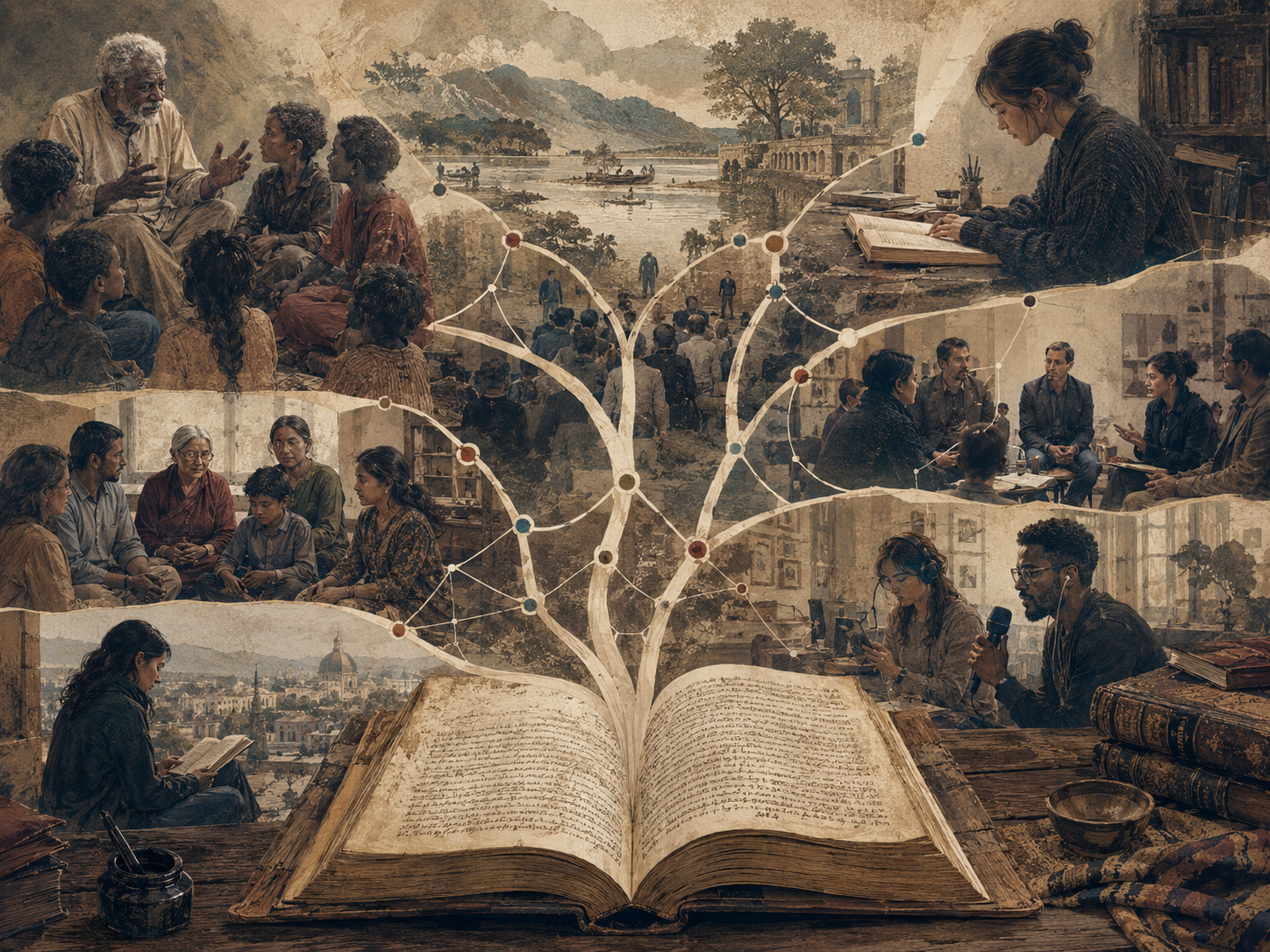
Storytelling matters today not because every story is good, true, or harmless. It matters because story is powerful enough to shape public life for good or harm. It can preserve memory, clarify injustice, teach responsibility, sustain culture, build empathy, and help people reason together. It can also manipulate, simplify, scapegoat, distort, and exploit. The ethical task is not to abandon story. The task is to tell, interpret, govern, and challenge stories responsibly.
Why This Question Matters Now
The question of why storytelling still matters is not nostalgic. It is practical. People now encounter more information than they can verify, more images than they can contextualize, more claims than they can evaluate, and more platforms than they can fully understand. Public life is saturated with fragments: posts, clips, summaries, alerts, headlines, campaigns, datasets, dashboards, automated outputs, and synthetic media.
In this environment, storytelling becomes more important, not less. Stories connect fragments into meaning. They help people understand sequence, cause, agency, consequence, responsibility, and possibility. But the same power also makes storytelling dangerous when it becomes manipulation, propaganda, mythic simplification, or synthetic persuasion.
The challenge is not to choose between story and evidence. Evidence without story may fail to reach public judgment. Story without evidence may become distortion. The work of responsible communication is to hold both together.
| Contemporary condition | Why story matters | Risk if story is irresponsible |
|---|---|---|
| Information overload | Story organizes attention and relevance. | Simplification becomes distortion. |
| Institutional distrust | Story can explain accountability and repair. | Story can intensify total suspicion. |
| Platform acceleration | Story travels quickly across publics. | Engagement rewards outrage and compression. |
| Synthetic media | Story helps evaluate provenance and meaning. | Generated plausibility imitates truth. |
| Complex systems | Story shows how causes, actors, and consequences connect. | Single-cause stories hide complexity. |
| Ethical uncertainty | Story helps people imagine responsibility. | Emotional force bypasses judgment. |
Storytelling matters now because meaning is contested, trust is fragile, and attention is governed by systems that do not automatically serve public understanding.
Story as Human Sensemaking
Story is one of the primary ways people make sense of experience. A story does not merely say that something happened. It places events in relation: before and after, cause and effect, intention and consequence, loss and repair, conflict and decision, memory and future.
This sensemaking function is visible across ordinary life. People explain themselves through stories. Communities preserve identity through stories. Institutions justify action through stories. Courts organize evidence through stories. Scientists communicate discovery through stories of method, uncertainty, and implication. Public movements mobilize through stories of harm, responsibility, and possibility.
Narrative sensemaking matters because events rarely interpret themselves. A crisis, failure, success, injustice, discovery, or transition becomes meaningful when people understand what led to it, who was affected, what changed, and what should happen next.
| Sensemaking question | Storytelling function | Responsible standard |
|---|---|---|
| What happened? | Orders events into sequence. | Keep timeline and uncertainty clear. |
| Why did it happen? | Connects causes, decisions, systems, and consequences. | Avoid premature certainty. |
| Who was affected? | Shows lived consequence. | Preserve dignity and consent. |
| Who acted? | Maps agency and responsibility. | Distinguish individuals, institutions, and systems. |
| What changed? | Tracks transformation or loss. | Show material and moral consequence. |
| What now? | Frames response, repair, memory, or action. | Match action to evidence and capacity. |
Storytelling still matters because human beings need more than occurrence. We need intelligible relation.
Story and Memory
Memory is not only storage. It is interpretation, transmission, selection, care, and responsibility. Stories carry memory across generations, institutions, families, cultures, movements, and communities. They help people remember what happened, why it mattered, what was lost, what was preserved, and what must not be repeated.
Oral traditions, myths, legends, epics, songs, rituals, testimony, memoir, archive, documentary, public history, and digital memory all show that storytelling is a memory technology. It can preserve knowledge when written records are absent. It can give shape to trauma when ordinary chronology breaks down. It can protect cultural continuity under displacement, violence, migration, or assimilation.
But memory stories also require governance. They can exclude, romanticize, erase, weaponize, or freeze the past. Responsible memory storytelling preserves complexity, multiple witnesses, evidence, context, and the dignity of those remembered.
| Memory form | Storytelling value | Ethical risk |
|---|---|---|
| Oral tradition | Transmits knowledge, values, and collective memory. | Can be extracted without cultural protocol. |
| Family story | Preserves inheritance, identity, and belonging. | Can silence conflict or exclude members. |
| Public history | Connects communities to shared past. | Can mythologize national or institutional identity. |
| Testimony | Preserves witness against denial. | Can expose or consume suffering. |
| Archive | Protects records for future interpretation. | Can privilege official voices over lived memory. |
| Digital memory | Extends preservation and access. | Can decontextualize, distort, or permanently expose. |
Storytelling still matters because memory is not self-preserving. It must be carried, interpreted, protected, and reviewed.
Story and Identity
People understand identity narratively. A person’s sense of self often depends on remembered events, turning points, relationships, losses, commitments, conflicts, failures, hopes, and futures. Identity is not only a category. It is a lived story about continuity and change.
Communities also tell identity stories. Nations, religions, professions, institutions, movements, families, and organizations narrate origins, values, heroes, wounds, obligations, and destinies. These stories can sustain belonging and responsibility. They can also harden into exclusion, superiority, grievance, or denial.
The ethical challenge is to tell identity stories that preserve agency without erasing complexity. A person is more than a single trauma, achievement, demographic category, failure, role, or public label. A community is more than a single origin myth, grievance, victory, or symbol.
| Identity story | Constructive function | Risk |
|---|---|---|
| Personal narrative | Supports continuity, reflection, and agency. | Reduces the self to a fixed script. |
| Community story | Builds belonging and responsibility. | Excludes those who do not fit the dominant memory. |
| National story | Creates shared civic imagination. | Mythologizes history and suppresses dissent. |
| Institutional story | Clarifies mission and accountability. | Performs virtue without changing practice. |
| Movement story | Mobilizes care and collective action. | Turns complexity into slogans. |
| Platform profile | Allows public self-presentation. | Compresses identity into metrics and performance. |
Storytelling still matters because identity requires interpretation, but identity stories require humility.
Story and Culture
Culture is carried through stories. Folktales, myths, epics, legends, jokes, songs, chants, rituals, proverbs, sacred histories, ceremonies, theatrical forms, novels, films, games, and digital media transmit ways of understanding time, kinship, obligation, danger, courage, authority, death, justice, nature, and the sacred.
Storytelling gives culture continuity without making culture static. Stories change as they are retold, translated, adapted, performed, contested, and reinterpreted. A living tradition is not simply preserved by repetition. It is preserved through meaningful transmission under changing conditions.
Comparative storytelling shows both shared patterns and deep differences. Many cultures tell stories of creation, flood, exile, return, tricksters, monsters, journeys, transformations, and moral tests. But similar motifs do not always mean the same thing. Responsible cultural storytelling preserves local context, language, performance, protocol, and historical conditions.
| Cultural storytelling function | What it preserves | Risk if mishandled |
|---|---|---|
| Transmission | Knowledge, values, memory, and practice. | Extraction without context. |
| Performance | Voice, gesture, audience relation, and occasion. | Reducing living practice to text alone. |
| Adaptation | Continuity through change. | Commercializing or flattening tradition. |
| Comparison | Pattern recognition across cultures. | Universalizing local meanings. |
| Translation | Cross-cultural access. | Losing worldview, rhythm, or sacred context. |
| Archive | Long-term preservation. | Freezing living traditions as museum objects. |
Storytelling still matters because culture does not survive only as information. It survives as meaningful practice.
Story and Moral Imagination
Story expands moral imagination by allowing people to encounter choices, consequences, perspectives, harms, obligations, and futures beyond their immediate experience. A story can make distant suffering visible, show the cost of decisions, reveal hidden dependency, and ask what kind of person or community one is becoming.
Moral imagination does not mean automatic empathy. Stories can cultivate care, but they can also sentimentalize, manipulate, dehumanize, or turn others into instruments for the audience’s feelings. The ethical value of story depends on how it handles dignity, evidence, agency, difference, and consequence.
A responsible moral story does not only ask audiences to feel. It asks them to perceive more truthfully, reason more carefully, and act more accountably.
| Moral function | Storytelling strength | Ethical discipline |
|---|---|---|
| Empathy | Shows experience from another position. | Avoid claiming total access to another’s interior life. |
| Responsibility | Connects action to consequence. | Distribute agency proportionately. |
| Witness | Preserves testimony against denial. | Protect consent, context, and risk. |
| Judgment | Tests values under pressure. | Do not make emotion replace evidence. |
| Hope | Imagines repair and possibility. | Avoid false reassurance. |
| Warning | Shows danger before it fully arrives. | Keep urgency proportional. |
Storytelling still matters because moral life requires imagination disciplined by truth.
Story and Public Reasoning
Public reasoning requires evidence, argument, institutional process, deliberation, and accountability. It also requires stories. Public issues are not experienced as abstract propositions. They are lived as consequences: housing insecurity, climate stress, infrastructure failure, migration, discrimination, health risk, labor conflict, war, technological change, and institutional betrayal.
Stories help public reasoning when they clarify who is affected, what systems are involved, what choices exist, what tradeoffs matter, and what evidence supports action. They harm public reasoning when they create scapegoats, hide complexity, manufacture crisis, or make one interpretation immune to correction.
Responsible public storytelling must therefore combine narrative force with democratic restraint. It should make problems intelligible without making them falsely simple. It should mobilize concern without disabling judgment.
| Public reasoning need | Story contribution | Governance question |
|---|---|---|
| Attention | Shows why a public issue matters. | Is attention being guided or exploited? |
| Context | Places events in history and systems. | What context is missing? |
| Evidence | Connects data, testimony, and records. | Are evidence and interpretation distinguished? |
| Agency | Shows who can act and at what scale. | Are people being asked to do what they cannot do? |
| Trust | Explains institutional responsibility and repair. | Is trust being earned or commanded? |
| Action | Connects values to practical response. | Is action proportionate to the evidence? |
Storytelling still matters because public life depends on shared meaning, not only shared data.
Story and Institutions
Institutions live through stories. They tell stories of origin, purpose, expertise, accountability, innovation, service, neutrality, care, and public good. These stories can help people understand what institutions are for. They can also hide failures, conflicts of interest, exclusions, and harms.
Institutional storytelling matters because trust is narrative as well as procedural. People trust institutions partly through evidence of reliability, but also through stories of conduct: what the institution did when it failed, how it responded to criticism, whether it listened, whether it corrected itself, whether it protected the vulnerable, whether its stated values matched practice.
The question is not whether institutions should tell stories. They already do. The question is whether their stories are accountable to records, affected people, measurable conduct, and public review.
| Institutional story | Responsible version | Distorted version |
|---|---|---|
| Mission | Connects purpose to actual practice. | Uses values language as reputation shield. |
| Accountability | Names failures, causes, remedies, and review. | Treats accountability as messaging. |
| Expertise | Explains methods, limits, and uncertainty. | Uses authority to avoid questions. |
| Innovation | Shows real benefit and risk governance. | Turns novelty into moral legitimacy. |
| Service | Centers affected people and outcomes. | Centers institutional self-image. |
| Repair | Demonstrates changed practice. | Uses apology without transformation. |
Storytelling still matters because institutions must be able to explain themselves truthfully—and be challenged when their stories fail.
Story and Education
Education depends on story because learning is not only information transfer. Students need sequence, context, example, conflict, model, failure, revision, and meaning. Stories help learners understand why ideas developed, how problems were solved, what mistakes occurred, and how knowledge is used responsibly.
A mathematical idea has a history. A scientific concept emerged through inquiry. A legal doctrine arose from conflicts. A social theory responded to conditions. A design framework solved some problems while creating others. Story places knowledge inside use, uncertainty, and consequence.
But educational storytelling must avoid false neatness. Real learning should not turn every discovery into a heroic genius narrative, every scientific dispute into a simple battle, or every framework into a universal solution. Responsible educational story shows process, limits, and revision.
| Educational use | Storytelling value | Risk |
|---|---|---|
| Concept explanation | Shows why an idea matters. | Turns analogy into oversimplification. |
| Case study | Connects theory to practice. | Treats one case as universal. |
| Historical development | Shows inquiry, dispute, and revision. | Creates false inevitability. |
| Problem-solving narrative | Models reasoning steps. | Hides uncertainty and failed attempts. |
| Ethical scenario | Tests judgment under constraint. | Manipulates toward predetermined answer. |
| Learning pathway | Organizes progression across topics. | Overstructures curiosity. |
Storytelling still matters because education needs meaning, not only content.
Story, Science, Policy, and Systems
Science, policy, and systems thinking all need careful storytelling. Complex systems involve feedback loops, delays, uncertainty, thresholds, incentives, tradeoffs, and unintended consequences. These dynamics can be difficult to understand through isolated facts.
Story can help explain systems by showing how causes unfold over time. A climate story can connect emissions, policy, infrastructure, ecological feedback, migration, and justice. A public health story can connect behavior, institutions, trust, access, risk, and care. A technology story can connect design choices, incentives, labor, data, governance, and social consequence.
But system stories are risky when they overpersonalize structural problems, oversimplify causality, or turn uncertainty into certainty. Responsible systems storytelling must preserve complexity without becoming inaccessible.
| Systems communication need | Storytelling contribution | Risk |
|---|---|---|
| Causality | Shows how actions produce consequences over time. | Reduces systems to one villain or one solution. |
| Feedback | Shows how effects return to shape causes. | Turns loops into vague inevitability. |
| Delay | Explains why consequences appear later. | Understates immediate harm or uncertainty. |
| Tradeoff | Makes competing values visible. | Hides costs behind emotional framing. |
| Uncertainty | Shows what is known, unknown, and changing. | Uses story to erase probability and limits. |
| Intervention | Connects action to leverage points. | Promises control over complex systems. |
Storytelling still matters because complex systems must be made understandable without being made false.
Story in Digital and Platform Culture
Digital culture has not ended storytelling. It has multiplied story forms: posts, videos, podcasts, livestreams, threads, games, newsletters, memes, interactive experiences, serialized feeds, creator channels, digital archives, and platform-native communities.
Platform culture changes how stories circulate. Algorithms shape visibility. Metrics shape incentives. Audiences participate, remix, respond, and reinterpret. Stories move faster and lose context more easily. Personal narratives can build community, but they can also become content economies. Public stories can mobilize action, but they can also become outrage loops.
The governance challenge is that platform storytelling is not only a matter of authorial intent. It is also shaped by ranking systems, monetization, moderation, recommendation, audience behavior, and data extraction.
| Digital condition | Storytelling value | Governance issue |
|---|---|---|
| Participation | Audiences become interpreters and co-creators. | Context and consent can break. |
| Visibility | Stories can reach publics without gatekeepers. | Algorithms shape whose stories surface. |
| Metrics | Feedback helps creators understand reach. | Engagement can replace meaning. |
| Remix | Stories adapt across communities. | Original meaning may be distorted. |
| Archive | Digital records preserve memory. | Platform decay threatens access. |
| Scale | Story can mobilize widely. | Harm can also spread widely. |
Storytelling still matters because digital systems amplify narrative power while weakening context.
Story and AI
Artificial intelligence changes storytelling because it can generate, summarize, personalize, imitate, remix, classify, translate, and distribute narrative at scale. It can help people draft, learn, analyze, preserve, and organize stories. It can also generate fluent narrative without lived experience, accountability, consent, or source grounding.
AI makes storytelling governance urgent. Synthetic stories can imitate witness. Generated images can appear evidentiary. Personalized narratives can target vulnerability. Automated systems can optimize persuasion. AI summaries can flatten uncertainty or omit context. Large-scale generation can flood public discourse with plausible but unaccountable story.
The value of human storytelling does not disappear in this environment. It becomes clearer. Human storytelling carries responsibility: experience, judgment, memory, consent, relationship, witness, culture, and accountability. AI can support storytelling, but it should not replace the ethical obligations of the storyteller.
| AI storytelling use | Constructive role | Risk |
|---|---|---|
| Drafting | Helps explore structure and language. | Defaults to generic narrative patterns. |
| Summarization | Organizes large bodies of material. | Omits uncertainty, source conflict, or context. |
| Translation | Expands access across languages. | Misses cultural and performative meaning. |
| Personalization | Adapts explanation to audience needs. | Targets vulnerability or manipulates belief. |
| Synthetic media | Creates disclosed educational or fictional material. | Fabricates evidence, testimony, or memory. |
| Analysis | Maps patterns, arcs, and risks. | Confuses pattern detection with interpretation. |
Storytelling still matters in the age of AI because accountable meaning cannot be automated away.
The Risks of Story
The case for storytelling must include the risks of storytelling. Story can clarify, but it can also mislead. It can humanize, but it can also stereotype. It can preserve memory, but it can also mythologize. It can mobilize justice, but it can also mobilize scapegoating. It can make evidence meaningful, but it can also make weak evidence feel emotionally sufficient.
The danger is not that stories are emotional. Emotion is part of human judgment. The danger is when emotion outruns evidence, when identity replaces inquiry, when one example becomes proof of everything, when suffering becomes a persuasive asset, or when story becomes closed to correction.
A serious defense of storytelling therefore requires ethical discipline. Storytelling still matters because it is powerful. Its power is exactly why it must be governed.
| Story risk | How it appears | Responsible safeguard |
|---|---|---|
| Oversimplification | Complex problems become simple enemies. | Preserve context and multiple causes. |
| Manipulation | Emotion bypasses evidence and agency. | Protect proportionality and audience judgment. |
| Stereotype | Characters or groups become fixed symbols. | Preserve dignity, specificity, and difference. |
| Mythic distortion | History becomes sacred certainty. | Preserve evidence and revision. |
| Extraction | Personal suffering becomes content. | Require consent, context, and benefit review. |
| Synthetic authority | Generated narratives imitate witness or expertise. | Require provenance and disclosure. |
Storytelling still matters, but not because stories are always good. They matter because they must be handled with care.
What Responsible Storytelling Requires
Responsible storytelling requires craft, evidence, ethics, and governance. It is not enough for a story to be compelling. It must also be accountable to truth, context, people, sources, consequences, and audience agency.
Responsible storytelling begins with purpose. Why is this story being told? Who benefits? Who is represented? Who may be harmed? What evidence supports it? What uncertainty remains? What context is required? What action is implied? What would correction look like?
The strongest stories do not merely move people. They help people see more clearly.
| Requirement | Question | Practice |
|---|---|---|
| Truthfulness | Are claims, causes, images, and examples accurate? | Use source review and correction pathways. |
| Context | What must the audience know to interpret fairly? | Include history, systems, limits, and alternatives. |
| Dignity | Are people represented as agents rather than symbols? | Protect consent, privacy, and voice. |
| Proportionality | Does emotional force match evidence and stakes? | Audit urgency, fear, outrage, and hope. |
| Accountability | Who owns the story’s claims and consequences? | Assign review, correction, and governance responsibilities. |
| Revision | Can the story change when evidence changes? | Preserve uncertainty and update mechanisms. |
Responsible storytelling is not weaker storytelling. It is stronger because it can survive scrutiny.
Examples of Why Story Still Matters
The examples below show why storytelling remains necessary across public, educational, cultural, and institutional life.
Public health
Weak: Health communication relies only on statistics and compliance language.
Stronger: Story connects evidence to lived conditions, access, trust, risk, and care.
Why it matters: People need to understand consequences in context.
Climate communication
Weak: Climate risk is presented only as abstract data.
Stronger: Story shows feedback, delay, community impact, adaptation, uncertainty, and responsibility.
Why it matters: Complex systems require human-scale meaning.
Institutional accountability
Weak: An organization uses mission language after a failure.
Stronger: Story names what happened, who was affected, what caused it, and what will change.
Why it matters: Trust depends on accountable narrative repair.
Education
Weak: A lesson presents concepts as isolated facts.
Stronger: Story shows discovery, problem, method, failure, revision, and application.
Why it matters: Learning improves when knowledge has structure and purpose.
Cultural preservation
Weak: A tradition is treated as content to archive.
Stronger: Story preserves performance, language, occasion, protocol, and community authority.
Why it matters: Living heritage is more than information.
AI governance
Weak: Synthetic content is judged only by technical quality.
Stronger: Story review asks about provenance, consent, evidence, persuasion, representation, and human accountability.
Why it matters: Plausible generation is not responsible storytelling.
Storytelling still matters because human meaning cannot be governed by information architecture alone.
Mathematics, Computation, and Modeling
Storytelling should not be reduced to metrics, but structured models can help evaluate whether stories serve understanding, memory, ethics, and public reasoning.
A storytelling value score can estimate whether a story contributes to meaningful understanding:
S_v = \frac{C_l + E_g + M_c + A_r + D_g + P_u}{6}
\]
Interpretation: Storytelling value \(S_v\) averages clarity \(C_l\), evidence grounding \(E_g\), memory continuity \(M_c\), audience reasoning \(A_r\), dignity protection \(D_g\), and public usefulness \(P_u\).
A narrative responsibility score can estimate whether a story is ethically ready for publication:
N_r = \frac{T_f + C_x + C_n + U_d + R_v + A_c}{6}
\]
Interpretation: Narrative responsibility \(N_r\) averages truthfulness \(T_f\), context adequacy \(C_x\), consent \(C_n\), uncertainty disclosure \(U_d\), revision openness \(R_v\), and accountability \(A_c\).
A misuse-risk score can identify when story power may distort judgment:
M_r = O_sw_o + E_xw_e + S_cw_s + C_lw_c + P_fw_p + (1 – H_r)w_h
\]
Interpretation: Misuse risk \(M_r\) rises with oversimplification \(O_s\), emotional exploitation \(E_x\), scapegoating \(S_c\), context loss \(C_l\), platform frictionlessness \(P_f\), and weak human review \(H_r\).
An AI storytelling governance score can estimate whether AI-supported story work is sufficiently accountable:
A_g = \frac{P_v + S_t + H_r + C_d + U_l + R_c}{6}
\]
Interpretation: AI storytelling governance \(A_g\) averages provenance visibility \(P_v\), source traceability \(S_t\), human review \(H_r\), consent discipline \(C_d\), use-limit clarity \(U_l\), and revision/correction process \(R_c\).
| Modeling task | Governance question | Example output |
|---|---|---|
| Storytelling value audit | Does the story clarify, preserve, humanize, and support reasoning? | Storytelling value score. |
| Narrative responsibility audit | Are truth, context, consent, uncertainty, revision, and accountability strong? | Narrative responsibility score. |
| Misuse-risk audit | Could the story oversimplify, exploit emotion, scapegoat, or distort judgment? | Misuse-risk score. |
| AI storytelling audit | Are provenance, sources, consent, and human review visible? | AI storytelling governance score. |
| Public reasoning audit | Does the story help audiences inspect evidence and alternatives? | Audience reasoning note. |
| Memory audit | Does the story preserve context, voice, and transmission responsibility? | Memory continuity profile. |
Computational tools can support storytelling governance when they make assumptions visible and keep human judgment central.
Python Workflow: Storytelling Value Governance Audit
The Python workflow below follows the advanced Catalyst Canvas standard: typed records, config-driven scoring, validation, governance notes, Canvas-card exports, CSV outputs, JSON outputs, markdown governance queues, and review priorities. The companion repository version includes the shared `python/catalyst_canvas/` layer plus article-specific data for storytelling value, narrative responsibility, misuse risk, AI storytelling governance, memory continuity, and public reasoning.
# run_storytelling_value_governance_audit.py
from __future__ import annotations

from dataclasses import dataclass
from pathlib import Path
import csv
import json
from hashlib import sha256
from statistics import mean
from typing import Any


ARTICLE_ROOT = Path(__file__).resolve().parents[1]
OUTPUTS = ARTICLE_ROOT / "outputs"


@dataclass(frozen=True)
class StorytellingValueGovernanceRecord:
    item: str
    story_context: str
    clarity: float
    evidence_grounding: float
    memory_continuity: float
    audience_reasoning: float
    dignity_protection: float
    public_usefulness: float
    truthfulness: float
    context_adequacy: float
    consent_discipline: float
    uncertainty_disclosure: float
    revision_openness: float
    accountability: float
    oversimplification: float
    emotional_exploitation: float
    scapegoating: float
    context_loss: float
    platform_frictionlessness: float
    human_review: float
    provenance_visibility: float
    source_traceability: float
    ai_human_review: float
    ai_consent_discipline: float
    use_limit_clarity: float
    correction_process: float
    cultural_context: float
    ethical_stakes: float
    owner: str = "editorial"
    status: str = "active"
    notes: str = ""


@dataclass(frozen=True)
class StorytellingValueGovernanceConfig:
    article_title: str = "Why Storytelling Still Matters"
    article_slug: str = "why-storytelling-still-matters"
    medium_threshold: float = 0.45
    high_threshold: float = 0.62
    allowed_statuses: tuple[str, ...] = ("active", "archive", "review", "revise")


def validate_score(value: float, field_name: str) -> None:
    if value < 0 or value > 1:
        raise ValueError(f"{field_name} must be between 0 and 1.")


def validate_record(record: StorytellingValueGovernanceRecord, config: StorytellingValueGovernanceConfig) -> None:
    if not record.item.strip():
        raise ValueError("item is required.")
    if not record.story_context.strip():
        raise ValueError("story_context is required.")
    if record.status not in config.allowed_statuses:
        raise ValueError(f"Invalid status: {record.status}")

    for field_name, value in record.__dict__.items():
        if isinstance(value, float):
            validate_score(value, field_name)


def storytelling_value(record: StorytellingValueGovernanceRecord) -> float:
    return mean([
        record.clarity,
        record.evidence_grounding,
        record.memory_continuity,
        record.audience_reasoning,
        record.dignity_protection,
        record.public_usefulness,
    ])


def narrative_responsibility(record: StorytellingValueGovernanceRecord) -> float:
    return mean([
        record.truthfulness,
        record.context_adequacy,
        record.consent_discipline,
        record.uncertainty_disclosure,
        record.revision_openness,
        record.accountability,
    ])


def misuse_risk(record: StorytellingValueGovernanceRecord) -> float:
    return min(
        1.0,
        record.oversimplification * 0.18
        + record.emotional_exploitation * 0.18
        + record.scapegoating * 0.18
        + record.context_loss * 0.18
        + record.platform_frictionlessness * 0.14
        + (1 - record.human_review) * 0.14,
    )


def ai_storytelling_governance(record: StorytellingValueGovernanceRecord) -> float:
    return mean([
        record.provenance_visibility,
        record.source_traceability,
        record.ai_human_review,
        record.ai_consent_discipline,
        record.use_limit_clarity,
        record.correction_process,
    ])


def governance_priority_score(record: StorytellingValueGovernanceRecord, config: StorytellingValueGovernanceConfig) -> float:
    score = (
        misuse_risk(record) * 0.28
        + (1 - narrative_responsibility(record)) * 0.22
        + (1 - storytelling_value(record)) * 0.16
        + (1 - ai_storytelling_governance(record)) * 0.14
        + record.ethical_stakes * 0.12
        + (1 - record.cultural_context) * 0.08
    )

    if record.status == "revise":
        score = max(score, config.high_threshold)
    elif record.status == "review":
        score = max(score, config.medium_threshold)

    return min(1.0, max(0.0, score))


def review_priority(record: StorytellingValueGovernanceRecord, config: StorytellingValueGovernanceConfig) -> str:
    score = governance_priority_score(record, config)
    if score >= config.high_threshold:
        return "high"
    if score >= config.medium_threshold:
        return "medium"
    return "standard"


def card_id(record: StorytellingValueGovernanceRecord, config: StorytellingValueGovernanceConfig) -> str:
    raw = f"{config.article_slug}|{record.item}|{record.story_context}"
    return sha256(raw.encode("utf-8")).hexdigest()[:16]


def governance_note(record: StorytellingValueGovernanceRecord, config: StorytellingValueGovernanceConfig) -> str:
    priority = review_priority(record, config)
    notes = []

    if priority == "high":
        notes.append("High-priority storytelling governance review required.")
    elif priority == "medium":
        notes.append("Medium-priority storytelling value review recommended.")
    else:
        notes.append("Standard editorial review sufficient.")

    if storytelling_value(record) < 0.65:
        notes.append("Storytelling value is limited; strengthen clarity, evidence grounding, memory continuity, audience reasoning, dignity, and public usefulness.")
    if narrative_responsibility(record) < 0.65:
        notes.append("Narrative responsibility is limited; strengthen truthfulness, context, consent, uncertainty disclosure, revision openness, and accountability.")
    if misuse_risk(record) >= 0.55:
        notes.append("Misuse risk is elevated; review oversimplification, emotional exploitation, scapegoating, context loss, platform frictionlessness, and human review.")
    if ai_storytelling_governance(record) < 0.65:
        notes.append("AI storytelling governance is limited; improve provenance, source traceability, human review, consent discipline, use limits, and correction process.")
    if record.notes:
        notes.append(record.notes)

    return " ".join(notes)


def canvas_card(record: StorytellingValueGovernanceRecord, config: StorytellingValueGovernanceConfig) -> dict[str, Any]:
    return {
        "schema_version": "1.0.0",
        "card_id": card_id(record, config),
        "card_type": "storytelling_value_governance",
        "article_title": config.article_title,
        "article_slug": config.article_slug,
        "item": record.item,
        "story_context": record.story_context,
        "scores": {
            "storytelling_value": round(storytelling_value(record), 4),
            "narrative_responsibility": round(narrative_responsibility(record), 4),
            "misuse_risk": round(misuse_risk(record), 4),
            "ai_storytelling_governance": round(ai_storytelling_governance(record), 4),
            "governance_priority_score": round(governance_priority_score(record, config), 4),
        },
        "review": {
            "priority": review_priority(record, config),
            "owner": record.owner,
            "status": record.status,
            "governance_note": governance_note(record, config),
        },
    }


def write_csv(path: Path, rows: list[dict[str, Any]]) -> None:
    path.parent.mkdir(parents=True, exist_ok=True)
    fieldnames = list(rows[0].keys())
    with path.open("w", encoding="utf-8", newline="") as handle:
        writer = csv.DictWriter(handle, fieldnames=fieldnames)
        writer.writeheader()
        writer.writerows(rows)


def write_json(path: Path, payload: Any) -> None:
    path.parent.mkdir(parents=True, exist_ok=True)
    path.write_text(json.dumps(payload, indent=2), encoding="utf-8")


def write_markdown_queue(path: Path, rows: list[dict[str, Any]]) -> None:
    path.parent.mkdir(parents=True, exist_ok=True)
    lines = [
        "# Storytelling Value Governance Queue",
        "",
        "| Item | Context | Value | Responsibility | Misuse risk | AI governance | Priority | Owner |",
        "|---|---|---:|---:|---:|---:|---|---|",
    ]

    for row in rows:
        lines.append(
            f"| {row['item']} | {row['story_context']} | "
            f"{row['storytelling_value']} | {row['narrative_responsibility']} | "
            f"{row['misuse_risk']} | {row['ai_storytelling_governance']} | "
            f"{row['review_priority']} | {row['owner']} |"
        )

    path.write_text("\n".join(lines) + "\n", encoding="utf-8")


def main() -> None:
    config = StorytellingValueGovernanceConfig()

    records = [
        StorytellingValueGovernanceRecord(
            "Public memory storytelling",
            "community memory project preserving testimony, context, dignity, and archive access",
            0.86, 0.82, 0.92, 0.80, 0.88, 0.84,
            0.84, 0.86, 0.82, 0.80, 0.84, 0.86,
            0.22, 0.20, 0.16, 0.24, 0.30, 0.88,
            0.82, 0.84, 0.86, 0.82, 0.80, 0.84,
            0.90, 0.86,
            "editorial", "active",
            "Strong public memory model; maintain consent and contextual integrity."
        ),
        StorytellingValueGovernanceRecord(
            "Platform-optimized outrage story",
            "attention-driven public story optimized for anger, shareability, and identity conflict",
            0.52, 0.42, 0.38, 0.34, 0.40, 0.46,
            0.44, 0.36, 0.34, 0.28, 0.26, 0.30,
            0.86, 0.88, 0.82, 0.84, 0.90, 0.34,
            0.30, 0.28, 0.32, 0.26, 0.24, 0.30,
            0.38, 0.90,
            "governance", "revise",
            "Escalate; misuse risk is high and public reasoning is weak."
        ),
        StorytellingValueGovernanceRecord(
            "AI-generated witness narrative",
            "synthetic testimony-like story produced without provenance, consent, or source traceability",
            0.48, 0.30, 0.28, 0.34, 0.26, 0.36,
            0.28, 0.30, 0.18, 0.22, 0.24, 0.26,
            0.72, 0.78, 0.54, 0.82, 0.80, 0.22,
            0.14, 0.18, 0.20, 0.12, 0.20, 0.24,
            0.24, 0.92,
            "governance", "revise",
            "Escalate; synthetic witness narrative lacks provenance, consent, source traceability, and review."
        ),
    ]

    rows = []
    cards = []

    for record in records:
        validate_record(record, config)
        cards.append(canvas_card(record, config))
        rows.append({
            "item": record.item,
            "story_context": record.story_context,
            "storytelling_value": round(storytelling_value(record), 4),
            "narrative_responsibility": round(narrative_responsibility(record), 4),
            "misuse_risk": round(misuse_risk(record), 4),
            "ai_storytelling_governance": round(ai_storytelling_governance(record), 4),
            "governance_priority_score": round(governance_priority_score(record, config), 4),
            "review_priority": review_priority(record, config),
            "owner": record.owner,
            "status": record.status,
            "governance_note": governance_note(record, config),
        })

    priority_order = {"high": 3, "medium": 2, "standard": 1}
    rows = sorted(
        rows,
        key=lambda row: (
            priority_order.get(str(row["review_priority"]), 0),
            float(row["governance_priority_score"]),
        ),
        reverse=True,
    )

    queue = [row for row in rows if row["review_priority"] != "standard"]
    queue_cards = [card for card in cards if card["review"]["priority"] != "standard"]

    write_csv(OUTPUTS / "tables" / "storytelling_value_governance_audit.csv", rows)
    write_csv(OUTPUTS / "tables" / "storytelling_value_governance_queue.csv", queue)
    write_json(OUTPUTS / "json" / "storytelling_value_governance_canvas_cards.json", cards)
    write_json(OUTPUTS / "json" / "storytelling_value_governance_queue.json", queue_cards)
    write_markdown_queue(OUTPUTS / "markdown" / "storytelling_value_governance_queue.md", queue)

    print("Storytelling value governance audit complete.")


if __name__ == "__main__":
    main()
This workflow helps evaluate why story still matters while distinguishing public value from oversimplification, extraction, platform optimization, synthetic authority, and AI-generated witness risk.
R Workflow: Storytelling Value Diagnostics
The R workflow below provides a portable base R diagnostic for storytelling value, narrative responsibility, misuse risk, and AI storytelling governance.
# storytelling_value_governance_diagnostics.R
# Base R workflow for Why Storytelling Still Matters.

args <- commandArgs(trailingOnly = FALSE)
file_arg <- grep("^--file=", args, value = TRUE)

if (length(file_arg) > 0) {
  script_path <- normalizePath(sub("^--file=", "", file_arg[1]), mustWork = TRUE)
  article_root <- normalizePath(file.path(dirname(script_path), ".."), mustWork = TRUE)
} else {
  article_root <- getwd()
}

setwd(article_root)

tables_dir <- file.path(article_root, "outputs", "tables")
figures_dir <- file.path(article_root, "outputs", "figures")
dir.create(tables_dir, recursive = TRUE, showWarnings = FALSE)
dir.create(figures_dir, recursive = TRUE, showWarnings = FALSE)

records <- data.frame(
  item = c(
    "Public memory storytelling",
    "Platform-optimized outrage story",
    "AI-generated witness narrative"
  ),
  story_context = c(
    "community memory project preserving testimony, context, dignity, and archive access",
    "attention-driven public story optimized for anger, shareability, and identity conflict",
    "synthetic testimony-like story produced without provenance, consent, or source traceability"
  ),
  clarity = c(0.86, 0.52, 0.48),
  evidence_grounding = c(0.82, 0.42, 0.30),
  memory_continuity = c(0.92, 0.38, 0.28),
  audience_reasoning = c(0.80, 0.34, 0.34),
  dignity_protection = c(0.88, 0.40, 0.26),
  public_usefulness = c(0.84, 0.46, 0.36),
  truthfulness = c(0.84, 0.44, 0.28),
  context_adequacy = c(0.86, 0.36, 0.30),
  consent_discipline = c(0.82, 0.34, 0.18),
  uncertainty_disclosure = c(0.80, 0.28, 0.22),
  revision_openness = c(0.84, 0.26, 0.24),
  accountability = c(0.86, 0.30, 0.26),
  oversimplification = c(0.22, 0.86, 0.72),
  emotional_exploitation = c(0.20, 0.88, 0.78),
  scapegoating = c(0.16, 0.82, 0.54),
  context_loss = c(0.24, 0.84, 0.82),
  platform_frictionlessness = c(0.30, 0.90, 0.80),
  human_review = c(0.88, 0.34, 0.22),
  provenance_visibility = c(0.82, 0.30, 0.14),
  source_traceability = c(0.84, 0.28, 0.18),
  ai_human_review = c(0.86, 0.32, 0.20),
  ai_consent_discipline = c(0.82, 0.26, 0.12),
  use_limit_clarity = c(0.80, 0.24, 0.20),
  correction_process = c(0.84, 0.30, 0.24),
  cultural_context = c(0.90, 0.38, 0.24),
  ethical_stakes = c(0.86, 0.90, 0.92),
  owner = c("editorial", "governance", "governance"),
  status = c("active", "revise", "revise"),
  stringsAsFactors = FALSE
)

records$storytelling_value <- rowMeans(records[, c(
  "clarity",
  "evidence_grounding",
  "memory_continuity",
  "audience_reasoning",
  "dignity_protection",
  "public_usefulness"
)])

records$narrative_responsibility <- rowMeans(records[, c(
  "truthfulness",
  "context_adequacy",
  "consent_discipline",
  "uncertainty_disclosure",
  "revision_openness",
  "accountability"
)])

records$misuse_risk <- pmin(
  1,
  records$oversimplification * 0.18 +
    records$emotional_exploitation * 0.18 +
    records$scapegoating * 0.18 +
    records$context_loss * 0.18 +
    records$platform_frictionlessness * 0.14 +
    (1 - records$human_review) * 0.14
)

records$ai_storytelling_governance <- rowMeans(records[, c(
  "provenance_visibility",
  "source_traceability",
  "ai_human_review",
  "ai_consent_discipline",
  "use_limit_clarity",
  "correction_process"
)])

records$governance_priority_score <- pmin(
  1,
  records$misuse_risk * 0.28 +
    (1 - records$narrative_responsibility) * 0.22 +
    (1 - records$storytelling_value) * 0.16 +
    (1 - records$ai_storytelling_governance) * 0.14 +
    records$ethical_stakes * 0.12 +
    (1 - records$cultural_context) * 0.08
)

records$review_priority <- ifelse(
  records$status == "revise" | records$governance_priority_score >= 0.62,
  "high",
  ifelse(
    records$status == "review" | records$governance_priority_score >= 0.45,
    "medium",
    "standard"
  )
)

records <- records[order(records$governance_priority_score, decreasing = TRUE), ]

write.csv(records, file.path(tables_dir, "storytelling_value_governance_diagnostics.csv"), row.names = FALSE)
write.csv(records[records$review_priority != "standard", ], file.path(tables_dir, "storytelling_value_governance_queue.csv"), row.names = FALSE)

png(file.path(figures_dir, "storytelling_value_scores.png"), width = 1200, height = 700)
barplot(
  records$storytelling_value,
  names.arg = records$item,
  las = 2,
  ylab = "Storytelling value",
  main = "Storytelling Value"
)
grid()
dev.off()

png(file.path(figures_dir, "misuse_risk_scores.png"), width = 1200, height = 700)
barplot(
  records$misuse_risk,
  names.arg = records$item,
  las = 2,
  ylab = "Misuse risk",
  main = "Misuse Risk"
)
grid()
dev.off()

print(records[, c(
  "item",
  "story_context",
  "storytelling_value",
  "narrative_responsibility",
  "misuse_risk",
  "ai_storytelling_governance",
  "review_priority"
)])
This workflow helps evaluate storytelling value without treating story as automatically good or automatically dangerous.
GitHub Repository
The companion repository for this article supports storytelling value governance as a Catalyst Canvas-ready module. It includes advanced additive `python/catalyst_canvas/` governance infrastructure, article-specific storytelling value data, config-driven scoring, validation, governance notes, Canvas card generation, CSV/JSON/markdown exporters, CLI workflows, smoke tests, unit tests, R diagnostics, SQL structures, documentation, and reusable responsible storytelling review templates.
Complete Code Repository
Companion repository for the article, including advanced Catalyst Canvas-ready code for storytelling value, narrative responsibility, misuse risk, AI storytelling governance, JSON exports, Canvas cards, governance queues, and reproducible research workflows.
articles/why-storytelling-still-matters/
├── canvas/
│   ├── canvas_manifest.json
│   ├── input_schema.json
│   ├── output_schema.json
│   ├── catalyst_canvas_config.json
│   ├── catalyst_canvas_manifest.json
│   ├── catalyst_canvas_cards.json
│   └── catalyst_canvas_governance_queue.json
├── html/
├── css/
├── php/
├── java/
├── python/
│   ├── catalyst_canvas/
│   │   ├── __init__.py
│   │   ├── __main__.py
│   │   ├── cli.py
│   │   ├── models.py
│   │   ├── scoring.py
│   │   ├── validation.py
│   │   ├── governance.py
│   │   └── exporters.py
│   ├── storytelling_value_governance_canvas/
│   │   ├── __init__.py
│   │   ├── models.py
│   │   ├── scoring.py
│   │   ├── validation.py
│   │   ├── governance.py
│   │   └── exporters.py
│   ├── tests/
│   │   ├── test_catalyst_canvas.py
│   │   └── test_storytelling_value_governance_canvas.py
│   ├── run_catalyst_canvas_audit.py
│   └── run_storytelling_value_governance_audit.py
├── r/
│   ├── storytelling_value_governance_diagnostics.R
│   └── run_all_storytelling_value_governance_workflows.R
├── sql/
│   ├── canvas_schema.sql
│   └── canvas_queries.sql
├── docs/
│   ├── article_notes.md
│   ├── modeling_principles.md
│   ├── why_this_question_matters_now.md
│   ├── story_as_human_sensemaking.md
│   ├── story_and_memory.md
│   ├── story_and_identity.md
│   ├── story_and_culture.md
│   ├── story_and_moral_imagination.md
│   ├── story_and_public_reasoning.md
│   ├── story_and_institutions.md
│   ├── story_and_education.md
│   ├── story_and_science_policy_and_systems.md
│   ├── story_in_digital_and_platform_culture.md
│   ├── story_and_ai.md
│   ├── the_risks_of_story.md
│   ├── what_responsible_storytelling_requires.md
│   ├── ethical_risk.md
│   ├── responsible_use.md
│   ├── governance_notes.md
│   └── catalyst_canvas_upgrade_notes.md
├── data/
│   ├── storytelling_value_governance_claims.csv
│   ├── narrative_responsibility_notes.csv
│   ├── misuse_risk_notes.csv
│   ├── ai_storytelling_governance_notes.csv
│   └── catalyst_canvas_assessment.csv
├── outputs/
│   ├── figures/
│   ├── json/
│   ├── markdown/
│   └── tables/
├── notebooks/
├── shared/
│   ├── schemas/
│   ├── narrative-templates/
│   ├── story-archetypes/
│   ├── character-models/
│   ├── plot-structures/
│   ├── rhetorical-frameworks/
│   ├── cultural-memory/
│   ├── storytelling-value-governance/
│   └── governance/
├── tests/
└── README.md
Related Articles
- Narrative Risk and the Misuse of Story
- Storytelling and the Ethics of Representation
- Digital Storytelling and Platform Culture
- Storytelling in Comparative Perspective
- Narrative Systems and Story Structure Modeling
- Rhetorical Moves and the Ethics of Persuasive Story
A Practical Method for Responsible Storytelling
1. Define the purpose
Name whether the story is meant to explain, teach, preserve, persuade, document, warn, repair, or mobilize.
2. Identify the people represented
Ask whose experience, memory, culture, labor, or suffering is being used and what permissions or protocols apply.
3. Ground the story in evidence
Distinguish fact, testimony, interpretation, inference, memory, metaphor, and speculation.
4. Preserve context
Include the historical, cultural, institutional, systemic, or personal context needed for fair interpretation.
5. Protect dignity and agency
Do not reduce people to victims, heroes, villains, examples, data points, or symbols.
6. Disclose uncertainty
Show what is known, unknown, contested, changing, or incomplete.
7. Review emotional force
Ask whether fear, hope, grief, outrage, or urgency supports judgment or replaces it.
8. Audit misuse risk
Check for oversimplification, scapegoating, manipulation, mythic distortion, and platform optimization.
9. Govern AI use
Require provenance, source traceability, human review, consent discipline, use limits, and correction pathways.
10. Build revision into the story
Make it possible to correct, update, contextualize, remove, or repair the story after publication.
Responsible storytelling is not the absence of force. It is force disciplined by truth, care, and accountability.
Common Pitfalls
Several pitfalls appear when people either romanticize or dismiss storytelling.
- Story worship: Assuming every story is automatically wise, healing, or authentic.
- Data worship: Assuming facts become meaningful without narrative context.
- Emotional shortcutting: Letting feeling replace evidence, proportion, or agency.
- Context collapse: Moving stories across audiences without preserving meaning or consent.
- Representation flattening: Reducing people to symbolic roles.
- Institutional self-mythology: Using story to perform accountability without changing practice.
- Platform optimization: Shaping story around engagement rather than public value.
- Synthetic authority: Treating AI-generated story as witness, evidence, or lived experience.
- Formula drift: Replacing interpretation with templates.
- Revision resistance: Refusing to change a story when evidence changes.
The central pitfall is forgetting that story is both necessary and dangerous.
Why Storytelling Still Matters
Storytelling still matters because human beings need meaning, not only information. We need ways to understand time, memory, identity, loss, responsibility, conflict, evidence, and possibility. We need stories to preserve culture, teach knowledge, challenge institutions, make systems intelligible, imagine futures, and hold each other accountable.
But storytelling matters most when it is treated seriously. Story is not a toy, shortcut, decoration, or marketing technique. It is a form of public power. It can dignify or exploit. It can reveal or distort. It can repair trust or destroy it. It can support evidence or overwhelm it. It can preserve memory or mythologize it. It can help people reason together or divide them into enemies.
The future will not be less narrative. Platforms, institutions, movements, AI systems, archives, schools, and publics will continue producing stories. The important question is whether those stories will be accountable.
Storytelling still matters because truth needs form, memory needs care, culture needs transmission, justice needs witness, institutions need accountability, and public life needs meaning that can survive scrutiny.
Further Reading
- Abbott, H.P. (2021) The Cambridge Introduction to Narrative. 3rd edn. Cambridge: Cambridge University Press.
- Arendt, H. (1958) The Human Condition. Chicago: University of Chicago Press.
- Bruner, J. (1991) ‘The Narrative Construction of Reality’, Critical Inquiry, 18(1), pp. 1–21. Available at: https://web.english.upenn.edu/~cavitch/pdf-library/Bruner_Narrative.pdf
- Fisher, W.R. (1984) ‘Narration as a Human Communication Paradigm: The Case of Public Moral Argument’, Communication Monographs, 51(1), pp. 1–22. Available at: https://www.tandfonline.com/doi/abs/10.1080/03637758409390180
- Green, M.C. and Brock, T.C. (2000) ‘The Role of Transportation in the Persuasiveness of Public Narratives’, Journal of Personality and Social Psychology, 79(5), pp. 701–721.
- Herman, D. (2013) Storytelling and the Sciences of Mind. Cambridge, MA: MIT Press. Available at: https://direct.mit.edu/books/monograph/2225/Storytelling-and-the-Sciences-of-Mind
- Nussbaum, M.C. (1995) Poetic Justice: The Literary Imagination and Public Life. Boston: Beacon Press.
- Ricoeur, P. (1984) Time and Narrative, Volume 1. Chicago: University of Chicago Press.
- UNESCO (n.d.) ‘Oral traditions and expressions including language as a vehicle of the intangible cultural heritage’. Available at: https://ich.unesco.org/en/oral-traditions-and-expressions-00053
- UNESCO (n.d.) ‘What is Intangible Cultural Heritage?’ Available at: https://ich.unesco.org/en/what-is-intangible-heritage-00003
- Hackenburg, K. et al. (2026) ‘Artificial intelligence can persuade people to take political actions’. Available at: https://arxiv.org/abs/2604.09200
- El-Sayed, S. et al. (2024) ‘A Mechanism-Based Approach to Mitigating Harms from Persuasive Generative AI’. Available at: https://arxiv.org/abs/2404.15058
References
- Abbott, H.P. (2021) The Cambridge Introduction to Narrative. 3rd edn. Cambridge: Cambridge University Press.
- Arendt, H. (1958) The Human Condition. Chicago: University of Chicago Press.
- Bruner, J. (1991) ‘The Narrative Construction of Reality’, Critical Inquiry, 18(1), pp. 1–21. Available at: https://web.english.upenn.edu/~cavitch/pdf-library/Bruner_Narrative.pdf
- El-Sayed, S. et al. (2024) ‘A Mechanism-Based Approach to Mitigating Harms from Persuasive Generative AI’. Available at: https://arxiv.org/abs/2404.15058
- Fisher, W.R. (1984) ‘Narration as a Human Communication Paradigm: The Case of Public Moral Argument’, Communication Monographs, 51(1), pp. 1–22. Available at: https://www.tandfonline.com/doi/abs/10.1080/03637758409390180
- Green, M.C. and Brock, T.C. (2000) ‘The Role of Transportation in the Persuasiveness of Public Narratives’, Journal of Personality and Social Psychology, 79(5), pp. 701–721.
- Hackenburg, K. et al. (2026) ‘Artificial intelligence can persuade people to take political actions’. Available at: https://arxiv.org/abs/2604.09200
- Herman, D. (2013) Storytelling and the Sciences of Mind. Cambridge, MA: MIT Press. Available at: https://direct.mit.edu/books/monograph/2225/Storytelling-and-the-Sciences-of-Mind
- Nussbaum, M.C. (1995) Poetic Justice: The Literary Imagination and Public Life. Boston: Beacon Press.
- Ricoeur, P. (1984) Time and Narrative, Volume 1. Chicago: University of Chicago Press.
- UNESCO (n.d.) ‘Oral traditions and expressions including language as a vehicle of the intangible cultural heritage’. Available at: https://ich.unesco.org/en/oral-traditions-and-expressions-00053
- UNESCO (n.d.) ‘What is Intangible Cultural Heritage?’ Available at: https://ich.unesco.org/en/what-is-intangible-heritage-00003