
Last Updated May 28, 2026
One of the sharpest debates in contemporary moral psychology concerns whether moral character is as stable and robust as virtue traditions have often assumed. Virtue ethics and older moral theories place great weight on enduring traits such as courage, honesty, compassion, justice, temperance, humility, and practical wisdom. Situationist critics respond that moral behavior is often far more dependent on context than that picture allows. Small situational features, role expectations, time pressure, authority cues, social norms, anonymity, fatigue, group pressure, and institutional incentives can shift conduct dramatically. The resulting dispute is not merely academic. It bears directly on how virtue, responsibility, education, leadership, institutional design, praise, blame, and moral selfhood should be understood.
This article argues that the strongest contemporary view is neither naïve confidence in perfectly global virtues nor total skepticism about character. Situationism exposed real weaknesses in overly simple trait pictures, but it did not make moral character unintelligible. Instead, it pushed moral psychology toward more modest, empirically informed models of virtue: models in which stable moral patterns may exist, but are expressed through context-sensitive tendencies, learned habits, self-regulation, identity-linked commitments, practical wisdom, and structured if-then responses rather than flawless uniformity across all situations.
The central question is therefore not whether character exists or situations matter. Both matter. The harder question is how they interact. A person may be genuinely compassionate but less so under overload, genuinely honest but more vulnerable under self-interest, genuinely courageous but less likely to speak when authority and retaliation are strong, genuinely fair but more selective under group identity pressure. Situationism matters because it reveals the fragility of virtue. Character matters because patterns of response, resistance, repair, and self-regulation are not random. A mature moral psychology must therefore explain how virtue is cultivated, expressed, suppressed, supported, and deformed under real conditions.
Main Library
Publications
Article Map
Moral Psychology
Related Topic
Positive Psychology
Related Topic
Social Psychology
Related Topic
Organizational Psychology
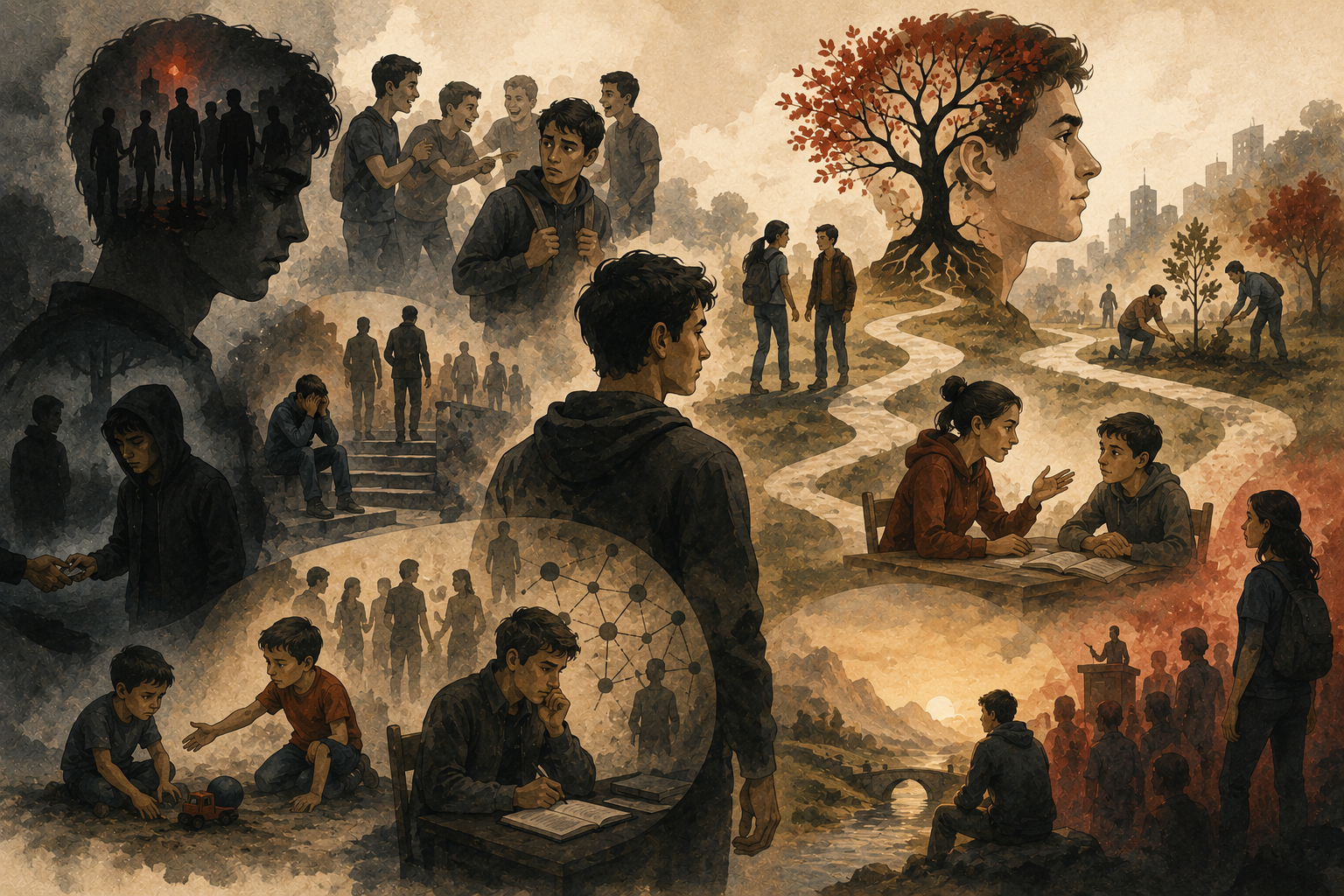
Situationism is morally unsettling because it challenges a comforting picture of ethical life. Many people want to believe that good persons reliably act well because goodness is inside them as a stable possession. They want courage to appear whenever courage is needed, honesty to appear whenever truth is at stake, compassion to appear whenever suffering is present, and justice to appear whenever fairness is violated. But psychological evidence and ordinary experience both suggest that moral conduct is more conditional than that. People who see themselves as decent may fail to help when hurried, remain silent under authority, follow unfair group norms, justify harm when roles demand it, or behave cruelly when distance, anonymity, or status competition weakens ordinary restraint.
Yet the opposite conclusion is also too simple. If character were merely an illusion, moral education would collapse into environmental engineering, virtue would become rhetorical decoration, and responsibility would lose much of its practical meaning. People do differ in courage, honesty, empathy, humility, self-command, and willingness to repair harm. Some resist pressure more consistently than others. Some become truthful when lying would benefit them. Some speak under threat. Some remain compassionate when exhausted. Some build habits and institutions that support their better commitments. The real challenge is to understand character as situated: morally meaningful, but not magically immune to circumstance.
What Situationism Is
Situationism is the view that behavior is often shaped more strongly by situational factors than by broad, robust character traits. In moral psychology and the empirical study of character, situationism functions as a challenge to the assumption that people typically possess virtues that are highly stable across a wide range of contexts. It asks whether courage, honesty, compassion, generosity, justice, and integrity are usually strong enough to govern conduct across diverse circumstances, or whether conduct is far more dependent on context than ordinary character language suggests.
Importantly, situationism is not necessarily the claim that persons have no dispositions at all. It is better understood as a challenge to one particular picture of traits: the picture in which moral virtues are broad, exceptionless, globally reliable, and powerful enough to determine conduct in most morally relevant contexts without substantial situational mediation. That distinction matters because the strongest versions of the debate are often caricatured. Defenders of virtue are portrayed as believing in saint-like consistency, while situationists are portrayed as denying all character. Neither picture is especially helpful.
Situationism instead raises an empirical and philosophical problem: if a person helps in one situation but fails to help in another because they are rushed, watched, anonymous, afraid, instructed by authority, or influenced by a group, what should we infer about their character? Does the inconsistency show that compassion was never really there? Does it show that the situation overwhelmed an otherwise real disposition? Does it show that character exists only as narrow, domain-specific tendency? Or does it show that virtue must include skill in recognizing and resisting situational pressure?
The best contemporary answer is layered. Situations shape behavior powerfully, but persons are not blank surfaces. Character may appear not as uniform behavior everywhere, but as structured responsiveness across recurring types of situations. A person may be honest when accountability is visible but evasive under status threat; generous when dependency is concrete but indifferent when need is abstract; courageous with peers but silent before authority. The moral question then becomes not simply whether the person has a trait, but how that trait is organized, activated, supported, and tested.
| Concept | Meaning | Why it matters |
|---|---|---|
| Situationism | The view that behavior is strongly shaped by situational features | Challenges overly broad claims about stable virtue and moral character. |
| Robust character | The idea that virtues are broad, stable, and reliable across many contexts | Supports traditional praise, blame, moral education, and virtue ethics. |
| Situational pressure | Contextual forces such as time pressure, authority, role, group norm, fear, or incentive | Explains why people often fail despite professed values. |
| Conditional stability | Patterned if-then consistency across recurring situation types | Preserves meaningful character without requiring perfect global uniformity. |
| Virtue fragility | The idea that virtue can be real but vulnerable to pressure, fatigue, distance, and institutional design | Connects character formation to habits, supports, institutions, and self-regulation. |
Why the Debate Matters
The debate matters because much of ethics, education, leadership, law, religion, parenting, and ordinary moral evaluation presumes that character is real and important. People praise courage, condemn dishonesty, admire integrity, trust the compassionate, fear the cruel, and worry about hypocrisy because they assume there is meaningful continuity in the kind of person someone is. If stable moral character were mostly an illusion, then many familiar practices of praise, blame, aspiration, education, and responsibility would need to be rethought.
At the same time, if situations matter enormously, then character talk can become morally misleading when it ignores context, incentives, institutional design, role pressure, and small environmental variables that strongly affect conduct. It can lead people to blame individuals while leaving the moral architecture of harm intact. A workplace may say employees lack courage while punishing dissent. A school may say students lack character while maintaining humiliating discipline systems. A society may say people lack generosity while designing scarcity and competition into everyday life.
Situationism matters because it shifts part of moral responsibility from isolated persons to the environments that elicit, reward, suppress, or deform behavior. This does not erase individual responsibility. It makes responsibility more complete. If environments predictably make wrongdoing easier and virtue harder, then the design of those environments becomes morally relevant. Ethics cannot rely on exhortation alone. It must also attend to the practical and structural conditions under which virtue is expressed or suppressed.
The debate also matters for self-understanding. Situationism warns against moral overconfidence. A person may imagine themselves courageous until authority threatens them, generous until time becomes scarce, honest until deception protects status, or fair until fairness benefits an outgroup. A realistic moral psychology therefore treats humility as central. The question is not only “Do I have good character?” but “Under what conditions does my character fail, and what supports do I need to act well when failure is predictable?”
| Field | Why situationism matters | Practical implication |
|---|---|---|
| Virtue ethics | Challenges overly global accounts of stable virtue | Virtue must be understood as cultivated, context-sensitive, and practically supported. |
| Moral education | Shows that exhortation is insufficient | Education should teach situational awareness, habits, self-regulation, and environment design. |
| Organizations | Reveals how incentives, hierarchy, and culture shape ethical behavior | Institutions must design for honesty, courage, care, and accountability. |
| Responsibility | Complicates simple blame based only on individual traits | Responsibility should consider agency, role, power, pressure, and system design. |
| Self-knowledge | Undermines moral overconfidence | People should identify predictable failure conditions and build supports before crisis arrives. |
| Public ethics | Shows that social arrangements elicit moral patterns | Justice requires shaping environments that make ethical action more possible. |
Virtue Ethics and Robust Character
Virtue ethics is one of the major traditions in normative ethics, and it is defined precisely by its emphasis on virtues and moral character rather than primarily on rules, consequences, or isolated decisions. On this kind of view, moral excellence involves cultivated dispositions such as honesty, generosity, courage, justice, temperance, humility, fidelity, compassion, and practical wisdom. Classical virtue theory, especially in Aristotle, presents virtue as a stable state in which feeling, judgment, desire, and action are educated into practical harmony.
This older picture is psychologically powerful because it treats moral life as self-formation rather than occasional compliance. Virtue is not merely doing the right thing once. It is becoming the kind of person who perceives what matters, feels appropriately, desires rightly, chooses well, and acts with reliable practical judgment. On this view, a courageous person is not merely someone who once acted bravely. A courageous person has formed a stable disposition to face fear for worthy ends. An honest person has formed a stable relation to truth. A just person has formed a stable concern for fair and right relation.
But this picture also sets a demanding standard for stability. If virtues are understood as broad and reliable dispositions, then evidence of strong context-dependence creates a serious challenge. What should we say of a person who is generous in familiar settings but indifferent to strangers, honest with friends but evasive at work, courageous in private judgment but silent under group pressure, compassionate when rested but cruel when rushed? Are these simply failures within virtue? Evidence against virtue? Or signs that virtue is real but narrower, more fragile, and more dependent on supporting practices than heroic accounts suggest?
The deepest value of virtue ethics is that it refuses to reduce morality to rule compliance or outcome calculation. It asks what kind of persons we are becoming. Situationism does not make that question obsolete. It makes it harder. It forces virtue theory to ask how virtues are actually formed, how they are maintained under pressure, how they differ from self-image, and how institutions can either cultivate or corrode them.
| Virtue | Robust-character expectation | Situationist complication |
|---|---|---|
| Courage | The person reliably faces fear for worthy ends. | Authority, retaliation, isolation, and group pressure may suppress action. |
| Honesty | The person reliably tells truth and resists deception. | Self-interest, status threat, ambiguity, and institutional norms may encourage evasion. |
| Compassion | The person reliably responds to suffering with care. | Distance, fatigue, abstraction, overload, and dehumanization may narrow concern. |
| Justice | The person reliably gives others their due. | Group identity, hierarchy, bias, and role incentives may distort fairness. |
| Humility | The person remains open to correction and limitation. | Power, praise, expertise, or moral identity may produce defensiveness. |
| Temperance | The person regulates appetite, anger, status desire, and impulse. | Stress, scarcity, peer norms, and reward systems may weaken self-command. |
The Situationist Challenge
The situationist challenge argues that empirical findings in psychology undermine strong character attributions by showing that behavior varies substantially with contextual conditions. The challenge is not merely that people sometimes fail. Virtue theories already allow for failure. The stronger claim is that behavioral variation may be too extensive and too easily shifted by minor situational cues for broad virtues to explain much of everyday conduct. If that is right, then moral psychology must move toward more qualified and empirically constrained accounts of moral character.
The challenge is forceful because ordinary moral language often moves quickly from action to trait. Someone helps, so we call them compassionate. Someone lies, so we call them dishonest. Someone remains silent, so we call them cowardly. But if behavior depends heavily on time pressure, mood, bystander presence, authority framing, incentives, group norms, and role expectation, then such inferences may be too quick. The same person might act differently under only slightly altered circumstances.
This creates a problem for praise as well as blame. If people behave well because the situation makes good action easy, then praise should be modest. If they behave badly because the situation makes bad action easy, then blame should be more careful. But caution should not become moral paralysis. Situationism does not imply that all behavior is excused by context. It implies that moral evaluation should ask better questions: What was the pressure? What did the person know? What alternatives existed? What role did authority play? Was the harm visible? Did the institution reward or punish ethical action? Did the person have prior habits for resisting this kind of pressure?
The situationist challenge therefore changes the unit of analysis. Instead of asking only whether a person possesses a trait, it asks how person, situation, role, habit, identity, and institution interact. That shift is one of the most important developments in contemporary moral psychology.
| Situationist concern | What it challenges | Better question |
|---|---|---|
| Behavioral variability | The assumption that one action reveals a broad trait | Across what situations does the behavior recur? |
| Small-cue effects | The assumption that only major moral factors shape action | Which environmental cues shift attention, motivation, and responsibility? |
| Role pressure | The assumption that people act as private moral selves in all contexts | How does the role define loyalty, obedience, duty, and permissible conduct? |
| Authority influence | The assumption that conscience easily resists command | What practices help people question authority under pressure? |
| Group conformity | The assumption that moral judgment automatically survives belonging pressure | How does group membership shape what feels speakable, loyal, or shameful? |
| Institutional incentives | The assumption that virtue is independent of systems | What does the system reward, punish, ignore, or normalize? |
Small Situational Variables and Large Behavioral Effects
One of the most striking lessons of the situationist literature is that apparently small situational variables can matter a great deal. Time pressure, ambient context, role framing, conformity pressure, perceived norms, authority cues, accountability visibility, social distance, fatigue, anonymity, and the perceived behavior of others can all influence whether people help, tell the truth, speak up, cheat, exclude, punish, or remain passive. Moral behavior is often more conditional than ordinary character judgments suggest.
This does not mean that tiny variables always dominate everything else. It means that moral behavior is often highly sensitive to how situations are structured. A person may be compassionate when another person’s need is vivid but indifferent when need is abstract. They may be honest when accountability is visible but evasive when lying is easy and socially tolerated. They may be courageous when supported but silent when isolated. They may be fair when rules are transparent but biased when outcomes are ambiguous and self-interest is present.
Small variables matter because they shape moral attention. If harm is visible, compassion may activate. If responsibility is diffused, guilt may weaken. If authority frames a task as normal, moral alarm may diminish. If others remain passive, bystander inaction becomes easier. If time pressure narrows attention, helping may seem less available. If an institution uses technical language, harm may feel procedural rather than personal. These are not trivial details. They are part of the moral architecture of action.
Such findings are especially important for real institutions. Ethical failure rarely depends only on explicit malice. It often grows through ordinary pressures: hurry, workload, hierarchy, professional jargon, divided responsibility, unclear reporting channels, fear of retaliation, and the sense that “this is how things are done.” Situationism teaches that moral environments must be designed with the fragility of virtue in mind.
| Situational variable | Possible effect | Ethical design response |
|---|---|---|
| Time pressure | Reduces helping, reflection, and attention to consequences | Build pauses, review points, and humane workload expectations. |
| Authority framing | Makes harmful action feel authorized or required | Protect refusal rights, escalation channels, and role-specific accountability. |
| Group norm | Makes silence or cruelty feel normal | Create visible norms for dissent, care, and repair. |
| Responsibility diffusion | Weakens personal accountability | Map ownership across the full decision chain. |
| Distance from harm | Makes victims less visible and less emotionally salient | Include affected-person testimony and consequence tracking. |
| Anonymity | Can weaken accountability and increase cruelty | Balance privacy with responsibility and transparent moderation. |
| Ambiguity | Allows self-interest to masquerade as judgment | Use disclosure, peer review, and conflict-of-interest safeguards. |
Classic Experimental Lessons
Situationist arguments are often associated with classic findings in social psychology showing that ordinary people can behave very differently under altered situational conditions. Studies of obedience, bystander behavior, conformity, role assignment, time pressure, and helping behavior have been used to challenge the idea that broad moral traits reliably govern action across contexts. Some of these classic studies have themselves been criticized, reinterpreted, or methodologically debated, but the broader lesson remains influential: moral action is often shaped by social context in ways people underestimate.
One recurring lesson is that people often mispredict their own behavior. Many people believe they would resist unjust authority, help someone in distress, refuse group cruelty, or speak honestly when it matters. Yet when placed under pressure, behavior may change. This gap between moral self-image and actual conduct is one reason situationism is morally important. It reveals that self-confidence is not the same as character.
A second lesson is that situations create perceived permission structures. If authority appears legitimate, if peers are silent, if responsibility is shared, if harm is distant, or if the task is framed as ordinary, then moral resistance becomes harder. People may not experience themselves as choosing wrongdoing. They may experience themselves as following procedure, doing their part, preserving order, or avoiding trouble. Situationism therefore overlaps with moral disengagement, institutional ethics, and the psychology of obedience.
A third lesson is that support matters. People are more likely to act well when responsibility is clear, harm is visible, dissent is protected, peers support moral action, and institutions reinforce ethical conduct. This means the moral conclusion is not pessimism. The conclusion is design. Human beings are vulnerable to situations, but situations can also be built to support care, honesty, courage, and justice.
| Experimental theme | Moral lesson | Limit of the lesson |
|---|---|---|
| Obedience | Authority can override ordinary moral hesitation. | Authority influence varies by context, interpretation, identity, and resistance practices. |
| Bystander behavior | Responsibility diffusion can weaken helping. | Clear responsibility and visible need can increase action. |
| Conformity | Group norms can distort perception and conduct. | Minority dissent and supportive peers can reduce conformity. |
| Time pressure | Hurry can narrow attention and reduce helping. | Time pressure does not erase responsibility, but it reveals predictable fragility. |
| Role framing | Assigned roles can reshape behavior and moral interpretation. | Roles are mediated by norms, oversight, identity, and institutional safeguards. |
| Accountability visibility | Being answerable can change conduct. | Accountability must be meaningful, fair, and oriented toward truth rather than only punishment. |
What Situationism Does and Does Not Show
Situationism shows that strong global character attributions are often empirically suspect. It does not by itself prove that there are no morally meaningful dispositions. This distinction is crucial. If one treats virtue as requiring near-perfect cross-situational consistency, then situationism is devastating. If one treats virtue as involving more modest but still meaningful patterns of reliability, shaped by habituation, self-regulation, identity, attention, social support, and context-sensitive practical intelligence, then the lesson is not to abandon character but to reconceive it.
Situationism does show that moral behavior is more situationally dependent than many ordinary judgments assume. A person’s action in one case should not automatically be inflated into a broad trait conclusion. It also shows that institutions and environments bear moral responsibility for the conduct they predictably elicit. A system that creates fear, hurry, ambiguity, and obedience pressure should not be surprised when moral failure follows.
But situationism does not show that persons are morally indistinguishable. Some people resist pressure more reliably. Some have stronger self-regulatory habits. Some recognize moral salience faster. Some are less easily captured by authority or group norms. Some have practiced courage, honesty, compassion, and humility in ways that make good action more likely even under strain. The fact that character is fragile does not mean it is fictional.
Situationism also does not show that responsibility disappears. A morally serious account must distinguish explanation from excuse. Situations help explain conduct, but they do not automatically absolve it. The harder and more truthful question is how responsibility should be distributed across persons, roles, histories, pressures, and institutions. In many cases, both individual and structural responsibility are real.
| Situationism shows… | Situationism does not show… | Balanced conclusion |
|---|---|---|
| Behavior is strongly shaped by context. | Persons have no morally meaningful dispositions. | Character is situated, conditional, and environmentally mediated. |
| Broad trait attributions can be overconfident. | All praise and blame are meaningless. | Moral evaluation should be more context-aware and evidence-sensitive. |
| Small variables can affect conduct. | Small variables determine everything. | Moral action is probabilistic, interactive, and patterned. |
| Institutions shape ethical behavior. | Individuals are never responsible. | Responsibility can be both personal and structural. |
| Virtue is fragile. | Virtue is impossible. | Virtue requires cultivation, practice, support, and situational wisdom. |
| Self-confidence is unreliable. | Self-formation is pointless. | Humility and preparedness are central to moral character. |
CAPS and If-Then Character Patterns
One of the most important alternatives to both naïve trait theory and radical skepticism is the CAPS model: the Cognitive-Affective Processing System. CAPS suggests that stable personality structure may be expressed through if-then patterns. If a certain class of situation is encountered, then a characteristic response becomes more likely. Stability is thus preserved, but in a conditional rather than globally uniform form.
This matters enormously for virtue theory. It suggests that morally relevant stability may consist not in identical behavior everywhere, but in patterned regularity under recurring situational triggers. Someone may reliably become generous when dependency is concrete, defensive when status is threatened, honest when accountability is visible, evasive when conflict is interpersonal, courageous when supported by peers, or silent when authority is punitive. Character then becomes neither fiction nor infallible essence, but a structured profile of situation-linked response.
CAPS also helps explain why people can seem inconsistent without being random. The same person may show striking reliability within certain situation classes. For example, a person may consistently defend subordinates but avoid challenging superiors. Another may be kind in intimate settings but indifferent in bureaucratic ones. Another may be honest about facts but dishonest about motives. These patterns are morally significant precisely because they reveal where character is strong, weak, conditional, or undeveloped.
For moral psychology, the value of if-then thinking is practical. It asks people and institutions to identify predictable failure points. If I am tempted to lie when embarrassed, then I need a truth-telling practice for shame. If I avoid intervention when others are silent, then I need a bystander script. If my compassion collapses under overload, then I need rest, delegation, and institutional support. Character formation becomes more concrete when it is tied to known situational triggers.
| If situation… | Then likely response… | Character question |
|---|---|---|
| If authority gives a questionable instruction | The person complies, questions, delays, escalates, or refuses | How does the person relate courage to hierarchy? |
| If the group mocks an outsider | The person joins, stays silent, redirects, or defends | How does the person balance belonging and justice? |
| If truth threatens status | The person hides, rationalizes, confesses, or repairs | How strong is honesty under self-protective pressure? |
| If another person’s need is visible | The person helps, avoids, delegates, or ignores | How does compassion activate under concrete vulnerability? |
| If responsibility is diffuse | The person waits, assumes ownership, or disappears into the group | How does responsibility survive ambiguity? |
| If feedback exposes wrongdoing | The person denies, attacks, listens, apologizes, or repairs | How does humility respond to moral threat? |
Big Five, VIA, and Character Strengths
The empirical study of character also draws on broader personality and character-strength frameworks. The Big Five offers a broad trait vocabulary widely used in personality psychology: openness, conscientiousness, extraversion, agreeableness, and neuroticism or emotional stability. The VIA framework, associated with positive psychology, focuses more explicitly on virtues and character strengths. These approaches do not resolve the situationist challenge by themselves, but they show that contemporary character research is not limited to one trait model.
The significance of these approaches is partly methodological and partly conceptual. They offer tools for describing relatively stable tendencies while also acknowledging measurement complexity and contextual variation. Big Five traits may shape morally relevant behavior indirectly: agreeableness may support cooperation and compassion, conscientiousness may support reliability and self-control, openness may support perspective-taking, emotional stability may reduce defensive reactivity, and extraversion may support public engagement or social courage. But none of these traits is identical with virtue.
VIA and character-strength approaches move closer to moral language by naming strengths such as bravery, honesty, kindness, fairness, perseverance, gratitude, humility, prudence, forgiveness, and love of learning. Their value is that they keep moral aspiration visible. Their risk is that strengths can become self-branding labels if detached from cost, accountability, and context. To say that someone has the strength of bravery means little unless we ask where bravery appears, what it costs, whom it protects, and when it fails.
Taken together with CAPS, these frameworks support a plural view: character may be real, but different frameworks capture different levels of its organization. Broad traits, character strengths, moral identity, self-regulation, habits, cultural learning, and if-then response patterns all matter. Contemporary moral psychology is therefore less interested in heroic, globally invariant virtue than in patterned, situation-sensitive moral profiles.
| Framework | What it contributes | Situationist caution |
|---|---|---|
| Big Five | Broad dispositional vocabulary for personality variation | Broad traits are not themselves virtues and do not guarantee ethical action. |
| VIA character strengths | Language for positive moral and psychological strengths | Strength labels must be tested by context, cost, and actual conduct. |
| CAPS | Conditional if-then model of personality and character expression | Stability may be situationally patterned rather than globally uniform. |
| Moral identity | Explains when morality becomes central to self-regulation | Identity can become self-image rather than accountability. |
| Self-regulation | Explains how commitments become action under pressure | Self-regulation is vulnerable to fatigue, stress, and institutional design. |
| Habit theory | Explains how repeated practice shapes reliable conduct | Habits depend on cues, environments, and reinforcement patterns. |
Virtue, Stability, and Fragility
One useful way to rethink virtue after situationism is to distinguish stability from invulnerability. A virtue may be stable enough to matter and yet fragile enough to require support. Courage may be real while still vulnerable to hierarchy and fear. Compassion may be real while still weakened by overload and distance. Honesty may be real while still threatened by self-interest and rationalization. Justice may be real while still distorted by group loyalty. Humility may be real while still tested by praise, power, and expertise.
This kind of fragility does not trivialize virtue. It may actually make virtue psychologically richer. It suggests that virtues are achievements maintained through habit, attention, self-regulation, moral identity, relational support, and supportive environments, rather than magical guarantees of right action. That is a more modest picture than some classical rhetoric suggests, but it is also more plausible.
Stability should therefore be understood as patterned reliability under relevant conditions, not as flawless performance across every possible circumstance. The honest person is not someone incapable of deception, but someone whose relation to truth is strong enough to shape conduct across many pressures and who has practices for repair when they fail. The courageous person is not someone who never feels fear, but someone who has learned how to act for worthy ends when fear is present. The compassionate person is not someone who feels unlimited care at all times, but someone who keeps vulnerability morally visible and resists the narrowing of concern.
Fragility also has institutional implications. If virtues require support, then communities and organizations should not merely demand good character. They should build conditions that help good character survive: time for reflection, fair workloads, clear responsibility, accountability without humiliation, protected dissent, visible consequences, restorative repair, and language that names harm plainly. Virtue becomes a shared project, not merely a private possession.
| Virtue | Form of stability | Form of fragility | Supportive condition |
|---|---|---|---|
| Honesty | Reliable commitment to truth and correction | Threatened by shame, self-interest, status, and institutional secrecy | Transparent norms, safe correction, and conflict-of-interest review |
| Courage | Capacity to act under fear for worthy ends | Threatened by retaliation, isolation, and authority pressure | Protected dissent, solidarity, and clear escalation channels |
| Compassion | Responsiveness to suffering and vulnerability | Threatened by overload, distance, abstraction, and dehumanization | Human impact visibility, rest, and shared care structures |
| Justice | Concern for fair relation, rights, and equal standing | Threatened by group loyalty, hierarchy, and biased incentives | Equity audits, voice, accountability, and affected-person participation |
| Humility | Openness to correction, limits, and dependence | Threatened by power, expertise, praise, and moral identity defensiveness | Feedback norms, apology practices, and leadership accountability |
| Temperance | Self-command under appetite, anger, and status desire | Threatened by stress, scarcity, and reward systems | Reasonable constraints, reflective routines, and non-exploitative incentives |
Moral Identity, Self-Regulation, and Habit
Situationism becomes more constructive when connected to moral identity, self-regulation, and habit. If situations predictably shape conduct, then the person who wants to become more virtuous must do more than endorse ideals. They must build practices that help ideals survive pressure. Moral identity can make ethical commitments more central to the self. Self-regulation can help commitments become action. Habit can reduce the need to decide from scratch in every morally charged situation.
Moral identity matters because it links virtue to self-understanding. A person who sees honesty, courage, compassion, or justice as central to who they are may be more likely to act consistently with those commitments. But moral identity can also become dangerous when it protects self-image more than truth. The person who believes “I am a good person” may become defensive when confronted with harm. A mature moral identity therefore includes accountability, not only aspiration.
Self-regulation matters because many moral failures occur in the gap between judgment and action. A person may know the better course but fail under fear, fatigue, temptation, anger, or social pressure. Situationism makes this gap visible. It shows that moral action requires capacities for attention, emotion regulation, delay, resistance, courage, and repair. These capacities can be cultivated, but they are also vulnerable to depletion and institutional strain.
Habit matters because repeated practice gives virtue practical form. The person who has practiced saying “I need to think about that before I agree,” “Who might be harmed by this decision?” or “I may be wrong; let’s check” has built situational scripts for moral pressure. Habits do not eliminate judgment. They make better judgment more available when pressure narrows attention.
| Internal support | How it helps virtue survive situations | Failure mode |
|---|---|---|
| Moral identity | Connects virtue to self-understanding and integrity | Can become moral vanity or defensiveness |
| Self-regulation | Helps values become action under temptation, fear, fatigue, or pressure | Can weaken under stress, overload, scarcity, or emotional depletion |
| Habit | Creates practiced responses before pressure overwhelms reflection | Can become rigid or morally blind if habits are never reviewed |
| Attention | Keeps harm, responsibility, and affected persons visible | Can narrow under time pressure, overload, or self-interest |
| Practical wisdom | Helps adapt virtue to complex situations | Can become rationalization if detached from accountability |
| Repair capacity | Allows virtue to recover after failure | Can become self-exoneration if apology replaces material change |
Moral Education After Situationism
Situationism has significant implications for moral education. If moral behavior is highly sensitive to context, then education cannot focus only on internal exhortation or abstract principle. It must also teach students and adults how environments shape action, how temptation and role pressure work, how group norms influence judgment, how moral disengagement begins, and how to design routines and settings that support better behavior.
At the same time, abandoning character altogether would make moral education strangely thin. Education still aims at forming persons who can perceive what matters, regulate themselves, care about others, tell the truth, resist cruelty, apologize, repair harm, and act with some reliability. The lesson is not to stop teaching character. The lesson is to teach character more realistically: as something cultivated under conditions, tested by situations, and strengthened by practices that reduce predictable sources of moral failure.
A post-situationist moral education would teach the fragility of virtue without turning that fragility into fatalism. Students would learn that good intentions are not enough; that environments matter; that peer pressure, authority, hurry, and ambiguity are morally dangerous; that courage requires scripts and support; that honesty requires practices of accountability; that compassion requires making suffering visible; and that institutions should be judged partly by the kinds of character they make possible.
This approach also changes how moral failure is taught. Instead of presenting failure only as evidence of bad character, education can ask how failure happened. Was the person afraid? Was responsibility unclear? Was the group norm corrupt? Was harm invisible? Was there a practiced alternative? Was the institution designed to reward silence? Such questions do not erase accountability. They deepen moral learning by making failure intelligible and preventable.
| Educational goal | Situationist lesson | Practice |
|---|---|---|
| Teach courage | Courage fails under isolation and retaliation risk. | Practice dissent scripts, bystander intervention, and collective support. |
| Teach honesty | Truth fails under shame, self-interest, and ambiguity. | Practice disclosure, correction, and conflict-of-interest reflection. |
| Teach compassion | Care narrows under distance and overload. | Use testimony, perspective-taking, and shared care practices. |
| Teach justice | Fairness distorts under group loyalty and bias. | Use role reversal, equity review, and affected-person participation. |
| Teach humility | Self-image resists correction. | Normalize apology, feedback, and evidence-based revision. |
| Teach responsibility | Agency disappears when responsibility is diffused. | Map roles, decisions, consequences, and repair obligations. |
Institutions and the Expression of Character
The stability of virtue cannot be separated from institutional setting. Organizations, schools, workplaces, professions, religious communities, political movements, platforms, and public institutions structure incentives, visibility, responsibility, language, fear, reward, and punishment. They shape whether honesty, courage, care, humility, and justice are expressed or suppressed. Environment is not just background. It is part of the moral architecture in which virtue survives, deforms, or collapses.
Institutions can support virtue by making good action easier and wrongdoing harder. They can protect dissent, clarify responsibility, make consequences visible, align incentives with ethical conduct, reduce unnecessary time pressure, create fair review, and treat apology and repair as serious practices. They can also corrode virtue by rewarding silence, punishing whistleblowers, diffusing responsibility, hiding harm, using euphemistic language, celebrating outcomes detached from means, and turning people into metrics.
This is one reason situationism has political and organizational implications. If good behavior is context-sensitive, then institutions bear real responsibility for the moral patterns they elicit. A harmful system cannot simply demand better character from individuals while maintaining conditions that predictably suppress moral agency. Character remains relevant, but institution design becomes part of moral responsibility.
Role morality is especially important. A person may act differently as employee, manager, parent, citizen, teacher, clinician, officer, engineer, moderator, or administrator because each role defines obligations, loyalties, risks, and permissible action differently. The question is not whether role influence exists. It always does. The question is whether roles are designed to preserve moral agency or to replace it with obedience, deniability, and performance.
| Institutional feature | Effect on virtue | Ethical design question |
|---|---|---|
| Hierarchy | Can suppress courage and shift responsibility upward | Can people question authority without retaliation? |
| Incentives | Can reward integrity or reward moral compromise | What behavior is actually promoted, paid, praised, or punished? |
| Language | Can clarify harm or hide it through euphemism | Does institutional language name what is being done to whom? |
| Workload | Can support care or create moral exhaustion | Are people given conditions under which care and reflection are possible? |
| Accountability | Can make responsibility visible or merely punitive | Is accountability fair, transparent, repair-oriented, and role-specific? |
| Voice safety | Can support honesty and courage | Can people report harm, dissent, and correct errors safely? |
| Consequence visibility | Can activate compassion and responsibility | Are affected persons, downstream harms, and lived impacts visible? |
The Stability of Virtue Reconsidered
The most defensible contemporary view is that virtue is stable, but not simple. Moral character may not typically appear as perfectly global cross-situational consistency. Instead, it may consist in structured tendencies, trained habits, identity-linked commitments, self-regulatory capacities, moral attention, emotional formation, and practical capacities that remain meaningfully vulnerable to circumstance. This reading fits empirical moral-character research better than either heroic essentialism or total skepticism.
On this view, the stability of virtue is neither myth nor guarantee. It is an achievement that can be measured, challenged, strengthened, and undermined. It depends on what situations reveal, what pressures expose, what habits sustain, what institutions support, and what repair follows failure. A person’s character is not shown by one good action or one bad action alone. It is shown by patterns over time, across contexts, under cost, and in response to correction.
This also means that virtue has a developmental and institutional dimension. Virtues are cultivated through repeated practice, moral attention, role models, correction, apology, reflection, and environments that make ethical action possible. They are not merely inner possessions. They are lived capacities shaped by relationships, rituals, communities, and systems. Character is real, but it is enacted.
The stability of virtue after situationism should therefore be understood as resilient situated reliability. The virtuous person is not immune to situation. The virtuous person learns how situations work, anticipates predictable failures, builds supports, practices resistance, seeks accountability, repairs harm, and grows more reliable over time. That is a more demanding picture than moral self-confidence, and a more realistic one than moral skepticism.
| Model of virtue | Core claim | Problem | Better synthesis |
|---|---|---|---|
| Heroic globalism | Virtue is broad, stable, and highly reliable across contexts. | Underestimates situational pressure and behavioral variability. | Retain aspiration, but make stability empirically realistic. |
| Radical situationism | Situations dominate; character contributes little. | Underestimates patterned differences, habits, identity, and resistance. | Retain context sensitivity, but preserve meaningful moral agency. |
| Narrow trait view | People have small, domain-specific moral tendencies. | May fragment character too much and weaken moral aspiration. | Use narrow evidence while studying larger patterns over time. |
| CAPS-style conditionality | Character appears in if-then patterns. | Requires careful mapping of situation classes and response signatures. | Strong tool for modeling situated moral reliability. |
| Virtue as resilient situated reliability | Virtue is stable through practice, support, wisdom, and repair. | Harder to measure than simple trait scores. | Best fit for moral psychology after situationism. |
What Situationism Does Not Excuse
Situationism should not become a language of evasion. To say that situations influence conduct is not to say that people are helpless. Context explains, shapes, pressures, and predicts; it does not automatically absolve. Moral responsibility remains relevant because persons still notice, choose, resist, comply, rationalize, repair, and participate. The question is not whether responsibility disappears, but how it should be understood when action is shaped by both person and situation.
This distinction matters because situationist language can be misused. A leader can blame culture to avoid personal responsibility. An employee can blame pressure to excuse dishonesty. An institution can blame “human factors” while preserving harmful incentives. A political movement can blame the environment while encouraging dehumanization. A person can say “anyone would have done the same” when the more truthful statement is “the situation made failure easier, and I failed.”
A morally serious use of situationism therefore pairs explanation with accountability. It asks: What was predictable? Who designed the pressure? Who benefited? Who had power to resist? Who had fewer options? Who ignored warning signs? What supports were absent? What should now be repaired? These questions prevent situationism from becoming fatalism or self-exoneration.
The strongest ethical lesson is double accountability. Persons should cultivate character with humility about situational vulnerability. Institutions should design environments that support ethical agency. When failure occurs, responsibility should be mapped across both levels. This is harder than blaming only bad individuals or only bad systems, but it is closer to moral reality.
| Misuse of situationism | Why it is dangerous | Corrective question |
|---|---|---|
| “The situation made me do it.” | Erases agency and repair obligation. | What options existed, and what responsibility remains? |
| “Everyone would have failed.” | Turns vulnerability into inevitability. | Who resisted, and what made resistance possible? |
| “It was just the culture.” | Hides the people who created, benefited from, or maintained the culture. | Who designed, rewarded, normalized, or ignored the pattern? |
| “No one is responsible because responsibility was diffused.” | Confuses shared responsibility with no responsibility. | How should responsibility be mapped across roles and authority? |
| “Character does not matter.” | Abandons self-formation and moral education. | What habits and commitments help people act well under pressure? |
| “Only character matters.” | Ignores systems that predictably produce failure. | What environmental changes would make ethical action more likely? |
Mathematical Lens: Modeling Situationism and Virtue Stability
The debate can be modeled by treating morally relevant behavior as a joint function of person-level character, situational influence, and their interaction. Let \(B_{ij}\) represent the morally relevant behavior of person \(i\) in situation \(j\):
B_{ij} = \alpha C_i + \beta S_j + \gamma(C_i \times S_j) + \varepsilon_{ij}
\]
Interpretation: Moral behavior is modeled as a function of character strength, situational pressure or affordance, and the interaction between character and situation. This captures the core post-situationist insight: character may matter, but its expression can shift across contexts.
where \(C_i\) is character strength, \(S_j\) is situational pressure or affordance, and the interaction term captures the possibility that character expresses itself differently across contexts. If one assumes robust global virtue, the variance explained by \(C_i\) should dominate across a wide range of situations. If one assumes radical situationism, \(S_j\) should dominate and \(C_i\) should contribute little. A moderate view expects both to matter, with interaction effects revealing that character is structured but context-sensitive rather than all-powerful or illusory.
We can also model CAPS-style stability through if-then signatures:
R_i(k) = f_k(U_i)
\]
Interpretation: Person \(i\)’s response in situation class \(k\) depends on an organized cognitive-affective system. Stability appears not as identical behavior everywhere, but as patterned regularity within recurring classes of circumstances.
where \(R_i(k)\) is person \(i\)’s response in situation class \(k\), and \(U_i\) is the organized set of cognitive-affective units shaping that response.
Virtue fragility can be modeled by adding depletion, accountability, and institutional support:
A_{ij} = \sigma(\theta_1 C_i + \theta_2 H_i + \theta_3 V_j – \theta_4 P_j – \theta_5 D_i + \theta_6 A_j)
\]
Interpretation: Moral action probability rises with character, habit strength, voice safety, and accountability, but falls under situational pressure and depletion. The model treats virtue as real but environmentally supported.
where \(A_{ij}\) is moral action probability, \(H_i\) is habit strength, \(V_j\) is voice safety or support, \(P_j\) is situational pressure, \(D_i\) is depletion or fatigue, and \(A_j\) is accountability visibility.
A repeated-measures model can also represent character as reliability over time rather than single-action purity:
\text{Reliability}_i = \frac{1}{K}\sum_{k=1}^{K} P(A_i = 1 \mid S_k)
\]
Interpretation: Moral reliability can be estimated across multiple classes of situations. A person’s character should be evaluated by patterned conduct across contexts, not by one isolated action or one idealized self-description.
| Model term | Meaning | Moral interpretation |
|---|---|---|
| \(B_{ij}\) | Morally relevant behavior by person \(i\) in situation \(j\) | The observed action or response under particular conditions. |
| \(C_i\) | Character strength | The person-level tendency toward virtue-relevant action. |
| \(S_j\) | Situational pressure or affordance | The contextual force that supports or suppresses ethical conduct. |
| \(C_i \times S_j\) | Person-situation interaction | How character expresses differently depending on context. |
| \(R_i(k)\) | Response in situation class \(k\) | CAPS-style if-then signature of moral conduct. |
| \(H_i\) | Habit strength | Practiced response that helps virtue survive pressure. |
| \(V_j\) | Voice safety or support | Contextual protection for truth-telling, dissent, and correction. |
| \(D_i\) | Depletion or fatigue | Condition that can narrow attention and weaken self-regulation. |
| \(A_j\) | Accountability visibility | The extent to which action remains answerable to review and consequence. |
R Workflow: Modeling Character Across Situations
The following R workflow simulates character strength, self-regulation, habit strength, situational pressure, voice safety, accountability visibility, depletion, and if-then response patterns. It then estimates how much morally relevant action varies by person, situation, and their interaction. The dataset is synthetic and intended for reproducible article support, not empirical claims about real persons, workplaces, schools, organizations, institutions, or communities.
# Situationism, Moral Character, and the Stability of Virtue
# Synthetic R workflow for modeling character across situations.
# Educational and reproducible research scaffold only.

suppressPackageStartupMessages({
  library(tidyverse)
  library(broom)
})

set.seed(42)

# ------------------------------------------------------------
# 1. Set up output folders
# ------------------------------------------------------------

dir.create("outputs", showWarnings = FALSE)
dir.create("outputs/tables", recursive = TRUE, showWarnings = FALSE)
dir.create("outputs/figures", recursive = TRUE, showWarnings = FALSE)

# ------------------------------------------------------------
# 2. Simulate people and situations
# ------------------------------------------------------------

n_people <- 500
n_situations <- 10

people <- tibble(
  person_id = 1:n_people,
  character_strength = rnorm(n_people, 0, 1),
  self_regulation = rnorm(n_people, 0, 1),
  habit_strength = rnorm(n_people, 0, 1),
  moral_identity = rnorm(n_people, 0, 1),
  depletion = rnorm(n_people, 0, 1)
)

situations <- tibble(
  situation_id = 1:n_situations,
  situational_pressure = seq(-1.5, 1.5, length.out = n_situations),
  voice_safety = seq(1.2, -1.2, length.out = n_situations),
  accountability_visibility = c(1.2, 1.0, 0.8, 0.4, 0.1, -0.1, -0.4, -0.7, -1.0, -1.2),
  situation_class = c(
    "Helping visible / low pressure",
    "Accountability high / low pressure",
    "Peer support / moderate pressure",
    "Public ambiguity",
    "Neutral",
    "Private temptation",
    "Time stress",
    "Conformity pressure",
    "Authority pressure",
    "Very high pressure / low accountability"
  )
)

df <- crossing(people, situations) %>%
  mutate(
    action_latent =
      0.42 * character_strength +
      0.28 * self_regulation +
      0.25 * habit_strength +
      0.22 * moral_identity -
      0.55 * situational_pressure +
      0.25 * voice_safety +
      0.25 * accountability_visibility -
      0.20 * depletion -
      0.22 * character_strength * situational_pressure +
      rnorm(n(), 0, 0.9),

    moral_action_probability = plogis(action_latent),
    moral_action = if_else(moral_action_probability >= 0.5, 1, 0),

    pressure_band = case_when(
      situational_pressure < -0.75 ~ "Low pressure",
      situational_pressure < 0.25 ~ "Moderate pressure",
      situational_pressure < 1.0 ~ "High pressure",
      TRUE ~ "Very high pressure"
    )
  )

# ------------------------------------------------------------
# 3. Estimate person, situation, and interaction effects
# ------------------------------------------------------------

model <- glm(
  moral_action ~ character_strength + self_regulation + habit_strength +
    moral_identity + depletion + situational_pressure + voice_safety +
    accountability_visibility + character_strength:situational_pressure,
  data = df,
  family = binomial()
)

model_results <- tidy(model, conf.int = TRUE, exponentiate = TRUE)
model_fit <- glance(model)

print(model_results)

# ------------------------------------------------------------
# 4. Summarize action by pressure band
# ------------------------------------------------------------

pressure_summary <- df %>%
  group_by(pressure_band) %>%
  summarize(
    mean_character = mean(character_strength),
    mean_self_regulation = mean(self_regulation),
    mean_habit = mean(habit_strength),
    mean_pressure = mean(situational_pressure),
    mean_voice_safety = mean(voice_safety),
    mean_accountability = mean(accountability_visibility),
    mean_action_prob = mean(moral_action_probability),
    action_rate = mean(moral_action),
    .groups = "drop"
  )

print(pressure_summary)

# ------------------------------------------------------------
# 5. Build prediction grid
# ------------------------------------------------------------

pred_grid <- expand_grid(
  character_strength = seq(-2, 2, length.out = 120),
  situational_pressure = c(-1, 0, 1),
  self_regulation = 0,
  habit_strength = 0,
  moral_identity = 0,
  depletion = 0,
  voice_safety = 0,
  accountability_visibility = 0
)

pred_grid$predicted_action_prob <- predict(
  model,
  newdata = pred_grid,
  type = "response"
)

pred_grid <- pred_grid %>%
  mutate(
    pressure_label = case_when(
      situational_pressure == -1 ~ "Low situational pressure",
      situational_pressure == 0 ~ "Neutral situation",
      TRUE ~ "High situational pressure"
    )
  )

# ------------------------------------------------------------
# 6. Plot predicted moral action
# ------------------------------------------------------------

plot_action <- ggplot(
  pred_grid,
  aes(x = character_strength, y = predicted_action_prob)
) +
  geom_line(linewidth = 1) +
  facet_wrap(~ pressure_label) +
  labs(
    title = "Predicted Moral Action from Character and Situation",
    subtitle = "Character matters, but its expression shifts across contexts",
    x = "Character strength",
    y = "Probability of moral action"
  ) +
  theme_minimal(base_size = 12)

print(plot_action)

# ------------------------------------------------------------
# 7. Export outputs
# ------------------------------------------------------------

write_csv(df, "outputs/tables/situationism_character_simulated_data.csv")
write_csv(model_results, "outputs/tables/situationism_character_model.csv")
write_csv(model_fit, "outputs/tables/situationism_character_model_fit.csv")
write_csv(pressure_summary, "outputs/tables/situationism_pressure_summary.csv")
write_csv(pred_grid, "outputs/tables/situationism_character_predictions.csv")

ggsave(
  filename = "outputs/figures/predicted_moral_action_character_situation.png",
  plot = plot_action,
  width = 10,
  height = 6,
  dpi = 300
)
This workflow is useful because it makes the core debate explicit: how much moral action is explained by character, by situations, and by their interaction. It also adds habit strength, moral identity, accountability visibility, voice safety, and depletion, so the model does not reduce the debate to a simple character-versus-situation binary.
Python Workflow: Simulating Virtue Expression Under Situational Pressure
The Python workflow below simulates virtue expression under varying situational demands and shows how stable person-level tendencies can still be conditionally expressed rather than globally uniform. The example uses synthetic data for reproducible demonstration and should not be interpreted as an assessment of real people, workplaces, schools, organizations, institutions, or communities.
# Situationism, Moral Character, and the Stability of Virtue
# Python workflow for synthetic virtue-expression modeling.
# Educational and reproducible research scaffold only.

from pathlib import Path

import numpy as np
import pandas as pd

np.random.seed(42)

# ------------------------------------------------------------
# 1. Set up output folders
# ------------------------------------------------------------

output_tables = Path("outputs/tables")
output_tables.mkdir(parents=True, exist_ok=True)

# ------------------------------------------------------------
# 2. Simulate people and situations
# ------------------------------------------------------------

n_people = 600
n_situations = 12

people = pd.DataFrame({
    "person_id": np.arange(1, n_people + 1),
    "character_strength": np.random.normal(0, 1, n_people),
    "self_regulation": np.random.normal(0, 1, n_people),
    "habit_strength": np.random.normal(0, 1, n_people),
    "moral_identity": np.random.normal(0, 1, n_people),
    "depletion": np.random.normal(0, 1, n_people)
})

situations = pd.DataFrame({
    "situation_id": np.arange(1, n_situations + 1),
    "situational_pressure": np.linspace(-1.6, 1.6, n_situations),
    "voice_safety": np.linspace(1.3, -1.3, n_situations),
    "accountability_visibility": np.linspace(1.2, -1.2, n_situations)
})

df = people.merge(situations, how="cross")

# ------------------------------------------------------------
# 3. Generate morally relevant behavior
# ------------------------------------------------------------

latent = (
    0.42 * df["character_strength"] +
    0.28 * df["self_regulation"] +
    0.25 * df["habit_strength"] +
    0.22 * df["moral_identity"] -
    0.55 * df["situational_pressure"] +
    0.25 * df["voice_safety"] +
    0.25 * df["accountability_visibility"] -
    0.20 * df["depletion"] -
    0.22 * df["character_strength"] * df["situational_pressure"] +
    np.random.normal(0, 0.9, len(df))
)

df["moral_action_probability"] = 1 / (1 + np.exp(-latent))
df["moral_action"] = (df["moral_action_probability"] >= 0.5).astype(int)

df["pressure_band"] = pd.qcut(
    df["situational_pressure"],
    q=4,
    labels=["Low", "Lower-middle", "Upper-middle", "High"]
)

# ------------------------------------------------------------
# 4. Summarize by pressure bands
# ------------------------------------------------------------

summary = (
    df.groupby("pressure_band", observed=False)
      .agg(
          mean_character=("character_strength", "mean"),
          mean_self_regulation=("self_regulation", "mean"),
          mean_habit=("habit_strength", "mean"),
          mean_identity=("moral_identity", "mean"),
          mean_pressure=("situational_pressure", "mean"),
          mean_voice_safety=("voice_safety", "mean"),
          mean_accountability=("accountability_visibility", "mean"),
          mean_action_prob=("moral_action_probability", "mean"),
          action_rate=("moral_action", "mean")
      )
      .reset_index()
)

print(summary)

# ------------------------------------------------------------
# 5. Build scenario grid
# ------------------------------------------------------------

scenario_rows = []

for character in np.linspace(-2, 2, 41):
    for pressure in [-1, 0, 1]:
        for habit in [-1, 0, 1]:
            latent_scenario = (
                0.42 * character +
                0.28 * 0 +
                0.25 * habit +
                0.22 * 0 -
                0.55 * pressure +
                0.25 * 0 +
                0.25 * 0 -
                0.20 * 0 -
                0.22 * character * pressure
            )

            probability = 1 / (1 + np.exp(-latent_scenario))

            scenario_rows.append({
                "character_strength": character,
                "situational_pressure": pressure,
                "habit_strength": habit,
                "predicted_action_probability": probability
            })

scenario_df = pd.DataFrame(scenario_rows)

print(scenario_df.head(12))

# ------------------------------------------------------------
# 6. Identify high-character low-action synthetic cases
# ------------------------------------------------------------

high_character_low_action = (
    df[
        (df["character_strength"] > df["character_strength"].quantile(0.75)) &
        (df["moral_action"] == 0)
    ]
    .sort_values("situational_pressure", ascending=False)
    .head(25)
    .reset_index(drop=True)
)

# ------------------------------------------------------------
# 7. Export outputs
# ------------------------------------------------------------

df.to_csv(output_tables / "situationism_character_python.csv", index=False)
summary.to_csv(output_tables / "situationism_character_summary.csv", index=False)
scenario_df.to_csv(output_tables / "situationism_character_scenarios.csv", index=False)
high_character_low_action.to_csv(
    output_tables / "situationism_high_character_low_action_cases.csv",
    index=False
)

print("Synthetic situationism and character outputs written to:", output_tables)
This workflow is useful because it preserves the possibility of stable virtue while showing that its expression remains highly sensitive to context. It also makes visible a central post-situationist point: high character strength does not guarantee action when pressure is high, voice safety is low, accountability is weak, and practiced habits are absent.
In a full article repository, this Python workflow can be extended into notebooks, SQL schema, synthetic datasets, validation notes, if-then signature models, pressure-band summaries, high-character low-action case analyses, institution-design simulations, and additional language examples. R can support statistical modeling and visualization; Python can support simulation and data pipelines; SQL can preserve structured scenario metadata; Julia can support person-situation simulations; and C, C++, Fortran, Go, and Rust can support reproducible command-line tools, validation utilities, and computational demonstrations.
GitHub Repository
The companion repository for this article provides a reproducible code scaffold for modeling situationism, character strength, self-regulation, habit strength, moral identity, depletion, situational pressure, voice safety, accountability visibility, person-situation interaction, if-then response patterns, moral action probability, and virtue stability under contextual pressure.
This article’s companion repository includes reproducible workflows, synthetic datasets, model documentation, computational examples, and outputs for exploring how moral character, virtue, self-regulation, habit, identity, institutional pressure, accountability, and situational context interact to shape ethical action across different circumstances.
The repository structure should support a full research workflow rather than a single script. The article folder can include language-specific examples in python, r, julia, sql, c, cpp, fortran, go, and rust, along with data, docs, notebooks, and outputs. This structure makes the article reproducible, inspectable, and extensible for readers who want to move from conceptual argument to analytical demonstration.
Conclusion
Situationism changed the study of moral character by forcing virtue theory to confront the empirical power of context. It showed that behavior is often more conditional, fragile, and situationally influenced than heroic pictures of moral character suggested. Time pressure, authority, conformity, role expectation, institutional incentives, anonymity, fatigue, and the visibility of harm can all shift conduct in morally consequential ways. That lesson should permanently alter how moral psychology understands virtue.
But situationism did not prove that character is a fiction. More plausibly, it forced a better question: what kind of stability should we realistically expect from virtue? The strongest answer is that virtue may be stable without being exceptionless, and that moral character may be real without being globally uniform. Stability may appear in patterned responsiveness, trained habits, identity-linked commitments, self-regulation, practical wisdom, accountability, and repair rather than in flawless cross-situational consistency.
This is a more modest view than some classical rhetoric, but it is also more psychologically credible. Virtue is not an invulnerable essence. It is a cultivated capacity. It must be practiced, supported, tested, revised, and repaired. It depends on persons, but also on families, schools, workplaces, communities, and institutions that either protect or corrode moral agency.
The moral lesson is therefore not cynicism. It is humility and design. People should not assume their good intentions will survive every situation. Institutions should not assume character alone will overcome bad systems. Moral education should teach both self-formation and situational intelligence. A serious account of virtue after situationism must ask how good character becomes reliable enough to matter in a world where context always matters too.
Related articles
- Character, Virtue, and the Psychology of Moral Selfhood
- Personality, Character, and Individual Differences in Moral Life
- Moral Identity and the Formation of Moral Agency
- Moral Self-Regulation, Temptation, and Weakness of Will
- Moral Motivation and the Judgment–Action Gap
- Moral Disengagement and the Psychology of Ethical Failure
- Moral Psychology in Organizations and Institutions
- Cross-Cultural Moral Psychology
- Virtue and Flourishing in the Psychology of Ethical Life
Further reading
- Miller, C.B. (2016) ‘Empirical Approaches to Moral Character’, in Zalta, E.N. and Nodelman, U. (eds.) The Stanford Encyclopedia of Philosophy. Available at: https://plato.stanford.edu/entries/moral-character-empirical/.
- Doris, J. (2006, rev. 2022) ‘Moral Psychology: Empirical Approaches’, in Zalta, E.N. and Nodelman, U. (eds.) The Stanford Encyclopedia of Philosophy. Available at: https://plato.stanford.edu/entries/moral-psych-emp/.
- Hursthouse, R. and Pettigrove, G. (2018) ‘Virtue Ethics’, in Zalta, E.N. and Nodelman, U. (eds.) The Stanford Encyclopedia of Philosophy. Available at: https://plato.stanford.edu/entries/ethics-virtue/.
- Homiak, M. (2003, rev. 2019) ‘Moral Character’, in Zalta, E.N. and Nodelman, U. (eds.) The Stanford Encyclopedia of Philosophy. Available at: https://plato.stanford.edu/entries/moral-character/.
- Snow, N.E. (2003, archived 2025) ‘Moral Character’, in The Stanford Encyclopedia of Philosophy. Available at: https://plato.stanford.edu/archives/fall2025/entries/moral-character/.
- Doris, J.M. (2002) Lack of Character: Personality and Moral Behavior. Cambridge: Cambridge University Press.
- Harman, G. (1999) ‘Moral Philosophy Meets Social Psychology: Virtue Ethics and the Fundamental Attribution Error’, Proceedings of the Aristotelian Society, 99, pp. 315–331.
- Mischel, W. and Shoda, Y. (1995) ‘A Cognitive-Affective System Theory of Personality: Reconceptualizing Situations, Dispositions, Dynamics, and Invariance in Personality Structure’, Psychological Review, 102(2), pp. 246–268.
- Peterson, C. and Seligman, M.E.P. (2004) Character Strengths and Virtues: A Handbook and Classification. New York: Oxford University Press.
References
- Doris, J. (2006, rev. 2022) ‘Moral Psychology: Empirical Approaches’, in Zalta, E.N. and Nodelman, U. (eds.) The Stanford Encyclopedia of Philosophy. Available at: https://plato.stanford.edu/entries/moral-psych-emp/.
- Doris, J.M. (2002) Lack of Character: Personality and Moral Behavior. Cambridge: Cambridge University Press.
- Harman, G. (1999) ‘Moral Philosophy Meets Social Psychology: Virtue Ethics and the Fundamental Attribution Error’, Proceedings of the Aristotelian Society, 99, pp. 315–331.
- Homiak, M. (2003, rev. 2019) ‘Moral Character’, in Zalta, E.N. and Nodelman, U. (eds.) The Stanford Encyclopedia of Philosophy. Available at: https://plato.stanford.edu/entries/moral-character/.
- Hursthouse, R. and Pettigrove, G. (2018) ‘Virtue Ethics’, in Zalta, E.N. and Nodelman, U. (eds.) The Stanford Encyclopedia of Philosophy. Available at: https://plato.stanford.edu/entries/ethics-virtue/.
- Miller, C.B. (2016) ‘Empirical Approaches to Moral Character’, in Zalta, E.N. and Nodelman, U. (eds.) The Stanford Encyclopedia of Philosophy. Available at: https://plato.stanford.edu/entries/moral-character-empirical/.
- Mischel, W. and Shoda, Y. (1995) ‘A Cognitive-Affective System Theory of Personality: Reconceptualizing Situations, Dispositions, Dynamics, and Invariance in Personality Structure’, Psychological Review, 102(2), pp. 246–268.
- Peterson, C. and Seligman, M.E.P. (2004) Character Strengths and Virtues: A Handbook and Classification. New York: Oxford University Press.
- Snow, N.E. (2003, archived 2025) ‘Moral Character’, in The Stanford Encyclopedia of Philosophy. Available at: https://plato.stanford.edu/archives/fall2025/entries/moral-character/.