
Last Updated May 9, 2026
War of Attrition Game Theory provides a rigorous analytical framework for understanding why some conflicts persist even when the cumulative costs of fighting appear to exceed the value of the original objective. In a war of attrition, the decisive question is not simply who possesses greater force at the beginning of the contest, but who can credibly endure longer, absorb higher costs, maintain political legitimacy, sustain institutional capacity, and convince the other side that continued resistance is futile.
In classical game theory, strategic outcomes depend not only on each actor’s goals, resources, and preferences, but also on expectations about what other actors will do. Conflict is therefore not reducible to brute force. It is a structured interaction among actors who form beliefs, send signals, conceal weaknesses, test resolve, and update their strategies over time. This is why prolonged conflict can become rationally intelligible even when it appears irrational from the outside. Actors may continue fighting not because victory is near, but because withdrawal would reveal weakness, abandon sunk sacrifices, concede future bargaining power, or allow the opponent to secure a more advantageous position.
The war-of-attrition model, originally developed in evolutionary game theory by John Maynard Smith and later adapted into economics, political science, military studies, and international relations, describes contests in which competitors incur ongoing costs while waiting for the opposing side to withdraw. In its simplest form, two actors compete over a valued prize. Each actor pays a cost for remaining in the contest. The actor that exits first loses the prize; the actor that outlasts the opponent wins, but only after paying the accumulated cost of waiting.
When applied to military and political conflict, the model helps explain why wars can become endurance contests rather than decisive campaigns. It illuminates the logic of prolonged battlefield attrition, sanctions regimes, sieges, insurgencies, blockades, proxy wars, and political struggles in which the central strategic problem is not immediate victory, but the capacity to impose, absorb, and survive cumulative pressure. For Institutions & Governance, the model is especially important because endurance is never only military. It depends on public finance, administrative competence, industrial production, alliance coordination, information systems, humanitarian constraint, domestic legitimacy, and the ability of institutions to keep functioning under stress.
Main Library
Publications
Article Map
Institutions & Governance
Related Topic
Geopolitics & Global Order
Related Topic
Economic Systems
Related Topic
International Law
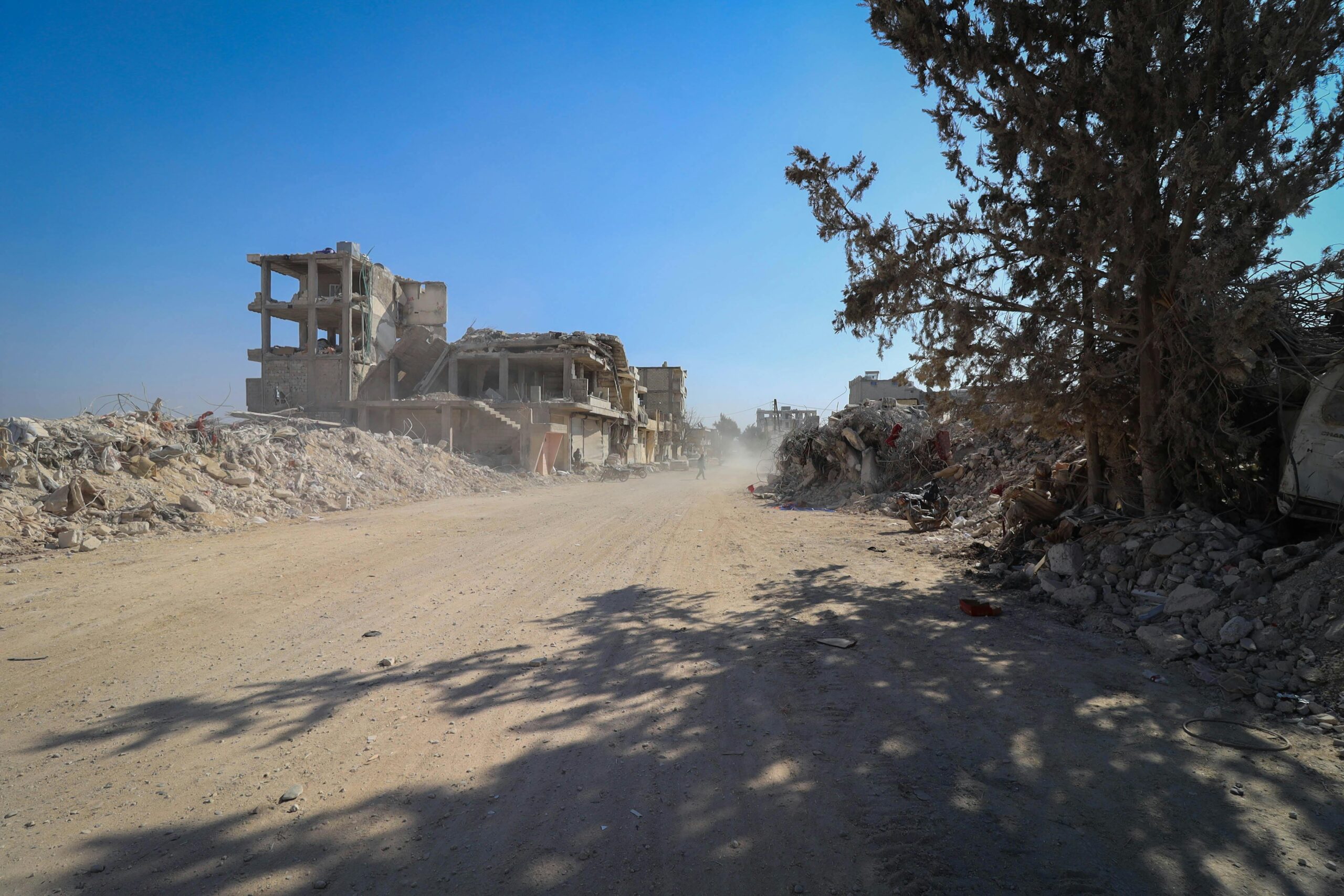
This article examines war of attrition as both a game-theoretic model and an institutional stress test. It explains how prolonged conflicts persist under uncertainty, why actors may continue fighting despite enormous costs, how signaling and bargaining shape endurance, and why the capacity to absorb pressure depends on more than battlefield strength. The central argument is that attrition conflicts are contests among institutions and societies as much as armies: they test public finance, logistics, legitimacy, alliance cohesion, industrial production, humanitarian restraint, and the ability to turn endurance into a politically meaningful outcome.
Conflict as Strategic Interaction
Strategic interaction lies at the core of game-theoretic analysis. An actor’s decision is rarely determined by its own preferences alone. It depends on expectations about the opponent’s likely behavior, expectations about how the opponent interprets one’s own behavior, and expectations about how third parties, domestic audiences, allies, institutions, and international organizations may respond.
This is especially important in military and political conflict. A state may possess military superiority but still hesitate if the opponent appears highly resolved. A weaker actor may continue fighting if it believes time, terrain, international sympathy, domestic endurance, or asymmetric tactics can offset material disadvantage. A government may reject a settlement that appears favorable in the short term if it fears the settlement will create future vulnerability. These are not merely psychological dynamics; they are strategic dynamics shaped by incentives, information, credibility, and time.
Game theory therefore shifts attention from isolated choices to interdependent choices. Each actor asks: What will the other side do if we advance, retreat, escalate, negotiate, mobilize reserves, accept mediation, or continue absorbing costs? In a war of attrition, the central decision is not only whether to fight, but how long to remain in the contest before the expected cost of endurance exceeds the expected value of victory.
Prolonged conflict often emerges when each side believes that the other side is closer to exhaustion than it really is. If both sides expect the other to collapse soon, both may continue fighting. The result is a tragic structure: the conflict persists not necessarily because either side expects an easy victory, but because each side believes that quitting first would waste prior sacrifices and surrender future leverage.
This is why attrition is not simply a military pattern. It is a governance pattern. Prolonged conflict requires systems that can mobilize resources, maintain legitimacy, regulate information, distribute sacrifice, manage public grief, coordinate allies, and sustain institutions under pressure. A war of attrition asks not only who can fight, but who can continue governing while fighting.
The War of Attrition in Game Theory
The war-of-attrition model was developed to analyze contests in which competitors incur costs while waiting for the other side to give up. In evolutionary biology, it helped explain animal contests over territory, mates, dominance, or resources without assuming that organisms explicitly calculate payoffs. In economics and political science, it became useful for modeling bargaining delay, labor disputes, litigation, market competition, sanctions, military conflict, and other situations where endurance itself becomes strategic.
The basic structure of the model contains three elements:
- A valued prize: The actors are competing over territory, political control, status, security, resources, reputation, institutional authority, or some other objective.
- A cost of waiting: Remaining in the contest imposes costs over time, including military casualties, financial losses, economic disruption, diplomatic isolation, domestic political pressure, and social exhaustion.
- A rule of victory through endurance: The actor that withdraws first loses the contest, while the actor that remains longer obtains the prize, though not without paying accumulated costs.
This model differs from a simple battle model. In a decisive battle model, actors compare immediate strength and fight until one side defeats the other militarily. In an attrition model, the conflict may continue even without dramatic battlefield movement. The strategic burden shifts from tactical dominance to endurance capacity. The question becomes: who can continue longer under pressure?
This distinction matters because many real conflicts are not resolved by a single decisive engagement. They are resolved through exhaustion, negotiation, domestic political change, economic pressure, alliance fatigue, logistical collapse, or the gradual recognition that the cost of victory has become too high. War of Attrition Game Theory helps explain this temporal dimension of conflict. It treats time not as background, but as a central strategic variable.
The war-of-attrition framework also shows why visible strength is not always decisive. A materially weaker actor may win if it can credibly signal that its threshold for suffering is higher than the opponent expects. Conversely, a stronger actor may lose if its political system, alliance structure, fiscal capacity, industrial base, media environment, or domestic legitimacy cannot sustain the costs of a long conflict.
For institutional analysis, this point is central. The capacity to endure is not distributed only by weapons or population size. It is produced by public finance, logistics, administrative quality, alliance management, public trust, emergency governance, civil-military relations, and the social contract that defines who is asked to sacrifice and why.
A Mathematical Lens on Attrition
At its simplest, the war of attrition can be represented as a timing game. Suppose two actors, \(A\) and \(B\), compete over a prize. Each actor chooses how long it is willing to remain in the contest.
| Symbol | Meaning |
|---|---|
| \(V_i\) | The value of victory for actor \(i\) |
| \(c_i\) | The cost per unit of time for actor \(i\) |
| \(t_i\) | The time at which actor \(i\) exits the contest |
| \(T\) | The time at which the contest ends |
If actor \(i\) quits first, it receives no prize and pays the cost of remaining until its exit:
U_i(\text{quit}) = -c_i t_i
\]
Interpretation: Quitting first means losing the prize while still paying the accumulated cost of remaining in the contest until withdrawal.
If actor \(i\) outlasts the opponent, it receives the prize but still pays the cost of waiting until the opponent exits:
U_i(\text{win}) = V_i – c_i t_j
\]
Interpretation: Winning produces the prize, but the value of victory is reduced by the cost of waiting for the opponent to quit.
This simple payoff structure captures the central logic of attrition. Winning is valuable, but waiting is costly. The longer both sides remain in the contest, the more value is destroyed. If the conflict continues long enough, the winner may obtain a prize that has been severely diminished by the process of winning it.
In a symmetric version of the model, both actors have the same valuation \(V\) and the same cost rate \(c\). A stylized mixed-strategy equilibrium can be represented by a distribution of quitting times. One common intuition is that each actor randomizes its exit time so that the opponent cannot predict exactly when it will quit. The probability of continued endurance declines over time because waiting becomes progressively more costly.
A simple exponential form can illustrate this intuition:
F(t) = 1 – e^{-ct/V}
\]
Interpretation: \(F(t)\) represents the probability that an actor has quit by time \(t\). Exit becomes more likely as the cost of waiting rises relative to the value of the prize.
This is not a complete model of any particular war. Real conflicts include alliances, multiple fronts, domestic politics, international law, humanitarian constraints, technological adaptation, uncertainty, and shifting objectives. Yet the formal structure clarifies a powerful strategic insight: prolonged conflict can persist because each actor hopes the other will exit first, even as both actors pay mounting costs.
The model also helps distinguish three different types of attrition:
- Material attrition: the depletion of troops, weapons, supplies, infrastructure, energy, food, money, and industrial capacity.
- Political attrition: the erosion of legitimacy, public support, elite cohesion, alliance confidence, and diplomatic room for maneuver.
- Informational attrition: the gradual revelation of resolve, capability, weakness, adaptability, and willingness to compromise.
In prolonged conflict, these forms interact. A military setback may produce political pressure. Economic stress may reduce military readiness. Diplomatic isolation may increase domestic costs. Public resilience may compensate for material disadvantage. A war of attrition is therefore not merely a battlefield process; it is a dynamic interaction among military, economic, social, informational, and institutional systems.
Incomplete Information and Strategic Uncertainty
A central feature of attrition conflicts is incomplete information. Actors rarely know with certainty how much the opponent values the contested issue, how much cost it can absorb, how long its reserves will last, how stable its domestic coalition is, or how likely its allies are to remain committed. This uncertainty is one of the main reasons conflicts continue.
If each side had perfect information about the other’s costs, capabilities, and resolve, settlement would often be easier. The parties could identify a bargaining range and avoid the destruction caused by fighting. But in real conflicts, actors possess private information. They may know more about their own military stockpiles, economic vulnerabilities, domestic tolerance for casualties, political red lines, or institutional weaknesses than the opponent does. They also have incentives to misrepresent that information.
No actor wants to appear weak before negotiations. A state that publicly admits exhaustion may invite escalation. A government that reveals domestic fragility may weaken its bargaining position. A military coalition that discloses logistical limits may encourage the opponent to wait it out. As a result, actors often exaggerate resolve, conceal costs, and continue fighting partly to test whether the opponent’s claims are credible.
This creates a destructive information problem. War becomes a mechanism for revealing information, but it reveals information through costly events: casualties, territorial losses, failed offensives, sanctions fatigue, mobilization problems, supply constraints, alliance defections, domestic protests, and changes in leadership. In this sense, prolonged conflict may be understood as a brutal process of strategic learning.
The tragedy is that learning through war can destroy the very prize over which the conflict began. Territory may be devastated. Infrastructure may collapse. Civilian populations may be displaced. Economies may be damaged for generations. Yet as long as each side believes that additional endurance may produce a better bargaining position, the logic of attrition can continue.
For institutions, incomplete information is not only external. Leaders may misunderstand their own societies. They may overestimate public patience, underestimate fiscal pressure, suppress battlefield reporting, ignore local suffering, or mistake propaganda for resilience. A governance system that cannot process accurate information under stress may keep fighting because it cannot recognize the real cost of endurance.
Costly Signaling and the Performance of Resolve
Attrition conflicts often involve costly signaling. A signal is credible when it is difficult or expensive to fake. In ordinary communication, an actor may claim to be resolved. In an attrition conflict, the actor demonstrates resolve by continuing to bear costs.
Examples of costly signals include:
- continuing military operations despite casualties;
- absorbing sanctions or economic pressure;
- mobilizing reserves or expanding defense production;
- maintaining alliance commitments under domestic pressure;
- refusing settlement terms that appear superficially attractive but undermine long-term security;
- investing in reconstruction, logistics, or civilian resilience while the conflict continues.
The underlying message is simple:
We are willing to endure more than you expect.
But costly signaling can be dangerous. A signal intended to demonstrate resolve may be interpreted as escalation. A refusal to negotiate may strengthen domestic morale but close diplomatic channels. A mobilization may deter the opponent or convince it that compromise is impossible. The same act can communicate strength, desperation, commitment, or inflexibility depending on how it is interpreted.
War of Attrition Game Theory therefore emphasizes not only what actors do, but how their actions are read by others. Conflict is a field of interpretation. Military operations, public speeches, alliance visits, sanctions, ceasefire proposals, prisoner exchanges, and even silence can become signals. The difficulty is that signals are filtered through mistrust, propaganda, ideology, fear, and prior beliefs.
Costly signaling also has a domestic dimension. Leaders signal not only to enemies, but to citizens, elites, militaries, coalition partners, and victims of violence. A government may continue a conflict to show that prior sacrifices were not in vain. An armed movement may endure to preserve identity and credibility. A great power may remain involved to maintain reputation. In each case, the audience is not singular. Attrition is performed simultaneously before many audiences.
The institutional danger is that signaling can become detached from strategy. A state may continue costly action because stopping would look weak, even when continued action no longer serves a realistic political goal. When the performance of resolve becomes more important than the achievement of a legitimate settlement, endurance becomes a trap.
War as Bargaining Under Pressure
Modern political science often analyzes war as a form of bargaining. This does not mean war is morally equivalent to negotiation. Rather, it means that war and negotiation are connected. Actors fight because they cannot agree on a distribution of goods, security, territory, status, authority, or future risk. They continue fighting because the battlefield, economy, and political environment keep changing the perceived terms of settlement.
In theory, if war is costly, rational actors should prefer a negotiated settlement that gives each side more than it expects to gain from continued fighting. This creates the puzzle identified in rationalist theories of war: if conflict is costly and risky, why do actors fight rather than bargain?
Several answers are especially relevant to attrition:
- Private information: actors disagree about relative strength, resolve, or likely outcomes.
- Incentives to misrepresent: actors conceal weakness and exaggerate endurance.
- Commitment problems: actors cannot credibly promise to honor a settlement in the future.
- Issue indivisibility: some contested goods are difficult to divide symbolically, legally, or politically.
- Domestic political constraints: leaders may fear punishment from internal audiences if they compromise.
- Third-party effects: allies, sponsors, rivals, and external patrons may alter the incentives of the primary belligerents.
In attrition warfare, bargaining continues even when formal negotiations are absent. Military operations can be understood as attempts to change the bargaining environment. A side may launch an offensive to improve its negotiating position, resist a blockade to show that pressure will not work, or continue fighting to reveal that the opponent’s expectations are unrealistic.
Yet bargaining through violence is profoundly destructive. It converts uncertainty into suffering. It uses damage as information. It treats endurance as evidence. For this reason, war-of-attrition analysis should not be confused with a celebration of strategic endurance. The model explains why prolonged conflict can persist; it does not justify the human costs that such conflicts impose.
The governance task is to create credible off-ramps before bargaining through violence consumes the political possibilities that negotiation was meant to secure. Mediation, verification, security guarantees, sequencing, humanitarian access, prisoner exchanges, monitoring missions, and postwar reconstruction frameworks can all reduce the uncertainty that keeps attrition going.
The Commitment Problem
The commitment problem is one of the most important explanations for prolonged conflict. Even when both sides might benefit from a negotiated settlement, they may doubt whether the other side will honor the agreement once conditions change.
This problem is especially severe in international politics because there is no single global sovereign capable of reliably enforcing all agreements among states and armed actors. Treaties, ceasefires, monitoring missions, peacekeepers, guarantor states, international courts, and sanctions mechanisms can help, but they do not eliminate the underlying problem. If one party believes that the other will use a ceasefire to regroup, rearm, fortify positions, or prepare for renewed aggression, continuing the conflict may appear safer than accepting a fragile settlement.
Commitment problems are particularly acute when the balance of power is changing. If one side expects to become stronger in the future, the other side may prefer to fight now rather than accept a settlement that will become unenforceable later. Similarly, if a settlement would leave one party vulnerable to future coercion, it may reject peace even at enormous short-term cost.
Attrition can therefore become a strategy for altering future commitment conditions. An actor may try to weaken the opponent enough that future aggression becomes less likely. It may seek territorial depth, demilitarized zones, security guarantees, reparations, recognition, or institutional arrangements designed to reduce future vulnerability. The war continues not only because of the original dispute, but because each side fears the postwar order that might follow.
This is why peace agreements in attrition conflicts often require more than a ceasefire line. They require credible enforcement, verification, security guarantees, reconstruction arrangements, prisoner exchanges, political inclusion, accountability mechanisms, and sometimes third-party monitoring. Without such mechanisms, the fear of future betrayal can make continued war appear rational even when peace would be materially beneficial.
The commitment problem is therefore an institutional problem. Durable peace requires institutions that can make promises credible across time: courts, monitoring systems, security arrangements, constitutional guarantees, international oversight, demobilization mechanisms, reconstruction funds, and political processes that allow former enemies to survive without returning immediately to violence.
Sunk Costs, Escalation, and Political Psychology
Strict economic rationality suggests that actors should ignore sunk costs. Losses already incurred cannot be recovered, so future decisions should depend only on expected future costs and benefits. Yet real political actors rarely behave this cleanly. In prolonged conflicts, sunk costs can become politically and psychologically powerful.
When a society has already endured casualties, displacement, economic hardship, and public sacrifice, leaders may find it difficult to accept a settlement that appears to make those sacrifices meaningless. Citizens may ask why so much was lost if the final terms resemble what could have been accepted earlier. Military institutions may resist compromise if they believe battlefield sacrifices have not been honored. Political opponents may accuse leaders of betrayal.
This dynamic can produce escalation of commitment. Actors remain in the conflict not because the original expected value still justifies the cost, but because withdrawal would force a painful reckoning with prior losses. The more costly the war becomes, the more emotionally and politically difficult it may be to quit.
War-of-attrition logic therefore interacts with memory, identity, grief, honor, and legitimacy. The conflict becomes embedded in narratives of sacrifice. Public discourse shifts from “What can we gain?” to “What have we already lost?” Once this shift occurs, settlement becomes not only a strategic calculation but a moral and symbolic problem.
This does not mean all continued resistance is irrational. Some actors fight prolonged conflicts because surrender would expose civilians to domination, repression, ethnic cleansing, occupation, or political annihilation. Others continue fighting because the opponent’s terms are genuinely unacceptable. The point is more subtle: attrition conflicts mix rational calculation with psychological pressure, symbolic meaning, institutional incentives, and domestic political survival.
Institutions determine whether societies can deliberate honestly about costs. A political system that criminalizes dissent, suppresses casualty information, or equates negotiation with treason may trap itself in escalation. A political system that allows public debate, independent reporting, parliamentary scrutiny, and civil society pressure may be more capable of reassessing strategy, though it may also face intense domestic conflict over compromise.
Attrition and Resource Depletion
The war-of-attrition model highlights the gradual depletion of resources over time. Attrition is not merely a metaphor for exhaustion; it is a material process through which societies consume military, economic, social, institutional, and ecological capacity.
Prolonged conflicts can erode multiple forms of capital:
- Military capital: personnel, equipment, ammunition, command capacity, morale, intelligence networks, and battlefield readiness.
- Economic capital: fiscal reserves, productive infrastructure, trade routes, energy systems, labor capacity, investment, and currency stability.
- Political capital: domestic legitimacy, elite cohesion, alliance credibility, diplomatic support, and public trust.
- Social capital: family stability, community networks, educational continuity, intergroup trust, and civic resilience.
- Institutional capital: administrative capacity, courts, local governance, emergency services, public finance, and regulatory continuity.
- Ecological capital: land, water systems, agricultural productivity, forests, pollution sinks, and long-term environmental health.
Because these forms of capital are interdependent, depletion in one domain can accelerate depletion in another. A damaged energy grid can weaken industry. Economic collapse can undermine military supply. Public distrust can reduce compliance with mobilization. Corruption can distort procurement. Environmental damage can intensify food insecurity. Refugee flows can alter regional politics.
This systemic view complicates narrow military analysis. A side may still hold territory but lose economic viability. It may preserve military capacity while losing diplomatic legitimacy. It may win battlefield engagements while exhausting its society. In attrition conflicts, victory cannot be measured only by front lines. It must also be measured by the long-term capacity to govern, rebuild, reconcile, and sustain social life after the fighting stops.
Attrition also changes the value of the prize. A territory devastated by prolonged war is not the same prize that existed at the beginning of the conflict. A state hollowed out by debt, depopulation, trauma, environmental damage, and institutional collapse may technically survive while losing the foundations of future wellbeing. The longer attrition continues, the more the contest risks destroying the very object over which it is fought.
Institutional and Social Dimensions of Attrition
Early formal models often focus on abstract players, payoffs, and costs. Real conflicts, however, are fought by institutions and societies. A state’s ability to sustain prolonged conflict depends not only on its military strength but also on its administrative competence, fiscal capacity, legitimacy, industrial base, public communication, civil-military relations, and social cohesion.
Institutions shape attrition in several ways.
First, institutions determine how costs are distributed. A government may shift burdens onto marginalized regions, conscripts, minority communities, rural populations, occupied territories, poorer citizens, or politically excluded groups. These unequal burdens matter. Attrition is never experienced evenly across society. Some groups pay with lives, homes, land, labor, or displacement while others experience the war primarily through taxation, inflation, media narratives, or political symbolism.
Second, institutions determine how information flows. Democratic systems, authoritarian regimes, military juntas, insurgent movements, and coalition governments differ in how they process bad news, tolerate dissent, punish failure, and revise strategy. A system that suppresses accurate information may continue a failing war because leaders do not receive honest assessments. A system that permits public criticism may correct errors earlier, but may also face stronger domestic pressure to settle.
Third, institutions shape credibility. A state with reliable fiscal systems, disciplined procurement, trusted courts, professional administration, and resilient local governance may be better able to sustain prolonged pressure. Conversely, corruption, factionalism, weak logistics, and brittle legitimacy can magnify the cost of attrition.
Fourth, institutions mediate grief and memory. How a society honors the dead, supports veterans, compensates displaced families, documents atrocities, protects civilians, and tells the story of sacrifice affects whether the public interprets endurance as meaningful resistance, tragic necessity, elite failure, or political manipulation.
War of Attrition Game Theory therefore becomes more powerful when combined with institutional analysis. The “cost of waiting” is not a single number. It is a social distribution of pain, endurance, legitimacy, coercion, and administrative capacity.
This is why the article belongs inside Institutions & Governance. Attrition is a strategic model, but prolonged conflict is a governance test. It reveals whether institutions can sustain lawful authority, protect civilians, finance endurance, process information, coordinate allies, preserve public trust, and still leave open the possibility of peace.
Asymmetry, Insurgency, and Strategic Patience
Wars of attrition are especially important in asymmetric conflicts. A weaker actor may be unable to defeat a stronger opponent in conventional battle, but may still hope to outlast it politically. Insurgencies, anti-colonial struggles, national liberation movements, resistance campaigns, and guerrilla wars often rely on strategic patience. Their goal may be to make continued occupation, intervention, or repression too costly for the stronger actor to sustain.
In asymmetric attrition, the stronger actor may possess superior firepower, technology, intelligence, and economic resources. But the weaker actor may possess other advantages:
- local knowledge of terrain and communities;
- higher stakes because the conflict concerns homeland, survival, or identity;
- lower organizational costs in decentralized networks;
- ability to disperse, hide, and reconstitute;
- access to external sanctuaries or diaspora support;
- capacity to impose political costs rather than seek battlefield victory.
The stronger actor may win battles yet lose the war if the political cost of staying becomes greater than the value of the objective. This is one reason attrition models are useful for understanding conflicts in which battlefield metrics alone are misleading. Casualty ratios, territorial control, and equipment losses matter, but so do domestic patience, international legitimacy, fiscal strain, alliance cohesion, and the moral burden of prolonged violence.
Asymmetric attrition also raises difficult ethical and legal questions. A weaker actor’s reliance on endurance does not excuse attacks on civilians, hostage-taking, indiscriminate violence, or violations of humanitarian law. Similarly, a stronger actor’s claim to restore order does not justify collective punishment, disproportionate force, forced displacement, or unlawful targeting. Strategic analysis must not erase legal and moral constraints.
The governance challenge in asymmetric conflict is especially severe because ordinary state institutions may be absent, contested, or themselves instruments of domination. Conflict may occur across military, political, legal, humanitarian, diplomatic, and narrative arenas at once. In such settings, legitimacy becomes one of the most important resources in the attrition contest.
Technology, Logistics, and Industrial Capacity
Attrition conflicts are often decided less by spectacular weapons than by logistics, production, maintenance, repair, adaptation, and replacement. Advanced technology can shape the battlefield, but prolonged conflict tests whether a society can keep systems functioning under stress.
Modern attrition may involve drones, satellites, cyber operations, precision artillery, electronic warfare, missile defense, autonomous systems, sensors, encrypted communications, and artificial intelligence-assisted targeting. Yet the strategic question remains familiar: can these systems be sustained over time? Can ammunition be produced? Can vehicles be repaired? Can supply chains survive disruption? Can trained operators be replaced? Can energy systems and communications infrastructure remain functional?
Attrition turns technology into a production and maintenance problem. A sophisticated weapon that cannot be manufactured at scale may have limited value in a long war. A cheap system that can be rapidly replaced may impose disproportionate costs on expensive defensive systems. A supply chain dependent on rare components, foreign suppliers, vulnerable ports, or fragile industrial processes may become a strategic weakness.
This is why wars of attrition often become contests between industrial systems. The battlefield consumes material. The rear area must replace it. States with deeper manufacturing capacity, diversified supply chains, reliable logistics, and adaptive procurement may endure longer. However, industrial endurance can also intensify destruction by enabling conflicts to continue far beyond the point at which human suffering should compel settlement.
Technology also alters signaling. Cyber operations, satellite imagery, battlefield videos, open-source intelligence, and real-time media coverage can reveal losses quickly, but they can also distort perception. Public audiences may see fragments of war without understanding operational context. Leaders may feel compelled to demonstrate action for media consumption. Information systems become part of the attrition environment.
For Institutions & Governance, the lesson is that military technology cannot be separated from industrial policy, procurement systems, public finance, logistics governance, cyber resilience, and supply-chain security. The endurance of weapons depends on the endurance of institutions behind them.
Humanitarian Costs and Ethical Limits
A scholarly treatment of attrition must not reduce war to an abstract contest of endurance. Attrition is paid for by human beings. Its costs include death, injury, trauma, hunger, displacement, family separation, destroyed schools, damaged hospitals, contaminated land, lost livelihoods, and the long afterlife of unexploded ordnance, grief, disability, and social fragmentation.
Game theory can clarify strategic incentives, but it can also become morally dangerous if used without ethical constraint. The language of payoffs, costs, resolve, and endurance may obscure the unequal distribution of suffering. Civilian populations often bear costs they did not choose. Marginalized communities may be exposed to disproportionate violence. Refugees may become bargaining instruments. Humanitarian corridors, aid access, hospitals, water systems, and food supply chains may become sites of strategic pressure.
International humanitarian law exists precisely because war cannot be governed by strategic logic alone. Distinction, proportionality, necessity, humane treatment, and the protection of civilians are not optional moral preferences; they are legal and ethical constraints on the conduct of war. A strategy of attrition that deliberately targets civilian life, starvation, medical infrastructure, or collective survival crosses from military endurance into unlawful and morally indefensible coercion.
This matters analytically as well as ethically. Atrocities can harden resistance, destroy bargaining possibilities, radicalize populations, fracture postwar legitimacy, and invite international intervention or isolation. A strategy that appears to impose costs on the opponent may generate long-term strategic failure by destroying the conditions for political settlement.
War-of-attrition analysis should therefore be used with care. It is valuable because it explains why prolonged conflicts continue. It is dangerous if it normalizes endurance as an end in itself. The most important question is not only who can last longer, but what kind of political order remains after endurance has consumed the society it claims to defend.
The ethical limit is clear: strategic endurance cannot justify the deliberate destruction of civilian life. A war that wins time by destroying the conditions of human survival has already failed the most basic test of legitimate governance.
Attrition as a Systemic Stress Test
From a systems perspective, wars of attrition function as stress tests for entire societies. They reveal the resilience or fragility of institutions, economies, infrastructures, alliances, narratives, and social contracts.
A society facing attrition must answer several hard questions:
- Can the state finance prolonged conflict without destroying civilian welfare?
- Can military logistics keep pace with operational demands?
- Can institutions process accurate information and adapt strategy?
- Can public legitimacy survive casualties, inflation, displacement, and uncertainty?
- Can alliances remain cohesive when costs rise?
- Can humanitarian obligations be upheld under pressure?
- Can the postwar society be rebuilt after prolonged destruction?
These questions show why attrition is systemic. The front line is only one visible expression of deeper pressures. Energy grids, transport corridors, public finance, food systems, hospitals, schools, courts, media systems, diplomatic networks, and family structures all become part of the endurance equation.
Systems with redundancy, trust, adaptive governance, diversified economies, and legitimate institutions are often better able to absorb prolonged shocks. Systems built on coercion, corruption, brittle hierarchy, propaganda, or narrow extraction may appear strong at the beginning of conflict but degrade rapidly under sustained pressure.
Attrition therefore reveals hidden structures. It exposes whether power is durable or merely performative. It tests whether legitimacy is real or manufactured. It reveals whether alliances are transactional or deeply institutionalized. It shows whether a state can learn under stress, or whether it repeats failure because leaders cannot admit error.
This is one of the strongest reasons to read war of attrition through Institutions & Governance. The model begins with strategic endurance, but its real-world meaning expands into public systems: who governs, who pays, who suffers, who decides, who is protected, and who is sacrificed.
Policy Implications
War of Attrition Game Theory has several important implications for policymakers, analysts, mediators, and scholars.
1. Do not confuse endurance with strategy
Remaining in a conflict is not automatically strategic. Endurance must be connected to realistic political objectives, sustainable resources, lawful conduct, and credible settlement pathways. Otherwise, endurance becomes inertia.
2. Estimate costs across systems, not only battlefields
Military losses are only one part of attrition. Analysts must also assess fiscal capacity, industrial production, infrastructure resilience, public health, social cohesion, diplomatic support, ecological damage, and postwar reconstruction costs.
3. Treat information as a strategic variable
Conflicts persist when actors disagree about resolve, capability, and likely outcomes. Better information, credible monitoring, third-party verification, and reliable communication channels can sometimes shorten wars by reducing uncertainty.
4. Build credible off-ramps
Negotiation is difficult when withdrawal appears humiliating or dangerous. Settlement design must address security guarantees, verification, sequencing, face-saving mechanisms, reparations, prisoner exchanges, accountability, and future enforcement.
5. Understand domestic audiences
Leaders bargain not only with enemies but with their own publics. Domestic legitimacy, elite politics, media narratives, veterans’ groups, displaced communities, and opposition movements can all shape whether compromise is politically possible.
6. Avoid strategies that make peace impossible
Some forms of coercion may impose costs but destroy the possibility of legitimate settlement. Atrocities, collective punishment, forced displacement, starvation, and attacks on civilian survival can deepen resistance and make postwar governance harder.
7. Recognize when the prize is being destroyed
In prolonged conflict, the value of the contested objective may decline as the conflict continues. Territory may be devastated. Institutions may collapse. Populations may flee. The war may consume the very object over which it is being fought.
8. Treat humanitarian law as a strategic and moral constraint
Civilian protection is not peripheral to conflict analysis. It shapes legitimacy, future reconciliation, international support, and the possibility of a durable settlement. Strategies that disregard humanitarian limits may appear tactically coercive while producing long-term political failure.
Why Attrition Models Matter
War of Attrition Game Theory matters because it explains a recurring puzzle in human conflict: why do actors continue fighting when the costs are catastrophic?
The answer is not that leaders, states, or armed groups are always irrational. The answer is that prolonged conflict can arise from strategic interaction under uncertainty. Each side may believe that endurance will improve its bargaining position. Each side may doubt the credibility of the other’s commitments. Each side may fear that compromise will produce future vulnerability. Each side may be trapped by sunk costs, domestic pressure, alliance expectations, or the symbolic meaning of sacrifice.
The war-of-attrition framework reveals why conflicts often end not when one side is destroyed, but when beliefs change. A settlement becomes possible when actors revise their expectations about costs, capabilities, resolve, future risks, and achievable objectives. War termination is therefore an informational and political process, not merely a military event.
Yet the model also warns against romanticizing endurance. Strategic patience may be necessary in some circumstances, especially when communities resist domination, aggression, occupation, or annihilation. But endurance also carries moral danger. A conflict that continues for the sake of reputation, sunk costs, or political survival can become a machine for converting human life into bargaining information.
Seen in this light, War of Attrition Game Theory is not only a model of conflict. It is a lens for examining the relationship between power, time, suffering, uncertainty, and political order. It helps explain why some wars last far longer than expected, why weaker actors sometimes outlast stronger ones, why negotiated settlements are difficult, and why the human costs of strategic endurance must remain central to any serious analysis of prolonged conflict.
The institutional lesson is direct: prolonged conflict does not test armies alone. It tests the governing systems that finance war, distribute sacrifice, interpret information, maintain legitimacy, protect civilians, coordinate allies, and decide when endurance has ceased to serve a defensible political purpose.
Governance Diagnostic Table
| Governance feature | Attrition question | Institutional consequence |
|---|---|---|
| Strategic endurance | Can the actor sustain costs long enough to alter the opponent’s expectations? | Endurance depends on legitimacy, finance, logistics, public trust, and credible objectives. |
| Incomplete information | Do actors know the opponent’s true resolve, capabilities, and limits? | Uncertainty can prolong conflict by making each side believe the other is closer to collapse. |
| Signaling | Are costly actions communicating credible resolve or closing paths to settlement? | Signals can deter, escalate, reassure, or trap actors in performative endurance. |
| Commitment problems | Can actors trust that a settlement will be honored in the future? | Weak enforcement and fear of betrayal can make continued fighting appear safer than peace. |
| Public finance | Can the state fund prolonged conflict without hollowing out civilian systems? | War finance can erode welfare, infrastructure, currency stability, and postwar recovery. |
| Industrial capacity | Can equipment, ammunition, energy systems, and logistics be sustained over time? | Attrition often becomes a contest between production systems, not only military units. |
| Domestic legitimacy | Can public support survive casualties, displacement, inflation, and uncertainty? | Legitimacy determines whether endurance remains politically sustainable. |
| Humanitarian constraint | Are civilians protected, or are they treated as instruments of pressure? | Violations can harden resistance, delegitimize strategy, and make peace harder. |
| Alliance cohesion | Can external supporters maintain commitment as costs rise? | Attrition tests not only belligerents but also coalitions, sponsors, and international institutions. |
| War termination | Are there credible off-ramps that address security, verification, accountability, and future risk? | Conflicts often end when beliefs change and institutions make settlement credible. |
Further Reading
- Fearon, J.D. (1995) ‘Rationalist explanations for war’, International Organization, 49(3), pp. 379–414. Available at: https://www.jstor.org/stable/2706903
- Powell, R. (2006) ‘War as a commitment problem’, International Organization, 60(1), pp. 169–203. Available at: https://www.jstor.org/stable/3877871
- Schelling, T.C. (1960) The Strategy of Conflict. Cambridge, MA: Harvard University Press. Available at: https://www.hup.harvard.edu/books/9780674840317
- Slantchev, B.L. (2004) ‘How initiators end their wars: the duration of warfare and the terms of peace’, American Journal of Political Science, 48(4), pp. 813–829. Available at: https://ideas.repec.org/a/wly/amposc/v48y2004i4p813-829.html
- Stanford Encyclopedia of Philosophy (2024) ‘Game Theory’. Available at: https://plato.stanford.edu/entries/game-theory/
- International Committee of the Red Cross (n.d.) International Humanitarian Law. Available at: https://www.icrc.org/en/law-and-policy/international-humanitarian-law
- Kalyvas, S.N. (2006) The Logic of Violence in Civil War. Cambridge: Cambridge University Press.
- Reiter, D. (2009) How Wars End. Princeton: Princeton University Press.
References
- Akerlof, G.A. (1970) ‘The market for “lemons”: quality uncertainty and the market mechanism’, The Quarterly Journal of Economics, 84(3), pp. 488–500. Available at: https://doi.org/10.2307/1879431
- Blainey, G. (1973) The Causes of War. New York: Free Press. Bibliographic information available at: https://books.google.com/books/about/The_Causes_of_War.html?id=EcuxgjB6W-sC
- Fearon, J.D. (1995) ‘Rationalist explanations for war’, International Organization, 49(3), pp. 379–414. Available at: https://www.jstor.org/stable/2706903
- Filson, D. and Werner, S. (2004) ‘Bargaining and fighting: the impact of regime type on war onset, duration, and outcomes’, American Journal of Political Science, 48(2), pp. 296–313. Available at: https://doi.org/10.1111/j.0092-5853.2004.00071.x
- International Committee of the Red Cross (n.d.) International Humanitarian Law. Available at: https://www.icrc.org/en/law-and-policy/international-humanitarian-law
- Kalyvas, S.N. (2006) The Logic of Violence in Civil War. Cambridge: Cambridge University Press.
- Maynard Smith, J. (1974) ‘The theory of games and the evolution of animal conflicts’, Journal of Theoretical Biology, 47(1), pp. 209–221.
- Maynard Smith, J. and Price, G.R. (1973) ‘The logic of animal conflict’, Nature, 246, pp. 15–18. Available at: https://ui.adsabs.harvard.edu/abs/1973Natur.246…15S/abstract
- Powell, R. (2006) ‘War as a commitment problem’, International Organization, 60(1), pp. 169–203. Available at: https://www.jstor.org/stable/3877871
- Reiter, D. (2009) How Wars End. Princeton: Princeton University Press.
- Schelling, T.C. (1960) The Strategy of Conflict. Cambridge, MA: Harvard University Press. Available at: https://www.hup.harvard.edu/books/9780674840317
- Slantchev, B.L. (2004) ‘How initiators end their wars: the duration of warfare and the terms of peace’, American Journal of Political Science, 48(4), pp. 813–829. Available at: https://ideas.repec.org/a/wly/amposc/v48y2004i4p813-829.html
- Stanford Encyclopedia of Philosophy (2024) ‘Game Theory’. Available at: https://plato.stanford.edu/entries/game-theory/