
Last Updated May 22, 2026
Personality and physical health are linked across the lifespan because enduring individual differences shape not only what people think and feel, but how they sleep, eat, move, persist, seek care, comply with treatment, react to stress, manage risk, sustain relationships, and organize daily life over decades. Physical health is never purely biological in the narrow sense. It is also lived through habits, environments, coping styles, social support, inequality, and patterns of self-regulation that personality helps stabilize.
A serious theory of personality therefore cannot stop at mental life alone. It must also ask how traits become embodied: how conscientiousness becomes routine, how neuroticism becomes vigilance or physiological strain, how extraversion becomes social engagement or risk exposure, how agreeableness shapes relational support, how openness supports adaptation, and how these pathways accumulate across childhood, adulthood, illness, aging, and mortality risk.
The strongest contemporary view is neither biological determinism nor psychological reductionism. Personality is not the whole explanation of physical health, and it never operates outside medical systems, public policy, environmental exposure, poverty, discrimination, disability, caregiving, and access to care. But personality is one of the major pathways through which health trajectories are patterned and prolonged. It helps explain how daily conduct becomes cumulative embodiment.
Main Library
Publications
Article Map
Personality Psychology
Related Topic
Developmental Psychology
Related Topic
Cognitive Psychology
Related Topic
Social Psychology
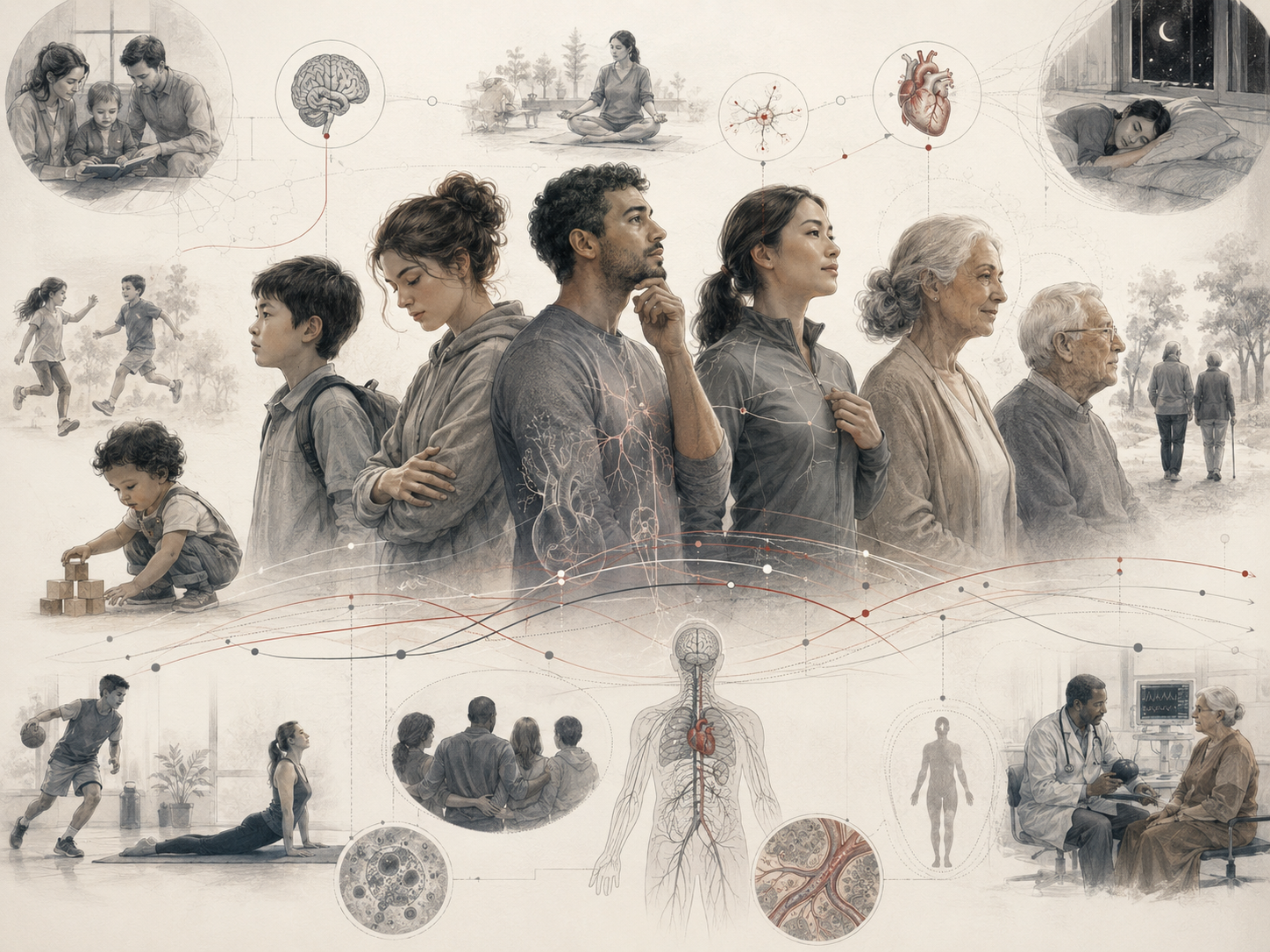
Health is one of the places where personality becomes materially consequential. A tendency toward planning may become preventive care. A pattern of reactivity may become sleep disruption or chronic stress burden. A style of sociability may become support, stimulation, or risk. A disposition toward caution may become vigilance, adherence, or avoidance. Across years and decades, these ordinary patterns can accumulate into disease exposure, resilience, recovery, frailty, functional ability, and survival.
Why personality matters for physical health
Personality matters for physical health because health is sustained through repeated behavior under changing conditions. Bodies age, environments shift, stress accumulates, habits harden, relationships support or strain, and medical needs become more complex over time. Traits influence whether people monitor symptoms, seek help, follow medical advice, regulate impulses, persist with exercise, manage sleep, reduce substance use, adhere to treatment, and recover after disruption.
This does not mean traits act directly and mechanically on organs or disease states in every case. More often, personality operates through pathways. It influences what kinds of lives people build, what burdens they accumulate, how they respond to stress, how they organize daily routine, and how they manage care over decades. A lifespan perspective is especially important because small trait-linked differences in daily conduct can compound into large differences in health risk and functional ability.
Physical health is therefore not only a medical endpoint. It is also a cumulative biography of exposure, behavior, care, vulnerability, adaptation, and constraint. Two people may begin with similar biological risk but diverge because one sustains regular care, avoids unnecessary hazards, regulates stress more effectively, and maintains supportive relationships, while another experiences chronic instability, fragmented care, poor sleep, substance exposure, isolation, or persistent physiological activation.
Personality is not destiny in this process. It is a tendency structure. It makes some pathways easier, more likely, or more familiar, but it never acts alone. The same trait may protect in one context and create risk in another. The same person may become healthier when environments support structure, safety, care, and meaning. Physical health is produced at the intersection of person, body, environment, and time.
Health is behavioral, relational, and biological
Physical health is best understood as a layered outcome. Biology matters, but so do behaviors such as smoking, alcohol use, sleep, diet, activity, medication adherence, preventive care, and risk exposure. Social relations matter because isolation, conflict, caregiving, partnership, family support, friendship, and community shape both behavior and stress burden. Psychological processes matter because appraisal, worry, impulse control, planning, hope, self-efficacy, and coping influence whether health-protective conduct is sustained or abandoned.
This layered view helps explain why personality is so relevant. Traits are not diseases, but they help organize how disease risk is encountered, interpreted, and managed. A highly conscientious person may maintain routines that protect cardiovascular and metabolic health. A highly reactive person may experience daily stressors as more intense and recover more slowly. A socially connected person may receive more monitoring, encouragement, and instrumental help. A person high in openness may adapt more flexibly to new treatment demands or changing bodily limits.
Health is relational as well as individual. People often maintain health because others remind them, care for them, walk with them, cook with them, transport them, notice changes, interpret symptoms, and encourage adherence. Personality affects whether people build and preserve those support systems. It also affects whether relationships become protective or stressful. Conflict, hostility, loneliness, and caregiving strain can all become embodied over time.
Health is also institutional. Access to primary care, insurance, safe housing, walkable neighborhoods, food quality, pollution exposure, occupational hazard, disability accommodation, education, and public health infrastructure all shape what health choices are realistically available. Personality may influence how people use available resources, but it cannot create resources where they do not exist. A responsible account of personality and physical health must therefore hold individual difference and structural condition together.
Personality as behavioral architecture
One of the clearest ways personality affects physical health is through behavioral architecture. Health is protected not by isolated acts alone, but by repeated patterns: regular sleep, sustained activity, safer substance use, preventive appointments, medication routines, meal planning, stress recovery, symptom monitoring, and willingness to seek help. These behaviors require self-regulation, planning, emotional tolerance, social support, and the ability to continue when motivation fades.
Personality helps determine whether such routines are easy or difficult to sustain. A person high in conscientiousness may naturally build calendars, checklists, appointments, exercise habits, and medication routines. A person high in impulsivity may struggle with long-horizon costs when immediate reward is available. A person high in neuroticism may monitor symptoms carefully but also become overwhelmed by worry. A person high in openness may adapt to new health information, while a person low in openness may prefer familiar routines even when change is needed.
Behavioral architecture also includes avoidance. Some people avoid medical settings because they fear bad news, distrust institutions, feel shame, lack time, lack money, or are overwhelmed by complexity. Others overuse reassurance-seeking because uncertainty feels intolerable. Still others underreport symptoms because they value stoicism, independence, or not burdening others. These patterns are not simply choices. They are psychologically organized responses to vulnerability.
The health significance of personality becomes clearer when behavior is viewed across time. A single skipped appointment may not matter. A decade of inconsistent care does. A single poor night of sleep may not matter. Years of dysregulated sleep do. A single stress reaction may not matter. Chronic reactivity without recovery does. Personality matters because it helps give repetition its shape.
Conscientiousness and the architecture of health protection
Conscientiousness has one of the clearest and most replicated links to physical health. It is associated with planning, impulse control, persistence, responsibility, order, reliability, and the ability to maintain routines. These qualities matter for preventive care, safer behavior, medication adherence, regular sleep, dietary stability, activity, and avoidance of unnecessary risk. Across the life course, conscientiousness often functions as a structural health-protective trait.
Its importance is not merely that conscientious people “behave better” in a moralizing sense. More precisely, they are often better able to sustain patterns that protect the body from cumulative damage. Health maintenance is repetitive, ordinary, and often tedious. It requires doing the same protective things again and again: taking the medication, keeping the appointment, preparing the meal, getting rest, limiting exposure, following through with rehabilitation, and persisting after setbacks. Conscientiousness supports exactly that kind of long-horizon regulation.
Conscientiousness may also protect through life organization. People higher in this trait are often better at building stable routines, avoiding preventable hazards, managing work obligations, and coordinating responsibilities. These patterns can reduce chaotic exposure and support earlier intervention. A well-organized life is not automatically a healthy life, but it can create conditions under which health needs are noticed and managed.
Yet conscientiousness is not a universal shield. Its health-protective value depends on context and flexibility. Excessive perfectionism, overwork, rigidity, or inability to rest can become harmful. Conscientious people may ignore bodily limits if they define responsibility as constant productivity. They may also experience guilt or self-blame when illness disrupts control. The healthiest form of conscientiousness is not compulsive self-discipline. It is adaptive reliability: the capacity to sustain care without turning the body into an enemy of achievement.
Conscientiousness also reveals the social ethics of health. People without stable housing, food access, safe work, medical care, transportation, or time cannot simply regulate their way into equal health. A conscientious person under structural deprivation is still constrained. The trait matters, but the world decides how much that trait can become health protection.
Neuroticism, stress reactivity, and the body
Neuroticism is often linked to physical health through stress sensitivity, worry, vigilance, negative affect, and greater reactivity to daily strain. A more reactive emotional system can intensify how stressors are experienced, prolong recovery, and alter patterns of behavior such as sleep disruption, reassurance seeking, avoidance, rumination, substance use, and difficulty maintaining routines. These effects can accumulate through cardiovascular, inflammatory, immune, neuroendocrine, and behavioral pathways.
The body is not separate from emotional life. When threat is repeatedly perceived, the body repeatedly prepares for danger. Heart rate, tension, sleep, appetite, immune signaling, and hormonal systems may all be affected by chronic stress activation. Over time, the question is not whether someone “feels too much,” but whether the body is repeatedly mobilized without sufficient recovery.
Neuroticism can also shape health interpretation. A sensation may be noticed earlier, interpreted as dangerous, monitored closely, or catastrophized. This may lead to earlier help-seeking in some cases and unnecessary worry in others. It may support symptom awareness or undermine wellbeing through chronic vigilance. The same sensitivity can therefore have different health meanings depending on knowledge, access to care, self-regulation, and social support.
The story is not as simple as “neuroticism is bad for health.” Neuroticism is a broad trait, and some of its features may increase symptom awareness, caution, or medical monitoring. Its risks are clearest when worry becomes dysregulated, avoidance increases, sleep is disrupted, and stress recovery is poor. Its possible benefits are clearest when concern is paired with discipline, accurate information, and effective care-seeking.
Neuroticism therefore shows why personality-health research needs configuration rather than caricature. Emotional sensitivity can be vulnerability, warning system, burden, or adaptive vigilance depending on the person’s regulatory capacities and the surrounding environment.
Healthy neuroticism and conditional protection
One of the most interesting developments in this literature is the idea of healthy neuroticism. In some contexts, neuroticism combined with high conscientiousness may produce a form of vigilant self-protection: worry paired with discipline rather than worry paired with dysregulated coping. A person who is highly concerned about health but also organized and restrained may be more likely to seek preventive care, monitor symptoms, adhere to treatment, and avoid risk.
This finding matters because it shows that personality and health are not governed by single traits in isolation. Trait combinations matter. Neuroticism without regulation may increase distress and avoidance. Conscientiousness without sensitivity may produce discipline but insufficient attention to warning signs. Together, vigilance and disciplined follow-through may become health-protective under the right conditions.
Healthy neuroticism also helps avoid moralizing interpretations. Worry is not always weakness. Sometimes worry is a signal that something requires attention. The health question is whether worry becomes accurate monitoring and timely action, or whether it becomes rumination, panic, avoidance, or exhaustion. Personality configurations shape that difference.
Context remains central. A person who worries about symptoms but cannot afford care may experience distress without protection. A person who is vigilant but repeatedly dismissed by clinicians may lose trust. A person with health anxiety may be harmed by fragmented or dismissive systems. Healthy neuroticism is therefore not simply inside the person. It requires pathways through which vigilance can become care.
The broader lesson is that personality-health science is strongest when it asks conditional questions: under what circumstances does a trait protect, under what circumstances does it harm, and what other traits, resources, relationships, and institutions change the pathway?
Extraversion, agreeableness, openness, and health pathways
Other traits matter in more conditional ways. Extraversion may support physical health through activity, positive affect, social engagement, vitality, and broader support networks. More socially engaged people may receive more encouragement, companionship, and monitoring. They may participate in group activities, maintain contact, and experience more social reinforcement for health-protective routines. At the same time, extraversion can relate to stimulation-seeking, alcohol use, sleep disruption, or risk exposure in some settings.
Agreeableness may protect health indirectly through lower antagonistic conflict, more cooperative relationships, greater willingness to accept help, and a higher likelihood of supportive social ties. A person who is easier to care with, live with, and coordinate with may receive more support during illness and aging. Reduced hostility may also lower chronic relational stress. But agreeableness can create risk when it becomes self-neglect, overaccommodation, or difficulty asserting health needs.
Openness can support reflective adaptation, learning, and flexibility. Health often requires people to revise habits, understand new information, adapt to changing bodily limits, try unfamiliar treatments, or reconstruct identity after illness. Openness may help people engage medical information, lifestyle change, rehabilitation, and new forms of meaning. Its effects are often less direct than conscientiousness, but may become important under complexity and change.
These traits show that physical health is not tied to one ideal personality profile. Different traits may support health through different mechanisms: one through routine, another through social connection, another through flexibility, another through vigilance, another through cooperation. The whole personality-health literature is strongest when it attends to pathways rather than simplistic “good trait / bad trait” formulas.
Trait effects may also vary by culture, class, gender, disability, age, and health status. Social engagement may protect where community is available and strain where obligations are burdensome. Agreeableness may support support networks in one context and exploitation in another. Openness may enable adaptation in a flexible system but offer less advantage where care options are constrained. Personality is always translated through lived conditions.
Personality and mortality risk
Personality also matters at the far end of the health spectrum: mortality risk. Long-term studies and reviews have repeatedly linked personality traits, especially conscientiousness, to longevity-related outcomes. These associations are not usually interpreted as evidence that traits act magically on survival. Rather, they suggest that repeated trait-linked differences in behavior, stress response, social process, and physiological burden can influence all-cause mortality risk over long intervals.
Mortality is an extreme outcome, but it clarifies the cumulative nature of personality-health pathways. Small differences in smoking, alcohol use, sleep, diet, treatment adherence, accident exposure, chronic stress, isolation, and preventive care may not appear dramatic in the short term. Across decades, they can become consequential. Personality matters because it helps pattern those repeated exposures.
Findings for neuroticism are more mixed, which again points to the complexity of health pathways. Some aspects of neuroticism appear risky; others may be conditionally protective when paired with monitoring and conscientious action. Mortality research therefore reinforces a broader lesson: personality matters for health, but through multiple mechanisms and not always in uniform ways.
Mortality associations should also be interpreted carefully. Survival is shaped by healthcare access, occupational hazard, neighborhood conditions, environmental exposure, violence, racism, poverty, disability, public health systems, and medical innovation. Personality may influence longevity, but it does so inside a social distribution of risk. A serious lifespan account must avoid turning mortality into a morality tale about individual traits.
The best use of mortality research is not to rank people by personality, but to identify pathways through which health-protective environments, routines, relationships, and care systems can reduce cumulative risk across different personality profiles.
Stress, inflammation, and physiological pathways
One of the strongest current questions in this field concerns biological mediation. How do traits become physically consequential inside the body? Research has increasingly examined physiological pathways involving chronic stress exposure, affective reactivity, inflammation, immune dysregulation, cardiovascular strain, metabolic function, and neuroendocrine burden. These are not separate from behavior; they interact with it.
Poor sleep, rumination, inactivity, social conflict, food insecurity, traumatic exposure, and ongoing vigilance can all contribute to patterns of physiological wear. A person who is chronically reactive to stress may experience more frequent activation. A person who lacks support may recover more slowly. A person whose work or housing environment is unsafe may face physiological burden regardless of trait. Personality influences stress appraisal and coping, but the stressors themselves are often socially produced.
This makes physical health a powerful example of embodiment. Personality is not only a psychological description. Under repeated conditions, it becomes a pattern of biological exposure and recovery. The body remembers traits partly through the environments and states those traits help create, and partly through the environments into which people are forced.
Inflammation is especially important because it connects stress, immunity, aging, disease vulnerability, and behavior. Chronic stress may alter inflammatory regulation; health behaviors may amplify or buffer these processes; social support may reduce strain; and medical care may intervene. Personality may shape several points in this chain: how stress is perceived, whether support is sought, whether routines are maintained, and whether recovery occurs.
The strongest account is therefore biopsychosocial in the full sense. Biology is real. Psychology is real. Social structure is real. Personality becomes health-relevant because it participates in all three, not because it replaces any of them.
Sleep, movement, substance use, and adherence
Health behaviors are among the most visible bridges between personality and physical health. Sleep, movement, diet, substance use, preventive care, and treatment adherence are not isolated lifestyle choices. They are repeated behaviors shaped by time, resources, emotion, impulse control, culture, work, caregiving, neighborhood safety, pain, fatigue, and social support. Personality contributes to how these behaviors are organized and sustained.
Sleep is strongly affected by stress regulation, routine, rumination, and environmental conditions. Conscientiousness may support regular schedules, while neuroticism may intensify worry and sleep disruption. But sleep is also shaped by shift work, caregiving, noise, housing, pain, and economic stress. Personality may help explain some individual variation, but sleep health is also a structural issue.
Movement and activity can be supported by extraversion, vitality, discipline, openness to experience, and social engagement. Some people maintain activity through routine; others through group participation; others through curiosity or enjoyment. Barriers differ as well: pain, unsafe neighborhoods, disability, time scarcity, depression, heat exposure, and lack of access to green space can all limit activity regardless of motivation.
Substance use and risk exposure may be shaped by impulsivity, sensation-seeking, distress tolerance, social context, and coping style. A person may use alcohol, nicotine, or other substances for stimulation, social bonding, emotional numbing, habit, pain management, or availability. Personality helps explain tendencies, but public health must also address marketing, poverty, trauma, stress, and access to treatment.
Adherence is another major pathway. Taking medication, following rehabilitation, monitoring chronic conditions, and attending follow-up appointments require memory, trust, planning, understanding, motivation, and support. Conscientiousness may help, but adherence also depends on cost, side effects, transportation, clinician communication, health literacy, and institutional trust. A responsible framework does not blame nonadherence without examining the system around it.
Childhood, adulthood, and aging trajectories
The personality-health relationship unfolds over time. Early temperament can shape educational discipline, peer experience, family conflict, risky behavior, sleep, activity, and life opportunities. Children who develop stronger self-regulation may find it easier to build routines that later become health-protective. Children who experience chronic stress, trauma, poverty, or instability may carry physiological and behavioral burdens that shape later health regardless of trait.
In adolescence and early adulthood, personality may influence risk-taking, substance use, sleep patterns, exercise, diet, driving behavior, sexual health, peer affiliation, and help-seeking. This period is especially important because autonomy increases before long-term risk is fully visible. Traits linked to impulse control, sensation-seeking, emotional regulation, and social belonging can have outsized effects.
In adulthood, personality may affect work stability, caregiving, medical adherence, chronic disease management, relationship quality, financial routines, and stress exposure. Adult health is often built in the background: repeated sleep, food, movement, work stress, substance use, care access, and emotional regulation. Personality helps structure these routines, while social position determines the available options.
In later life, personality may influence adaptation to health decline, management of medical complexity, preservation of mobility, engagement with rehabilitation, social connectedness, and response to loss. Conscientiousness may support medication and appointment management. Emotional stability may ease adaptation to uncertainty. Openness may support new routines and roles. Agreeableness may help sustain caregiving relationships. Extraversion may support social engagement.
This developmental view matters because health consequences are cumulative. A personality trait may seem minor in youth and highly consequential decades later because of accumulated habits, exposures, and institutional encounters. The lifespan lens reveals health not as a one-time outcome, but as a trajectory partly patterned by enduring psychological style and partly constrained by social worlds.
Healthy ageing, functional ability, and personality
Healthy ageing is increasingly understood not only as survival, but as functional ability: the capacity to do and be what matters in older age. This broader framework aligns well with personality psychology because traits influence whether people can sustain activity, relationships, adaptation, self-management, meaning, and care coordination as they age.
Conscientiousness may support medication adherence, appointment management, fall-prevention routines, diet, sleep, and rehabilitation. Emotional stability may help people cope with illness burden, uncertainty, and loss. Openness may support adaptation to assistive technologies, changed roles, and new forms of meaning. Extraversion may protect against isolation through social engagement. Agreeableness may support caregiving relationships and cooperation with care teams.
At the same time, aging exposes the limits of trait-centered explanation. Health in later life depends heavily on health systems, caregiving, mobility, income, housing, disability support, transportation, family structure, public infrastructure, and neighborhood safety. A conscientious older adult cannot adhere to care they cannot afford. A socially motivated older adult cannot remain connected without accessible community. An adaptable older adult still needs supportive environments.
Functional ability is therefore a person-environment achievement. Personality may help people adapt, but public systems decide whether adaptation is realistically supported. This is especially important for aging populations because the burden of health management often shifts onto individuals and families. Traits can help, but they cannot substitute for care infrastructure.
A responsible science of personality and physical health must therefore treat healthy ageing as both psychological and political. It is about self-regulation, meaning, and adaptation, but also about institutions, caregiving, housing, transportation, and the social commitment to dignity in later life.
Personality, health inequality, and structural context
Personality never operates outside structure. Poverty, racialized inequality, environmental exposure, food systems, workplace hazards, disability, trauma, medical mistrust, unequal care access, and public policy profoundly shape physical health. Traits may alter how people respond to these pressures, but they do not erase them. A conscientious person without access to care is still constrained. A highly regulated person under chronic material stress still pays a physiological price.
This point is essential because personality-and-health research can be misread as if individuals simply “cause” their own health through disposition. That is too crude. Personality helps organize health trajectories, but always within worlds structured by unequal opportunity and unequal burden. Health is both personal and political.
Structural context also shapes trait expression. A person may appear low in conscientious health behavior because they work two jobs, lack transportation, cannot afford medication, or live in a neighborhood without safe places to exercise. A person may appear high in neuroticism because chronic danger, racism, illness, or housing insecurity makes vigilance adaptive. A person may appear nonadherent because a care system is confusing, dismissive, unaffordable, or inaccessible.
Health inequality therefore demands humility from personality psychology. Traits can illuminate pathways, but they can also obscure injustice when used carelessly. The correct question is not “Which personalities are healthy?” but “How do personality, environment, opportunity, and institutions combine to produce unequal health trajectories?”
A strong account uses personality to improve support, not to assign blame. Different trait profiles may require different health communication, care design, adherence supports, stress interventions, and social resources. The goal is not to moralize health behavior, but to design systems that help more people sustain health under real conditions.
Mathematical lens: traits, health behaviors, and lifespan risk
The relation between personality and physical health can be written as a dynamic system. Let a person’s trait vector be:
\mathbf{T}_i = (E_i, A_i, C_i, N_i, O_i)
\]
Interpretation: The vector \(\mathbf{T}_i\) represents person \(i\)’s Big Five profile: Extraversion \(E_i\), Agreeableness \(A_i\), Conscientiousness \(C_i\), Neuroticism \(N_i\), and Openness \(O_i\).
Let \(H_i\) represent physical health status. One simple pathway model is:
H_i = \alpha + \beta_1 \mathbf{T}_i + \beta_2 B_i + \beta_3 S_i + \beta_4 C_i + \varepsilon_i
\]
Interpretation: Physical health depends on personality traits, health behaviors \(B_i\), stress burden \(S_i\), contextual conditions \(C_i\), and unexplained variation.
This formulation makes explicit that personality usually affects health partly through mediating pathways rather than by direct trait-to-disease correspondence alone. Traits shape health behaviors and stress processes, but context shapes whether protective behavior is possible.
A longitudinal model makes the cumulative nature of health clearer:
H_{i,t+1} = \gamma_0 + \gamma_1 H_{it} + \gamma_2 \mathbf{T}_i + \gamma_3 B_{it} + \gamma_4 S_{it} + u_{it}
\]
Interpretation: Future health depends on prior health, personality, repeated health behaviors, repeated stress burden, and residual variation over time.
This model shows why a lifespan perspective matters. Current health is partly a continuation of earlier health, but it is also shaped by repeated exposures and behaviors. Personality matters because it can stabilize those repeated pathways.
Conditional trait effects can also be modeled. For example, healthy neuroticism can be represented through an interaction:
H_i = \delta_0 + \delta_1 N_i + \delta_2 C_i + \delta_3(N_i \times C_i) + \varepsilon_i
\]
Interpretation: Health depends on neuroticism \(N_i\), conscientiousness \(C_i\), and their interaction. A favorable interaction may indicate that vigilance becomes more protective when paired with disciplined self-regulation.
Healthy ageing can be modeled through functional ability:
F_i = \theta_0 + \theta_1 H_i + \theta_2 \mathbf{T}_i + \theta_3 R_i + \theta_4 E_i + e_i
\]
Interpretation: Functional ability \(F_i\) depends on physical health \(H_i\), personality traits, social resources \(R_i\), and environmental supports \(E_i\).
This final model clarifies the ethical point: personality can support adaptation, but functional health in later life depends heavily on resources and environments. Healthy ageing is not only a trait outcome. It is a social achievement.
R: modeling personality and physical health across time
The R example below illustrates how a researcher might examine Big Five traits, health behaviors, stress burden, and physical-health outcomes in a longitudinal dataset. It includes mixed-effects modeling because personality-health pathways often unfold across repeated waves rather than a single observation.
# Personality and physical health across the lifespan
# R workflow for longitudinal personality-health analysis

# Install packages if needed
# install.packages(c("readr", "dplyr", "ggplot2", "lme4", "broom.mixed"))

library(readr)
library(dplyr)
library(ggplot2)
library(lme4)
library(broom.mixed)

# Read data
# Expected columns:
# person_id, wave, age, extraversion, agreeableness, conscientiousness,
# neuroticism, openness, exercise, sleep_quality, smoking_risk,
# alcohol_risk, medication_adherence, stress_burden,
# physical_health_score, functional_ability
data <- read_csv("personality_physical_health_lifespan.csv")

# Inspect structure
glimpse(data)
summary(data)

# Select variables for correlation analysis
cor_vars <- data %>%
  select(
    extraversion,
    agreeableness,
    conscientiousness,
    neuroticism,
    openness,
    exercise,
    sleep_quality,
    smoking_risk,
    alcohol_risk,
    medication_adherence,
    stress_burden,
    physical_health_score,
    functional_ability
  )

cor_matrix <- cor(cor_vars, use = "pairwise.complete.obs")
print(round(cor_matrix, 2))

# Model 1: physical health across repeated waves
model_health <- lmer(
  physical_health_score ~ conscientiousness + neuroticism + extraversion +
    openness + exercise + sleep_quality + smoking_risk +
    medication_adherence + stress_burden + age + wave +
    (1 | person_id),
  data = data
)

summary(model_health)

# Model 2: healthy neuroticism interaction
model_healthy_neuroticism <- lmer(
  physical_health_score ~ neuroticism * conscientiousness +
    exercise + sleep_quality + smoking_risk +
    medication_adherence + stress_burden + age + wave +
    (1 | person_id),
  data = data
)

summary(model_healthy_neuroticism)

# Model 3: functional ability in ageing and health management
model_function <- lmer(
  functional_ability ~ physical_health_score + conscientiousness +
    emotional_stability + perceived_support + medication_adherence +
    age + wave + (1 | person_id),
  data = data
)

summary(model_function)

# Clean coefficient tables
tidy(model_health, conf.int = TRUE)
tidy(model_healthy_neuroticism, conf.int = TRUE)
tidy(model_function, conf.int = TRUE)

# Plot conscientiousness and physical health
ggplot(data, aes(x = conscientiousness, y = physical_health_score)) +
  geom_point(alpha = 0.4) +
  geom_smooth(method = "lm", se = TRUE) +
  labs(
    title = "Conscientiousness and Physical Health",
    x = "Conscientiousness",
    y = "Physical Health Score"
  )

# Plot stress burden and physical health
ggplot(data, aes(x = stress_burden, y = physical_health_score)) +
  geom_point(alpha = 0.4) +
  geom_smooth(method = "lm", se = TRUE) +
  labs(
    title = "Stress Burden and Physical Health",
    x = "Stress Burden",
    y = "Physical Health Score"
  )

# Save processed data
write_csv(data, "personality_physical_health_lifespan_scored.csv")
This workflow is useful because it links traits to physical health through concrete behavioral and stress-related pathways while still allowing repeated measurement across time. It also keeps functional ability conceptually separate from general health status, which is important for aging research.
Python: estimating trait associations with physical health
The Python example below performs a parallel analysis of personality, health behaviors, stress burden, physical-health outcomes, and functional ability. It is designed as a reproducible scaffold for lifespan personality-health analysis rather than a clinical prediction system.
# Personality and physical health across the lifespan
# Python workflow for longitudinal personality-health analysis

# Install packages if needed:
# pip install pandas numpy statsmodels

import pandas as pd
import numpy as np
import statsmodels.formula.api as smf

# Read data
# Expected columns:
# person_id, wave, age, extraversion, agreeableness, conscientiousness,
# neuroticism, openness, emotional_stability, perceived_support,
# exercise, sleep_quality, smoking_risk, alcohol_risk,
# medication_adherence, stress_burden, physical_health_score,
# functional_ability
df = pd.read_csv("personality_physical_health_lifespan.csv")

print(df.head())
print(df.info())
print(df.describe(include="all"))

corr_vars = [
    "extraversion",
    "agreeableness",
    "conscientiousness",
    "neuroticism",
    "openness",
    "exercise",
    "sleep_quality",
    "smoking_risk",
    "alcohol_risk",
    "medication_adherence",
    "stress_burden",
    "physical_health_score",
    "functional_ability",
]

# Correlation matrix
corr = df[corr_vars].corr(numeric_only=True)
print(corr.round(2))

# Model 1: mixed model for physical health
model_health = smf.mixedlm(
    "physical_health_score ~ conscientiousness + neuroticism + "
    "extraversion + openness + exercise + sleep_quality + "
    "smoking_risk + medication_adherence + stress_burden + age + wave",
    df,
    groups=df["person_id"],
)

result_health = model_health.fit()
print(result_health.summary())

# Model 2: healthy neuroticism interaction
model_healthy_neuroticism = smf.mixedlm(
    "physical_health_score ~ neuroticism * conscientiousness + "
    "exercise + sleep_quality + smoking_risk + medication_adherence + "
    "stress_burden + age + wave",
    df,
    groups=df["person_id"],
)

result_healthy_neuroticism = model_healthy_neuroticism.fit()
print(result_healthy_neuroticism.summary())

# Model 3: functional ability
model_function = smf.mixedlm(
    "functional_ability ~ physical_health_score + conscientiousness + "
    "emotional_stability + perceived_support + medication_adherence + "
    "age + wave",
    df,
    groups=df["person_id"],
)

result_function = model_function.fit()
print(result_function.summary())

# Create exploratory composite indices
df["health_behavior_index"] = (
    df["exercise"]
    + df["sleep_quality"]
    + df["medication_adherence"]
    - df["smoking_risk"]
    - df["alcohol_risk"]
) / 3

df["stress_vulnerability_index"] = (
    df["neuroticism"]
    + df["stress_burden"]
    - df["emotional_stability"]
    - df["perceived_support"]
)

df["healthy_aging_support_index"] = (
    df["physical_health_score"]
    + df["functional_ability"]
    + df["perceived_support"]
    + df["medication_adherence"]
) / 4

# Summarize by age band if available
if "age_band" in df.columns:
    age_summary = (
        df.groupby("age_band")
        .agg(
            n=("person_id", "count"),
            health_behavior_mean=("health_behavior_index", "mean"),
            stress_vulnerability_mean=("stress_vulnerability_index", "mean"),
            physical_health_mean=("physical_health_score", "mean"),
            functional_ability_mean=("functional_ability", "mean"),
        )
        .reset_index()
    )

    print(age_summary)
    age_summary.to_csv("personality_physical_health_age_summary_python.csv", index=False)

# Save processed data
df.to_csv("personality_physical_health_lifespan_scored_python.csv", index=False)
This kind of analysis helps show that personality and physical health are linked not only cross-sectionally, but through repeated behavioral, stress-related, relational, and care-management pathways that accumulate across the lifespan.
GitHub Repository
The companion GitHub repository provides reproducible research scaffolding for this article, including synthetic data, lifespan personality-health modeling examples, documentation, validation materials, and multi-language workflows for examining physical health, health behaviors, stress burden, conscientiousness, neuroticism, healthy ageing, functional ability, and mortality-related pathways.
Complete Code Repository
Access the full companion repository for this article, including reproducible analysis materials and multi-language code workflows for personality, physical health, lifespan development, health behavior, stress reactivity, healthy neuroticism, functional ability, aging, and health inequality.
Responsible interpretation
Personality research on physical health requires careful interpretation. Trait models can clarify why people differ in health behavior, stress response, adherence, risk exposure, support-seeking, and adaptation to illness or aging. But they can also be misused if treated as tools for blaming people for illness, ranking moral worth, or reducing complex health inequalities to individual disposition.
The first principle is interaction. Personality matters for health, but always in relation to biology, environment, medical care, socioeconomic conditions, disability, trauma, work, housing, nutrition, pollution, public policy, and social support. A trait that supports health in one setting may not protect in another if the environment blocks access to care or increases exposure to harm.
The second principle is dignity. Illness should not be treated as evidence of personality failure. Many diseases emerge from genetics, environmental exposure, infection, injury, aging, unsafe work, poverty, discrimination, stress, or bad luck. Personality may shape coping and management, but it should not be used to moralize suffering.
The third principle is pathway thinking. A trait-health association should prompt questions about mechanisms: sleep, movement, substance use, medical adherence, social support, stress burden, inflammation, access to care, and functional ability. Without pathway analysis, personality-health claims remain too blunt and can easily become misleading.
The appropriate use of this framework is supportive and systems-aware: to design better health communication, tailor adherence supports, understand stress vulnerability, strengthen preventive care, and create environments where different personality profiles can sustain health. The goal is not to reduce health to personality, but to understand how personality becomes embodied through time, behavior, care, and context.
Conclusion
Personality and physical health are linked across the lifespan because enduring traits help organize the habits, relationships, stress processes, and self-regulatory patterns through which health is maintained, strained, or eroded. Conscientiousness often protects through routine, restraint, and adherence. Neuroticism often increases vulnerability through reactivity and worry, though under some configurations it may support vigilance and preventive action. Other traits matter through energy, cooperation, openness, social fit, and adaptation.
The deeper lesson is that health is lived through personality, but never explained by personality alone. Biology, environment, public systems, inequality, aging, caregiving, and medical access remain indispensable. Personality matters because it helps explain how those forces become daily conduct and cumulative embodiment.
To understand physical health across the life course is therefore to understand not only disease and treatment, but also the recurring ways people regulate themselves, build routines, seek support, respond to stress, and adapt to bodily change. Physical health belongs inside personality psychology because personality is one of the ways life becomes embodied over time.
Related articles
- Personality, Wellbeing, and Mental Health
- Personality Development Across the Lifespan
- Can Personality Change? Stability, Intervention, and Plasticity
- Motivation, Goals, and the Architecture of Desire
- Temperament, Biology, and the Early Foundations of Personality
Further reading
- Friedman, H.S. (2012) ‘A new lifespan approach to conscientiousness and health’, Research in Human Development.
- Hampson, S.E. (2012) ‘Personality processes: Mechanisms by which personality traits “get outside the skin”’, Annual Review of Psychology.
- Chapman, B.P., Roberts, B. and Duberstein, P. (2011) ‘Personality and longevity: Knowns, unknowns, and implications for public health and personalized medicine’, Journal of Aging Research.
- Jokela, M., Batty, G.D., Nyberg, S.T. et al. (2013) ‘Personality and all-cause mortality: Individual-participant meta-analysis of 3,947 deaths in 76,150 adults’, American Journal of Epidemiology.
- Turiano, N.A., Pitzer, L., Armour, C., Karlamangla, A., Ryff, C.D. and Mroczek, D.K. (2012) ‘Personality trait level and change as predictors of health outcomes’, Health Psychology.
- Luo, J., Derringer, J., Briley, D.A. and Roberts, B.W. (2022) ‘Personality and health: Disentangling their between-person associations and within-person dynamic processes’, Social and Personality Psychology Compass.
- World Health Organization, ‘Ageing’ topic page.
References
- Chapman, B.P., Roberts, B. and Duberstein, P. (2011) ‘Personality and longevity: Knowns, unknowns, and implications for public health and personalized medicine’, Journal of Aging Research. Available at: https://pmc.ncbi.nlm.nih.gov/articles/PMC3134197/.
- Friedman, H.S. (2012) ‘A new lifespan approach to conscientiousness and health’, Research in Human Development. Available at: https://pmc.ncbi.nlm.nih.gov/articles/PMC3651756/.
- Grogan, C.S. et al. (2023) ‘Personality traits and mediating pathways to mortality risk’, open-access review tradition. Available at: https://pmc.ncbi.nlm.nih.gov/articles/PMC11979782/.
- Hampson, S.E. (2012) ‘Personality processes: Mechanisms by which personality traits “get outside the skin”’, Annual Review of Psychology. Available at: https://www.annualreviews.org/content/journals/10.1146/annurev-psych-120710-100352.
- Jokela, M., Batty, G.D., Nyberg, S.T. et al. (2013) ‘Personality and all-cause mortality: Individual-participant meta-analysis of 3,947 deaths in 76,150 adults’, American Journal of Epidemiology, 178(5), pp. 667–675. Available at: https://academic.oup.com/aje/article/178/5/667/111763.
- Leger, K.A., Charles, S.T., Almeida, D.M. and Lachman, M.E. (2021) ‘Personality traits predict long-term physical health via affective reactivity to daily stressors’, Annals of Behavioral Medicine. Available at: https://pmc.ncbi.nlm.nih.gov/articles/PMC8258308/.
- Luo, J., Derringer, J., Briley, D.A. and Roberts, B.W. (2022) ‘Personality and health: Disentangling their between-person associations and within-person dynamic processes’, Social and Personality Psychology Compass. Available at: https://pmc.ncbi.nlm.nih.gov/articles/PMC8867777/.
- Turiano, N.A., Pitzer, L., Armour, C., Karlamangla, A., Ryff, C.D. and Mroczek, D.K. (2012) ‘Personality trait level and change as predictors of health outcomes: Findings from a national study of Americans’, Health Psychology. Available at: https://pmc.ncbi.nlm.nih.gov/articles/PMC3393775/.
- World Health Organization (n.d.) ‘Ageing’. Available at: https://www.who.int/health-topics/ageing.
- World Health Organization (2025) ‘Ageing and health’. Available at: https://www.who.int/news-room/fact-sheets/detail/ageing-and-health.
- World Health Organization (2025) ‘Ageing: Global population’. Available at: https://www.who.int/news-room/questions-and-answers/item/population-ageing.