
Last Updated May 24, 2026
Deep learning for biodiversity is becoming one of the most powerful analytical approaches in modern ecological monitoring. Its value, however, depends not only on model accuracy, but on the accountability, validation, transparency, data infrastructure, and institutional design that determine whether prediction actually becomes preservation.
Biodiversity loss is one of the defining ecological crises of the twenty-first century. Species decline, habitat fragmentation, land-use change, climate stress, pollution, invasive species, overexploitation, and ecosystem degradation are reshaping the living systems on which human societies depend. The challenge is not only that biodiversity is declining. It is that many ecological changes are difficult to observe in time, at scale, and with enough confidence to support public decision-making.
Main Library
Publications
Article Map
Environmental Monitoring
Related Topic
AI Systems
Related Topic
Data Systems
Related Topic
Planetary Boundaries
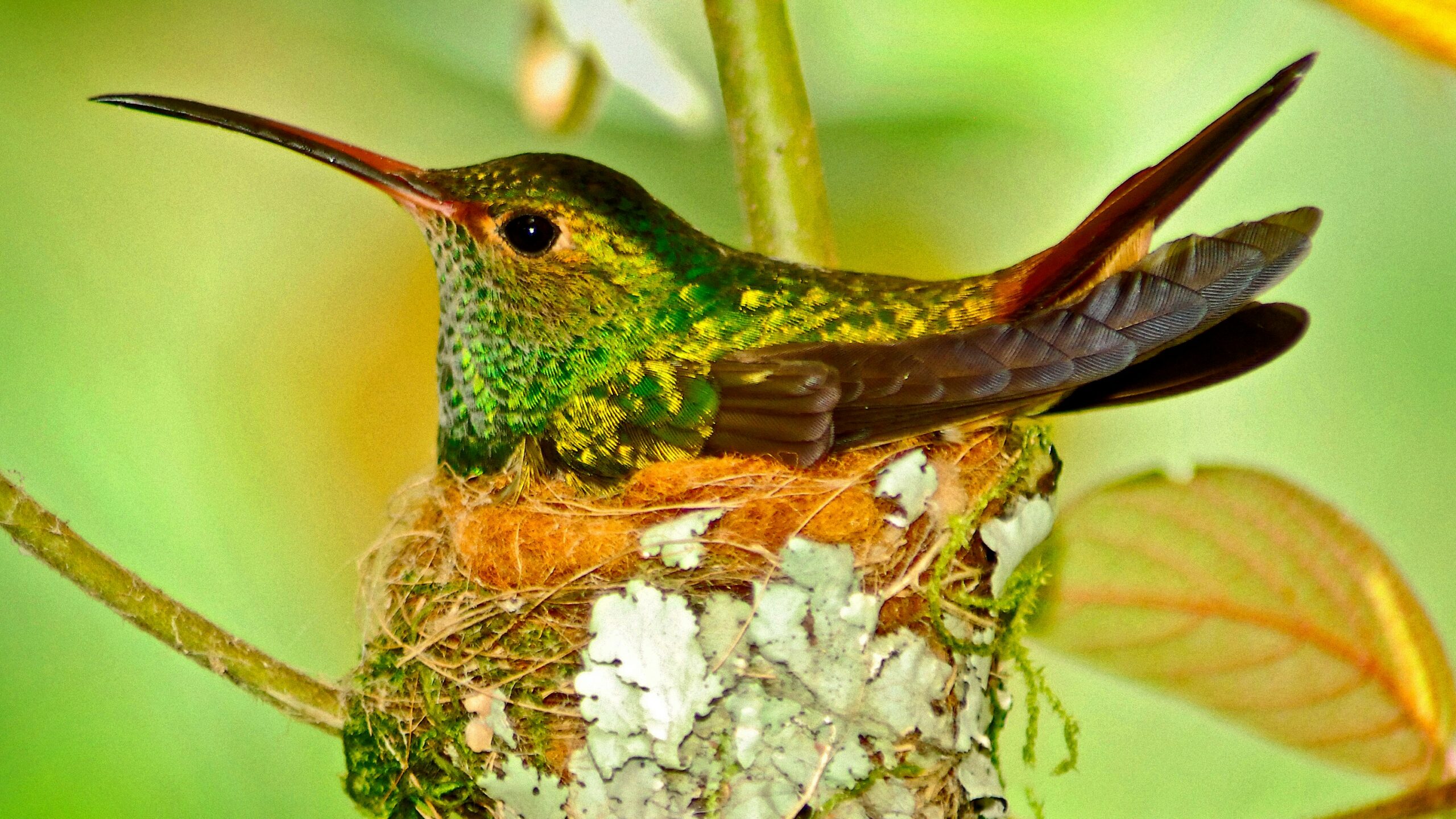
This is where deep learning has become important. Neural networks can classify species in camera-trap images, identify calls in acoustic recordings, detect land-cover change from satellite imagery, segment habitat features, flag anomalies in sensor streams, and model complex ecological patterns across large datasets. These capabilities can help conservation organizations, researchers, governments, Indigenous land stewards, protected-area managers, and civil society institutions see ecological change more clearly.
Yet the central question is no longer whether artificial intelligence can process biodiversity data. It can. The more consequential question is whether deep learning for biodiversity is being deployed inside systems that are scientifically valid, socially legitimate, ecologically meaningful, and institutionally accountable. A model that detects forest loss but does not trigger enforcement, restoration, land-rights protection, or policy response is not conservation. It is observation without authority.
This article examines deep learning for biodiversity as an environmental monitoring system. It argues that AI-assisted biodiversity monitoring should be understood as a layered architecture: data collection, model design, validation, uncertainty reporting, governance, policy translation, and stewardship. Deep learning can improve ecological visibility, but visibility alone is not enough. The future of biodiversity monitoring depends on whether advanced analytics can be integrated into credible institutions capable of protecting living systems.
The Biodiversity Crisis as a Monitoring and Governance Challenge
Biodiversity protection depends on the ability to observe ecological systems at multiple scales. Conservation decisions require information about species distributions, population trends, migration routes, habitat degradation, ecological interactions, invasive species, climate exposure, and human pressures such as land conversion, poaching, pollution, extraction, infrastructure expansion, and agricultural intensification.
Yet biodiversity monitoring remains uneven, fragmented, and labor-intensive. Field surveys are essential, but they can be costly, time-consuming, seasonal, geographically limited, and difficult to repeat consistently. Many species are cryptic, nocturnal, rare, migratory, dispersed, or difficult to identify. Some ecosystems are remote or dangerous to survey. Others are changing faster than traditional monitoring cycles can document.
This creates a visibility problem. Biodiversity loss often advances before institutions fully understand where it is happening, which species are affected, which drivers are responsible, and which interventions are most urgent. By the time decline becomes obvious, ecological thresholds may already have been crossed.
Deep learning addresses part of this problem by expanding the scale and speed of ecological observation. Camera traps can generate millions of images. Passive acoustic sensors can collect continuous soundscape data. Satellites can observe land-cover change across large regions. Drones can monitor habitats at fine spatial resolution. Citizen-science platforms can generate massive species-observation datasets. Environmental DNA, bioacoustics, remote sensing, and sensor networks are producing data volumes that exceed manual processing capacity.
But biodiversity loss is not only a data problem. It is also a governance problem. A monitoring system that detects decline but lacks enforcement capacity, restoration funding, land-tenure legitimacy, community trust, or policy authority still fails to protect ecosystems. The purpose of monitoring is not only to know. It is to support accountable action.
This distinction matters. Deep learning can make ecological change more visible, but it cannot decide whose land rights matter, which development projects should be halted, which communities should govern data, how conservation burdens should be distributed, or how legal systems should respond to harm. Biodiversity monitoring must therefore be designed as part of a broader institutional architecture, not as a technical shortcut around difficult political choices.
Why Deep Learning Matters for Biodiversity Monitoring
Deep learning matters because biodiversity monitoring increasingly involves complex, high-dimensional, multimodal data. Ecological systems generate images, sounds, spatial patterns, time series, genetic signals, climate variables, land-use histories, and human-pressure indicators. Traditional statistical models remain essential, but deep learning can identify patterns in large datasets that are difficult to process manually or with simpler methods.
Deep learning models can learn hierarchical representations. In image analysis, early layers may detect edges, textures, colors, and shapes, while deeper layers identify species, habitat structures, or disturbance patterns. In acoustic monitoring, models can detect frequency patterns, temporal rhythms, and species-specific calls. In satellite imagery, models can classify land cover, detect deforestation, identify coral bleaching, monitor wetlands, or segment habitat features. In ecological forecasting, models can integrate many predictors to estimate species distributions, habitat suitability, or community composition.
These capabilities are especially valuable where conservation data are abundant but human review capacity is limited. A team may not be able to manually classify millions of images, listen to thousands of hours of recordings, or inspect continuous satellite imagery for every protected area. Deep learning can accelerate triage, reduce manual burden, and help experts focus attention where ecological change is likely.
However, deep learning is not magic. Models learn from data, and biodiversity data are often incomplete. They may overrepresent accessible regions, charismatic species, wealthy countries, well-funded research sites, or easily observed organisms. They may underrepresent Indigenous territories, remote forests, marine systems, small organisms, nocturnal species, rare species, and regions with limited monitoring infrastructure. The model can only learn from what the monitoring system has made visible.
For that reason, the promise of deep learning depends on the quality of the entire monitoring system. Better algorithms cannot compensate for poor sampling design, weak metadata, missing ground truth, biased training data, inadequate validation, or institutions that ignore uncertainty. Deep learning is powerful, but it is only one part of ecological knowledge production.
The Biodiversity Data Ecosystem
Biodiversity data are produced by many actors: universities, museums, conservation organizations, government agencies, Indigenous communities, protected-area managers, citizen scientists, remote-sensing programs, environmental consultancies, local observers, and international research networks. These data may include species occurrence records, camera-trap images, acoustic recordings, satellite imagery, environmental covariates, habitat maps, museum specimens, genetic data, field notes, and administrative records.
The distributed nature of biodiversity knowledge creates both strength and fragility. It allows many observers to contribute, but it also creates challenges of standardization, access, metadata quality, licensing, taxonomic consistency, geospatial precision, data sovereignty, and long-term stewardship. Biodiversity data are not simply raw material for models. They are institutional artifacts shaped by collection methods, funding priorities, access rules, colonial histories, scientific norms, and political authority.
Global biodiversity data infrastructures help address this fragmentation by supporting discovery, interoperability, and reuse. But even well-designed data platforms cannot eliminate the need for local context. A species observation may be accurate but spatially sensitive. A camera-trap dataset may be useful for model training but ethically complicated if it captures people. A citizen-science record may expand coverage but require validation. A satellite-derived habitat classification may be spatially extensive but ecologically incomplete without field verification.
A strong biodiversity monitoring system therefore needs more than data volume. It needs data governance. Key questions include:
- Who collected the data, and under what authority?
- What sampling method was used?
- Which species, regions, seasons, or habitats are underrepresented?
- What metadata are available?
- Can the data be audited, reproduced, and corrected?
- Who has the right to access, restrict, interpret, or govern sensitive ecological information?
- How are Indigenous knowledge, local knowledge, and community monitoring respected?
- How are sensitive species locations protected from exploitation?
Deep learning systems inherit the structure of the data ecosystem. If that ecosystem is biased, extractive, opaque, or incomplete, the model will carry those weaknesses into conservation decision-making.
How Deep Learning Is Used in Biodiversity Monitoring
Image Classification and Species Identification
Camera traps, drones, field cameras, and mobile devices generate large volumes of biodiversity imagery. Deep learning models, especially convolutional neural networks and vision transformers, can classify species, detect individuals, identify behaviors, separate empty images from usable images, and support population monitoring. These systems are useful for endangered species detection, occupancy analysis, migration studies, anti-poaching monitoring, invasive species detection, and long-term ecological surveys.
Image-based models are especially valuable where manual classification would be prohibitive. A protected-area network may collect millions of camera-trap images across seasons. Deep learning can identify likely species, flag uncertain images for expert review, and accelerate the production of ecological indicators. But image classification must be validated carefully. A model trained in one ecosystem may fail in another. Lighting, vegetation, camera angle, background, animal posture, season, and image quality can all affect performance.
Satellite-Based Habitat Analysis
Satellite remote sensing allows biodiversity monitoring to operate at landscape, regional, and global scales. Deep learning can help classify land cover, detect deforestation, monitor wetland change, identify coral bleaching, track vegetation stress, map habitat fragmentation, and estimate ecosystem condition. Remote sensing is particularly important for monitoring large or inaccessible regions where field surveys are difficult.
Satellite-based models are powerful because they provide repeated observations over time. They can show patterns of change: forest clearing, regrowth, drought stress, coastline change, burned area, agricultural expansion, urban encroachment, and shifts in water bodies. But remote sensing has limits. It may detect habitat structure without directly detecting species presence. It may miss understory biodiversity, soil biota, small organisms, or ecological interactions. It must therefore be connected to field ecology, not treated as a replacement for it.
Acoustic Monitoring
Passive acoustic monitoring uses microphones or hydrophones to collect sound from forests, grasslands, wetlands, oceans, and other ecosystems. Deep learning models can identify bird calls, amphibian choruses, insect sounds, marine mammal vocalizations, reef soundscapes, illegal logging activity, and broader acoustic indicators of ecosystem condition.
Acoustic monitoring is valuable because sound can reveal ecological activity that cameras may miss. It can operate continuously, cover large time windows, and reduce disturbance to wildlife. It is especially useful for nocturnal species, dense forests, marine environments, and long-term monitoring. But acoustic models face challenges of overlapping calls, background noise, regional dialects, seasonal variation, and species with similar vocalizations. Validation remains essential.
Predictive Modeling of Species Risk
Deep learning can also support predictive modeling. Models can combine species records, climate variables, habitat metrics, land-use change, fragmentation indices, topography, human footprint data, and historical observations to estimate species distributions, community composition, or areas of elevated risk. These outputs can help prioritize field surveys, identify potential corridors, detect emerging threats, and support conservation planning.
Prediction, however, is not preservation. A model may identify a high-risk habitat, but conservation still depends on land-use decisions, enforcement, financing, governance legitimacy, and community participation. Predictive systems should therefore be treated as decision-support tools, not decision-making authorities.
Anomaly Detection and Early Warning
Deep learning can identify anomalies in sensor streams, satellite imagery, acoustic signals, or ecological indicators. An anomaly may represent sudden forest loss, unusual animal movement, unexpected silence in a soundscape, water-quality stress, disease risk, or habitat disturbance. Early warning is valuable because ecological harm often becomes harder to reverse after thresholds are crossed.
But anomaly detection requires careful interpretation. Not every anomaly is ecological harm. Some anomalies reflect sensor failure, seasonal variation, weather events, sampling gaps, or model error. Monitoring systems need protocols for verification before intervention.
Multimodal Monitoring
The strongest biodiversity monitoring systems increasingly combine multiple data streams: camera traps, acoustics, satellite imagery, field surveys, environmental DNA, climate data, community observation, and administrative records. Deep learning can support multimodal integration, but institutional design determines whether those signals become coherent evidence.
Multimodal monitoring is especially important because no single data source captures biodiversity fully. Images show visible organisms. Acoustics capture sound-producing species. Satellites observe habitat and land cover. Field surveys provide ecological interpretation. Community knowledge adds lived context. Environmental DNA reveals biological traces. The system becomes stronger when these sources validate and correct one another.
| Monitoring mode | Deep learning use | Primary strength | Key limitation |
|---|---|---|---|
| Camera traps and images | Species classification, object detection, behavior recognition | Efficient processing of large image datasets | Performance varies by region, lighting, angle, and species representation |
| Satellite imagery | Habitat classification, land-cover change, deforestation detection, wetland mapping | Large-scale repeated observation | May infer habitat condition without directly observing species |
| Acoustic sensors | Species-call detection, soundscape analysis, anomaly detection | Continuous low-disturbance monitoring | Noise, overlapping calls, and regional variation complicate classification |
| Drones | Fine-resolution mapping, object detection, habitat inspection | Flexible high-resolution observation | Regulatory, ethical, battery, disturbance, and coverage constraints |
| Citizen science | Species distribution modeling, image validation, occurrence-data enrichment | Large scale and public participation | Sampling bias and uneven observer expertise |
| Environmental DNA | Pattern classification and species-presence inference | Detects organisms difficult to observe directly | Requires careful sampling, contamination control, and ecological interpretation |
Deep learning becomes most useful when it is embedded in a monitoring architecture that understands the strengths and limits of each data stream.
A Mathematical Lens: From Observations to Ecological Inference
Biodiversity monitoring often begins with observations and ends with ecological inference. A simplified species-classification model estimates the probability that an observation belongs to a particular class.
\hat{y} = f_\theta(x)
\]
Interpretation: The model \(f_\theta\), with learned parameters \(\theta\), maps an input observation \(x\)—such as an image, acoustic recording, or satellite patch—to a predicted output \(\hat{y}\), such as species identity, habitat class, or disturbance status.
For a classification problem, the output may be a probability distribution over possible species:
p(y = k \mid x) = \frac{e^{z_k}}{\sum_{j=1}^{K} e^{z_j}}
\]
Interpretation: A softmax function converts model scores \(z_k\) into probabilities across \(K\) possible classes. The model may assign high probability to one species and lower probabilities to alternatives, but those probabilities require calibration and validation before they can support ecological decisions.
Monitoring systems must distinguish prediction from confidence. A model may output a high probability because the input resembles examples in the training data. But if the training data are geographically narrow, taxonomically incomplete, or biased toward certain habitats, the probability may be misleading outside that context.
At the monitoring-system level, model predictions often feed into indicators. For example, an occupancy indicator may estimate whether a species is present at a site over time:
\psi_{s,t} = P(\text{species present at site } s \text{ during time } t)
\]
Interpretation: Occupancy probability \(\psi_{s,t}\) estimates the probability that a species is present at site \(s\) during time period \(t\). Deep learning can help process observations used in occupancy modeling, but ecological inference must account for detection probability, sampling effort, seasonality, and uncertainty.
Monitoring performance should be evaluated with transparent metrics. For classification systems, precision and recall are often useful:
\text{Precision} = \frac{TP}{TP + FP}
\]
Interpretation: Precision measures how many positive predictions are correct. In biodiversity monitoring, low precision may create false alarms, misclassify species, or misdirect conservation attention.
\text{Recall} = \frac{TP}{TP + FN}
\]
Interpretation: Recall measures how many true cases are detected. In conservation, low recall may be especially harmful when rare, endangered, or invasive species are missed.
The appropriate metric depends on the decision context. For endangered species detection, missing a true occurrence may be more damaging than reviewing false positives. For enforcement, false positives may create legal or social harm if they trigger accusations without sufficient evidence. For habitat mapping, class imbalance may distort results if rare habitats are underrepresented. A responsible monitoring system must therefore connect model metrics to ecological and institutional consequences.
Validation, Ground Truth, and Ecological Credibility
Validation is the difference between a model that appears impressive and a model that can support conservation. Deep learning systems must be tested against reliable ground truth, including expert-labeled data, field verification, independent datasets, and ecological knowledge. Without validation, model outputs may become persuasive visualizations rather than defensible evidence.
Ground truth is difficult in biodiversity work because ecological reality is complex. A species may be present but undetected. A habitat may appear intact from above while degraded underneath the canopy. A soundscape may change because of weather, season, migration, human noise, or sensor placement. A satellite signal may reflect vegetation greenness but not species richness. A camera may fail, be blocked, or attract some species more than others.
Validation should therefore be layered. A strong system may include:
- expert review of labeled training data;
- independent test sets from regions not used in training;
- field verification of model predictions;
- uncertainty estimates and confidence thresholds;
- error analysis by species, region, habitat, season, and sensor type;
- benchmarking against traditional ecological methods;
- periodic retraining and drift detection;
- transparent documentation of model scope and limitations.
Validation should also be ecological, not merely statistical. A model can score well on a test set while still failing to answer the conservation question that matters. For example, classifying animals in images is useful, but conservation may require estimating population trends, habitat occupancy, reproductive success, migration timing, or ecosystem resilience. The technical task must match the ecological decision.
Validation becomes especially important when model outputs influence funding, enforcement, protected-area designation, land-use restrictions, restoration priorities, or community rights. In such cases, biodiversity AI must be auditable. Affected stakeholders should be able to understand what the model was designed to do, what data it used, what uncertainty remains, and how its outputs were interpreted by institutions.
Conservation technology should not ask the public to trust opaque systems. It should earn trust through documentation, validation, accountability, and meaningful participation.
Bias, Data Gaps, and the Geography of Model Error
Biodiversity data are unevenly distributed. Some places have dense observation networks, museum collections, research stations, citizen-science participation, and remote-sensing coverage. Other places have sparse monitoring because of limited funding, political instability, remoteness, restricted access, colonial research histories, or lack of institutional capacity. These data gaps shape model behavior.
Deep learning systems can reproduce and amplify geographic bias. A model trained primarily on temperate-region species may perform poorly in tropical forests. A camera-trap model trained in one protected area may struggle in another with different vegetation, lighting, or species composition. A satellite model trained on one landscape may misclassify habitat in a different ecological zone. A citizen-science dataset may overrepresent roads, cities, parks, charismatic species, or regions with high smartphone access.
Bias is not only technical. It affects which ecosystems become visible to decision-makers. Regions with better data may receive more scientific attention, stronger monitoring, and more conservation funding. Regions with weak data may appear less important because their ecological value is underdocumented. In this way, monitoring inequality can become conservation inequality.
Bias can also affect species. Large mammals, birds, and charismatic species are often easier to monitor and more likely to receive attention. Insects, fungi, soil organisms, plants, amphibians, small mammals, marine invertebrates, and microbial communities may be underrepresented despite their ecological importance. A biodiversity AI system that performs well on popular species may still fail to represent biodiversity as a whole.
Responsible deep learning for biodiversity should therefore include bias audits. These audits should ask:
- Which regions are overrepresented in the training data?
- Which species groups are underrepresented?
- How does performance vary by habitat, season, sensor, and geography?
- Are Indigenous territories, community-managed lands, and remote ecosystems represented appropriately?
- Does the model perform differently for rare species than for common species?
- Are uncertainty estimates higher in data-poor regions?
- Could model outputs redirect conservation resources away from under-monitored ecosystems?
The goal is not perfect data, which rarely exist. The goal is honest modeling: systems that make uncertainty visible rather than hiding it behind automated confidence.
The Risk of AI Optimism in Conservation
Deep learning can detect patterns. It does not, by itself, resolve the institutional causes of biodiversity loss. It does not settle land-rights disputes, halt illegal extraction, enforce environmental law, restore degraded habitats, guarantee conservation finance, or build public legitimacy. AI can strengthen conservation, but it cannot replace the social and political systems that make conservation possible.
The risk of AI optimism is that technological capability becomes mistaken for ecological protection. A dashboard may show habitat loss in near real time, but if agencies lack enforcement authority, nothing may change. A model may detect species decline, but if the development approval process ignores the evidence, the decline continues. A remote-sensing system may identify illegal clearing, but if local communities lack legal protection or public institutions are captured by extractive interests, monitoring does not translate into justice.
Several risks accompany the rise of deep learning for biodiversity:
- Model bias: incomplete or geographically skewed datasets can produce unreliable outputs.
- Over-reliance on remote sensing: satellite signals may be treated as ecological truth without field validation.
- Opacity: complex models may be difficult for stakeholders to interpret or challenge.
- Data extraction: communities may provide knowledge or access without control over how data are used.
- Surveillance concerns: biodiversity monitoring systems may capture human activity, movement, livelihoods, or culturally sensitive practices.
- False authority: model outputs may be treated as neutral even when they reflect contested assumptions.
- Policy displacement: technology may distract from land reform, enforcement, restoration, or economic drivers of ecological harm.
Technological sophistication cannot substitute for procedural accountability. If conservation policy begins to rely on opaque analytical systems, trust can erode, especially among communities directly affected by environmental regulation. Deep learning must support democratic, scientific, and ecological accountability rather than bypassing it.
From Prediction to Preservation: The Governance Layer
Deep learning for biodiversity is most valuable when it operates inside accountable institutions. Models can help identify ecological patterns, but institutions determine whether those patterns lead to protection, restoration, enforcement, finance, public participation, or legal action.
The governance layer should answer several practical questions:
- What conservation decision is the model designed to support?
- Who is responsible for acting on the model output?
- What level of uncertainty is acceptable before intervention?
- Who can audit the training data, evaluation metrics, and documentation?
- How are affected communities informed or involved?
- How are false positives and false negatives handled?
- How are sensitive species locations protected?
- How are Indigenous data sovereignty and community rights respected?
- What happens when model outputs conflict with field expertise or local knowledge?
For conservation systems, accountable deep learning requires:
- transparent documentation of model purpose and scope;
- version control for training datasets and model updates;
- reproducible evaluation metrics;
- clear uncertainty reporting;
- bias analysis across region, species, habitat, and sensor type;
- human review pathways for high-stakes decisions;
- publicly defensible impact frameworks;
- procedures for contesting or correcting model outputs;
- institutional links to enforcement, restoration, policy, and stewardship.
Conservation technology must be auditable. If a model recommends prioritizing one ecosystem over another, stakeholders should be able to understand the basis for that recommendation. If remote sensing flags illegal logging or habitat loss, the methodology should be scientifically and legally defensible. If an acoustic system detects a threatened species, the confidence threshold and verification pathway should be clear.
Without governance, artificial intelligence becomes persuasive rather than protective. It can produce maps, scores, alerts, and rankings that appear authoritative while leaving underlying ecological and political problems unresolved.
A Layered Architecture for Biodiversity Monitoring
An effective biodiversity monitoring system should be understood as a layered architecture. Deep learning is one layer, but it depends on the layers around it.
| Layer | Core function | Failure risk | Resilience requirement |
|---|---|---|---|
| Data collection | Collect imagery, sound, field observations, satellite data, environmental DNA, and sensor streams | Uneven sampling, poor metadata, missing regions, sensor failure | Sampling design, metadata standards, maintenance, community participation |
| Data infrastructure | Store, standardize, document, and share biodiversity data | Fragmentation, inaccessible data, weak provenance, incompatible formats | Interoperability, version control, licensing clarity, long-term stewardship |
| Model layer | Classify species, detect habitat change, segment features, forecast risk | Bias, overfitting, poor transferability, opaque outputs | Model documentation, benchmarking, uncertainty estimates, bias audits |
| Validation layer | Compare predictions with field evidence, expert labels, independent datasets, and ecological knowledge | False confidence, untested assumptions, weak ground truth | Ground verification, independent review, error analysis, ecological interpretation |
| Governance layer | Define authority, accountability, access, review, and decision rules | Technocratic overreach, mistrust, data misuse, unaccountable decisions | Transparency, community rights, auditability, contestability, ethical safeguards |
| Policy layer | Translate evidence into conservation action, restoration, regulation, finance, and enforcement | Observation without intervention, weak enforcement, policy delay | Legal authority, funding, institutional capacity, public accountability |
This architecture helps clarify why deep learning alone cannot solve biodiversity loss. A model can only operate on available data. Data only become meaningful through validation. Validation only matters if institutions act. Institutions only remain legitimate if they are accountable. Policy only becomes protective if it changes land use, incentives, enforcement, restoration, and stewardship.
The strength of biodiversity AI therefore depends on system design. The question is not simply whether the neural network is accurate. The question is whether the full monitoring system can produce reliable knowledge and translate that knowledge into ecological protection.
Biodiversity, Planetary Boundaries, and Earth-System Risk
Biodiversity monitoring is not only a conservation concern. It is also an Earth-system concern. Biosphere integrity is central to the stability of climate, freshwater systems, soils, food systems, pollination, disease regulation, carbon cycling, and ecosystem resilience. When biodiversity declines, the capacity of living systems to absorb disturbance and sustain human societies is weakened.
Deep learning for biodiversity can support planetary-boundaries analysis by improving the observation of biosphere change. Remote sensing can track habitat loss. Acoustic systems can indicate changes in species activity. Camera traps can monitor wildlife presence. Species-distribution models can identify climate-related range shifts. Multispecies models can help analyze ecological communities rather than isolated species. Combined monitoring systems can reveal where ecological degradation is approaching thresholds.
But planetary-boundaries thinking also warns against narrow technical fixes. The drivers of biodiversity loss are systemic: land-use change, resource extraction, pollution, climate change, invasive species, overexploitation, and institutional failure. Deep learning can strengthen monitoring, but it does not replace the need to reduce pressures on ecosystems.
A planetary-boundaries approach therefore asks whether biodiversity AI helps institutions act within ecological limits. Does the system identify habitat loss early enough to prevent irreversible damage? Does it support restoration priorities? Does it help enforce protected-area boundaries? Does it reveal cumulative pressure across landscapes? Does it help protect ecological connectivity? Does it strengthen public accountability?
If the answer is no, then the system may be analytically impressive but ecologically weak. Monitoring systems should not only measure decline. They should help societies prevent it.
Ethics, Indigenous Knowledge, and Community Accountability
Biodiversity monitoring often occurs on lived land. Forests, rivers, coasts, grasslands, wetlands, mountains, and marine areas are not empty spaces for data extraction. They are homes, territories, sacred places, working landscapes, subsistence systems, cultural landscapes, and sites of political struggle. AI-assisted conservation must therefore be designed with ethical attention to power.
Indigenous peoples and local communities have long protected biodiversity through stewardship systems, customary governance, ecological knowledge, seasonal practices, and place-based responsibility. Monitoring systems that ignore this knowledge risk repeating extractive patterns: outside institutions collect data, build models, publish results, and make decisions without giving communities authority over interpretation or use.
Deep learning can also create surveillance risks. Camera traps may capture people. Drones may monitor movement. Acoustic sensors may record human activity. Satellite analysis may be used to enforce land-use rules without community consent or contextual understanding. Conservation monitoring can become coercive if it treats local communities as subjects of observation rather than partners in governance.
Ethical biodiversity AI should therefore include:
- community consent and participation where monitoring affects local people;
- respect for Indigenous data sovereignty and knowledge governance;
- protection of sensitive species locations and culturally sensitive sites;
- clear limits on surveillance and human data capture;
- transparent rules for access, interpretation, and decision-making;
- benefit-sharing when community knowledge or labor contributes to monitoring;
- mechanisms for contesting harmful or inaccurate model outputs;
- recognition that conservation cannot be separated from land rights, livelihoods, and historical justice.
The legitimacy of biodiversity monitoring depends on whether it protects both ecological systems and the communities most connected to them. A system that produces accurate ecological predictions while undermining community rights is not a successful conservation system.
Operational Design for Monitoring Systems
To move from concept to practice, deep learning for biodiversity must be operationally designed. That means turning broad principles into working systems with roles, workflows, thresholds, documentation, and accountability.
A practical monitoring workflow might include:
- Define the conservation decision. Clarify whether the system supports species detection, habitat monitoring, enforcement triage, restoration planning, protected-area management, environmental impact review, or early warning.
- Design the sampling strategy. Determine where sensors, surveys, cameras, acoustic recorders, drone flights, or satellite analyses are needed to represent ecological variation.
- Document the data pipeline. Track data sources, metadata, labeling procedures, quality checks, licensing, access rules, and sensitive-data restrictions.
- Train and evaluate models. Use appropriate benchmarks, independent validation, uncertainty estimates, and performance analysis across regions and species groups.
- Integrate expert and community review. Ensure ecological experts and affected communities can review findings before high-stakes decisions are made.
- Create escalation pathways. Define what happens when the system detects habitat loss, species decline, illegal activity, or ecological anomaly.
- Monitor model drift. Reassess model performance as ecosystems, sensors, seasons, and data distributions change.
- Publish accountable summaries. Make methods, assumptions, uncertainty, and limitations understandable to decision-makers and the public.
Operational design should also distinguish between low-stakes and high-stakes uses. Using AI to sort empty camera-trap images is different from using AI to support enforcement, restrict land use, or prioritize conservation funding. The higher the stakes, the stronger the validation and governance requirements should be.
The best biodiversity monitoring systems will not be those that simply maximize automation. They will be those that use automation to support better human judgment, stronger institutions, and more credible ecological stewardship.
GitHub Repository
The companion repository for this article can support reproducible biodiversity-monitoring workflows, synthetic ecological datasets, image-classification examples, acoustic-monitoring examples, satellite-habitat workflows, validation metrics, uncertainty reporting, and governance documentation templates.
Complete Code Repository
This repository provides a companion technical workspace for deep learning and biodiversity monitoring, including synthetic datasets, reproducible Python and R workflows, SQL schemas, validation examples, model-documentation templates, and systems-code demonstrations for accountable environmental monitoring.
Technology Is Not the Solution; Architecture Is
Biodiversity loss is not caused by insufficient computing power. It is driven by land-use change, extractive incentives, climate stress, pollution, overexploitation, invasive species, regulatory failure, short-term decision-making, and unequal power over land and resources. Deep learning can improve ecological visibility, but visibility without accountability changes very little.
The long-term value of deep learning for biodiversity will depend on whether advanced analytics are integrated into transparent, well-governed systems designed for ecological resilience. The model is not the conservation strategy. It is one component inside a larger architecture of observation, validation, governance, policy, enforcement, restoration, and stewardship.
Used well, deep learning can help conservation systems see faster, learn from larger datasets, identify risk earlier, and coordinate responses more effectively. Used poorly, it can create false confidence, obscure uncertainty, reproduce data inequities, expand surveillance, or distract from the political drivers of ecological decline.
The future of biodiversity monitoring should therefore be judged not by the sophistication of its algorithms alone, but by the credibility of the systems around them. Prediction matters. But preservation requires institutions capable of acting on what prediction reveals.
Related articles
- Environmental Monitoring Systems
- Artificial Intelligence Systems
- Data Systems & Analytics
- Planetary Boundaries
Further reading
- IPBES. Global Assessment Report on Biodiversity and Ecosystem Services.
- GBIF. What is GBIF?
- GBIF. Biological surveys and monitoring.
- Brun, P. et al. Multispecies deep learning using citizen science data improves species distribution and community prediction.
- Pettorelli, N. et al. Deep learning and satellite remote sensing for biodiversity monitoring and conservation.
- Gillespie, L.E. et al. Deep learning models map rapid plant species changes from citizen science and satellite/aerial imagery.
References
- Brun, P. et al. (2024). Multispecies deep learning using citizen science data improves species distribution and community prediction. Nature Communications.
- GBIF. What is GBIF?
- GBIF. Biological surveys and monitoring.
- Gillespie, L.E. et al. (2024). Deep learning models map rapid plant species changes from citizen science and satellite/aerial imagery. Proceedings of the National Academy of Sciences.
- IPBES. (2019). Global Assessment Report on Biodiversity and Ecosystem Services. Intergovernmental Science-Policy Platform on Biodiversity and Ecosystem Services.
- Pettorelli, N. et al. (2024). Deep learning and satellite remote sensing for biodiversity monitoring and conservation. Remote Sensing in Ecology and Conservation.