
Wide-Area IoT Protocols are becoming essential to disaster recovery in remote regions. When floods, landslides, storms, or earthquakes cut off roads, power, and conventional communications, responders face a basic problem: they lose visibility into what is happening on the ground. Remote villages, islands, mountain settlements, and rural river basins can go dark precisely when timely information matters most.
That is where wide-area IoT protocols begin to matter. Technologies such as LoRaWAN, NB-IoT, LTE-M, and satellite IoT create low-power, long-range communication layers that can preserve situational awareness even when traditional infrastructure fails. Instead of depending on dense cell coverage or uninterrupted grid power, these systems are designed for sparse terrain, small payloads, and constrained energy budgets.
In practical terms, wide-area IoT protocols can support flood monitoring, infrastructure alerts, status beacons, medical supply tracking, and early warning systems across places that are difficult to reach and easy to lose sight of during a crisis.
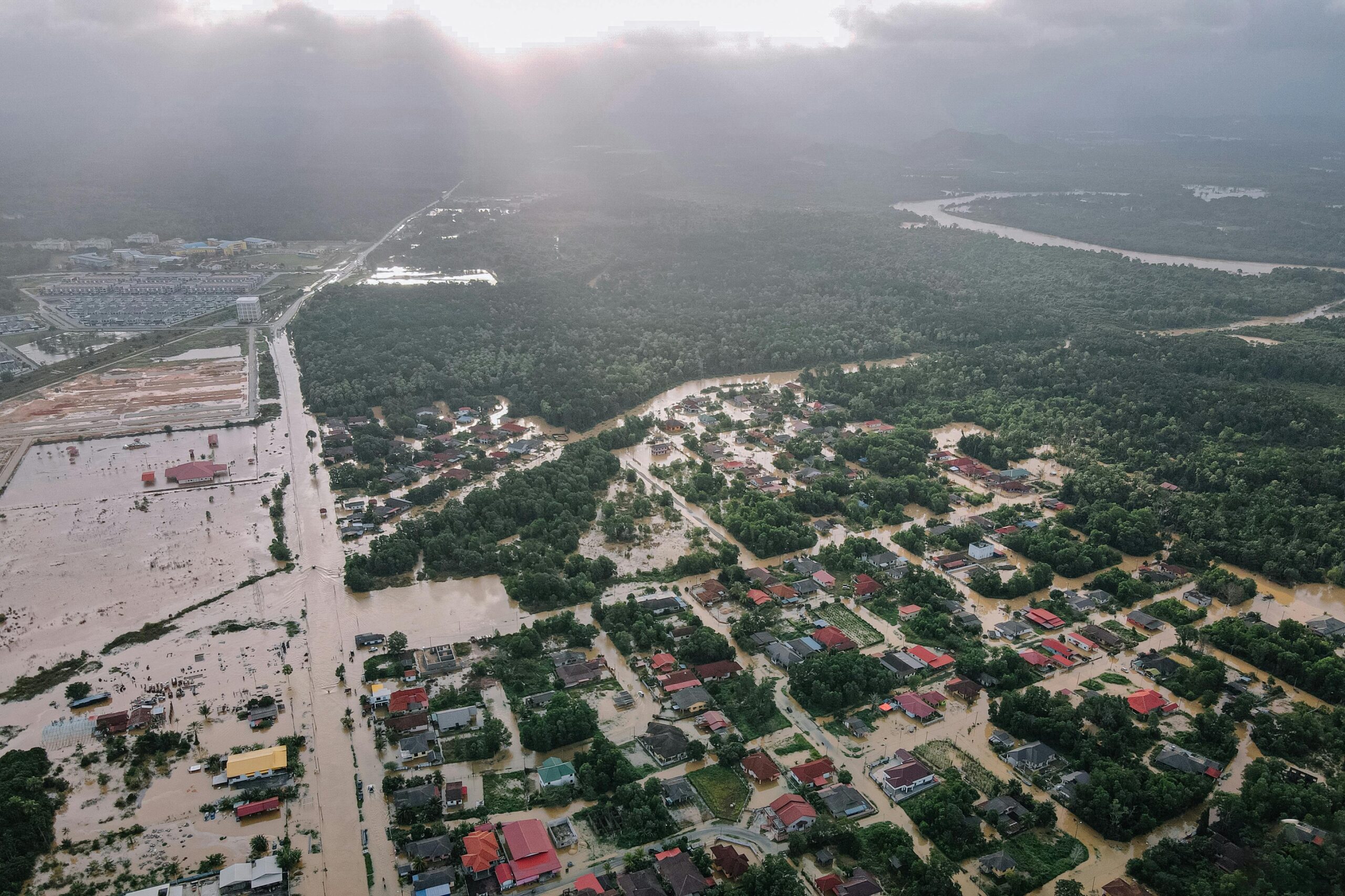
This also connects to broader themes across Sustainable Catalyst, including water stress and hydrological limits, distributed infrastructure, and the role of resilient systems in high-risk environments. Disaster recovery in remote regions is not only a communications problem. It is a systems design problem.
- Why Wide-Area IoT Protocols Matter in Disasters
- Why Remote Regions Need a Different Connectivity Model
- Wide-Area IoT Protocols and LPWAN Fundamentals
- LoRaWAN for Disaster Recovery
- NB-IoT and LTE-M in Remote Disaster Recovery
- Wide-Area IoT Protocols as Disaster Architecture
- Satellite IoT for Remote Regions
- Design Priorities for Wide-Area IoT Protocols
- Policy and Systems Questions
- Frequently Asked Questions
Why Wide-Area IoT Protocols Matter in Disasters
In urban disasters, some communications infrastructure usually survives. In remote disasters, that assumption often breaks down completely. A single landslide can isolate an entire valley. A flood can wipe out the few road and power connections linking scattered communities to regional hubs. A storm can disable the one tower or backhaul link a large territory depends on.
Wide-area IoT protocols matter because they are built for constrained environments. They support long-range transmission, low energy use, and small messages that can continue moving even when richer forms of connectivity fail. In disaster recovery, that modest capability can be the difference between blindness and basic coordination.
Why Remote Regions Need a Different Connectivity Model
Conventional disaster communications assume at least some baseline infrastructure: surviving cell towers, fiber, transport access, and backup power. Remote regions rarely have that luxury. Even before a disaster, connectivity may be patchy, expensive, or intermittent. After a disaster, it may disappear entirely.
Remote recovery has distinct constraints:
-
Sparse populations spread across large geographic areas.
-
Limited grid power and uncertain fuel supplies.
-
Few redundant communications paths.
-
Difficult physical access for assessment and repair crews.
The design question becomes simple but unforgiving: how do you preserve situational awareness and coordination across tens or hundreds of kilometers using devices that may need to operate for days or weeks on batteries or small solar systems? Wide-area IoT protocols are one of the few practical answers.
Wide-Area IoT Protocols and LPWAN Fundamentals
Most wide-area IoT protocols fall within the broader world of Low Power Wide Area Networks, or LPWAN. These systems trade bandwidth for range and energy efficiency. They are optimized for sensor readings, alerts, and brief status updates rather than voice, video, or continuous telemetry.
Key LPWAN characteristics include:
-
Long-range coverage across rural and open terrain.
-
Low power consumption that extends device life under constrained energy conditions.
-
Support for many endpoints with limited infrastructure.
For disaster recovery in remote regions, that means a few gateways can cover large territories, simple sensors can be left in hard-to-reach locations, and critical alerts can still move across damaged or degraded networks.
For technical reference material on LPWAN and IoT communications, the International Telecommunication Union and the 3GPP standards body provide useful starting points.
LoRaWAN for Disaster Recovery
Among wide-area IoT protocols, LoRaWAN is especially attractive in remote regions because it can be deployed without depending on existing cellular infrastructure. That makes it highly relevant for disaster recovery where towers are absent, damaged, or overloaded.
In practical terms, LoRaWAN supports:
-
Community-owned or NGO-operated networks in places underserved by conventional infrastructure.
-
Rapid deployment of portable gateways powered by batteries or solar panels.
-
Coverage in rugged environments where simpler network models break down.
Concrete LoRaWAN use cases include river and landslide monitoring, status beacons from villages, and low-cost structural sensing on bridges, schools, and clinics. Because payloads are small, the system does not deliver rich media. It delivers something more essential in a disaster: a distributed heartbeat of critical signals from places that would otherwise disappear from view.
NB-IoT and LTE-M in Remote Disaster Recovery
NB-IoT and LTE-M extend wide-area IoT protocols over licensed cellular spectrum. Where some macro coverage survives, these technologies can carry low-bitrate sensor data even when ordinary mobile voice and data services are unusable.
Their advantages in disaster recovery include:
-
Deep coverage for devices in shelters, buildings, and fringe areas.
-
Operator-managed service quality for critical telemetry and alerts.
-
Integration with existing security and SIM-based management.
NB-IoT and LTE-M are less useful where no cellular infrastructure exists, but they remain valuable in many remote regions where degraded networks still carry enough signal to move essential machine-to-machine messages.
Wide-Area IoT Protocols as Disaster Architecture
For remote regions, wide-area IoT protocols are not a single technology but a layered architecture.
-
Distributed sensor layer
-
Water, weather, geotechnical, and structural sensors dispersed across terrain.
-
Village-level status nodes for clinics, schools, and local authorities.
-
Trackers on vehicles, supply depots, and temporary assets.
-
-
LPWAN access layer
-
LoRaWAN gateways where cellular coverage is absent.
-
NB-IoT and LTE-M endpoints where some cellular macro coverage remains.
-
Adaptive reporting based on battery life and network conditions.
-
-
Backhaul layer
-
Satellite backhaul from key gateways.
-
Microwave or radio links where line-of-sight exists.
-
Intermittent data sync via vehicles or drones when continuous backhaul is unavailable.
-
-
Data and decision layer
-
Regional dashboards and threshold-based alerts.
-
Interfaces designed for responders and local authorities.
-
The protocols matter because they define what is possible at each layer and under what power, cost, and operational constraints.
Satellite IoT for Remote Regions
For some communities, terrestrial backhaul is not realistic even in temporary form. This is where satellite IoT completes the picture. LEO satellite systems and direct-to-satellite endpoints can extend wide-area IoT protocols into places that would otherwise remain disconnected.
Satellite IoT supports:
-
Backhauling LoRaWAN gateways in mountain, island, and rural communities.
-
Direct links for critical infrastructure sensors and trackers.
-
Continuity of minimal situational awareness when ground systems fail.
As non-terrestrial network standards mature, the boundary between terrestrial IoT and satellite IoT will become less rigid. For disaster recovery, that interoperability could prove decisive.
Design Priorities for Wide-Area IoT Protocols
1. Energy as a First-Class Constraint
In remote disasters, power may come only from small solar systems, vehicle batteries, or occasional generator access. Wide-area IoT protocols are useful only if sensors, gateways, and backhaul links can all function within those tight limits.
-
Aggressive duty-cycling.
-
Local event filtering and preprocessing.
-
Adaptive reporting frequencies.
2. Robustness Over Bandwidth
In disaster recovery, reliability is more valuable than richness. Small payloads that always get through matter more than data-heavy systems that fail under pressure.
-
Redundant messaging formats.
-
Graceful degradation when gateways or backhaul fail.
-
Priority handling for essential alerts and infrastructure signals.
3. Local Control and Data Sovereignty
Remote regions are often last in line for infrastructure and first in line for extraction. Wide-area IoT protocols can either reinforce that imbalance or help reverse it.
-
Local authorities and community groups should be able to operate parts of the network.
-
Critical data should be accessible to local communities, not only central agencies.
-
Open standards should reduce long-term vendor lock-in.
Resilience in these systems is not just technical. It is institutional and political as well.
Policy and Systems Questions for Remote Regions
For policymakers, the real challenge is not whether wide-area IoT protocols can work. It is how they are funded, governed, standardized, and integrated into resilience planning.
-
Investment models: who funds pre-deployment in high-risk but underserved areas?
-
Spectrum and device regulation: how do regulators support community-scale deployments without undermining reliability or security?
-
Data-sharing standards: what minimum datasets should be openly shared during crises?
-
Integration into national plans: how do these systems fit within broader disaster risk reduction and climate adaptation strategies?
Wide-area IoT protocols are one of the few technologies capable of covering the physical and institutional blind spots where remote communities often sit. Whether they become extractive telemetry systems or shared public infrastructure depends on governance choices made before the next disaster arrives.
Frequently Asked Questions
What are wide-area IoT protocols?
Wide-area IoT protocols are communication systems designed for long-range, low-power transmission of small data payloads. Examples include LoRaWAN, NB-IoT, LTE-M, and satellite IoT.
Why are wide-area IoT protocols useful in disaster recovery?
They help maintain situational awareness, move alerts, and support remote monitoring when conventional communications infrastructure is damaged or absent.
Which wide-area IoT protocols are most useful in remote regions?
LoRaWAN is useful where communities need independent deployment, while NB-IoT and LTE-M work well where some cellular infrastructure remains. Satellite IoT is often essential for the most isolated locations.