
Last Updated May 5, 2026
The Queen of Sheba stands at one of the most vivid crossroads in Abrahamic sacred history. She is a ruler, traveler, diplomat, seeker, tester of wisdom, bearer of gifts, and witness to royal and divine order. In the Hebrew Bible, she journeys to Solomon after hearing of his wisdom, tests him with hard questions, beholds the order of his court, blesses the God of Israel, and returns to her land. In the Qur’an, she appears within the story of Solomon as a powerful queen whose people possess wealth and political organization, but whose court is initially associated with sun worship. Through the encounter with Solomon, she moves from royal calculation to recognition of Allah, Lord of the worlds.
Within the Abrahamic Traditions sequence, the Queen of Sheba belongs to the study of sacred figures beyond prophets: persons whose status is not prophetic in the formal sense, but whose stories become indispensable for understanding wisdom, revelation, power, moral testing, sacred geography, and the transformation of human sovereignty before God. Her story is especially important because she is not presented merely as an ornament in Solomon’s story. She is a ruler with agency, intelligence, political judgment, wealth, curiosity, and spiritual capacity.
The Queen of Sheba has been remembered in Jewish, Christian, Islamic, and Ethiopian traditions; interpreted through questions of wisdom, kingship, gender, conversion, empire, trade, diplomacy, and sacred geography; and expanded through legend, art, literature, and devotional imagination. A careful comparative reading must therefore honor both the scriptural restraint of the biblical account and the distinctive moral drama of the Qur’anic account. She is shared across traditions, but not flattened into a single meaning. In each tradition, she becomes a witness to the relationship between wisdom and sovereignty.
Current Library
Religious Studies
Article Map
Abrahamic Traditions
Related Topic
Comparative Sacred Themes
Series context: This article is part of the Abrahamic Traditions: Prophecy, Revelation, Law, and Sacred History knowledge series. For the broader category structure, return to the Religious Studies category.
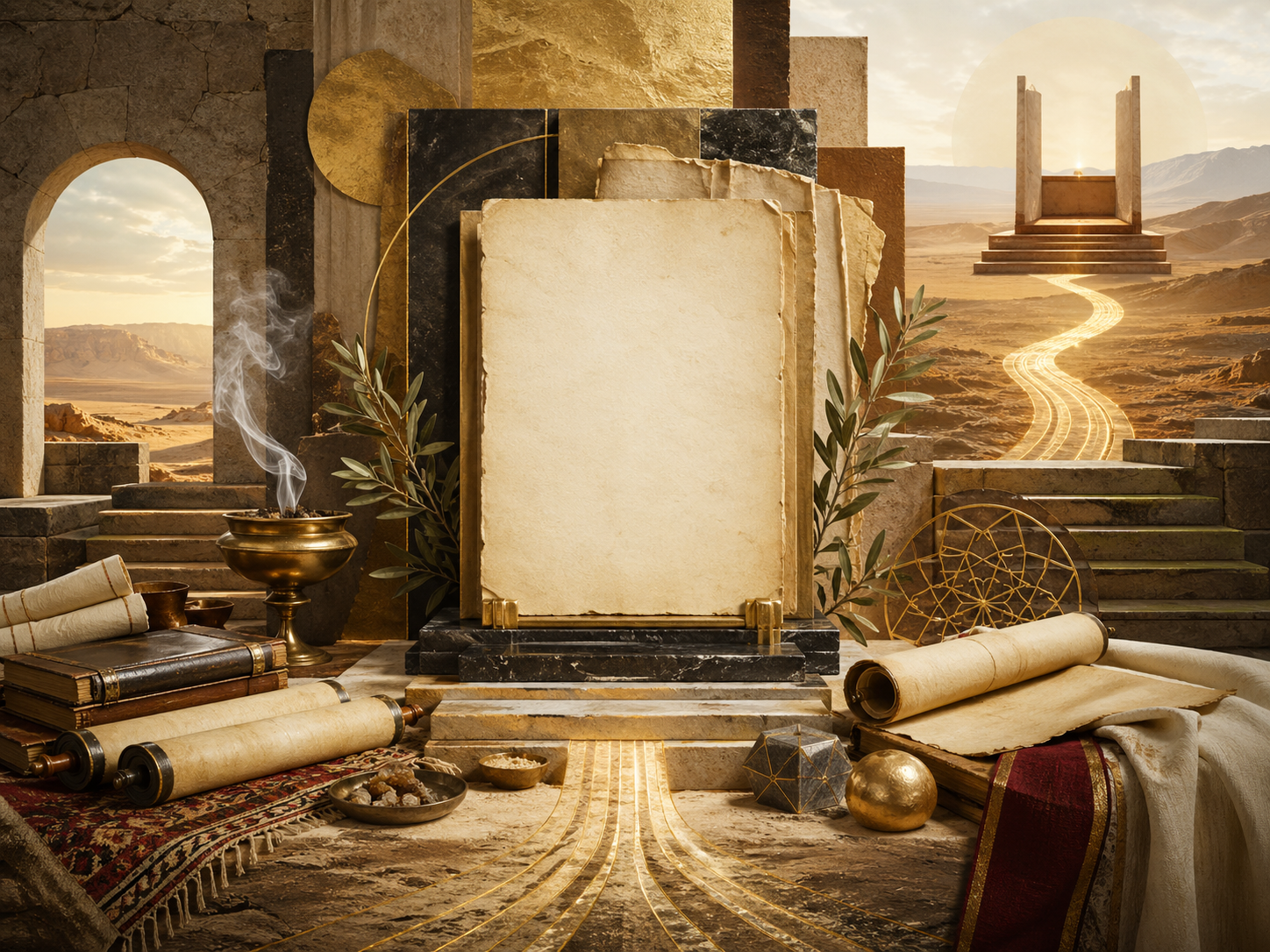
The Queen of Sheba should be read with interpretive care. She is not merely an exotic visitor, a legendary monarch, a romanticized woman of wealth, or a decorative foreign presence at Solomon’s court. The scriptural accounts are concerned with wisdom, sovereignty, perception, and recognition. She travels because she has heard of wisdom. She questions because reputation is not enough. She observes because royal order must be seen, not merely reported. She speaks because foreign witness can recognize divine favor. In the Qur’an, she consults, calculates, tests, perceives, and finally submits with Solomon to the Lord of the worlds. Her story asks what happens when power becomes teachable.
The Queen of Sheba as a Sacred Figure Beyond Prophets
The Queen of Sheba belongs naturally among sacred figures beyond prophets because her story is not centered on prophetic office, lawgiving, or revelation received directly by her. Instead, her significance lies in encounter. She encounters Solomon’s wisdom, royal order, and relation to God. She brings questions, gifts, political discernment, and sovereignty into contact with a wisdom greater than ordinary kingship. Her story asks what happens when power meets wisdom, when wealth meets revelation, and when a ruler is invited to recognize a higher sovereignty.
In the biblical account, the Queen of Sheba comes after hearing of Solomon’s fame. Her journey is not described as conquest, alliance, marriage, or conversion in a formal doctrinal sense. It is a journey toward wisdom. She tests Solomon, sees the order of his household, and recognizes that his wisdom and prosperity exceed report. Her speech blesses the God of Israel, who has placed Solomon on the throne to execute justice and righteousness. The queen becomes a witness: a foreign ruler who recognizes that Solomon’s wisdom is not merely political technique, but a gift bound to divine favor and moral order.
In the Qur’an, her role is more dramatically developed. She is not simply an admiring visitor. She is a sovereign confronted by prophetic-monotheistic kingship. She consults her council, weighs diplomacy against force, sends a gift, receives Solomon’s response, encounters her transformed throne, sees the crystal-like palace, and finally declares her submission with Solomon to Allah, Lord of the worlds. The Qur’anic queen is not humiliated into belief. She is guided through signs, political discernment, and a transformation of perception.
This makes her a distinctive sacred figure. She is not remembered because she belongs to Israel by birth, receives a prophetic commission, or rules in the name of biblical covenant. She is remembered because she seeks, tests, perceives, and finally recognizes. Her foreignness is not a barrier to sacred significance. On the contrary, her distance intensifies the meaning of her journey. Wisdom draws a ruler from beyond the expected boundaries.
The Queen of Sheba therefore widens Abrahamic sacred history. She shows that revelation’s moral field is not limited to prophets and their immediate communities. Foreign courts, trading kingdoms, wealthy rulers, and politically sophisticated women can also become witnesses to divine wisdom. The question is whether power remains closed within itself or becomes capable of recognition before God.
Sheba, Sabaʾ, and Sacred Geography
The name Sheba is commonly associated with Sabaʾ, an ancient South Arabian kingdom often located in the region of present-day Yemen, especially around Ma’rib. The historical kingdom of Sabaʾ was connected with incense trade, irrigation, monumental architecture, inscriptions, and South Arabian political culture. Its memory appears in biblical, classical, Arabian, Islamic, and later literary traditions. The Queen of Sheba therefore belongs not only to literary imagination, but also to the sacred geography of Arabia, the Red Sea world, the Horn of Africa, and the ancient routes of trade and diplomacy.
Historical certainty about the specific queen described in scripture remains limited. The biblical and Qur’anic accounts are theological narratives, not modern court archives. They should not be forced into a purely archaeological biography. Yet the wider historical background matters. Sheba evokes a prosperous southern kingdom, long-distance trade, precious goods, and political contact across regions. Gold, spices, precious stones, incense, and royal retinues in the biblical narrative make sense within a world of caravan routes, luxury exchange, and diplomatic gifts.
Sabaʾ also matters because it places the story within a broader Afro-Arabian and Red Sea world. South Arabia, Ethiopia, the Hijaz, the Levant, and the wider Near East were linked by trade, migration, political contact, and religious memory. The Queen of Sheba’s journey to Solomon is therefore not merely a literary episode of one monarch visiting another. It evokes a world in which goods, reports, questions, and sacred reputations could travel across desert, sea, and courtly networks.
Ethiopian tradition also became deeply associated with the Queen of Sheba, especially through the Kebra Nagast, where she is remembered as Makeda and linked to Solomon, Menelik, and Ethiopian royal sacred history. This tradition is not identical to the biblical or Qur’anic accounts, but it is enormously important for later reception. The Queen of Sheba became a figure through whom Ethiopia, Israel, wisdom, monarchy, and sacred legitimacy could be imagined together.
A responsible reading should distinguish scripture from later tradition while still honoring the seriousness of reception history. The biblical text does not name her Makeda. The Qur’an does not name her Bilqīs. Historical evidence does not allow a simple modern biography. Yet the memory of Sheba became a powerful sacred geography: South Arabian, Ethiopian, Israelite, Islamic, and global. The queen’s story lives precisely because it crosses boundaries.
The Queen of Sheba in the Hebrew Bible
The primary biblical account appears in 1 Kings 10:1–13, with a parallel in 2 Chronicles 9:1–12. The queen hears of Solomon’s fame, comes to Jerusalem with a great caravan, and tests him with hard questions. She brings spices, very much gold, and precious stones. Solomon answers all her questions. Nothing is hidden from him that he cannot explain. When she sees his wisdom, his house, the food of his table, the seating of his officials, the attendance of his servants, their clothing, his cupbearers, and his ascent or offerings connected with the house of the Lord, she is overwhelmed.
Hebrew Bible
וּמַלְכַּת־שְׁבָא שֹׁמַעַת אֶת־שֵׁמַע שְׁלֹמֹה לְשֵׁם יְהוָה וַתָּבֹא לְנַסֹּתוֹ בְּחִידוֹתAnd the Queen of Sheba heard of Solomon’s fame concerning the name of the Lord, and she came to test him with hard questions.1 Kings 10:1. Hebrew text with poetic English rendering.
The biblical account frames the queen’s journey as an encounter with wisdom associated with the divine name. Her testing is not mere curiosity; it is royal discernment before a wisdom reported across borders.
Her speech is central. She says that the report she heard in her own land was true, but that she had not believed until she came and saw with her own eyes. She declares that the half had not been told. Solomon’s wisdom and prosperity exceed the report. She blesses his servants who continually stand before him and hear his wisdom. Most importantly, she blesses the Lord, the God of Israel, who delighted in Solomon and placed him on the throne to do justice and righteousness.
The biblical queen is therefore a witness to wisdom and order. She is not portrayed as a defeated enemy, a seductress, or a passive admirer. She is a ruler who tests, observes, speaks, gives, and receives. The narrative gives her sufficient authority to evaluate Solomon, and sufficient spiritual perception to recognize that his wisdom is connected to the God of Israel. Her role is brief, but theologically dense.
The narrative also emphasizes seeing. The queen hears a report, travels, questions Solomon, and then sees the order of his court. The movement from report to sight is crucial. Wisdom is not only in Solomon’s answers but in the ordered life of his kingdom: table, officials, servants, clothing, worship, architecture, and royal administration. The queen evaluates a whole world of order. Her wonder is not only intellectual; it is political and liturgical.
The biblical account also leaves much unsaid. It does not narrate her inner conversion in detail. It does not record her riddles. It does not name her. It does not turn her into a romantic figure. Its restraint is important. The queen’s scriptural function is not to satisfy curiosity, but to witness that Solomon’s wisdom, prosperity, and rule are bound to the delight and purpose of Israel’s God.
Hard Questions, Wisdom, and Royal Testing
The queen’s “hard questions” are among the most intriguing features of the biblical account. The text does not record their content. This silence is significant. Later traditions often filled the gap with riddles, puzzles, tests of discernment, and legends of Solomon’s extraordinary insight. But the biblical narrative itself leaves the questions open, focusing instead on Solomon’s complete wisdom and the queen’s recognition.
Testing in this context is not hostility. It is royal and intellectual discernment. The queen has heard a report, but she does not merely accept reputation. She travels, questions, observes, and judges. Her method is empirical in a broad premodern sense: she tests speech against presence, report against sight, fame against actual order. This gives her story unusual intellectual dignity. She is not content with rumor. She seeks wisdom directly.
Solomon’s ability to answer her questions also connects his kingship to wisdom rather than military power alone. The biblical Solomon is famous for judgment, administration, wealth, temple-building, and international reputation. The queen’s visit gathers these themes into one scene. His wisdom is not only in words but in order: household, officials, servants, worship, and prosperity. The queen sees a kingdom structured by wisdom, or at least presented as such by the biblical narrator.
The hard questions also reveal something about the queen. She is not merely impressed by wealth. She comes prepared to test. She has the confidence to question one of the most celebrated kings in biblical memory. The narrative therefore grants her intellectual seriousness. She is not a passive recipient of Solomon’s fame; she is an examiner of it.
Later riddle traditions may be imaginative expansions, but they preserve a real scriptural intuition: the queen is associated with discernment. She stands for the ruler who does not confuse report with truth, or magnificence with wisdom, or wealth with divine favor. She asks, sees, and only then speaks. Her recognition is earned through encounter.
The Queen of Sheba in the Qur’an
The Qur’anic account appears in Sūrat al-Naml 27:20–44. The story begins with Solomon reviewing the birds and noticing the absence of the hoopoe. The hoopoe returns with news from Sheba: a woman rules over them, she has been given of everything, and she possesses a great throne. Yet the hoopoe also reports that she and her people prostrate to the sun rather than to Allah. Solomon sends a letter. The queen receives it, consults her chiefs, sends a gift, and eventually comes to Solomon. After witnessing signs, including the transformation of her throne and the palace that appears like water, she recognizes her wrong and submits with Solomon to Allah, Lord of the worlds.
The Qur’an does not name her. Later Islamic tradition often calls her Bilqīs, but that name does not appear in the Qur’anic text. This distinction matters. The Qur’an’s restraint keeps attention on the moral and theological drama rather than on biographical curiosity. She is “the woman” who rules them, a queen of Sheba, a ruler with a throne, a political mind, and finally a soul capable of recognizing truth.
The Qur’anic narrative is also striking because it presents Solomon as both prophet and king. His authority is not merely royal. He acts as a servant of Allah, calling another ruler away from sun worship and toward submission to the Lord of the worlds. The queen’s story therefore becomes part of the Qur’an’s wider sacred history of prophecy, monotheism, testing, and the correction of false worship.
The hoopoe’s role is also important. In the Qur’an, knowledge can arrive from unexpected sources. A bird reports political and religious information that leads Solomon to act. The story destabilizes assumptions about where meaningful knowledge comes from. Royal intelligence does not arrive only through ambassadors, spies, ministers, or armies. In Solomon’s world, creation itself is drawn into the field of divine service.
The Qur’anic queen is introduced through sovereignty and error at the same time. She has a great throne and political power, yet her people worship the sun. This pairing matters. The Qur’an does not deny her intelligence, wealth, or political order. It also does not treat those gifts as sufficient. A kingdom can be organized, prosperous, and powerful while still spiritually misdirected. The question is whether political wisdom can become open to theological truth.
Solomon as Prophet-King: Wisdom, Power, and Submission
Solomon’s role differs across biblical and Qur’anic emphasis, but in both traditions he is more than an ordinary monarch. In the Hebrew Bible, Solomon is associated with wisdom, judgment, temple-building, wealth, and international reputation. In the Qur’an, Sulaymān is a prophet-king whose dominion includes knowledge of birds, command over wind and jinn, gratitude for divine gifts, and submission to Allah. His power is extraordinary, but it is not self-originating.
This matters because the Queen of Sheba’s story is not simply about one ruler admiring another. It is about the proper ordering of sovereignty. Solomon’s wisdom and power are gifts under God. When he receives the hoopoe’s report, he does not treat Sheba only as a political opportunity. He responds to false worship. His letter begins in the name of Allah, the Compassionate, the Merciful. The summons is political, but also theological.
The Qur’anic Solomon is therefore a test for the queen, but he is also himself under test. Power can become arrogance. Wealth can become display. Dominion can become domination. The Qur’an repeatedly presents Solomon as one who recognizes divine favor and prays for gratitude. This prevents his kingship from becoming divine kingship. He is powerful, but still servant. He is wise, but still dependent. He commands, but he is not the Lord.
The queen’s final statement, “I submit with Solomon,” depends on this structure. Solomon is not the final object of submission. He is a fellow servant under Allah. The queen’s transformation is therefore not a movement from female sovereignty to male domination. It is a movement from misdirected worship to shared submission before God. Solomon’s highest role is not to possess her kingdom, but to become the occasion through which she recognizes the Lord of the worlds.
This distinction is essential for avoiding distorted readings. The story should not be used to glorify power for its own sake. Solomon’s authority is legitimate only because it serves divine truth. The queen’s recognition is meaningful only because she is not simply conquered. Both figures stand under a sovereignty greater than throne, wealth, gender, or courtly magnificence.
Consultation, Political Wisdom, and the Ethics of Power
One of the most important features of the Qur’anic queen is her political intelligence. When she receives Solomon’s letter, she does not act impulsively. She consults her chiefs. They respond by emphasizing their strength and military capability, but they leave the decision to her. Her reply shows prudence: kings, when they enter a city, often ruin it and humiliate its honored people. She understands the cost of war, especially for those who will suffer beneath royal ambition.
Qur’anic Text
قَالَتْ إِنَّ الْمُلُوكَ إِذَا دَخَلُوا قَرْيَةً أَفْسَدُوهَا وَجَعَلُوا أَعِزَّةَ أَهْلِهَا أَذِلَّةًShe said: Surely kings, when they enter a city, corrupt it and make the honored among its people low.Qur’an 27:34. Arabic text with poetic English rendering.
The queen’s political speech is sober and morally perceptive. She understands conquest not as glory alone, but as social disruption, humiliation, and danger for the governed.
This moment is ethically significant. The queen is not depicted as weak because she hesitates to fight. Her caution is wisdom. She recognizes that military strength is not the same as good judgment. Power can destroy the very order it claims to defend. Her political reading of conquest is realistic. In a narrative world where kings often boast of force, she understands the social consequences of invasion.
Her consultation also reveals the structure of her rule. She is sovereign, but not isolated. She has chiefs, counsel, and political procedure. The Qur’an gives her a public voice and a deliberative role. Her story can therefore be read as a meditation on governance: a ruler must listen, weigh consequences, resist vanity, and discern when diplomacy is better than war.
This does not make her spiritually complete at this stage. The Qur’an still presents her people as sun worshipers. But it does mean that political prudence can coexist with theological error. The queen is wrong about worship, but right to understand the cost of invasion. The Qur’an gives her moral and political complexity. She is not flattened into a villain merely because she has not yet recognized Allah.
This is one reason her conversion has force. She is not foolish before she submits. She is intelligent, cautious, and politically capable. Her submission is therefore not the replacement of stupidity with belief, but the reorientation of intelligence toward the Lord of the worlds. The Qur’an honors her reason by showing it at work before revelation completes its correction.
The Letter of Solomon and the Call to Monotheism
Solomon’s letter in the Qur’an is brief and powerful. It begins in the name of Allah, the Compassionate, the Merciful, and calls the queen and her people not to exalt themselves against him, but to come in submission. The letter is diplomatic, but also theological. It does not merely demand political obedience. It confronts false worship and summons a ruling power to recognize divine sovereignty.
Qur’anic Text
إِنَّهُ مِن سُلَيْمَانَ وَإِنَّهُ بِسْمِ اللَّهِ الرَّحْمَٰنِ الرَّحِيمِ أَلَّا تَعْلُوا عَلَيَّ وَأْتُونِي مُسْلِمِينَIt is from Solomon, and it is in the name of Allah, the Compassionate, the Merciful: Do not exalt yourselves against me, but come to me in submission.Qur’an 27:30–31. Arabic text with poetic English rendering.
Solomon’s letter combines royal summons and monotheistic correction. The issue is not tribute alone, but the reordering of power under Allah.
This is where the Qur’anic account differs most sharply from the biblical one. In 1 Kings, the queen comes because she has heard of Solomon’s wisdom. In Sūrat al-Naml, Solomon actively sends a letter after receiving the hoopoe’s report of Sheba’s sun worship. The movement is not only toward wisdom but toward monotheism. Solomon’s kingship is prophetic in function: it calls power to submit to Allah.
Here “Allah” should be understood as the Arabic word for God, used by Arabic-speaking Muslims, Christians, and Jews. In the Qur’anic account, the queen’s final submission is not to a tribal deity, nor to Solomon as a divine king, but to the Lord of the worlds. This phrase universalizes the moral field. Sheba, Israel, Solomon, queen, court, throne, sun, and palace all stand under one divine sovereignty.
The phrase “do not exalt yourselves” is also important. The Qur’anic issue is not only wrong worship but royal self-exaltation. Power can become spiritually dangerous when it refuses correction. A ruler may treat her own court, throne, wealth, and gods as sufficient. Solomon’s letter interrupts that self-contained sovereignty. It says, in effect, that power must answer to truth.
The letter’s opening in the name of the Compassionate and Merciful also frames the summons. The call to submission is not simply an act of domination. It comes under divine mercy. The queen is not invited into humiliation before Solomon’s ego, but into recognition of the God before whom Solomon himself stands. The mercy of the letter is that it calls her beyond sun worship and political enclosure toward the Lord of all worlds.
The Gift, Wealth, and the Limits of Royal Power
The queen’s decision to send a gift is a diplomatic test. In ancient and medieval political cultures, gifts could communicate respect, alliance, wealth, submission, or strategic delay. The Qur’anic queen uses the gift to see how Solomon’s envoys will respond. Her act is not foolish. It is a ruler’s attempt to measure the intentions and character of another ruler.
Solomon’s response is decisive. He rejects the idea that wealth can answer the matter at stake. What Allah has given him is better than what they offer. The issue is not the price of peace, nor the purchase of alliance. The issue is truth, sovereignty, and submission to God. Wealth has power in diplomacy, but it cannot substitute for recognition of divine reality.
This scene also protects Solomon’s own kingship from reduction to material grandeur. Solomon is wealthy, but his authority in the Qur’anic account is not grounded in wealth. It is grounded in divine gift, knowledge, prophetic office, and service to Allah. The queen’s gift exposes the limit of political economy: not every conflict can be resolved by tribute, and not every summons can be answered by luxury.
The gift also marks the queen’s intelligence. She understands that gifts reveal rulers. A greedy ruler can be bought. A vain ruler can be flattered. A purely political ruler can be delayed or negotiated with. Solomon’s refusal tells her that the matter is deeper than ordinary diplomacy. He is not negotiating for personal enrichment. He is acting from a claim about truth.
This is one of the story’s strongest critiques of wealth. Wealth is not condemned simply because it exists. Both Solomon and the queen are associated with wealth. The question is what wealth can and cannot do. It can travel, impress, honor, test, and negotiate. It cannot purchase wisdom. It cannot override revelation. It cannot make false worship true. It cannot stand in for submission to God.
The Throne, the Palace, and the Transformation of Perception
The throne is one of the central symbols in the Qur’anic account. The hoopoe reports that the queen possesses a mighty throne. Solomon later asks who can bring her throne before she arrives. It is brought and altered, and when she is asked whether it resembles her throne, she answers cautiously. The scene is not a simple magical display. It is a test of recognition, perception, and authority.
The throne represents royal power, identity, and sovereignty. By seeing her throne in Solomon’s court, transformed yet recognizable, the queen confronts the relativity of worldly authority. What seemed fixed in her own kingdom has been moved. What seemed hers is now before another ruler. Yet the purpose is not merely humiliation. It is revelation through displacement. Her political world is being reinterpreted.
The palace scene intensifies this transformation. When she sees the palace, she thinks it is water and uncovers her legs, but Solomon explains that it is a palace paved with crystal or glass. The scene is often interpreted in many ways, sometimes through later legendary embellishment. At the Qur’anic level, it dramatizes the limits of perception. What appears to be one thing is another. The queen’s misperception becomes the occasion for recognition. She has been moving through a world where appearances—sun, throne, wealth, power, palace—must be re-read in the light of Allah.
The throne and palace also form a subtle pair. The throne concerns sovereignty. The palace concerns perception. The queen’s throne is moved; her seeing is corrected. Together, the two scenes suggest that conversion is not only a change of belief but a reorganization of how the world is read. Power must be displaced, and perception must be refined.
This is why the Qur’anic story works through signs rather than argument alone. Solomon sends a letter, but the queen must also experience signs that unsettle her assumptions. Her throne appears where it should not be. The palace appears as water but is not. She learns that what seems stable can be moved, and what seems visible can deceive. These lessons prepare her final recognition: she has wronged herself, and true sovereignty belongs to Allah, Lord of the worlds.
“I Submit with Solomon”: Qur’anic Conversion and Moral Recognition
The queen’s final statement is one of the most important moments in the narrative. She says that she has wronged herself and that she submits with Solomon to Allah, Lord of the worlds. The wording is significant. She does not submit to Solomon as an object of worship. She submits with Solomon. Both ruler and prophet-king stand under Allah. Her conversion is therefore not a personal defeat before a male monarch, but recognition of the divine sovereignty before which both royal powers are accountable.
Qur’anic Text
قَالَتْ رَبِّ إِنِّي ظَلَمْتُ نَفْسِي وَأَسْلَمْتُ مَعَ سُلَيْمَانَ لِلَّهِ رَبِّ الْعَالَمِينَShe said: My Lord, I have wronged myself, and I submit with Solomon to Allah, Lord of the worlds.Qur’an 27:44. Arabic text with poetic English rendering.
The queen’s final confession is the theological center of the Qur’anic account. Her submission is not to Solomon as sovereign, but with Solomon to Allah.
The phrase “I have wronged myself” also matters. Qur’anic repentance often begins with the recognition that wrongdoing damages the soul before it damages reputation. Her earlier worship of the sun, however politically normal in her kingdom, is now understood as spiritual self-wronging. The movement is inward as well as political. She recognizes truth and reorders herself before God.
This conclusion makes the Qur’anic queen a profound figure of moral transformation. She is not converted by coercion alone, nor by spectacle alone, nor by loss of dignity. She observes, reasons, consults, tests, encounters signs, and finally recognizes. Her submission is a movement from worldly sovereignty to worship, from appearance to truth, from royal independence to shared servanthood before the Lord of the worlds.
The wording also preserves her agency. She speaks the confession herself. She names her wrong. She names her Lord. She names her submission. The story does not erase her voice at the moment of conversion. It gives her the decisive sentence. This matters because the queen’s transformation is not narrated as a passive absorption into Solomon’s rule. It is a conscious recognition of Allah.
In a Qur’an-centered reading, this scene also reorders the meaning of monarchy. A throne is not ultimate. A palace is not ultimate. Solar worship is not ultimate. Gendered power is not ultimate. Solomon himself is not ultimate. The Lord of the worlds is ultimate. The queen becomes great not because she retains worldly independence at all costs, but because she recognizes the one sovereignty that relativizes every throne.
The Queen of the South in Christian Memory
The Queen of Sheba also appears in the New Testament as the “Queen of the South.” In Matthew 12:42 and Luke 11:31, Jesus refers to her as one who came from the ends of the earth to hear the wisdom of Solomon, and who will rise in judgment against an unresponsive generation. In Christian interpretation, this transforms her into a witness against spiritual hardness. She sought wisdom from far away, while those near to Jesus failed to recognize something greater.
New Testament
βασίλισσα νότου ἐγερθήσεται ἐν τῇ κρίσει μετὰ τῆς γενεᾶς ταύτηςThe Queen of the South will rise in the judgment with this generation.Matthew 12:42. Greek text with poetic English rendering.
In Christian memory, the queen becomes a witness to receptivity. She traveled far for Solomon’s wisdom; Jesus uses her example to challenge those who fail to recognize greater wisdom near at hand.
This Christian use of the queen does not retell the full biblical narrative. It uses her memory as a moral comparison. Distance, effort, and receptivity become the point. The Queen of the South becomes an example of seeking wisdom, while the audience being criticized becomes an example of refusing revelation despite proximity.
For Christian theology, this passage is also Christological. Jesus’ claim that something greater than Solomon is present places the queen’s journey within a larger argument about wisdom, revelation, and the identity of Jesus. Christianity reads the queen’s search for Solomon’s wisdom as a sign that should awaken recognition of Christ. Islam, while honoring Jesus as Messiah and messenger, does not accept the Christological claim in the same way. The shared memory therefore becomes another site of both continuity and difference.
The Queen of the South also shows how sacred figures can be reinterpreted across scripture. In 1 Kings, she blesses the God of Israel after seeing Solomon’s wisdom. In the New Testament, she becomes a figure whose search exposes the failure of others to seek rightly. In the Qur’an, she becomes a ruler corrected by Solomon’s monotheistic summons. The same figure moves through different theological grammars, each preserving a form of witness.
Christian memory therefore adds another layer to her significance: she is not only a seeker of wisdom, but a standard of judgment. The one who travels from afar can shame those who refuse truth nearby. Her distance becomes evidence of sincerity. Her journey becomes a moral argument.
Jewish, Islamic, and Ethiopian Reception
Later Jewish, Islamic, and Ethiopian traditions greatly expanded the Queen of Sheba’s story. Rabbinic and midrashic traditions often develop the motif of riddles, testing, bodily signs, royal wit, and Solomon’s discernment. Islamic tafsir and storytelling traditions frequently name her Bilqīs and elaborate her genealogy, court, throne, and encounter with Solomon. Ethiopian tradition, especially in the Kebra Nagast, remembers her as Makeda and connects her with Solomon, Menelik, and the sacred history of Ethiopian kingship.
These traditions should be treated as reception history, not as identical to the scriptural accounts. Their value lies in showing how powerful the queen’s figure became. Communities used her story to think about wisdom, foreign kingship, gender, lineage, legitimacy, empire, conversion, wealth, and sacred geography. Her relative brevity in the Bible and her unnamed status in the Qur’an did not limit her later importance. On the contrary, the gaps invited interpretation.
Reception history also requires care. Some later traditions exoticize, sexualize, or diminish the queen. Others elevate her as a wise ruler, seeker of truth, mother of dynastic legitimacy, or model of recognition. A responsible modern article should avoid reproducing stereotypes that reduce her to seduction, spectacle, or foreign strangeness. The scriptural queen is more serious than that. She is intelligent, royal, observant, and spiritually consequential.
Jewish reception often explores riddles and testing as a way of magnifying Solomon’s wisdom while preserving the queen’s sharpness. Islamic reception often names and narratively expands Bilqīs while placing her within the Qur’an’s monotheistic transformation. Ethiopian reception gives her dynastic and national sacred significance through Makeda and Menelik. These traditions differ, but all testify to the queen’s remarkable interpretive power.
The key is to distinguish levels of authority. Scripture gives the foundation. Tafsir, midrash, legend, epic, art, and national memory build interpretive worlds around that foundation. Those worlds can be studied with respect, but not collapsed into the biblical or Qur’anic text itself. The Queen of Sheba is strongest when both restraint and reception are held together.
Gender, Rule, and Wisdom
The Queen of Sheba is one of the most important female rulers in Abrahamic sacred memory. Her story complicates simple assumptions about gender and authority. In the biblical account, she is a sovereign capable of testing Solomon’s wisdom. In the Qur’anic account, she rules a people, consults her council, analyzes the danger of war, uses diplomacy, and ultimately recognizes monotheistic truth. Neither account presents her as incapable of rule.
This does not mean that the texts are modern political manifestos about gender equality. They belong to ancient and late antique sacred worlds with assumptions very different from contemporary debates. Yet within those worlds, the queen is given striking dignity. Her rule is real. Her speech is substantial. Her judgment matters. Her spiritual transformation is narrated with seriousness.
The Qur’anic account is especially notable because her conversion is not framed as the destruction of her intelligence. She does not become pious by ceasing to think. Her path to submission involves inquiry, consultation, testing, interpretation, and recognition. Her reason is not abolished by revelation; it is corrected and fulfilled by it. This makes her a powerful figure for thinking about wisdom, gender, and moral agency in Islamic sacred history.
She also complicates the stereotype of women as merely private figures in sacred history. Mary/Maryam stands in embodied sacred vulnerability and divine election. Luqman teaches domestic wisdom through fatherly counsel. Khidr teaches hidden knowledge beyond ordinary perception. The Queen of Sheba brings public sovereignty, diplomacy, and statecraft into the sacred-figures-beyond-prophets arc. She shows that political life itself can become a site of spiritual testing.
Her story also challenges readers to distinguish submission to God from submission to patriarchy. In the Qur’an, she submits with Solomon to Allah. That wording matters. Her final recognition is not a denial of female agency. It is the reorientation of agency under divine sovereignty. She remains one of the few women in Abrahamic sacred memory whose public political intelligence is displayed before her spiritual transformation is narrated. That is a significant honor.
Comparative Reading: Similarities and Differences
The biblical and Qur’anic accounts share several important themes. Both connect the queen with Solomon, wisdom, wealth, international reputation, and recognition of a divine order greater than ordinary kingship. Both present her as a foreign ruler whose encounter with Solomon becomes spiritually meaningful. Both use her story to show that wisdom radiates beyond Israel or Solomon’s immediate realm.
The differences are equally important. The biblical account emphasizes her journey to test Solomon’s wisdom and her blessing of the God of Israel after witnessing his order and prosperity. The Qur’anic account emphasizes Solomon’s prophetic-monotheistic mission, her people’s sun worship, her political consultation, Solomon’s letter, the rejected gift, the throne, the palace, and her final submission to Allah. The biblical queen is primarily a witness to wisdom. The Qur’anic queen is a ruler transformed by signs into monotheistic submission.
These differences should not be flattened. A Qur’an-centered reading sees the story as part of the Qur’an’s correction and reorientation of sacred history toward uncompromising monotheism. A Jewish reading may emphasize Solomon’s wisdom, Israel’s God, and the international recognition of the Davidic-Solomonic kingdom. A Christian reading may further place the queen within Jesus’ teaching about the Queen of the South and the recognition of one greater than Solomon. The same figure thus becomes a shared sacred memory interpreted through distinct theological worlds.
Comparison is most useful when it preserves both continuity and difference. The continuity is real: a foreign queen seeks or encounters Solomon’s wisdom and recognizes divine order. The difference is real: the Bible centers her testing and blessing; the Qur’an centers her movement from sun worship to submission to Allah; the New Testament uses her as a witness against those who fail to seek greater wisdom. These are not contradictions to be flattened, but theological textures to be understood.
The Queen of Sheba therefore becomes a model case for Abrahamic comparative reading. She can be shared without being made identical. She can be honored differently without being possessed exclusively. She can illuminate wisdom, monarchy, gender, travel, wealth, and worship across traditions while still retaining the distinctive force of each scriptural account.
Modern Ethical Reading: Power That Can Still Learn
The Queen of Sheba’s story has strong modern ethical relevance because it portrays power that can still learn. Many rulers, institutions, and elites become trapped inside their own systems of validation. They hear only praise, measure truth by wealth, mistake military strength for wisdom, and treat outside correction as humiliation. The Queen of Sheba is different. She hears, travels, questions, consults, tests, observes, and changes.
Her example is therefore important for political ethics. She does not rush to war. She knows conquest harms cities and humiliates the honored. She recognizes that a gift can test another ruler’s intentions. She listens to counsel but retains judgment. These are not small virtues. They show a form of sovereignty disciplined by prudence.
Yet prudence alone is not enough. In the Qur’anic account, she must also recognize that political intelligence cannot replace right worship. A ruler may govern effectively and still be spiritually misdirected. A society may be prosperous and still worship the wrong thing. In modern terms, institutions may be efficient, wealthy, technologically advanced, and strategically sophisticated while still oriented toward false ultimate goods: domination, profit, prestige, spectacle, nationalism, extraction, or the worship of power itself.
The queen’s transformation therefore speaks to any person or institution with authority. The question is not only whether one can rule, manage, build, or negotiate. The question is whether one can recognize a truth higher than one’s own throne. Her throne is moved. Her perception is corrected. Her gift is rejected. Her final speech confesses self-wronging and submission to the Lord of the worlds. Power becomes wise only when it becomes accountable.
Her story also speaks to seekers of knowledge. The biblical queen does not accept reputation from a distance. She goes to test wisdom herself. In an age of rumor, projection, spectacle, and inherited opinion, that matters. Wisdom requires effort. Reports are not enough. She comes, asks, sees, and then speaks. Her journey is a discipline of verification.
The modern ethical reading should therefore resist both romanticization and dismissal. The Queen of Sheba is not a simple feminist icon, not a decorative monarch, not a symbol of exotic wealth, and not merely a convert. She is a ruler whose story asks whether intelligence can become humility, whether diplomacy can become recognition, and whether sovereignty can bow without being erased.
Comparative Cautions
Several cautions are necessary. First, the Queen of Sheba should not be reduced to exotic romance. The scriptural accounts are concerned with wisdom, sovereignty, recognition, and God. Later artistic and literary traditions have often made her into a figure of seduction or spectacle, but that is not the center of either the biblical or Qur’anic narrative.
Second, the Qur’anic account should not be treated as merely a borrowed version of the biblical story. It has its own structure, theology, and moral emphasis. The Qur’an reshapes the memory of Solomon and the queen around monotheism, signs, political wisdom, and submission to Allah, Lord of the worlds.
Third, later names such as Bilqīs and Makeda should be identified as traditional reception, not as names given in the Bible or Qur’an. These names are important, especially in Islamic and Ethiopian memory, but scriptural precision matters.
Fourth, historical Sheba and scriptural Sheba should be related carefully. Sabaʾ in South Arabia is historically important, and the association with Yemen is strong in scholarship and tradition. Ethiopian reception is also central to the afterlife of the story. But the scriptural narratives should not be forced into a modern biography that the evidence cannot securely supply.
Fifth, the queen’s submission in the Qur’an should not be read as submission to Solomon as a man or monarch. Her own words are clear: she submits with Solomon to Allah, Lord of the worlds. This is a theological statement of shared servanthood before God.
Sixth, gender should be handled carefully. The queen’s authority should not be minimized, but neither should ancient texts be forced into modern categories without nuance. Her scriptural dignity lies in her agency, judgment, speech, and recognition. That dignity is strong enough without anachronism.
Finally, comparison should not turn her into a trophy for one tradition against another. Jewish, Christian, Islamic, and Ethiopian memories all preserve meaningful aspects of her afterlife. A serious Abrahamic reading asks what each tradition sees, what each protects, and how this foreign queen became a witness to wisdom beyond her own court.
Why This Article Matters
The Queen of Sheba is one of the great sacred figures beyond prophets because her story gathers together wisdom, power, diplomacy, wealth, gender, sacred geography, and the recognition of God. In the Hebrew Bible, she journeys to Solomon, tests his wisdom, sees the order of his kingdom, and blesses the God of Israel. In the Qur’an, she rules a prosperous people, consults her chiefs, tests Solomon through a gift, encounters signs that transform her perception, and submits with Solomon to Allah, Lord of the worlds.
Her story is therefore not only about Solomon’s greatness. It is also about her own capacity to seek, question, perceive, and change. She is a ruler who recognizes that power must answer to wisdom, and that wisdom itself must answer to God. She is not a prophet, but she becomes a witness to revelation’s reach beyond familiar boundaries.
For Abrahamic sacred history, the Queen of Sheba shows that divine wisdom can summon even distant courts, wealthy kingdoms, and powerful rulers. She reminds readers that political intelligence is not enough without spiritual recognition, that wealth cannot purchase truth, and that the highest form of sovereignty is humility before the one God. Her story remains powerful because it does not merely ask whether Solomon is wise. It asks whether those who encounter wisdom are willing to be transformed by it.
For the Abrahamic Traditions knowledge series, she belongs beside figures such as Luqman, Wisdom, and Moral Counsel in the Qur’an, Khidr, Hidden Knowledge, and the Limits of Human Understanding, and Mary / Maryam in Christian and Qur’anic Sacred Memory. Luqman teaches wisdom in the household. Khidr teaches the humility of partial knowledge. Mary/Maryam teaches sacred vulnerability and divine vindication. The Queen of Sheba teaches that political sovereignty itself must become teachable before God.
The deepest value of her story is that it gives dignity to seeking. She hears and travels. She questions and observes. She consults and tests. She misperceives and then sees more clearly. She rules, but she learns. She has a throne, but she recognizes a higher sovereignty. In a world where power often refuses correction, the Queen of Sheba remains a sacred image of authority transformed by wisdom.
Related Reading
- Abrahamic Traditions: Prophecy, Revelation, Law, and Sacred History
- Light, Wisdom, and Knowledge in Abrahamic Thought
- Luqman, Wisdom, and Moral Counsel in the Qur’an
- Khidr, Hidden Knowledge, and the Limits of Human Understanding
- Mary / Maryam in Christian and Qur’anic Sacred Memory
- Arabic as a Shared Language of Jewish, Christian, and Muslim Knowledge
- Translation Movements in Abrahamic Civilization
- Comparative Sacred Themes
- Religion and Society
Further Reading
- Abdel Haleem, M.A.S. (2004) The Qur’an: A New Translation. Oxford: Oxford University Press. Available at: https://global.oup.com/academic/
- Ali, M.M. (2010) English Translation and Commentary of the Holy Quran. Lahore: Ahmadiyya Anjuman Isha‘at Islam Lahore. Available at: https://www.alahmadiyya.org/quran/english-trans-quran-2010.pdf
- Beeston, A.F.L. (1984) Sabaic Grammar. Manchester: University of Manchester. Available through academic libraries.
- Hoyland, R.G. (2001) Arabia and the Arabs: From the Bronze Age to the Coming of Islam. London: Routledge. Available at: https://www.routledge.com/
- Lassner, J. (1993) Demonizing the Queen of Sheba: Boundaries of Gender and Culture in Postbiblical Judaism and Medieval Islam. Chicago: University of Chicago Press. Available at: https://press.uchicago.edu/
- Levine, A.-J. (2006) The Misunderstood Jew: The Church and the Scandal of the Jewish Jesus. San Francisco: HarperOne. Available at: https://www.harpercollins.com/
- Nasr, S.H. et al. (eds.) (2015) The Study Quran: A New Translation and Commentary. New York: HarperOne. Available at: https://www.harpercollins.com/
- Robin, C.J. (2012) “Arabia and Ethiopia,” in Johnson, S.F. (ed.) The Oxford Handbook of Late Antiquity. Oxford: Oxford University Press. Available at: https://academic.oup.com/edited-volume/28114
- Ullendorff, E. (1968) Ethiopia and the Bible. Oxford: Oxford University Press. Available through academic libraries.
- Yosef Tobi (1999) The Jews of Yemen: Studies in Their History and Culture. Leiden: Brill. Available at: https://brill.com/
References
- Ahmadiyya Anjuman Lahore Publications (n.d.) The Holy Quran, Chapter 27: Al-Naml — The Naml. Available at: https://alahmadiyya.org/holy-quran/english-translation-commentary-holy-quran-2010-maulana-muhammad-ali/chapter-27-al-naml/
- Al-Islam.org (n.d.) Surah An-Naml, Chapter 27: An Enlightening Commentary into the Light of the Holy Qur’an. Available at: https://al-islam.org/enlightening-commentary-light-holy-quran-vol-13/surah-naml-chapter-27
- BibleGateway (n.d.) Matthew 12:42, New Revised Standard Version Updated Edition. Available at: https://www.biblegateway.com/passage/?search=Matthew%2012%3A42&version=NRSVUE
- BibleGateway (n.d.) Luke 11:31, New Revised Standard Version Updated Edition. Available at: https://www.biblegateway.com/passage/?search=Luke%2011%3A31&version=NRSVUE
- Britannica (2026) Queen of Sheba. Available at: https://www.britannica.com/biography/Queen-of-Sheba
- Britannica (2026) Sabaʾ. Available at: https://www.britannica.com/place/Saba-ancient-kingdom-Arabia
- Britannica (2026) Sabaean People. Available at: https://www.britannica.com/topic/Sabaean-people
- Quran.com (n.d.) Surah An-Naml 27:20–44. Available at: https://quran.com/an-naml/20-44
- Quran.com (n.d.) Surah An-Naml 27:30–31. Available at: https://quran.com/an-naml/30-31
- Quran.com (n.d.) Surah An-Naml 27:34. Available at: https://quran.com/an-naml/34
- Quran.com (n.d.) Surah An-Naml 27:44. Available at: https://quran.com/an-naml/44
- Sacred Texts (1922) The Kebra Nagast. Translated by E.A. Wallis Budge. Available at: https://sacred-texts.com/afr/kn/index.htm
- Sefaria (n.d.) I Kings 10:1–13. Available at: https://www.sefaria.org/I_Kings.10.1-13
- Sefaria (n.d.) II Chronicles 9. Available at: https://www.sefaria.org/II_Chronicles.9
- Sefaria (n.d.) Queen of Sheba Topic Page. Available at: https://www.sefaria.org/topics/queen-of-sheba
- UNESCO World Heritage Centre (2023) Landmarks of the Ancient Kingdom of Saba, Marib. Available at: https://whc.unesco.org/en/list/1700/