
Why local food production is less about gardening — and more about system design.
Urban farming infrastructure is often framed as lifestyle or activism — backyard gardens, rooftop greens, weekend farmers’ markets.
But in an era of climate volatility, supply chain fragility, and geopolitical disruption, food production is not a hobby.
It is infrastructure.
The question is not whether cities can replace industrial agriculture. They cannot.
The more interesting question is whether cities can increase resilience by distributing parts of the food system closer to where people live.
That is a systems question.
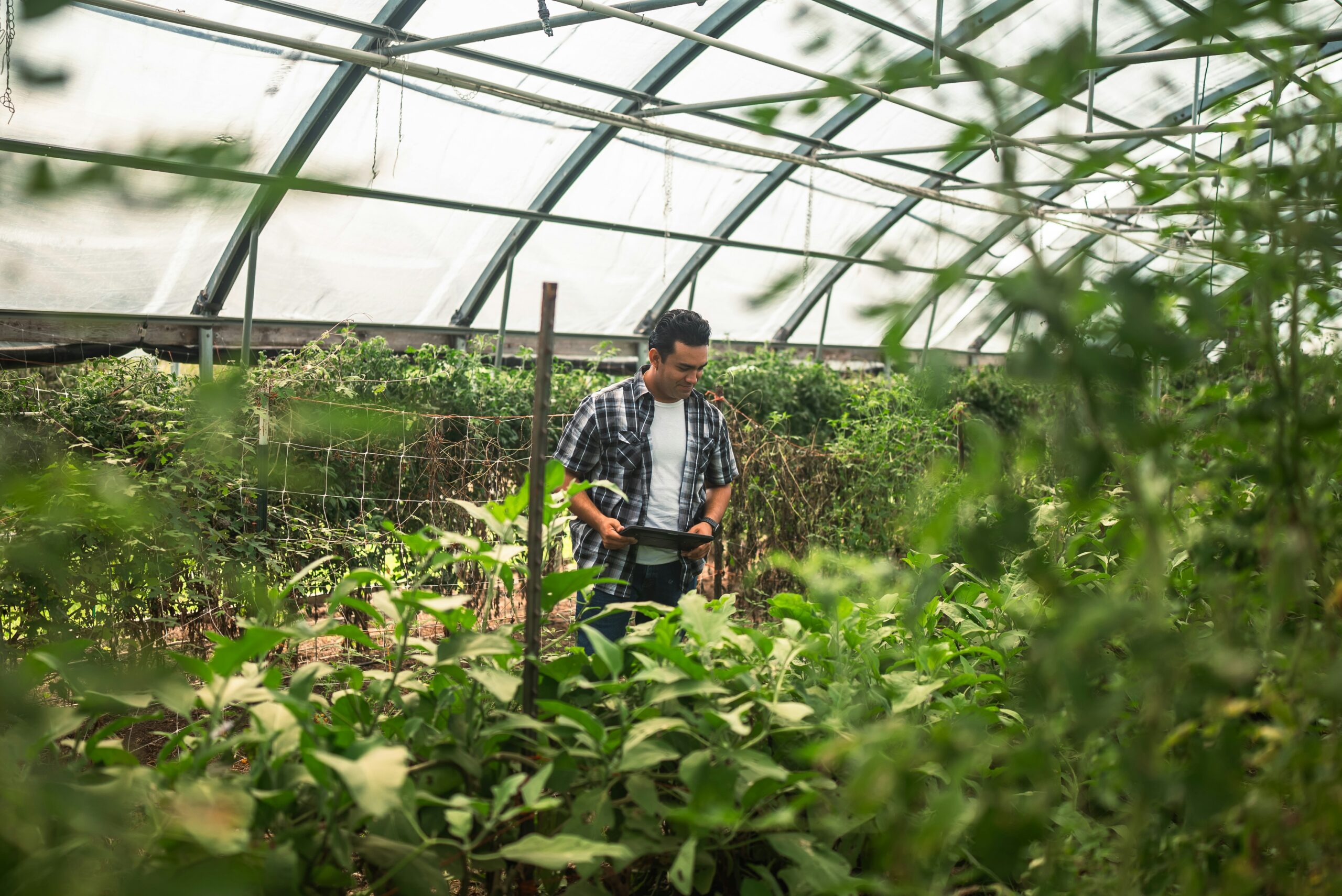
The Fragility of Centralized Food Systems
Modern food systems are optimized for efficiency.
Production is centralized.
Crops are specialized.
Distribution chains are long.
Storage is energy-dependent.
Inputs are globally sourced.
This model produces scale and affordability.
It also concentrates risk.
Drought in one region.
Fertilizer shortages.
Fuel price spikes.
Labor disruptions.
Transportation bottlenecks.
When production is centralized, shocks propagate.
Efficiency reduces redundancy.
Redundancy is what makes systems resilient.
What Urban Farming Infrastructure Changes
Urban farming infrastructure does not replace the industrial system.
It introduces distributed nodes.
Small farms on vacant lots.
Rooftop greenhouses.
Community gardens.
Hydroponic operations inside warehouses.
These nodes do three things:
- Shorten supply chains.
- Increase visibility into production.
- Create redundancy in case of disruption.
Distributed systems are not as efficient.
They are more adaptable.
The same principle governs power grids, cloud computing, and financial systems.
Redundancy absorbs shocks.
Proximity and Traceability
Urban farming also reduces informational distance between producer and consumer.
When food travels thousands of miles, traceability depends on paperwork and compliance regimes.
When food travels across a neighborhood, traceability becomes relational.
You can see the soil.
You can see the inputs.
You can ask questions.
This does not automatically guarantee quality.
It reduces opacity.
And in infrastructure design, reduced opacity improves governance.
Measuring Urban Farming Infrastructure
If urban farming infrastructure is to be treated as infrastructure, it must be measured as infrastructure.
That means asking disciplined questions:
- Yield per square meter
- Water use per kilogram
- Nutrient density retention
- Energy intensity
- Waste recapture rates
- Land-use efficiency
Not every urban farm is efficient.
Not every industrial farm is unsustainable.
The point is not ideology.
The point is data.
Distributed food systems should be evaluated on resilience contribution, not symbolic value. The FAO’s work on urban agriculture highlights how city-based food production can strengthen local food security when integrated into broader planning systems.
Scale and Limits
Urban farming will not produce staple grains at scale.
It will not eliminate global trade.
It will not solve structural food inequality alone.
But it can:
- Increase access to fresh produce
- Diversify local supply
- Improve community food literacy
- Provide micro-buffer capacity during shocks
Infrastructure does not need to be total to be valuable.
It needs to reduce systemic risk.
Food as Civic Infrastructure
Cities invest in water systems.
Transit systems.
Energy systems.
Communications networks.
Food is rarely treated with the same structural seriousness.
Yet it is foundational to public health, economic stability, and social cohesion.
Urban farming infrastructure reframes food as civic infrastructure — not simply commerce.
It introduces redundancy.
It increases visibility.
It shortens feedback loops.
In a volatile climate era, those are not lifestyle features.
They are system design features.
The Real Contribution
Urban farming infrastructure may never replace industrial agriculture.
But replacement is the wrong benchmark.
Its value lies in distribution.
In redundancy.
In proximity.
In resilience.
The future of sustainable strategy may depend less on eliminating centralized systems — and more on strengthening them with distributed layers.
This layered approach mirrors Sustainable Catalyst’s focus on distributed, auditable systems for resilient infrastructure.
Urban farming infrastructure is one such layer.
And layers are what make systems durable.