
The Finland education system is frequently cited as one of the most effective education models in the world. When discussions about global education systems arise, Finland often appears near the top of the conversation.
Over the past several decades, Finnish students have consistently performed well on international assessments such as the Programme for International Student Assessment (PISA).
What makes this achievement remarkable is not simply strong academic performance, but the way it has been achieved.
The Finland education system operates with shorter school days, minimal standardized testing, and less homework than many other countries.
The success of this model reflects a set of institutional choices that differ sharply from those found in the United States—particularly around equity, teacher trust, and universal access.
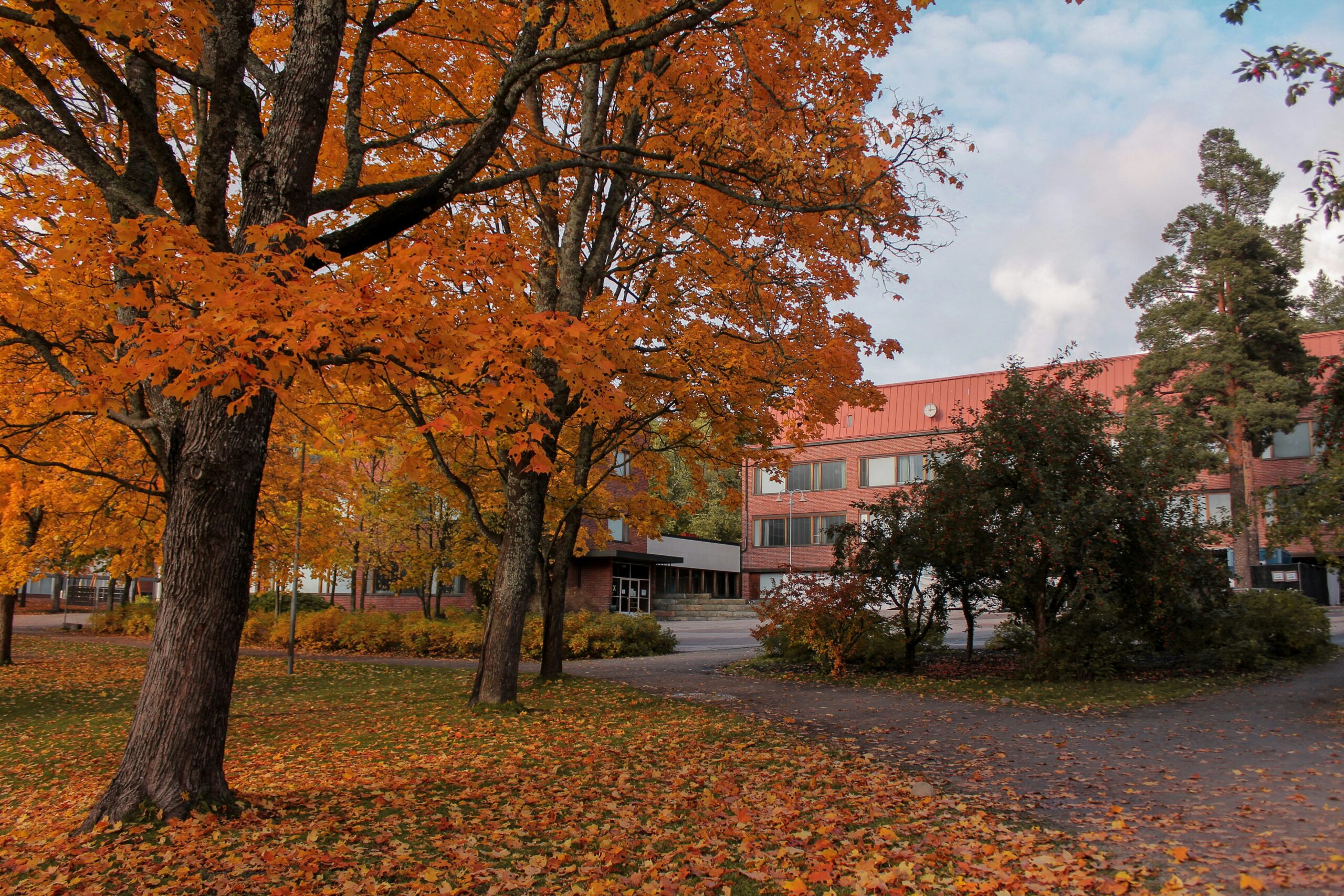
A Finnish public school campus reflecting the calm, community-centered environment typical of Finland’s schools.
How the Finland Education System Prioritizes Equity
At the center of the Finland education system is a commitment to equity. The goal is not to create elite schools, but to ensure that every community has access to consistently high-quality public education.
Public schools are funded through national and municipal taxation designed to minimize differences between districts. As a result, schools across the country maintain relatively similar resources and educational quality.
Private schools are rare, and when they exist they must follow national guidelines and operate within the same public-interest framework.
In the United States, where schools rely heavily on local property taxes, the quality of education often varies widely between communities—creating large differences in opportunity based on geography and wealth.
Teachers in the Finland Education System
Teachers play a central role in Finland’s education model.
All teachers must complete a research-based master’s degree, and teacher education programs admit only a small percentage of applicants. This selectivity signals that teaching is treated as a high-status profession rather than a fallback career.
Because teachers are highly trained, they are trusted to exercise professional judgment in the classroom. Rather than relying on constant oversight through standardized testing, the Finland education system assumes that skilled educators can design effective learning environments.
This trust stands in contrast to the more bureaucratic oversight structures often present in American schools, where performance metrics and administrative compliance can reduce classroom autonomy.
Testing in the Finland Education System
Finland’s students take very few standardized tests during their education.
The only major national exam occurs at the end of upper secondary school. Earlier stages rely primarily on teacher evaluations, projects, and classroom assessments.
This structure allows teachers to emphasize deeper learning rather than preparing students for frequent exams.
In the United States, where testing often plays a central role in evaluating schools and teachers, education can become more tightly aligned with test performance—sometimes at the expense of creativity, civic learning, and practical skills.
Shorter School Days and Student Well-Being
Finnish schools are designed with student well-being in mind.
Students typically attend shorter school days and receive less homework than many of their international peers. Classes often include regular breaks for physical activity, allowing students to recharge between lessons.
This approach reflects a belief that balanced development supports stronger long-term learning outcomes—and that cognitive performance is linked to rest, movement, and stability.
Free Higher Education
Finland extends its commitment to educational access beyond primary and secondary school.
University education is free for Finnish and EU students, including master’s and doctoral programs. This reduces financial barriers and allows graduates to enter the workforce without large debt burdens.
In the United States, rising tuition costs and student loan debt have become major concerns—shaping career choices and widening inequalities even after formal schooling ends.
Lessons from the Finnish Model
The Finland education system demonstrates how institutional design can influence educational outcomes.
By prioritizing equity, professional trust, and student well-being, Finland has created a system that combines strong academic performance with relatively small achievement gaps.
The comparison with the United States highlights how different policy choices can lead to very different educational environments—even among wealthy, technologically advanced democracies.
Ultimately, education systems reflect broader societal values. They determine how opportunity is distributed, how knowledge is cultivated, and how societies prepare future generations for the challenges ahead.
The success of the Finland education system is a reminder that educational outcomes are shaped not only by curriculum, but by the architecture of the institutions themselves: funding structures, teacher preparation, and the degree of trust embedded in the system.
For the companion analysis on the U.S. side, read: The Structural Failures of the American Education System.