
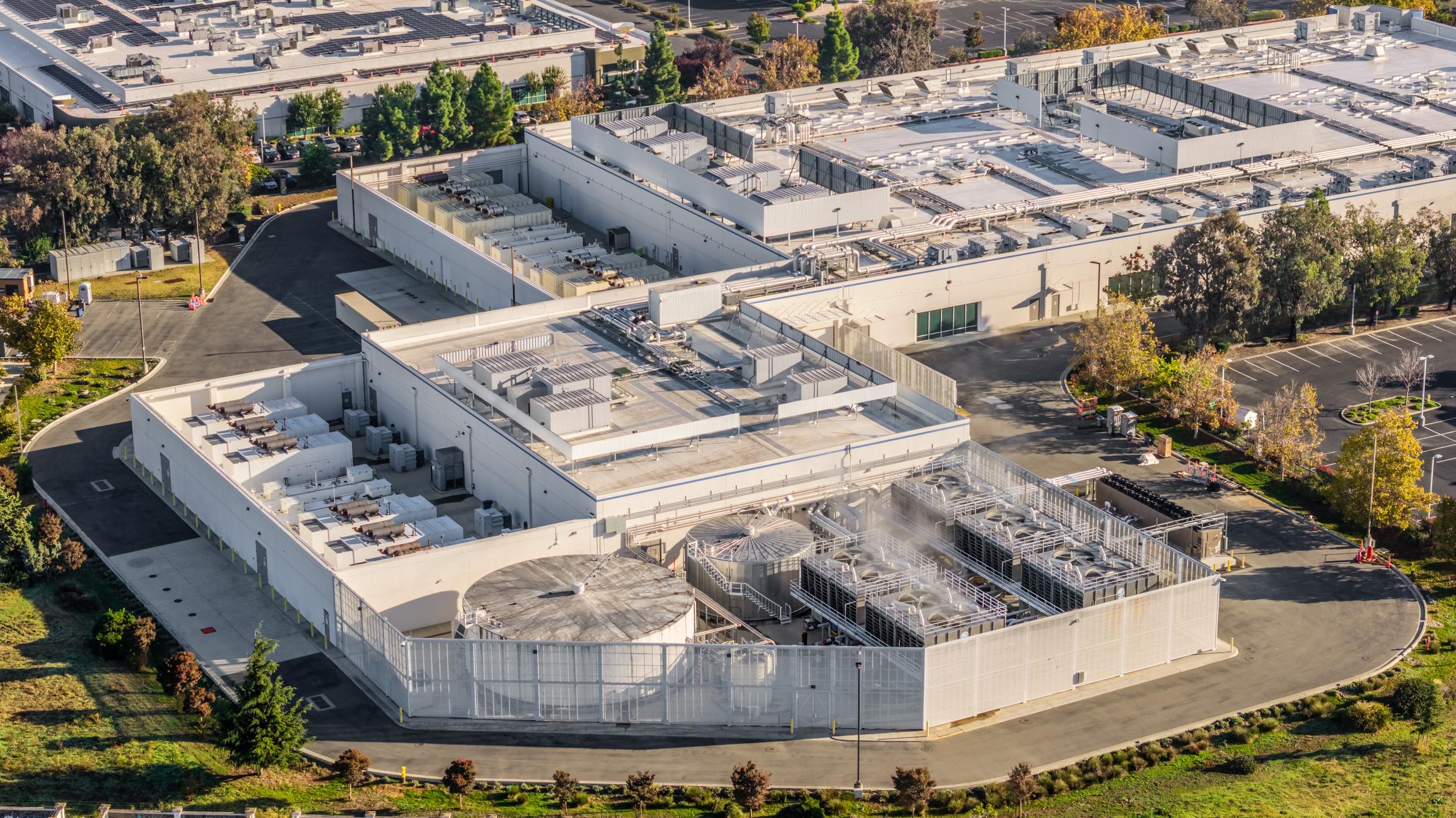
The Physical Reality Behind the Cloud
The term “cloud computing” can create the impression that digital systems operate in a largely immaterial environment. In practice, the cloud consists of enormous physical facilities that store and process data.
Modern data centers house thousands — and sometimes hundreds of thousands — of servers. These servers handle everything from search queries and video streaming to enterprise software and machine learning workloads.
Each of these activities ultimately relies on physical infrastructure:
- server hardware
- networking equipment
- electrical systems
- cooling infrastructure
- backup power generation
As the digital economy expands, the scale of this infrastructure continues to grow.
Energy Consumption and Data Center Expansion
Electricity consumption represents one of the most significant environmental dimensions of data center operations.
Globally, data centers are estimated to account for roughly 1–2 percent of total electricity consumption. While this share may appear modest, the rapid expansion of artificial intelligence workloads is expected to increase energy demand substantially.
Training and operating large AI models requires immense computational power. These models often rely on clusters of high-performance graphics processing units (GPUs), which consume large amounts of electricity during both training and inference.
As a result, technology companies and utilities are increasingly investing in new electrical infrastructure to support data center development. In some regions, large-scale facilities now require power capacity comparable to small cities.
Cooling Systems and Water Consumption
Another important component of the environmental cost of data centers is cooling.
Servers generate large amounts of heat when performing computational tasks. Maintaining safe operating temperatures requires extensive cooling systems, many of which rely on water-based technologies.
Depending on the design of the facility, data centers can consume substantial quantities of water for cooling purposes. In some cases, large facilities may use millions of gallons of water each year.
This creates potential tensions in regions where water resources are limited. As data center construction expands into new geographic areas, policymakers must consider how digital infrastructure interacts with local water availability and environmental constraints.
The AI Boom and Infrastructure Demand
The recent surge of investment in artificial intelligence has dramatically increased demand for data center capacity.
Large technology firms are constructing new facilities to support machine learning workloads, cloud services, and advanced computing applications. These facilities often require specialized hardware, high-density computing environments, and upgraded electrical infrastructure.
As AI becomes integrated into everyday digital services — from search engines to productivity software — the computational demands of the digital economy are likely to grow significantly.
This expansion raises important questions about the environmental footprint of digital infrastructure.
Supply Chains and Industrial Inputs
Beyond electricity and water consumption, data centers depend on complex global supply chains.
Server hardware requires advanced semiconductors, rare earth elements, and specialized manufacturing processes. Constructing large facilities also involves substantial quantities of steel, concrete, and electrical equipment.
The environmental footprint of digital infrastructure therefore extends beyond the facilities themselves. It includes the extraction of raw materials, semiconductor fabrication, and global manufacturing networks.
Understanding the environmental cost of data centers requires examining this broader industrial ecosystem.
Data Centers as Critical Infrastructure
One way to better understand the digital economy is to recognize that data centers function as a form of critical infrastructure.
Just as earlier technological revolutions depended on railroads, electrical grids, and telecommunications networks, today’s digital systems rely on global computing infrastructure.
This infrastructure supports nearly every sector of modern economies:
- finance
- healthcare
- government services
- scientific research
- communication networks
As a result, the sustainability of digital infrastructure is becoming an increasingly important policy and environmental issue.
The Sustainability Challenge
The central question is not whether data centers provide valuable services. Digital infrastructure has become essential to modern economic and social systems.
The challenge lies in ensuring that the continued expansion of digital infrastructure remains compatible with broader sustainability goals.
This includes addressing key issues such as:
- energy efficiency
- renewable electricity integration
- water resource management
- responsible supply chains
As artificial intelligence and cloud computing continue to expand, understanding the environmental cost of data centers will be critical for designing sustainable digital systems.
The cloud may feel intangible, but the infrastructure behind it is deeply physical — and increasingly central to the environmental footprint of the digital age.
Related analysis on infrastructure constraints and sustainability systems can be found in the Sustainable Catalyst Foundations.