
International law was designed to prevent a return to a world governed solely by force. After the devastation of the Second World War, the international community created a framework of rules intended to regulate how states behave toward one another and how wars are conducted. The UN Charter, the Geneva Conventions, and later institutions such as the International Criminal Court established legal limits meant to protect civilians and preserve global stability.
But recent geopolitical tensions and conflicts have raised a difficult question: does international law still meaningfully constrain state behavior?
Across multiple regions and political disputes, legal scholars and policy experts increasingly debate whether the international legal system is losing its ability to enforce norms. When powerful states bypass international institutions or when investigations into civilian harm stall, the credibility of the system itself begins to weaken.
Contents
- The Foundations of Modern International Law
- Civilian Protection and the Laws of War
- The Challenge of Enforcement
- Sovereignty, Power, and Global Governance
- Why Institutional Legitimacy Matters
- Does International Law Still Matter?
The Foundations of Modern International Law
The modern system of international law emerged after 1945 with a clear objective: prevent catastrophic wars and protect civilian populations.
Several key legal frameworks define the modern international order:
- The United Nations Charter, which restricts the use of force between states except in cases of self-defense.
- The Geneva Conventions, which establish rules governing the conduct of war and protect civilians.
- The International Criminal Court (ICC), created to prosecute war crimes, genocide, and crimes against humanity.
Together, these institutions were meant to establish a simple principle: even powerful states are bound by rules.
For decades, this framework helped shape diplomatic norms and conflict resolution. But the system has always depended on a critical assumption: that states are willing to respect and enforce the rules of international law.
Civilian Protection and the Laws of War
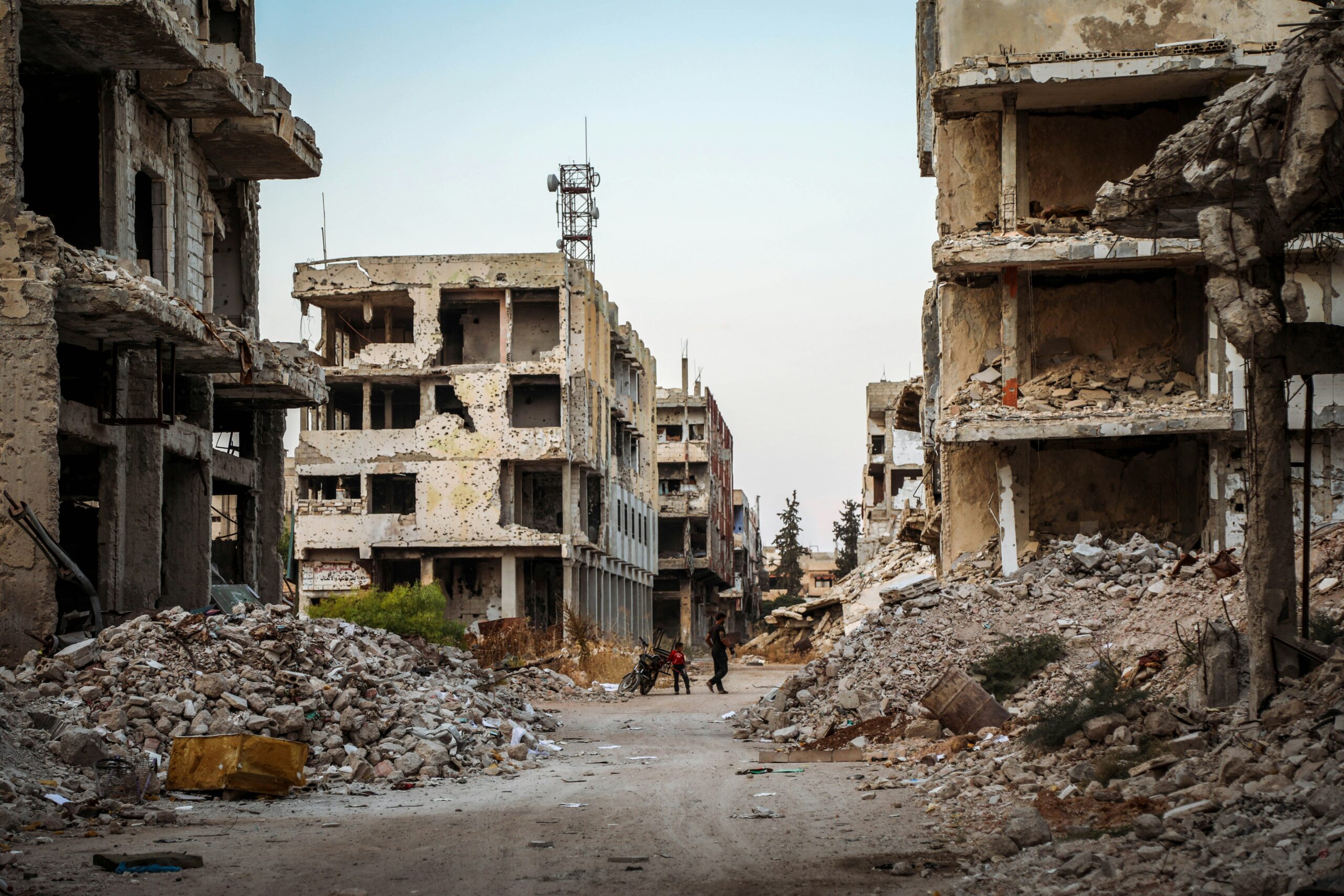
One of the most important elements of international law is the protection of civilians during armed conflict. The Geneva Conventions require military forces to distinguish between legitimate military targets and civilian infrastructure.
Protected civilian infrastructure includes:
- Hospitals and medical facilities
- Schools and universities
- Residential areas
- Journalists and humanitarian workers
However, modern conflicts increasingly blur these boundaries. Urban warfare, asymmetric tactics, and the use of civilian areas for military operations complicate the application of international humanitarian law.
Human rights organizations and international observers frequently raise concerns when civilian infrastructure is damaged or when journalists and aid workers are killed during conflicts. Investigating these incidents is essential for maintaining the legitimacy of international law and preserving confidence in global legal norms.
The Challenge of Enforcement
The greatest weakness of international law is not the absence of rules. It is the difficulty of enforcement.
Unlike domestic legal systems, international law lacks a centralized enforcement authority. Courts such as the International Criminal Court rely on cooperation from national governments to investigate crimes and arrest suspects.
This creates structural limitations:
- Countries can refuse to recognize the jurisdiction of international courts.
- Investigations may be blocked by geopolitical alliances.
- Powerful states often possess the diplomatic leverage to resist legal scrutiny.
As a result, critics argue that enforcement of international law can appear uneven. Leaders from weaker states have faced prosecution, while cases involving major powers often become entangled in political negotiations.
Sovereignty, Power, and Global Governance
Another source of tension within international law involves the balance between sovereignty and accountability.
States sometimes pursue individuals accused of serious crimes outside their own borders. Supporters argue these actions are necessary to combat transnational crime networks. Critics argue that such operations may undermine the principle of national sovereignty.
These debates highlight a deeper structural question: how can international law deliver justice without destabilizing the very system of sovereign states it was designed to regulate?
Why Institutional Legitimacy Matters
International law functions much like infrastructure. When it works well, it is largely invisible. Diplomatic norms, treaties, and legal frameworks quietly stabilize relations between countries.
But when those systems weaken, the consequences become visible quickly.
Declining trust in international institutions can lead to:
- greater geopolitical instability
- increased civilian harm during conflicts
- weaker diplomatic conflict resolution
- erosion of global cooperation
For a world facing complex global challenges, from climate change to nuclear proliferation, the stability of international institutions is not merely a legal issue. It is a foundational requirement for collective problem-solving.
This is also why institutional trust matters across other domains, including economic resilience and development. In that sense, international law is part of a broader conversation about governance, legitimacy, and systems stability. For a related perspective, see Inclusive Growth and Sustainable Development.
Does International Law Still Matter?
The rules governing international behavior have always been imperfect. Violations have occurred throughout modern history.
But the real question facing the international system today is not whether violations exist. It is whether the global community still believes those rules are worth defending.
If the institutions designed to enforce international law lose legitimacy or credibility, the world risks drifting toward a far more dangerous reality: one where power determines outcomes rather than rules.
International law may not always succeed in preventing conflict. But without it, the guardrails that limit the worst outcomes of geopolitical competition could begin to disappear.