
Inclusive growth challenges the idea that economic expansion alone guarantees shared prosperity. But growth alone does not tell us who benefits, who is left exposed, or whether prosperity translates into long-term stability. GDP can rise while insecurity deepens beneath the surface — when wages stagnate, housing costs accelerate, or public services become harder to access. Growth, in isolation, measures output. It does not measure distribution, resilience, or dignity.
If sustainable development is about balancing environmental integrity, economic vitality, and social inclusion, then economic performance cannot be evaluated by aggregate output alone. It must be evaluated by how well institutions translate growth into shared opportunity. That requires asking a harder question:
Does the economy actually serve everyone?
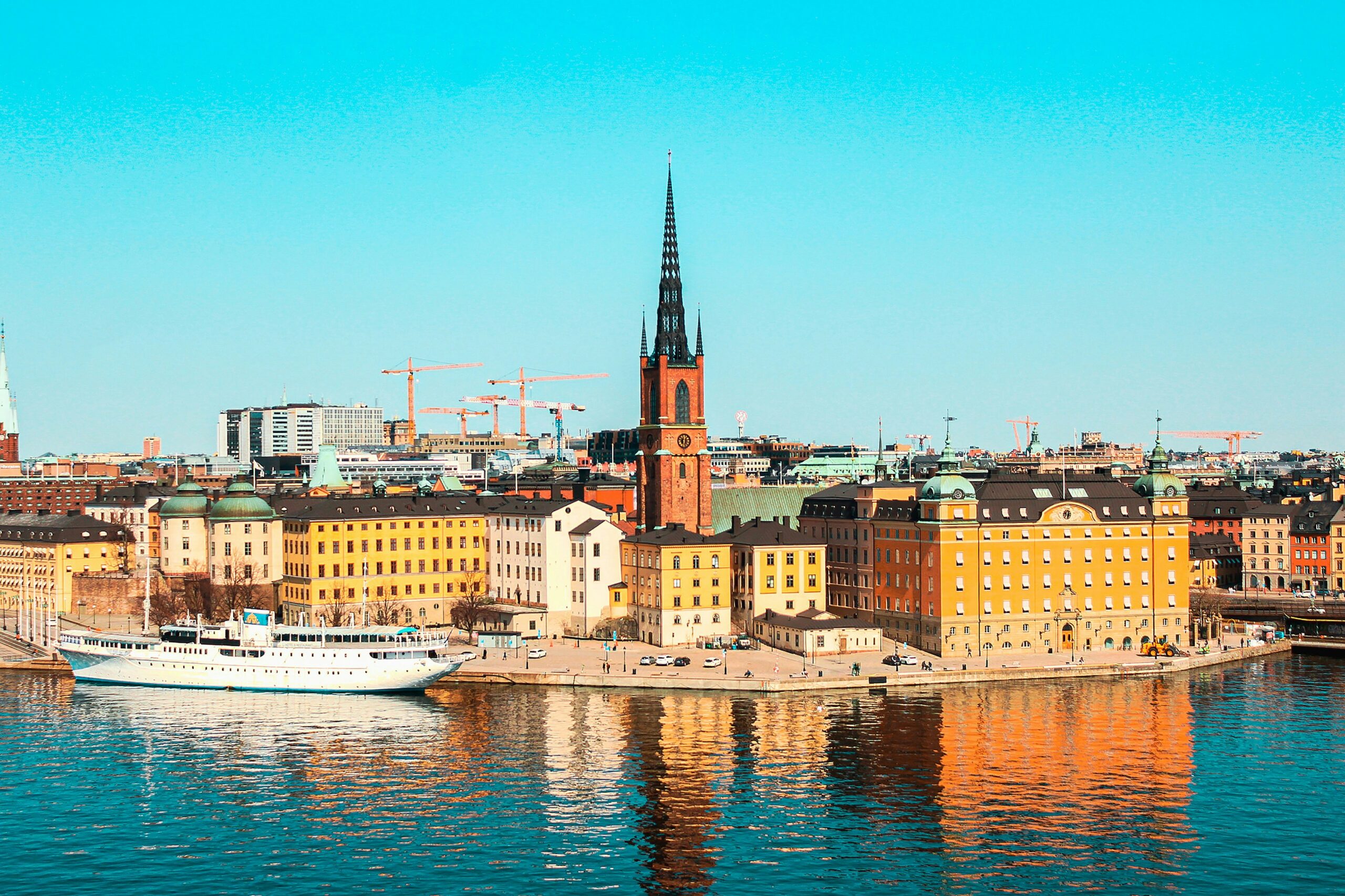
Stockholm, Sweden — a city often cited for balancing market dynamism with strong public institutions and social welfare systems.
Why Inclusive Growth Matters for Sustainable Development
One of the most important insights from sustainable development theory is that aggregate growth can coexist with deepening inequality. GDP may rise while housing becomes unaffordable, healthcare inaccessible, or education stratified by income.
Inclusive growth reframes economic success as a structural outcome, not simply a market result. It asks whether gains are broadly shared, whether risks are collectively managed, and whether opportunity is genuinely accessible. Without this lens, growth can mask fragility — rising asset values for some alongside declining mobility for others.
Markets reward innovation, risk-taking, and productivity. That is a strength. But markets alone do not guarantee:
- Universal healthcare
- Equal educational opportunity
- Income security during crises
- Protection from structural disadvantage
When these foundational protections are absent, economic shocks become personal crises. A medical emergency becomes bankruptcy. A job loss becomes housing instability. A tuition increase becomes a lifelong earnings gap. Inclusive growth seeks to prevent these cascades by embedding risk-sharing within the economic system itself.
Sustainable systems are not defined solely by how much wealth they generate, but by how they distribute risk and opportunity.
Inclusive Growth and Institutional Design
A useful comparison can be drawn between Nordic welfare states and more liberal market economies such as the United States.
Nordic countries combine competitive markets with:
- Progressive taxation
- Universal healthcare
- Strong labor protections
- Subsidized higher education
- Income supports
The result is not the elimination of inequality — differences in income still exist — but reduced poverty, higher social mobility, and stronger baseline security.
For example, Denmark and Sweden consistently rank high in measures of social mobility while maintaining globally competitive industries. This suggests that inclusive growth does not undermine innovation. Instead, it stabilizes participation by reducing the downside risk of failure. Individuals are more willing to retrain, relocate, or start businesses when healthcare and education are not contingent solely on private income.
In contrast, in more liberal market systems, access to healthcare and education is more closely tied to employment and private income. This can amplify intergenerational inequality and create greater economic precarity.
In more liberal market systems, safety nets are often thinner and more conditional. Economic opportunity can exist — but access to it is uneven. The result is greater volatility at the household level and higher exposure to systemic shocks. These outcomes are not inevitable; they reflect institutional design choices about taxation, social insurance, and public goods provision.
From a governance perspective, these differences are not accidental. They reflect policy choices about redistribution, public goods, and how societies share risk.
The central question becomes:
Not whether markets create wealth — but how institutions channel that wealth toward collective wellbeing.
For an overview of how policymakers frame this agenda, see the OECD’s work on inclusive growth, which connects prosperity to opportunity, resilience, and social cohesion.
Where Should We Draw the Line?
No economy eliminates differences in income or opportunity entirely. Nor should it. Incentives matter. Innovation matters. Effort should be rewarded.
But inequality becomes morally and socially harmful when:
- Basic healthcare is inaccessible
- Education locks in class divisions
- Housing costs displace entire communities
- Economic shocks push families into permanent instability
The line, then, may be drawn at the threshold of dignity. A sustainable economy ensures that everyone has a fair chance at:
- Health
- Education
- Security
- Participation in civic and economic life
The threshold of dignity is not a fixed number. It is contextual and evolving. But it implies that societies accept responsibility for ensuring a baseline of security below which no one falls. Without that baseline, inequality ceases to be a reflection of effort and becomes a structural barrier to participation.
Beyond that baseline, differences in income may reflect effort, skill, or entrepreneurship. Below that baseline, inequality becomes structural exclusion.
When inequality becomes entrenched, it weakens social trust, increases political polarization, and undermines long-term planning. In that sense, addressing inequality is not only a moral imperative — it is a strategic one.
Designing Economies That Serve All
If we treat sustainable development seriously, economic systems must be evaluated not only by output but by:
- Mobility
- Access
- Risk-sharing
- Long-term resilience
Evaluating economies through this broader lens shifts planning priorities. Infrastructure investment becomes a tool for opportunity expansion. Education policy becomes economic policy. Public health becomes resilience strategy. Inclusive growth requires coordination across sectors that are often treated separately.
Planning and policy are not neutral. Tax structures, zoning laws, healthcare systems, labor regulations, and social protection programs all shape how growth is distributed.
Markets remain essential mechanisms for allocating resources and driving innovation. But markets operate within rules. Those rules — tax codes, zoning frameworks, labor standards, regulatory systems — determine how widely opportunity spreads. Designing economies that serve all of their people is ultimately a governance question.
An economy that serves everyone is not one without markets. It is one where markets operate within institutions designed to protect human dignity and long-term social stability. Sustainable development, in this sense, is not anti-growth. It is growth redesigned — growth that stabilizes rather than destabilizes, includes rather than excludes.
Ultimately, inclusive growth is not a redistribution afterthought. It is a structural design principle for long-term stability.
This connects directly to the Sustainable Catalyst approach to auditable systems for sustainable strategy, where institutions, evidence, and accountability determine whether outcomes are truly durable.
Tell Us What You Think!
How about you? In your country or city, what mechanisms most effectively reduce harmful inequality — tax policy, public services, labor protections, housing regulation? Where do you see the biggest gaps that prevent the economy from truly serving all of its people?