
Hydrological limits remind us that water is renewable — but only within constraints. And those constraints increasingly shape economic stability.
When people think about environmental risk, they often think about carbon emissions or rising temperatures. But freshwater may be just as foundational. Water irrigates crops, cools power plants, supports manufacturing, sustains ecosystems, and stabilizes local climates. When water systems weaken, the effects ripple outward — into food prices, energy reliability, migration pressures, and public health.
The “blue water boundary” refers to how much freshwater humans can safely withdraw from rivers, lakes, and groundwater without destabilizing ecosystems or disrupting the natural water cycle. Rainfall replenishes rivers and aquifers, but only at certain rates. Withdraw too much, too quickly, and natural systems begin to degrade. This is where hydrological limits become more than a scientific concept — they become an economic constraint.
Hydrological Limits in Practice: What Happens When Use Exceeds Renewal?
Freshwater stress is not abstract. When withdrawals exceed sustainable levels:
- Aquifers can collapse or become saline, making water unusable.
- Rivers may no longer reach the sea, disrupting fisheries and coastal ecosystems.
- Wetlands shrink, reducing biodiversity and natural flood protection.
- Farm yields decline as irrigation becomes unreliable.
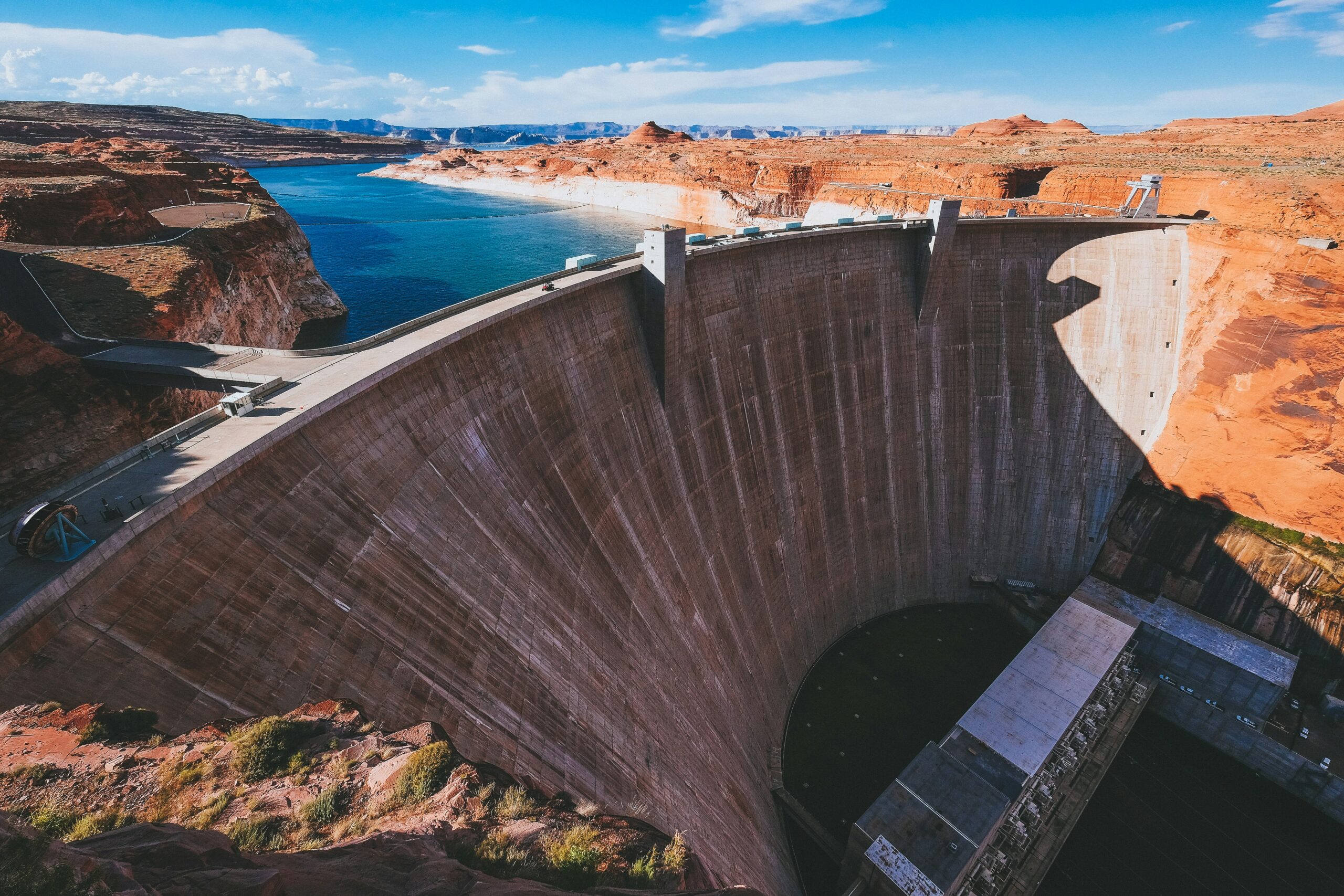
Globally, agriculture accounts for roughly 70% of freshwater withdrawals. Several major river basins — including the Colorado River in the United States and the Indus River in South Asia — already experience chronic overuse. In some years, more water is allocated on paper than physically exists in the system.
As climate change intensifies drought cycles and increases variability, water scarcity becomes less of a seasonal inconvenience and more of a structural constraint. In other words, hydrological limits begin to define the ceiling of what “normal” development can assume.
Hydrological Limits as Economic Risk
Development models often assume that water will remain available as demand grows. But when aquifers decline or reservoirs shrink, infrastructure investments become fragile. Hydropower output can fall. Food systems become volatile. Industrial expansion slows.
In this sense, development that depends on unsustainable water extraction is effectively borrowing from the future. Short-term economic gains may conceal long-term instability. Respecting hydrological limits is not anti-growth — it is pro-durability.
Importantly, water scarcity is not only a physical issue. It is also a governance issue. Allocation rules, pricing structures, enforcement capacity, infrastructure investment, and political priorities determine whether water stress becomes crisis or remains manageable.
From Short-Term Allocation to Long-Term Basin Management
Managing freshwater sustainably requires shifting from short-term allocation decisions to long-term basin planning. That shift treats hydrological limits as a planning input — not a post-crisis explanation.
This may include:
- Integrating water budgets into land-use and development planning
- Monitoring groundwater extraction transparently
- Incentivizing water-efficient agriculture and industrial processes
- Aligning pricing with scarcity to discourage waste
- Strengthening cross-border cooperation in shared river basins
Approving new water-intensive development in already stressed basins should require evidence that withdrawals remain within sustainable limits. Without that discipline, growth can accelerate depletion rather than prosperity — and hydrological limits will be enforced by ecological breakdown instead of governance.
A Foundational Constraint for the 21st Century
Freshwater is not simply an environmental concern. It underpins food security, public health, energy production, and economic stability. Respecting hydrological limits may ultimately determine whether development remains durable in a warming, more resource-constrained world.
When water becomes scarce, trade-offs become unavoidable. Should priority go to agriculture, cities, industry, or ecosystems? And how should those decisions be made in ways that are transparent, equitable, and sustainable over decades?
Further reading: For a deeper look at how infrastructure and governance shape long-term resilience, see the Sustainable Catalyst platform overview. For global context on water stress and basin risk, explore the UN-Water resource hub.