
Last Updated May 9, 2026
Inclusive growth is not simply a question of whether an economy expands. It is a question of whether economic institutions convert growth into broadly shared security, opportunity, dignity, and long-term social stability. Aggregate output can rise while wages stagnate, housing becomes unaffordable, healthcare remains inaccessible, education becomes stratified, and households become more exposed to debt, insecurity, and economic shock. In those conditions, the apparent success of the macroeconomy can conceal institutional failure at the level where people actually live.
Growth, in isolation, measures production. It does not measure the distribution of opportunity, the durability of social protections, the fairness of risk-sharing, the strength of public goods, or the capacity of institutions to prevent economic life from becoming a contest between private advantage and collective vulnerability.
Inclusive growth therefore belongs inside Institutions & Governance because it asks how societies design the public architecture around markets. Markets generate wealth, innovation, competition, and productivity, but they do not automatically determine who receives security, who bears risk, who gains mobility, who is protected during crisis, and who is left exposed. Those outcomes are shaped by taxation, labor law, public investment, healthcare systems, education systems, housing policy, social insurance, financial regulation, regional development, and the administrative capacity of the state.
Main Library
Publications
Article Map
Institutions & Governance
Related Topic
Economic Systems
Related Topic
Sustainable Development
Related Library
Global Governance
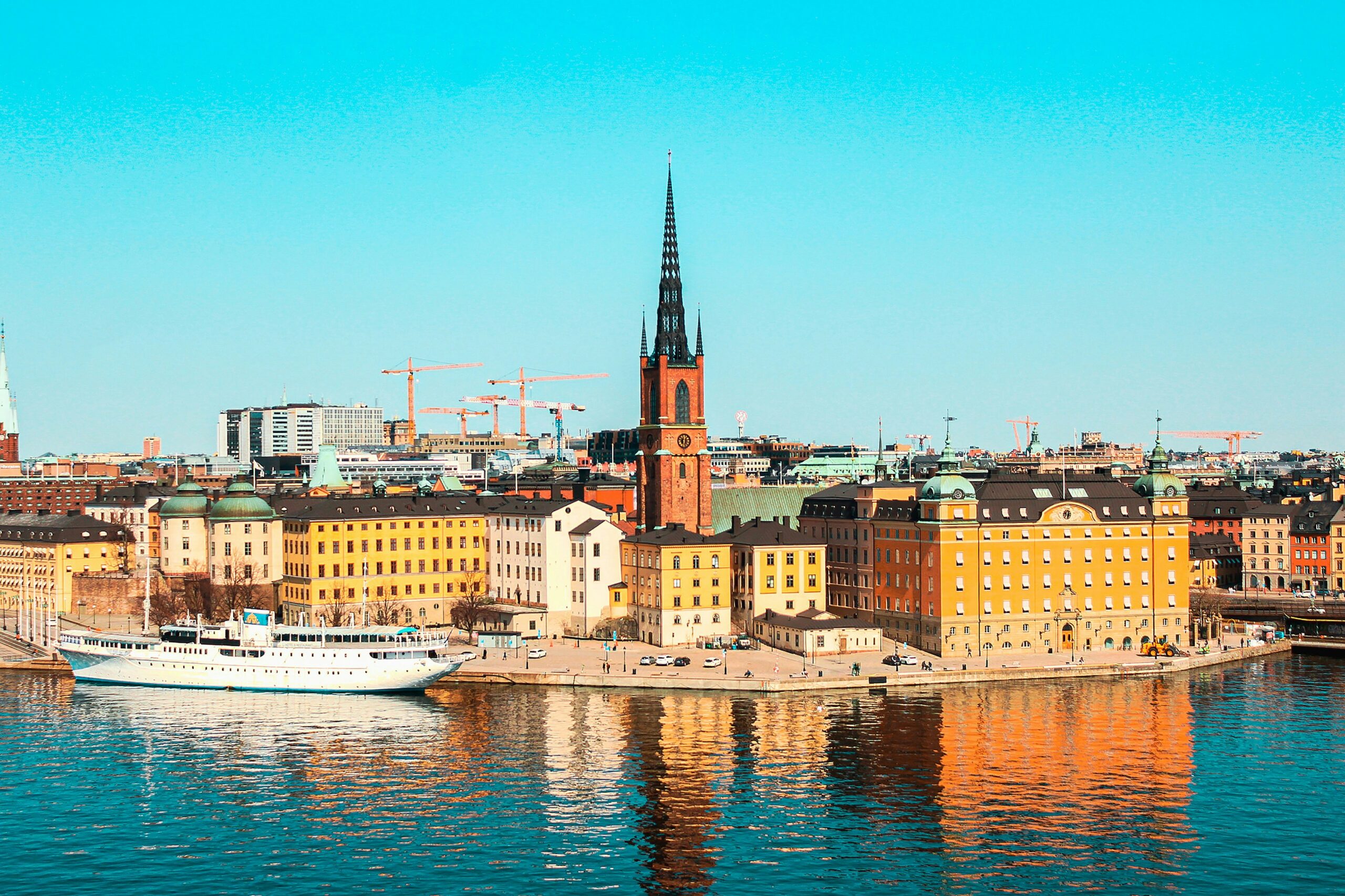
This article examines inclusive growth as a governance problem. It argues that shared prosperity is not the automatic result of economic expansion, but the product of institutional design: how societies distribute risk, finance public goods, regulate labor markets, protect basic capabilities, support mobility, and prevent growth from hardening into exclusion. The central issue is not whether markets matter. They do. The deeper question is whether markets operate inside institutions capable of turning prosperity into durable public wellbeing.
Why Inclusive Growth Is an Institutions & Governance Question
Inclusive growth is often discussed as an economic development objective, but its deepest questions are institutional. It asks whether the rules, public systems, and governing arrangements surrounding economic life allow growth to become broadly shared opportunity rather than concentrated advantage.
An economy may grow while many households experience greater insecurity. National income can rise while workers lose bargaining power, renters face displacement, students accumulate debt, families ration healthcare, and public infrastructure deteriorates. A society can become wealthier in aggregate while becoming more fragile in human terms.
This is why inclusive growth must be understood through governance. Markets operate within legal, fiscal, social, and administrative frameworks. Property rights, contract enforcement, corporate law, labor standards, monetary systems, taxation, zoning, education policy, health systems, welfare programs, industrial policy, infrastructure investment, and financial regulation all shape how growth is produced and distributed.
The institutional question is not whether markets should exist. It is whether markets are embedded in public systems that prevent economic dynamism from becoming social abandonment. A productive economy can generate wealth, but institutions determine whether that wealth strengthens the social foundations of life or accumulates in ways that deepen vulnerability.
Inclusive growth also requires attention to risk. Economic life is filled with risks that individuals do not fully control: illness, disability, automation, job loss, regional decline, housing shocks, climate disasters, inflation, caregiving burdens, and financial crises. When these risks are handled primarily by households, inequality widens because wealthier families can absorb shocks while poorer families are destabilized by them.
Risk-sharing is therefore central to inclusive growth. Public healthcare, unemployment insurance, pensions, paid leave, affordable education, housing protections, worker rights, and social assistance are not merely redistributive tools. They are institutional mechanisms that prevent predictable life risks from becoming permanent exclusion.
Inclusive growth is a governance test: whether an economic system can produce prosperity while protecting the public conditions that make prosperity meaningful.
Growth, Output, and the Limits of GDP
Gross domestic product remains one of the most influential indicators in economic policy. It measures the monetary value of final goods and services produced within an economy. As a measure of aggregate output, it is useful. But as a measure of social progress, it is incomplete.
GDP can rise when economic activity expands, but it does not reveal whether the gains are widely shared. It does not show whether working families can afford housing. It does not show whether children have equal educational opportunity. It does not show whether people delay medical care because of cost. It does not show whether debt is rising faster than income. It does not show whether pollution, stress, caregiving burdens, or ecological damage are being transferred onto communities.
A society can therefore appear successful through aggregate indicators while failing many of its people. Growth can coexist with wage stagnation, regional abandonment, declining life expectancy, weak labor protections, unaffordable childcare, student debt, medical bankruptcy, infrastructure decay, and social distrust.
The problem is not that GDP is useless. The problem is that GDP becomes misleading when treated as a substitute for institutional diagnosis. Output tells one part of the story. It does not tell us whether growth strengthens capabilities, reduces insecurity, expands opportunity, improves public health, protects ecological systems, or deepens democratic legitimacy.
Inclusive growth widens the evaluative frame. It asks whether economic expansion improves the real conditions of life across society. It therefore requires attention to distribution, mobility, public goods, social protection, regional balance, environmental sustainability, and the quality of institutions.
A narrow growth model asks, “How much did the economy expand?” An inclusive growth model asks, “Who benefited, who remained exposed, what risks were reduced, what capabilities were expanded, and whether the social foundations of prosperity became stronger.”
That broader question is essential because economies are not abstractions. They are systems through which people secure shelter, health, education, income, care, mobility, dignity, and participation. If growth does not strengthen those foundations, then growth alone cannot be treated as success.
Markets, Institutions, and Risk-Sharing
Markets are powerful coordination systems. They allocate resources, reward innovation, reveal demand, discipline inefficiency, and support entrepreneurial experimentation. They are essential to modern prosperity. But markets do not operate outside institutions, and they do not automatically produce social inclusion.
Every market depends on public architecture. Contracts require courts. Property requires law. Firms require infrastructure. Innovation often depends on public research. Labor markets depend on education, transport, health, childcare, immigration systems, and bargaining rules. Financial markets depend on regulation, enforcement, central banking, and public trust.
The idea of a “free market” can therefore obscure the institutional foundations that make markets possible. The real question is not whether markets are free from governance, but what kind of governance structures them and whose interests those structures protect.
Risk-sharing is especially important. In some societies, many social risks are handled collectively through public systems. Illness is addressed through universal healthcare. Old age is supported through public pensions. Job loss is buffered through unemployment insurance and retraining. Parenthood is supported through paid leave and childcare. Education is treated as a public investment. Housing is shaped by public planning, tenant protections, and affordability policy.
In other societies, more of these risks are pushed onto individuals and families. Healthcare is tied to employment. Higher education is financed through debt. Retirement depends heavily on private savings. Housing security depends on market position. Job loss can quickly become loss of insurance, income, and stability. Under such conditions, growth may continue, but insecurity becomes privatized.
This distinction matters because households do not enter markets with equal resilience. Wealthier households can absorb setbacks, buy services, move to opportunity, invest in education, and recover from crisis. Lower-income households face narrower margins. A single disruption can cascade into debt, eviction, untreated illness, educational interruption, or long-term instability.
Inclusive growth therefore depends on institutionalized risk-sharing. It does not require eliminating markets. It requires designing public systems so that ordinary economic shocks do not destroy human capability.
The goal is not to remove responsibility from individuals. It is to recognize that no society can build shared prosperity if basic life risks are distributed according to private wealth alone.
Inclusive Growth and the Capabilities Approach
Inclusive growth aligns closely with the capabilities approach associated with Amartya Sen and Martha Nussbaum. The capabilities approach shifts attention away from income alone and toward what people are actually able to be and do. It asks whether individuals have the substantive freedom to live healthy, educated, secure, meaningful, and participatory lives.
This matters because income is an important means, but not the whole measure of wellbeing. Two people with the same income may have very different real opportunities depending on health, disability, family responsibilities, discrimination, neighborhood conditions, access to transport, school quality, public safety, housing costs, and social support.
Inclusive growth therefore asks whether economic institutions expand real capabilities. Do people have access to healthcare? Can they obtain education without life-shaping debt? Can they find decent work? Can they afford housing near opportunity? Can they care for children or elders without falling out of the labor market? Can they recover from illness or unemployment? Can they participate meaningfully in civic and economic life?
This approach also clarifies why inequality matters. Inequality is not only a difference in income. It becomes structurally damaging when it limits the capabilities of some groups while expanding the freedom of others. When wealth buys safety, education, healthcare, political influence, legal protection, time, and geographic mobility, inequality becomes a system of unequal life chances.
Inclusive growth is not only about redistribution after markets produce outcomes. It is about the prior design of institutions that shape capabilities before market outcomes occur. Early childhood systems, public schools, transport networks, healthcare access, labor standards, anti-discrimination law, housing policy, and environmental protections all affect the opportunity structure within which people act.
A capabilities lens also helps avoid a narrow consumption-based view of inclusion. Inclusion is not merely whether households can buy more goods. It is whether people can live with dignity, agency, security, and public voice.
Economic growth becomes inclusive only when it expands these real freedoms across the population.
The Nordic Contrast
Nordic welfare states are often discussed in debates about inclusive growth because they illustrate a different institutional settlement between markets, public goods, and social protection. Countries such as Sweden, Denmark, Finland, Norway, and Iceland are not post-market societies. They contain competitive firms, open trade, innovation, private enterprise, and globally integrated industries. Their distinctiveness lies in how markets are embedded within public institutions.
The Nordic model is commonly associated with universal social protections, strong labor institutions, relatively high taxation, extensive public services, active labor-market policy, public investment in education, and a political culture that places strong emphasis on social trust and shared citizenship. These features do not eliminate inequality, but they tend to reduce the extent to which inequality becomes exclusion from basic capabilities.
This contrast is useful because it challenges the assumption that strong social protections necessarily suppress economic dynamism. Nordic societies have produced globally competitive companies, high labor-force participation, strong human-capital systems, relatively high trust, and broad access to public services. Their experience suggests that risk-sharing can support economic participation rather than undermine it.
When healthcare, education, childcare, and income security are less dependent on private wealth or employment status, individuals may be better able to change jobs, retrain, start businesses, move between sectors, recover from setbacks, and participate in the labor market. Security can become a platform for adaptation.
This does not mean Nordic systems are perfect or easily transferable. They face challenges related to migration, aging populations, housing markets, regional inequality, political polarization, fiscal pressure, and economic change. Their institutions also reflect specific histories of labor organization, state capacity, social democracy, small-state governance, and public trust.
But comparison remains useful because it reveals that economic insecurity is not inevitable. It is shaped by institutional choices. Societies decide how much risk households must bear alone, how public goods are financed, how labor markets are governed, how education is funded, and how strongly public systems protect people from predictable shocks.
The Nordic contrast is therefore not a template to copy mechanically. It is a mirror that shows that inclusive growth depends less on slogans than on durable institutional design.
Liberal Market Economies and Private Risk
Liberal market economies, including the United States, tend to rely more heavily on private markets, employer-based benefits, household debt, individual savings, and localized public provision. These arrangements can produce innovation, flexibility, entrepreneurship, and high aggregate output. But they can also expose individuals and families to greater insecurity.
The American case is especially important because it combines immense wealth with deep household vulnerability. A strong national economy can coexist with medical debt, student debt, housing insecurity, weak labor protections, uneven public schools, limited childcare, precarious employment, and regional decline. The result is a system in which many people are formally free to pursue opportunity but practically constrained by the private costs of participation.
Employment-linked benefits are a central example. When healthcare, retirement security, and family stability are tied closely to employment, job loss becomes more than income loss. It can threaten insurance, health access, housing security, and family wellbeing at the same time. A labor-market shock becomes a multi-system crisis.
Higher education provides another example. If credentials are increasingly necessary for economic mobility but access depends heavily on debt, then opportunity becomes financially risky. Students from wealthier families can pursue education with less exposure. Students from lower-income families may carry greater debt, face higher completion risks, and experience more severe consequences if expected labor-market returns do not materialize.
Housing markets also illustrate private risk. When housing is treated mainly as an asset class and local public goods are tied to residential location, families compete for access to safety, schools, transportation, and opportunity through property markets. This connects growth to exclusion: rising asset values may benefit owners while displacing renters and lower-income residents.
Private risk is not inherently wrong. Individual responsibility matters, and markets require incentives. But when too many foundational goods are privatized, society becomes less resilient. Household vulnerability rises. Mobility narrows. Social trust declines. Political anger intensifies because people sense that the economy is growing without protecting them.
Inclusive growth asks whether an economy can maintain dynamism while reducing the exposure of ordinary households to preventable insecurity.
Taxation, Public Goods, and Social Investment
Taxation is one of the central instruments through which societies decide what growth is for. It finances public goods, redistributes resources, supports infrastructure, funds education, protects health, stabilizes households, and gives governments the capacity to act. Debates over taxation are therefore never only technical. They are debates about the social contract.
Inclusive growth requires adequate public revenue. Without revenue, states cannot maintain infrastructure, fund schools, provide healthcare, support families, regulate effectively, respond to crisis, or invest in long-term capabilities. A low-tax system may leave more income in private hands, but it can also shift costs onto households through tuition, medical bills, private insurance, transport costs, childcare, debt, and degraded public services.
The question is not simply how much a society taxes, but how taxation is structured and what it finances. Progressive taxation can reduce inequality and support broad public investment. Consumption taxes may raise revenue efficiently but can burden lower-income households unless offset by transfers or universal services. Property taxation can support local public goods but may reproduce spatial inequality when communities have unequal tax bases. Corporate taxation, wealth taxation, payroll taxation, and capital-gains taxation all shape the distribution of responsibility across society.
Public goods are central to inclusive growth because they expand opportunity beyond private purchasing power. Public education, public health, transportation, broadband, clean water, safe streets, courts, parks, libraries, research systems, and climate-resilient infrastructure all strengthen the conditions under which people and businesses operate.
Social investment is especially important. Spending on early childhood development, education, preventive healthcare, workforce training, public research, and infrastructure should not be understood only as consumption. These are investments in human capability, productivity, social stability, and long-term institutional resilience.
A society that underinvests in public goods may still generate private wealth, but it weakens the shared foundations that make prosperity sustainable. The result can be a two-tier system: private abundance for those who can afford it, public scarcity for those who cannot.
Inclusive growth requires a different premise: the strength of an economy depends partly on the quality of the public systems beneath it.
Labor Institutions, Wages, and Bargaining Power
Inclusive growth depends on labor institutions because most households participate in the economy primarily through work. If productivity rises but wages stagnate, if employment becomes insecure, if workers lack bargaining power, or if essential labor is poorly compensated, growth will not translate into shared prosperity.
Labor markets are not natural arenas where power is evenly distributed. They are structured by law, regulation, union rights, minimum-wage policy, employment classification, immigration status, anti-discrimination enforcement, occupational licensing, benefits systems, corporate governance, and macroeconomic policy. These institutions shape the bargaining position of workers and employers.
When labor protections are weak, economic gains can concentrate among owners, executives, and highly skilled workers while many workers face stagnant wages or precarious conditions. When labor protections are stronger, growth is more likely to support broad income gains, stable employment, safer workplaces, and social mobility.
Unions and collective bargaining are especially important because they alter the distribution of power inside labor markets. They can raise wages, improve benefits, strengthen workplace voice, reduce arbitrary treatment, and support political advocacy for public goods. Their decline in many liberal market economies has contributed to weaker worker bargaining power and greater income inequality.
However, labor institutions must also adapt to changing economic conditions. Automation, platform work, subcontracting, global supply chains, fissured workplaces, artificial intelligence, and gig employment challenge older regulatory models. Inclusive growth requires institutions capable of protecting workers even as the organization of work changes.
The question is not whether labor markets should be flexible or protected. They need both. Workers and firms must be able to adapt, but adaptation should not mean that all risk falls on workers. Active labor-market policy, wage insurance, retraining, portable benefits, public employment services, sectoral bargaining, and worker voice can help balance flexibility with security.
A growth model that treats labor only as a cost will eventually undermine its own legitimacy. Work is not merely an input to production. It is a primary way people secure dignity, income, identity, belonging, and participation in society.
Housing, Healthcare, and Education as Growth Institutions
Housing, healthcare, and education are often treated as social policy domains separate from economic growth. Inclusive growth challenges that separation. These systems are not peripheral to the economy. They shape productivity, mobility, household security, regional opportunity, and the distribution of life chances.
Housing determines access to labor markets, schools, transportation, social networks, safety, environmental quality, and wealth accumulation. When housing becomes unaffordable or exclusionary, growth can produce displacement rather than opportunity. Rising property values may enrich owners while renters face instability and long commutes. Local zoning can protect wealth while limiting housing supply and intensifying segregation.
Healthcare is equally central. A workforce cannot be fully productive if people avoid care, delay treatment, live with preventable illness, or lose financial stability because of medical costs. Healthcare insecurity also affects entrepreneurship and labor mobility. People may remain in unsuitable jobs to retain insurance, avoid starting businesses, or delay family decisions because of health-related risk.
Education shapes long-term capability. Early childhood systems, public schools, vocational education, community colleges, universities, and adult learning institutions determine whether people can adapt to technological change, participate in skilled labor markets, and contribute to civic life. When education is unequal or debt-financed, growth becomes stratified by family background.
These systems interact. Housing segregation affects school quality. Education affects earnings. Earnings affect health. Health affects learning and employment. Employment affects housing stability. The economy is therefore not separate from social infrastructure. It is built through it.
Inclusive growth requires treating these systems as core growth institutions. Affordable housing is not merely a welfare issue. It is a mobility and productivity issue. Healthcare is not merely a cost center. It is a foundation of human capability. Education is not merely private advancement. It is public infrastructure for democracy and long-term development.
When foundational systems are unequal, markets inherit that inequality and often amplify it. When foundational systems are strong, markets operate on a broader base of capability.
Mobility, Precarity, and the Distribution of Opportunity
Inclusive growth is closely tied to social mobility. A society can tolerate some inequality more easily when people believe that opportunity is broadly accessible and that effort can translate into advancement. But when mobility declines, inequality becomes more entrenched and politically explosive.
Mobility depends on more than individual ambition. It depends on family wealth, neighborhood conditions, school quality, health, discrimination, transportation, childcare, labor-market access, social networks, legal status, exposure to violence, environmental quality, and the cost of credentials. These factors are shaped by institutions.
Precarity undermines mobility because insecure households have less room to take productive risks. A family living paycheck to paycheck may not be able to move for a better job, pay for training, absorb unpaid internships, start a business, reduce hours for education, or weather a temporary income loss. Insecurity narrows the future.
Wealthier households experience risk differently. They can use savings, family support, property wealth, insurance, legal assistance, and social networks to recover from setbacks. Their children can pursue opportunity with greater protection. Poorer households often face irreversible consequences from the same shocks.
This is why inclusive growth cannot be reduced to equal formal access. A scholarship application, a job posting, a training program, or a business opportunity may be formally open, but people do not approach these opportunities from equal positions. Institutional design determines whether opportunity is realistically usable.
Regional inequality adds another layer. Economic opportunity is often concentrated in metropolitan areas, innovation hubs, and high-growth regions. Communities facing deindustrialization, depopulation, infrastructure decline, climate exposure, or weak public investment may be structurally excluded from growth. Inclusive growth must therefore address place as well as class.
The distribution of opportunity is not simply a moral issue. It affects the productive capacity of the whole economy. Societies waste talent when children’s futures are determined by neighborhood, race, parental income, health status, or debt exposure.
Inclusive growth means building institutions that allow more people to participate fully in economic and civic life.
Where Should Societies Draw the Line?
No economic system completely eliminates differences in income, wealth, status, or opportunity. Nor would complete uniformity necessarily be desirable. Incentives can support innovation, productivity, entrepreneurship, and effort. People make different choices, possess different skills, and take different risks.
The more difficult question is where inequality becomes unacceptable. Inclusive growth does not require that everyone receive the same outcome. It requires that no one be pushed below the threshold required for dignity, participation, and realistic opportunity.
Inequality becomes structurally damaging when basic healthcare becomes inaccessible, when education reinforces class divisions, when housing markets displace entire communities, when wages cannot support basic needs, when debt becomes a gateway to opportunity, or when economic shocks permanently destabilize households.
At that point, inequality is no longer simply a difference in reward. It becomes exclusion from the conditions of full participation.
A sustainable economy requires a baseline threshold of security. That threshold includes access to healthcare, education, housing, nutrition, safety, legal protection, income support, digital access, and participation in civic and economic life. The exact institutional form may vary across societies, but the principle is clear: no person should be forced below the floor of human dignity in order for an economy to be considered successful.
Above that threshold, differences in income may reflect skill, innovation, effort, responsibility, or risk-taking. Below it, inequality becomes a failure of public design.
This distinction matters because societies often debate inequality in abstract terms. Inclusive growth makes the issue concrete. The question is not whether some people will earn more than others. The question is whether the economic system denies some people the basic capabilities needed to live freely and participate meaningfully.
An economy that cannot answer that question has not solved growth. It has only increased output while leaving the moral and institutional foundations of prosperity unresolved.
Inclusive Growth and Democratic Legitimacy
Inclusive growth is also a question of democratic legitimacy. When economic systems produce visible prosperity while large segments of the population experience insecurity, distrust grows. People may lose faith not only in markets, but in public institutions, expertise, political parties, media, and democracy itself.
Economic exclusion can intensify polarization because people experience public promises as false. They hear that the economy is strong while rent rises faster than wages. They hear that education is the path to mobility while tuition requires debt. They hear that hard work is rewarded while essential workers struggle. They hear that innovation is transforming society while local communities are abandoned.
This gap between macroeconomic success and lived insecurity creates political danger. It can fuel resentment, authoritarian appeals, scapegoating, anti-institutional anger, and social fragmentation. When people believe institutions no longer protect them, they become more willing to reject institutional norms.
Inclusive growth therefore supports democratic stability. It strengthens the perception that the economy is not only productive, but fair enough to command consent. It does not eliminate conflict, but it reduces the sense that the system is rigged beyond repair.
Trust is not created by rhetoric alone. It depends on visible institutional performance. People trust systems that deliver: schools that educate, hospitals that care, courts that protect rights, labor markets that reward work, housing systems that allow stability, and public agencies that respond competently during crisis.
Institutional legitimacy also requires fairness across groups. If growth benefits some regions, races, classes, or generations while others experience exclusion, democracy weakens. Inclusive growth must therefore address structural disadvantage, not only aggregate poverty rates. Racial inequality, gender inequality, disability exclusion, regional abandonment, migration status, and intergenerational debt all affect whether growth is experienced as legitimate.
Democracy depends on more than elections. It depends on whether people believe public institutions are capable of organizing a common life. Inclusive growth is one way societies sustain that belief.
What Structural Reform Would Require
A serious inclusive growth agenda would require moving beyond slogans toward institutional redesign. The first requirement is to treat public goods as foundations of economic participation. Healthcare, education, childcare, housing, transportation, digital access, clean water, and safe communities are not peripheral social benefits. They are the infrastructure through which people participate in economic life.
The second requirement is stronger risk-sharing. Illness, job loss, disability, caregiving, aging, climate shocks, technological displacement, and regional decline cannot be managed solely by individual households. Public systems must reduce the likelihood that predictable shocks become permanent exclusion.
The third requirement is labor-market reform. Workers need bargaining power, living wages, safe conditions, portable benefits, protection from misclassification, and pathways for retraining and advancement. Economic flexibility should not mean social disposability.
The fourth requirement is equitable taxation and public finance. Inclusive growth requires revenue systems capable of funding shared infrastructure and reducing extreme concentration of advantage. Fiscal design should support both productivity and social cohesion.
The fifth requirement is place-based investment. Regions left behind by deindustrialization, disinvestment, climate risk, or infrastructure decline need public strategies that connect people to opportunity without simply forcing migration as the only path to advancement.
The sixth requirement is housing reform. Inclusive growth is impossible if opportunity is geographically locked behind unaffordable housing, exclusionary zoning, segregation, displacement, and speculative land markets.
The seventh requirement is education without debt-based exclusion. Early childhood education, public schools, vocational pathways, community colleges, universities, and adult learning must be understood as public capability systems, not merely private credential markets.
The eighth requirement is better measurement. Governments should evaluate economic success through distribution, mobility, security, health, education, climate resilience, and public trust, not GDP alone.
The ninth requirement is administrative capacity. Inclusive growth depends on institutions that can actually deliver. A weak state cannot regulate effectively, coordinate investment, enforce rights, or maintain public systems.
Structural reform would not eliminate markets. It would strengthen the public architecture within which markets operate. The goal is not growth suppressed, but growth governed toward human capability, social stability, and long-term resilience.
The Institutional Lesson
The institutional lesson of inclusive growth is that prosperity is never purely an economic outcome. It is also a governance outcome. Societies do not simply grow and then discover whether growth was shared. They design tax systems, labor markets, education systems, health systems, housing rules, financial regulations, and public services that shape the distribution of growth from the beginning.
This is why inclusive growth should not be treated as a charitable correction after markets have done their work. It is a structural design principle. It asks whether economic life is organized so that growth strengthens human capability rather than deepening insecurity.
A society can generate extraordinary wealth and still fail institutionally if that wealth produces private abundance alongside public scarcity. It can celebrate innovation while leaving essential workers underpaid. It can build world-class universities while burdening students with debt. It can expand GDP while allowing housing, healthcare, and education to become inaccessible. It can praise resilience while forcing households to absorb risks that public systems should have shared.
Inclusive growth offers a different standard. It asks whether economic institutions protect the conditions of dignified life. It asks whether people can participate meaningfully in society. It asks whether risk is distributed fairly. It asks whether prosperity strengthens democratic legitimacy rather than weakening it.
The central issue is not whether markets generate prosperity, but whether institutions channel prosperity toward durable collective wellbeing.
An economy that serves everyone is not one without inequality, competition, or private enterprise. It is one in which markets operate within institutions strong enough to safeguard basic capabilities, reduce avoidable insecurity, support mobility, and preserve social trust.
Inclusive growth is therefore not anti-growth. It is growth made governable: growth disciplined by public purpose, shared risk, institutional accountability, and the recognition that economic success must be measured by the lives it makes possible.
Governance Diagnostic Table
| Governance feature | Institutional question | Inclusive growth consequence |
|---|---|---|
| Growth measurement | Is economic success measured only by aggregate output, or also by distribution, security, health, mobility, and public capability? | GDP-focused systems may overlook household insecurity, inequality, and social fragility. |
| Taxation | Does the fiscal system raise adequate and fair revenue for public goods and social investment? | Weak or regressive taxation can shift costs onto households and deepen private insecurity. |
| Public goods | Are education, healthcare, transport, digital access, and infrastructure treated as shared foundations of opportunity? | Strong public goods expand participation beyond private purchasing power. |
| Risk-sharing | Are illness, job loss, aging, disability, caregiving, and economic shocks collectively buffered? | Risk-sharing prevents ordinary disruptions from becoming permanent exclusion. |
| Labor institutions | Do workers have bargaining power, living wages, safe conditions, and voice? | Stronger labor institutions help translate productivity into broad income gains. |
| Housing systems | Does housing policy support affordability, stability, integration, and access to opportunity? | Exclusionary housing systems convert growth into displacement and spatial inequality. |
| Education systems | Is education funded and organized as a public capability system rather than a debt-financed private ladder? | Unequal or debt-heavy education systems reproduce class advantage and limit mobility. |
| Healthcare access | Is healthcare treated as a universal foundation of capability or as a private employment-linked benefit? | Healthcare insecurity weakens labor mobility, entrepreneurship, productivity, and dignity. |
| Regional development | Are lagging regions connected to investment, infrastructure, skills, and institutional capacity? | Place-based exclusion can make national growth coexist with local decline. |
| Democratic legitimacy | Do people experience economic institutions as fair, responsive, and protective? | When growth is not broadly shared, distrust and polarization intensify. |
Related Reading
Further Reading
- OECD (n.d.) Inclusive Growth. Available at: https://www.oecd.org/inclusive-growth/
- World Bank (n.d.) Inclusive Growth. Available at: https://www.worldbank.org/en/topic/inclusivegrowth
- United Nations (n.d.) The 17 Goals. Available at: https://sdgs.un.org/goals
- UNDP (n.d.) Human Development Reports. Available at: https://hdr.undp.org/
- International Labour Organization (n.d.) World Employment and Social Outlook. Available at: https://www.ilo.org/global/research/global-reports/weso/lang–en/index.htm
- World Inequality Lab (n.d.) World Inequality Database. Available at: https://wid.world/
- OECD (n.d.) Income Distribution Database. Available at: https://www.oecd.org/social/income-distribution-database.htm
- Stiglitz, J.E., Sen, A. and Fitoussi, J.-P. (2009) Report by the Commission on the Measurement of Economic Performance and Social Progress. Available at: https://ec.europa.eu/eurostat/documents/8131721/8131772/Stiglitz-Sen-Fitoussi-Commission-report.pdf
- Sen, A. (1999) Development as Freedom. Oxford: Oxford University Press.
- Esping-Andersen, G. (1990) The Three Worlds of Welfare Capitalism. Princeton: Princeton University Press.
- Hall, P.A. and Soskice, D. (eds.) (2001) Varieties of Capitalism: The Institutional Foundations of Comparative Advantage. Oxford: Oxford University Press.
- Piketty, T. (2014) Capital in the Twenty-First Century. Cambridge, MA: Harvard University Press.
References
- Esping-Andersen, G. (1990) The Three Worlds of Welfare Capitalism. Princeton: Princeton University Press.
- Hall, P.A. and Soskice, D. (eds.) (2001) Varieties of Capitalism: The Institutional Foundations of Comparative Advantage. Oxford: Oxford University Press.
- International Labour Organization (n.d.) World Employment and Social Outlook. Available at: https://www.ilo.org/global/research/global-reports/weso/lang–en/index.htm
- OECD (n.d.) Inclusive Growth. Available at: https://www.oecd.org/inclusive-growth/
- OECD (n.d.) Income Distribution Database. Available at: https://www.oecd.org/social/income-distribution-database.htm
- Piketty, T. (2014) Capital in the Twenty-First Century. Cambridge, MA: Harvard University Press.
- Sen, A. (1999) Development as Freedom. Oxford: Oxford University Press.
- Stiglitz, J.E., Sen, A. and Fitoussi, J.-P. (2009) Report by the Commission on the Measurement of Economic Performance and Social Progress. Available at: https://ec.europa.eu/eurostat/documents/8131721/8131772/Stiglitz-Sen-Fitoussi-Commission-report.pdf
- UNDP (n.d.) Human Development Reports. Available at: https://hdr.undp.org/
- United Nations (n.d.) The 17 Goals. Available at: https://sdgs.un.org/goals
- World Bank (n.d.) Inclusive Growth. Available at: https://www.worldbank.org/en/topic/inclusivegrowth
- World Inequality Lab (n.d.) World Inequality Database. Available at: https://wid.world/